Reviewed by Elena P. · Last Updated November 1, 2026 · How we review
Honey is good for you in a few specific ways and neutral-to-unhelpful in most others. The best human evidence supports it for easing coughs in children over 1 and, as sterile medical dressings, for healing burns. As a food it is mostly sugar: a tablespoon has 64 calories and 17 grams of sugar, so it can replace other sweeteners but should not be added on top of them. Never give honey to a baby under 12 months.
Below, we grade each popular claim against the studies behind it and turn the trial doses into everyday spoonfuls, using USDA, FDA and American Heart Association figures. As beekeepers, we also explain what “raw” changes and what it does not.
This is educational information, not medical advice. Ask your doctor before using honey to manage a health condition, and follow the CDC’s botulism prevention guidance for infants. Health statements here come from the studies and agencies named beside them, not from our own medical expertise. Sources checked November 1, 2026.
Key Takeaways
- Strongest evidence: honey eases cough in children over 1 (Cochrane, moderate certainty) and honey dressings heal partial-thickness burns faster than conventional dressings (Cochrane, high certainty).
- One tablespoon (21 g) supplies about 34% of the FDA’s Daily Value for added sugars but less than 1% of the Daily Value of every vitamin and mineral it contains.
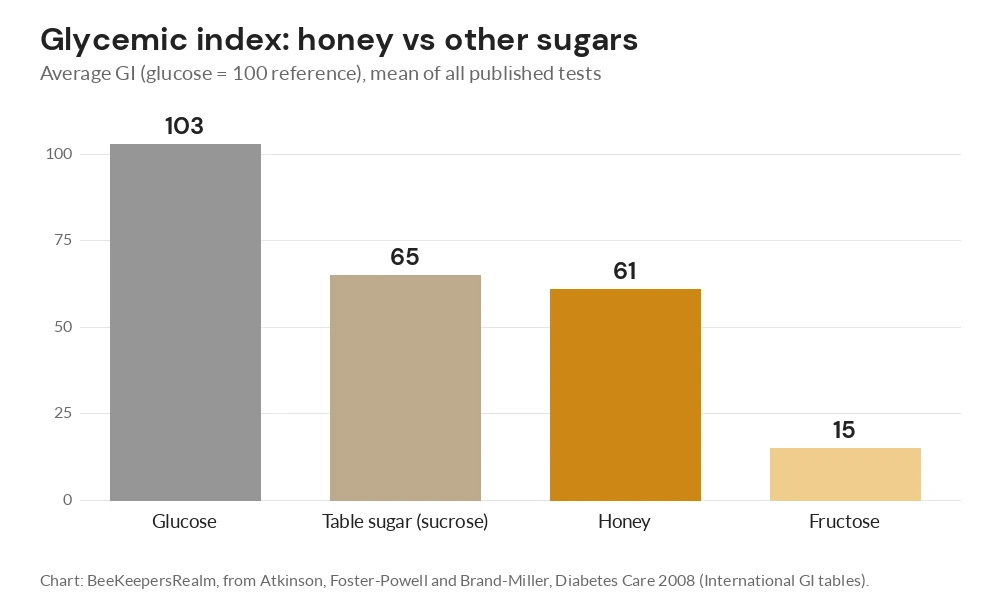
- Honey’s average glycemic index is 61, close to table sugar’s 65. It still raises blood sugar.
- Trials linking honey to better cholesterol used a median of 40 g a day, about 122 calories. That is more than the American Heart Association’s whole daily added-sugar limit for most women (100 calories), so the benefit only applies when honey replaces other sugar.
- No good evidence shows honey treats allergies, improves memory or feeds gut bacteria in people.
- Raw and processed honey are both unsafe for infants under 12 months because of botulism.
Table of Contents
- Is Honey Good for You? The Verdict, Claim by Claim
- What Is Actually in a Spoonful of Honey
- Is Honey Healthier Than Sugar?
- Cholesterol and Blood Sugar: What 18 Trials Found
- Cough and Sore Throat: The Best-Supported Home Use
- Wounds and Burns: Medical Dressings, Not the Kitchen Jar
- Antioxidants: Real in the Jar, Modest in the Body
- Digestion, Memory and Allergies: Weak or No Evidence
- Is Raw Honey Healthier?
- Is Honey Bad for You? Downsides and Who Should Avoid It
- A Beekeeper’s Note: Why No Two Jars Match
- Frequently Asked Questions
- The Bottom Line
Is Honey Good for You? The Verdict, Claim by Claim
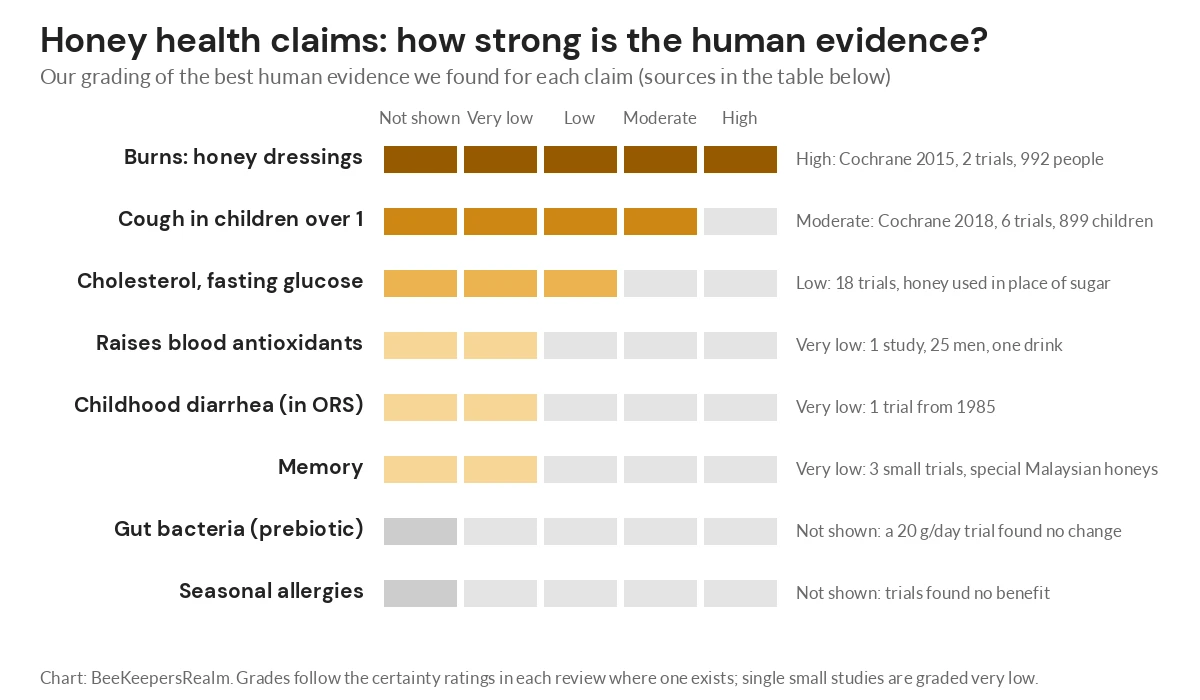
Many “benefits of honey” lists put a burn trial in 992 people next to a test-tube result as if they counted the same. They do not. The table ranks each common claim by the strongest human evidence we could find.
| Claim | Best human evidence | Our verdict |
|---|---|---|
| Heals burns (as a dressing) | Cochrane review, 2015: 26 trials, 3,011 people; high-quality evidence for partial-thickness burns | Supported, for sterile medical dressings |
| Eases cough in children over 1 | Cochrane review, 2018: 6 trials, 899 children; moderate certainty | Supported for short-term relief |
| Improves cholesterol and fasting glucose | Nutrition Reviews meta-analysis: 18 trials, 1,105 people; mostly low certainty | Possible, only when it replaces other sugar |
| Raises antioxidant levels in the blood | One University of Illinois study, 25 men, one drink | Real but small; long-term effect unknown |
| Shortens diarrhea in children | One 1985 trial of honey in oral rehydration solution | Too little evidence to act on |
| Feeds “good” gut bacteria | A pilot trial of 20 g a day found no change | Not shown in people |
| Improves memory | Small trials of special Malaysian honeys, no placebo | Not shown for ordinary honey |
| Relieves seasonal allergies | Trials reviewed by Mayo Clinic found no benefit | Not supported |
A 2023 review in Nutrients by Palma-Morales and colleagues, covering 48 human trials and 3,655 people from 1985 to 2022, reached the same overall picture: more beneficial effects than neutral or negative ones, mainly when honey replaces other sweeteners, from studies too varied to recommend a specific honey or dose. Mayo Clinic’s summary puts the starting point plainly:
“Honey is mostly sugar.”
What Is Actually in a Spoonful of Honey
Per USDA FoodData Central (Honey, SR Legacy 169640), honey is about 82% sugar and 17% water by weight. A tablespoon weighs 21 grams.
| In 1 tablespoon (21 g) | Amount | % Daily Value |
|---|---|---|
| Calories | 64 | n/a |
| Total sugars | 17.2 g (8.6 g fructose, 7.5 g glucose) | 34% of the 50 g added-sugar DV |
| Protein, fat, fiber | 0.1 g, 0 g, 0 g | about 0% |
| Potassium | 10.9 mg | 0.2% |
| Iron | 0.09 mg | 0.5% |
| Manganese | 0.017 mg | 0.7% |
| Riboflavin (B2) | 0.008 mg | 0.6% |
| Vitamin C | 0.1 mg | 0.1% |
Amounts are USDA’s per-100-gram values scaled to 21 g; percentages use the FDA’s current Daily Values. The American Heart Association lists honey among the other names for added sugar.
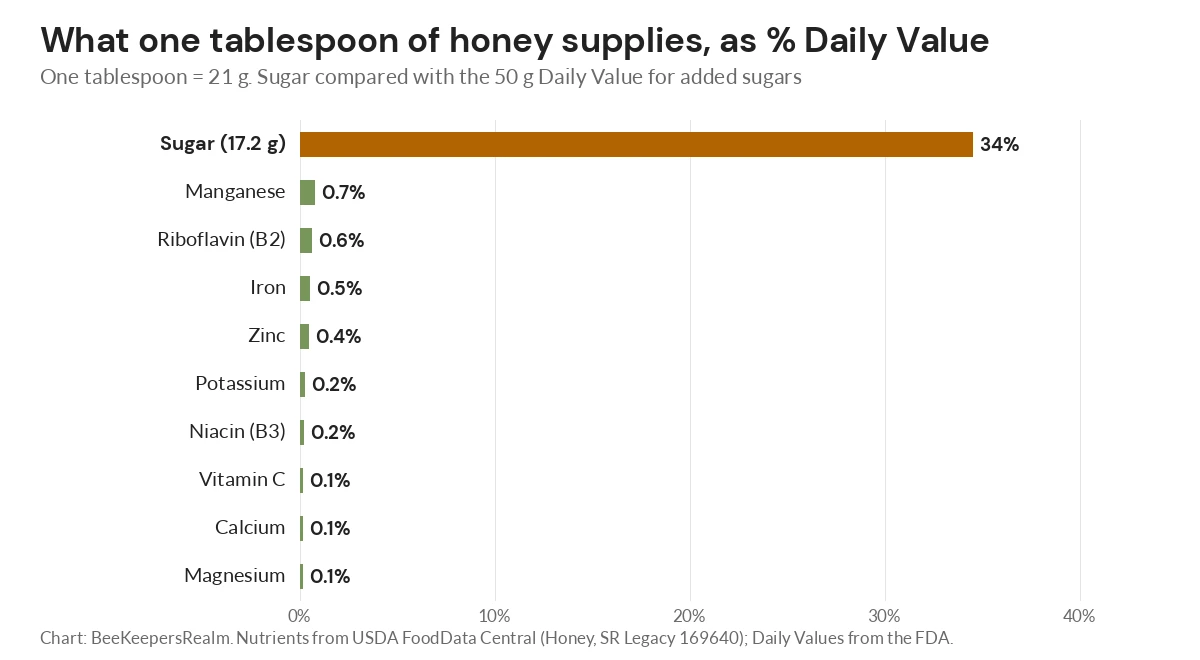
So the “vitamins and minerals in honey” are real but trivial: you would need well over 100 tablespoons to reach 100% of any one of them. The more interesting ingredients are the plant compounds, enzymes and acids that never appear on a label, which is where the antioxidant and antibacterial effects come from.
Is Honey Healthier Than Sugar?
Only slightly, and not per spoonful. Honey’s average glycemic index is 61, against 65 for table sugar (sucrose), 103 for pure glucose and 15 for pure fructose, in the international GI tables published in Diabetes Care in 2008 by Atkinson, Foster-Powell and Brand-Miller. The honey figure is an average of all published tests, and individual honeys vary around it.
Per spoonful, honey is the heavier choice. A Mayo Clinic video graphic puts a teaspoon of honey at 21 calories against 16 for a teaspoon of sugar, which matches USDA’s 304 calories per 100 grams. The practical upside is flavor: because honey tastes sweeter and stronger, many people use less of it.
In this one-minute Mayo Clinic video, dietitian Kate Zeratsky explains that honey, maple syrup and molasses are fine in limited amounts but all count toward your daily added-sugar total. She notes that honey has slightly more calories per teaspoon than sugar, but its stronger flavor means a little goes a long way, and in some baking it can help you use less added sugar overall.
If you manage diabetes, honey is a carbohydrate to count like any other; our guide to whether honey is good for diabetics covers glycemic response by honey type and carb counting.
Cholesterol and Blood Sugar: What 18 Trials Found
The most-cited recent evidence is a meta-analysis led by researchers at the University of Toronto (Ahmed et al., “Effect of honey on cardiometabolic risk factors,” Nutrition Reviews, published 2022, 2023 issue). It pooled 18 controlled trials with 1,105 participants. Honey lowered fasting glucose, total and LDL cholesterol and triglycerides, with low certainty, and raised HDL cholesterol, with high certainty. Raw honey and single-flower honeys such as clover and robinia (black locust) did best in subgroup analyses.
Two details matter more than the headline. First, the participants followed healthy diets in which added sugars stayed at or below 10% of calories, so honey was replacing sugar, not adding to it. The study’s own researcher was explicit:
“We’re not saying you should start having honey if you currently avoid sugar.”
Second, the dose. The median was 40 grams a day, about two tablespoons, for a median of eight weeks. Using USDA’s 304 calories per 100 grams, 40 grams of honey is about 122 calories. The American Heart Association recommends no more than 100 calories of added sugar a day for most women and 150 for most men, from all sources combined. In other words, the dose behind the cholesterol headline is more than an entire day’s added-sugar allowance for most women and about 81% of a man’s.
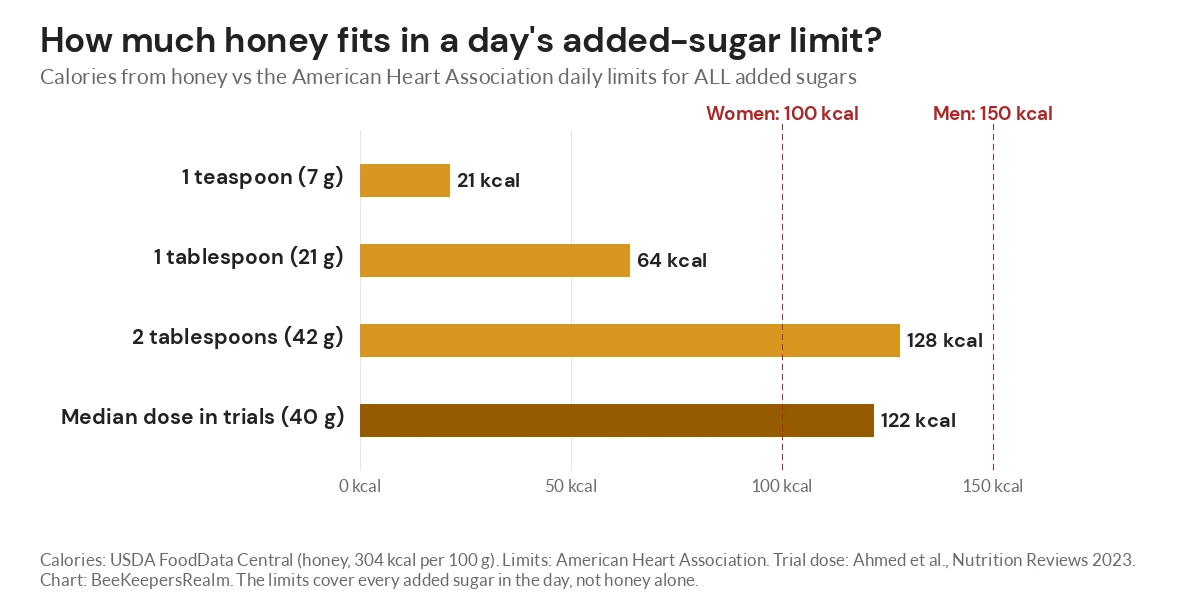
By the AHA’s added-sugar limits, the whole daily budget is about 4.7 teaspoons (1.5 tablespoons) of honey for most women and about 7 teaspoons (2.3 tablespoons) for most men, if no other added sugar is eaten that day. The useful reading of this research: if you already sweeten tea, yogurt or oatmeal with sugar or syrup, switching that amount to honey is reasonable. Adding honey for its “benefits” is not. Blood pressure is a separate question with its own trials, covered in our review of honey and blood pressure research.
Cough and Sore Throat: The Best-Supported Home Use
A 2018 Cochrane review (Oduwole et al., “Honey for acute cough in children”) pooled six randomized trials with 899 children aged 1 to 18. Honey probably eased cough frequency more than no treatment or a placebo (moderate certainty), may have done better than the antihistamine diphenhydramine, and made little or no difference compared with the cough suppressant dextromethorphan (both low certainty). Most children were treated for only one night. A 2021 systematic review of 14 studies in BMJ Evidence-Based Medicine (Abuelgasim, Albury and Lee) found honey better than usual care for upper respiratory symptoms, mainly cough frequency and severity, and called for more placebo-controlled trials.
The American Academy of Pediatrics suggests 2 to 5 mL of honey (about half to one teaspoon) as needed for children 1 year and older. The CDC lists honey to relieve cough for adults and children at least 1 year old. For adults, Mayo Clinic notes research hasn’t shown honey beats other cough medicines. Doses, timing and when a cough needs a doctor are in our guide to honey for cough and sore throat. Easing symptoms is not the same as strengthening the immune system; that separate claim is examined in honey and immune support.
Wounds and Burns: Medical Dressings, Not the Kitchen Jar
The 2015 Cochrane review of honey as a topical treatment (Jull et al., 26 trials, 3,011 participants) found high-quality evidence from two trials with 992 people that honey dressings heal partial-thickness burns faster than conventional dressings, by about 4.7 days on average. It found moderate evidence for infected surgical wounds from one trial of 50 people, and only low or very low quality evidence for the other wound types and comparisons.
The products used clinically are sterile, standardized dressings. Mayo Clinic describes medical-grade honey as honey cleaned using strict methods; a jar from the pantry is neither sterile nor tested, so do not put it on an open wound. Our guide to medical-grade honey in wound care covers the FDA record and where the evidence is weak. If you are weighing a jar of manuka for its antibacterial reputation, our guide to manuka honey’s UMF and MGO grades explains what the numbers on the label measure.
Antioxidants: Real in the Jar, Modest in the Body
Honey contains phenolic acids and flavonoids that act as antioxidants in lab tests. Whether eating it changes anything in the body is a separate question with far less data. In the best-known human test, at the University of Illinois (Gheldof, Wang and Engeseth, Journal of Agricultural and Food Chemistry, 2003), 25 healthy men drank 500 mL of water with buckwheat honey. Their serum antioxidant capacity rose by 7%, while other oxidation markers did not change, and the authors said long-term studies were needed.
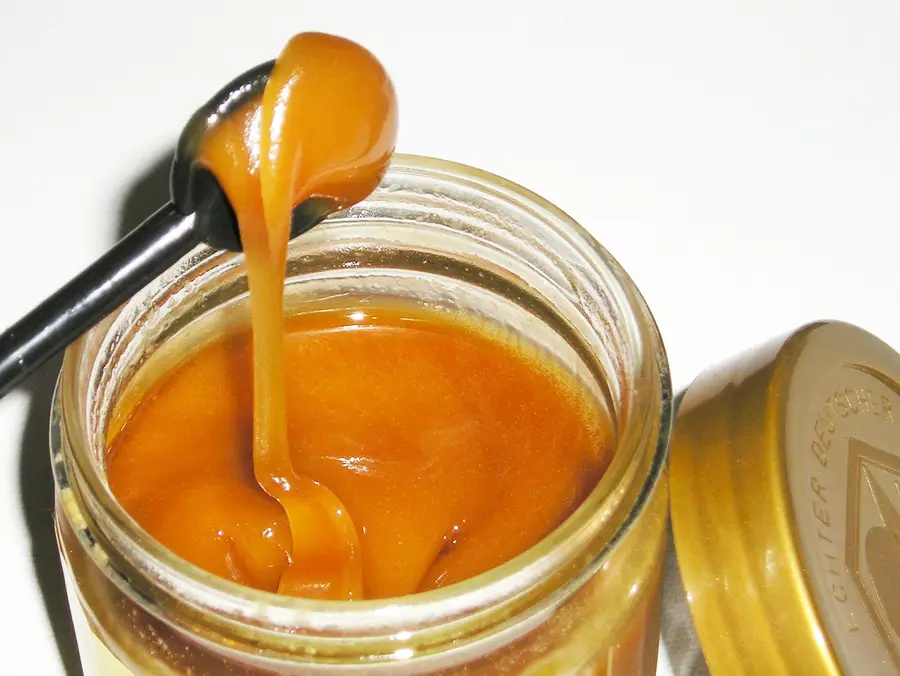
Color is a rough guide. Cleveland Clinic dietitian Beth Czerwony notes evidence that darker honey has less water and more antioxidants than light honey. For measured values by type, see our comparison of antioxidant levels in honey types worldwide and the buckwheat honey guide. Whatever the color, the sugar and calories per spoon stay the same.
Digestion, Memory and Allergies: Weak or No Evidence
Digestion and gut bacteria
A 1985 trial in the BMJ (Haffejee and Moosa) replaced glucose in oral rehydration solution with honey for infants and children with gastroenteritis, and bacterial diarrhea ended sooner. That was a clinical study with a carefully diluted solution containing electrolytes, not a home remedy, and babies under 1 should never be given honey at home. Honey’s “prebiotic” reputation comes mainly from lab and animal work: a 2022 review in Frontiers in Nutrition (Schell et al.) describes a pilot human study of 20 g of honey a day that found no significant change in gut bacteria. Mayo Clinic also warns that too much honey can itself cause diarrhea.
Memory and the brain
Claims that honey protects memory rest on very little human data. The best-known trial (Othman et al., Menopause, 2011) gave 20 g a day of tualang honey, a Malaysian honey, to 102 postmenopausal women split among honey, hormone therapy and no treatment for 16 weeks. They did better than untreated women on immediate word recall but not delayed recall, and there was no placebo. We found no trial showing that everyday supermarket honey improves memory or prevents dementia.
Seasonal allergies
Mayo Clinic reports that studies haven’t found that eating honey or using it as a nasal spray eases hay fever. American Heart Association News adds that seasonal allergies usually come from the pollen of weeds, trees and grass rather than flowers; our guide on local honey and seasonal allergies walks through the trials.
Is Raw Honey Healthier?
Possibly a little. Raw honey is strained but not heated; as Cleveland Clinic’s Czerwony puts it, it often has some pollen and more enzymes because it is not heat-treated. In the Toronto meta-analysis, raw honey was one of the subgroups with favorable effects on fasting glucose and cholesterol. But “raw” on a label is the seller’s own description, and Mayo Clinic notes that results vary because the FDA does not control how honey is made, so quality differs from brand to brand.
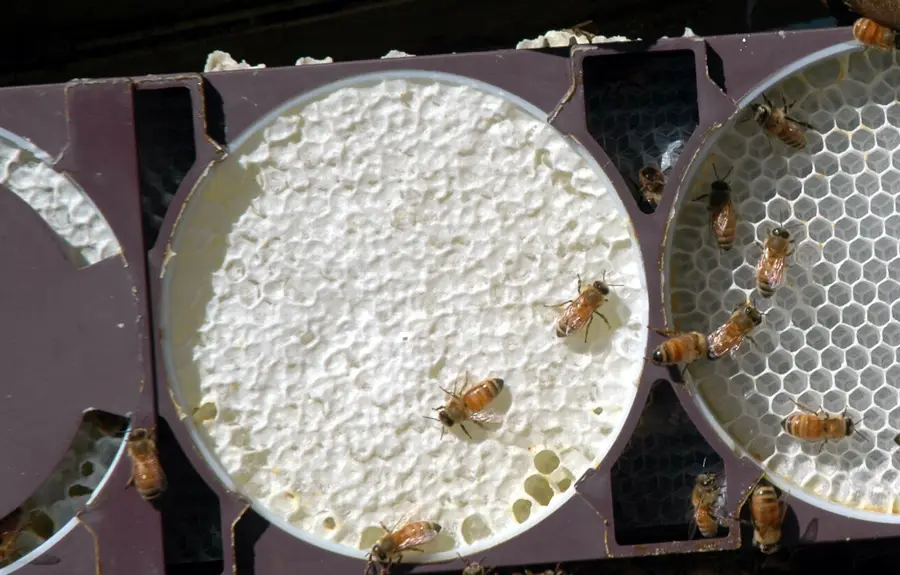
Raw does not mean safer. The CDC’s infant warning covers all honey, and the calories and sugar are the same either way. How to tell whether a jar is raw, and what heating and fine filtering actually remove, are covered in our guides to raw vs processed honey and strained vs filtered honey.
Is Honey Bad for You? Downsides and Who Should Avoid It
For most adults, a modest amount of honey is safe. The real risks are concentrated in a few groups.
- Babies under 12 months. The CDC warns that honey can contain the bacteria that cause botulism, and that babies should not be given honey or products made with it, including honey pacifiers. See whether honey is safe for babies.
- People managing blood sugar. With a GI near table sugar’s, honey raises blood glucose. Count it as carbohydrate and check your own readings.
- People allergic to bee pollen. Mayo Clinic notes honey may contain bee pollen, and pollen allergies rarely cause serious reactions such as wheezing or fainting.
- People taking phenytoin (Dilantin). Mayo Clinic lists a possible interaction that may raise the risk of side effects.
- Teeth. Honey is a sticky sugar; see what dental research shows about honey.
“Do not feed honey to a child who is younger than 1 year old.”
The most common side effects Mayo Clinic lists are nausea, belly pain and vomiting, and stinging when honey is put on skin. For everyone else, the everyday risk is simply sugar: the American Heart Association notes that added sugars bring calories without nutritional benefit and can lead to overweight or obesity, and honey’s calories count like any other sugar’s.
A Beekeeper’s Note: Why No Two Jars Match
Every study above used a particular honey: buckwheat in Illinois, tualang in Malaysia, clover and robinia among the Toronto subgroups. That matters because honey is made from whatever nectar the bees found that season. The Palma-Morales review stresses that honey’s composition is highly variable with its botanical and geographical origin, which is why its authors could not tie the benefits to any one honey or dose.
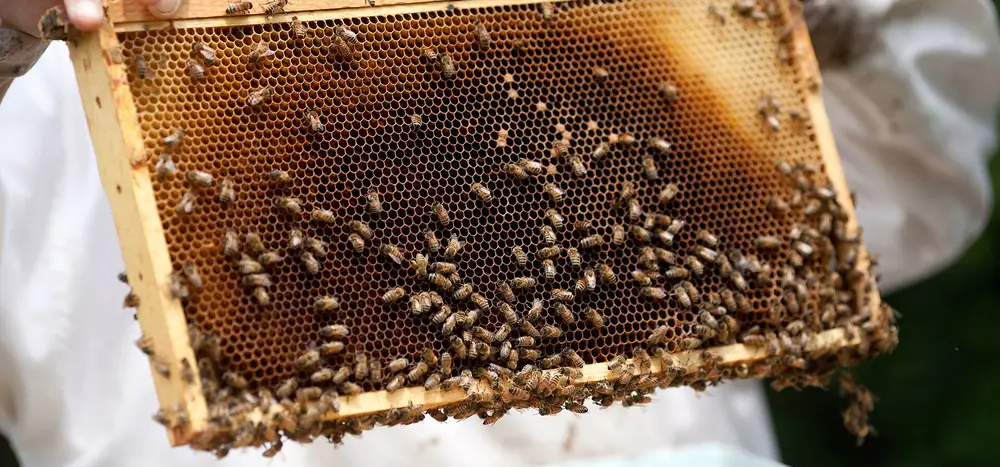
A light spring honey, a dark fall honey and a blended supermarket honey are different foods, so a lab result for one does not transfer to another. If antioxidants matter to you, darker single-flower honeys are the better bet; the guide to popular U.S. honey varieties describes the common American types, and our guide to spotting fake honey covers syrup-diluted jars, which carry the sugar without the plant compounds.
One popular pairing has its own evidence check: honey and cinnamon benefits.
For USDA numbers per teaspoon, tablespoon and cup, see calories in honey by serving size.
Bee pollen is a separate product; see bee pollen benefits graded by evidence.
Royal jelly is a separate product; see royal jelly benefits and risks.
Frequently Asked Questions
Is a spoonful of honey a day good for you?
A teaspoon a day is fine for most adults if it replaces other added sugar. A tablespoon is 64 calories, roughly two-thirds of a woman’s daily added-sugar limit. It is not a supplement.
Is honey healthier than sugar?
Slightly. Its GI is a little lower (61 vs 65) and it carries small amounts of plant compounds, but it has more calories per teaspoon and raises blood sugar.
What is honey good for?
Soothing coughs in children over 1 and, as sterile medical dressings, healing burns. As a food, it is a flavorful sweetener.
What is the healthiest type of honey?
No honey is proven healthiest. Darker honeys such as buckwheat tend to have more antioxidants, and raw honey did well in one meta-analysis subgroup.
Is it better to eat honey at night or in the morning?
We found no trial comparing the two. The evidence-based bedtime use is a small dose for a child’s cough.
Can honey help you lose weight?
No trial we found shows that adding honey causes weight loss. It adds calories like any sugar.
Why can’t babies have honey?
Honey can carry spores of Clostridium botulinum. In an infant’s intestines the spores can grow and make the toxin that causes infant botulism. Wait until after the first birthday.
The Bottom Line
Use honey as a sweetener you enjoy, in place of sugar, and as a cough remedy for anyone over 1. For storing a jar so it keeps its flavor, see how to store honey long term.