Table of Contents
- The Short Answer
- What Animal Studies Found
- The Proposed Biological Mechanisms
- What Human Studies Actually Show
- A Large Meta-Analysis Found an Adverse Effect
- Why Animal and Human Results Diverge
- The Practical, Honest Takeaway
- Common Mistakes
- How This Relates to Honey and Cholesterol
- Does the Dose Used Matter?
- A Note for Readers on Blood Pressure Medication
- The Diabetes Connection in This Research
- A Beekeeper’s Honest Perspective
- A Useful Comparison: Sodium Reduction
- What Would Actually Settle This
- Does Raw Honey Change Anything Here?
- A Note on Weight and Overall Diet
- A Note on Blood-Pressure Supplement Marketing
- A Practical Tip: Monitor Your Own Response
The Short Answer

The research on honey and blood pressure is genuinely contradictory, following a similar pattern to honey’s uncertain cholesterol research. Promising mechanisms and animal studies suggest honey could lower blood pressure, and at least one small human study found a benefit, but a large meta-analysis of 69 randomized controlled trials found honey may actually adversely affect systolic blood pressure. This is not a settled question in either direction.
What Animal Studies Found
Research using spontaneously hypertensive rats has found that honey supplementation reduced systolic blood pressure and protected against oxidative kidney damage, with honey-treated animals showing measurably better outcomes than untreated hypertensive controls. These animal findings are genuinely interesting from a mechanistic research standpoint, but animal studies, particularly those using specifically bred hypertensive rat models, don’t automatically translate into equivalent effects in humans with naturally occurring hypertension.
The Proposed Biological Mechanisms
Researchers have proposed several plausible biological mechanisms for how honey might affect blood pressure, including antioxidant effects that reduce oxidative stress, and vasodilatory properties potentially linked to enhanced nitric oxide availability and suppressed ACE (angiotensin-converting enzyme) activity, the same enzyme pathway targeted by a major class of prescription blood pressure medications. Specific antioxidant compounds in honey, including quercetin, caffeic acid phenethyl ester, kaempferol, and others, have been proposed as the active components behind these effects, though the overall mechanism remains, by researchers’ own admission, not fully understood.
What Human Studies Actually Show
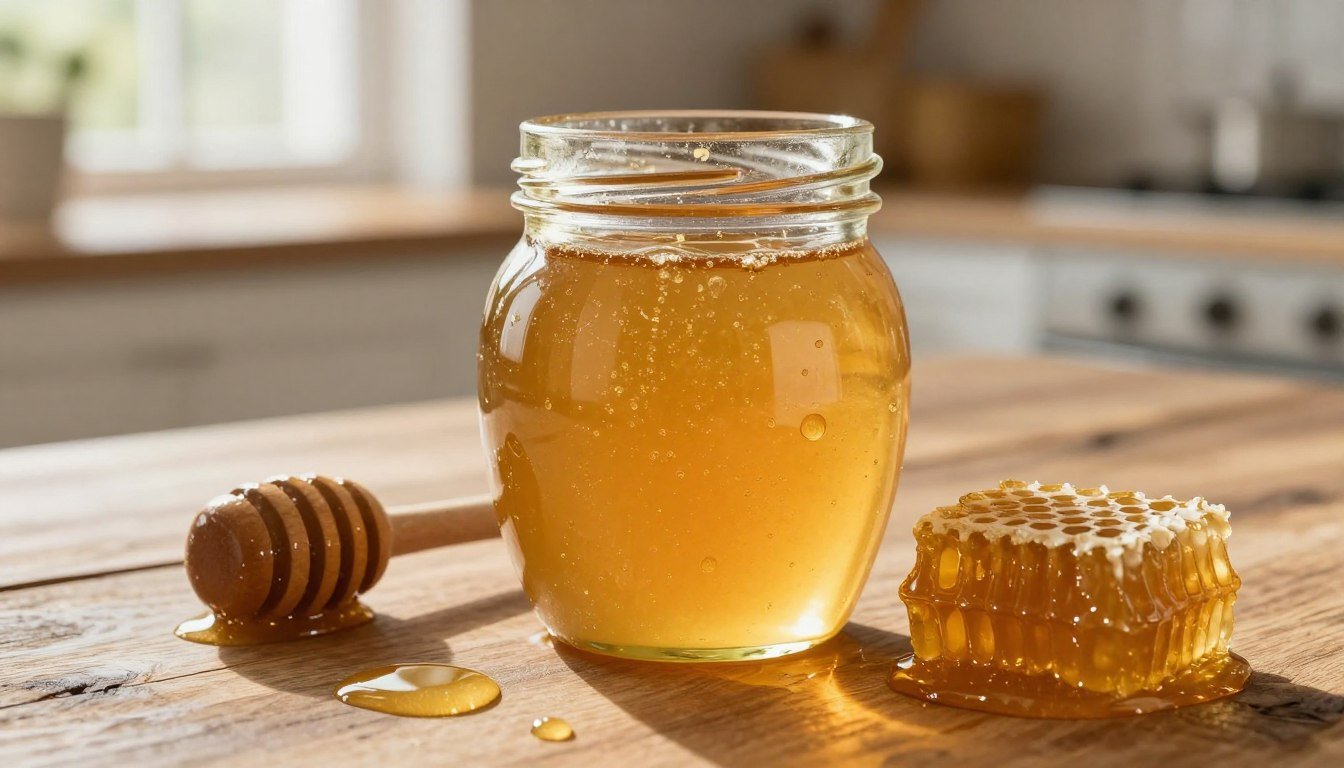
At least one clinical study found that three months of honey supplementation significantly reduced both systolic and diastolic blood pressure in participants, a genuinely positive human result worth taking seriously rather than dismissing. This kind of finding is exactly why the topic remains worth researching further rather than being dismissed outright, even as the broader picture across all available human research stays considerably less consistent than this single positive study alone might suggest.
A Large Meta-Analysis Found an Adverse Effect
A considerably larger analysis pooling 69 randomized controlled trials involving 3,544 total participants found that while about 10 grams of honey daily may modestly lower HbA1c (a blood sugar marker), it appeared to adversely affect systolic blood pressure, an honest and important finding that runs directly counter to the more optimistic individual studies and animal research discussed above. Given its much larger combined sample size, this meta-analysis generally deserves more weight than any single smaller study when the two disagree.
Why Animal and Human Results Diverge
Animal studies using specifically bred hypertensive rat models under tightly controlled laboratory conditions often show cleaner, more consistent results than human studies, which involve much greater individual variation in diet, genetics, existing health conditions, and honey dosage across a real, diverse population. This general pattern, promising animal and mechanistic research not consistently replicating in larger human trials, is common across nutrition science broadly and isn’t unique to honey specifically, though it’s a genuine reason for caution before drawing firm conclusions from the more encouraging early-stage research alone.
The Practical, Honest Takeaway
Given this genuine contradiction between smaller positive studies and a larger meta-analysis pointing the opposite direction, honey shouldn’t be treated as a proven blood-pressure-lowering food, and anyone managing diagnosed hypertension should rely on established, evidence-based treatment from their doctor rather than honey as a management strategy. This is one of the more genuinely unsettled honey health questions covered on this site, similar in spirit to the equally mixed research on honey and cholesterol.
How This Relates to Honey and Cholesterol
Readers who’ve seen our companion article on honey and cholesterol will notice a genuinely similar pattern here: promising early or mechanistic research contradicted by a larger, more reliable meta-analysis, rather than a clean, settled answer in either direction. Cardiovascular risk factors are often studied together in the same research, but that doesn’t mean findings about one automatically apply to the other, which is why these remain two separate, individually researched questions on this site rather than one combined claim.
Does the Dose Used Matter?
The large meta-analysis finding an adverse blood pressure effect used a relatively modest dose, around 10 grams of honey daily, roughly two teaspoons, while some of the more encouraging smaller studies and animal research used different, not always directly comparable dosing protocols. This dosing inconsistency across the research base is itself part of why a clean, confident conclusion remains genuinely out of reach, since studies using different amounts aren’t strictly measuring the same intervention.
A Note for Readers on Blood Pressure Medication
Anyone currently taking prescription blood pressure medication should not adjust their treatment or add substantial honey intake specifically as a blood-pressure strategy without discussing it with their prescribing physician first, particularly given the meta-analysis finding a possible adverse rather than beneficial effect. This article provides general information and is not personalized medical advice for managing diagnosed hypertension.
The Diabetes Connection in This Research
The same large meta-analysis that found an adverse blood pressure signal also found honey modestly lowered HbA1c, a blood sugar marker, illustrating a real, sometimes-overlooked point: a food can show a beneficial effect on one health marker while showing a neutral or adverse effect on another within the very same study population, rather than being uniformly “good” or “bad” across every measured outcome at once. This nuance is worth keeping in mind alongside our separate guide to honey and diabetes, which covers the blood-sugar side of this research in more depth.
A Beekeeper’s Honest Perspective
Continuing this site’s pattern across every honey health claim, it’s worth stating clearly: this is genuinely unsettled research, not a case where a beekeeping-authority site should manufacture confidence to make honey sound more medicinal than the evidence actually supports. A single positive study or a promising rat-model mechanism doesn’t outweigh a meta-analysis covering thousands of human participants, and presenting that hierarchy of evidence honestly matters more than a satisfying, simple headline either way.
A Useful Comparison: Sodium Reduction
For genuine perspective, it’s worth comparing honey’s uncertain blood pressure research to sodium reduction, one of the most robustly established, well-researched dietary interventions for lowering blood pressure across large, consistent bodies of clinical evidence. Someone genuinely focused on blood pressure management gets far more reliable, evidence-backed value from established interventions like reducing sodium intake, maintaining a healthy weight, and regular physical activity than from any single food, honey included, with this level of research uncertainty behind it.
What Would Actually Settle This
A large, well-designed, long-duration randomized controlled trial specifically measuring blood pressure outcomes at multiple honey doses, ideally tracking participants over months rather than weeks and controlling carefully for existing dietary sodium and other confounding factors, would help resolve the current disagreement between smaller positive studies and the larger meta-analysis. Until research at that level of rigor exists, the responsible, evidence-based position remains genuine uncertainty rather than a confident answer in either direction.
Does Raw Honey Change Anything Here?
The blood pressure research discussed throughout this article generally hasn’t isolated raw versus commercially processed honey as a distinguishing factor, meaning the genuine uncertainty applies to honey broadly rather than pointing toward one processing method as more effective for this specific question. Raw honey’s other well-documented qualities, covered in our raw honey benefits guide, remain relevant to other topics but don’t currently have dedicated blood-pressure-specific research separating them from processed honey.
A Note on Weight and Overall Diet
Any potential blood pressure effect from regular honey consumption needs to be weighed against its real caloric and sugar contribution, since excess weight is itself a well-established, significant risk factor for high blood pressure, meaning adding substantial honey to an already calorie-sufficient diet could theoretically work against blood pressure goals through weight gain even if honey itself had some small direct benefit. This kind of whole-diet thinking matters more for actual blood pressure outcomes than any single food consumed in isolation.
A Note on Blood-Pressure Supplement Marketing
Consumer products marketed specifically around honey’s blood-pressure benefits, sometimes paired with cinnamon or other ingredients under bold claims, generally aren’t held to the same evidence standards as the peer-reviewed clinical research discussed throughout this article, and their specific formulations haven’t necessarily been tested in the studies referenced here. The same healthy skepticism applied to plain honey’s uncertain blood pressure research should extend to any product built around amplifying that same uncertain claim into a confident marketing pitch.
A Practical Tip: Monitor Your Own Response
For anyone genuinely curious about their own individual response, tracking blood pressure with a home monitor before and after introducing regular honey consumption over several weeks offers more personally relevant information than any population-level study, given how much individual variation the research itself points to. This isn’t a substitute for medical guidance on diagnosed hypertension, but it’s a reasonable, low-risk way to gather personal data rather than relying solely on population averages that may not reflect any one individual’s actual response. Sharing this kind of self-tracked data with a doctor during a regular checkup can also turn casual personal curiosity into something genuinely useful for an actual care conversation, rather than staying purely anecdotal and disconnected from any professional medical context. Bringing a few weeks of consistent, dated readings to an appointment, rather than a vague memory of “I think it helped,” gives a physician something concrete to actually evaluate alongside standard clinical measurements, and it costs nothing beyond the modest investment of a home blood pressure cuff and a few minutes of consistent daily attention. It is a small habit, but one that rewards genuine curiosity with actual, personally relevant evidence rather than simply hoping a broad population-level average happens to describe one specific individual body accurately enough for any single reader to comfortably and confidently act on with real, genuinely personal relevance rather than relying on borrowed statistics drawn from a large group of complete strangers.
Common Mistakes
Citing the promising animal research or a single positive human study as proof honey lowers blood pressure overlooks the larger, more reliable meta-analysis pointing toward a possible adverse effect instead. Assuming a plausible biological mechanism (like enhanced nitric oxide availability) automatically means a proven clinical benefit confuses mechanistic plausibility with demonstrated real-world effect. Using honey in place of prescribed blood pressure medication or established dietary guidance for diagnosed hypertension substitutes genuinely unsettled research for actual evidence-based medical care.
Sources
Findings reflect published research including animal studies on honey and hypertensive rat models, individual human clinical trials, and a meta-analysis of 69 randomized controlled trials examining honey’s metabolic and blood pressure effects. See a peer-reviewed evidence review of honey’s cardioprotective effects for additional authoritative detail.
FAQ
Does honey lower blood pressure?
The evidence is genuinely contradictory. Animal studies and at least one human trial found honey lowered blood pressure, but a large meta-analysis of 69 trials found it may actually adversely affect systolic blood pressure instead.
What mechanism might explain honey affecting blood pressure?
Researchers have proposed antioxidant effects and vasodilation, potentially through enhanced nitric oxide availability and suppressed ACE activity, though the overall mechanism remains not fully understood even by researchers studying it.
Should someone with high blood pressure eat honey to help manage it?
No – given the genuinely mixed and partly contradictory research, honey shouldn’t replace established, evidence-based hypertension treatment. Anyone managing high blood pressure should follow their doctor’s guidance instead.
Why do animal studies on honey and blood pressure look more promising than human studies?
Animal studies use controlled conditions and specifically bred models that often show cleaner results, while human studies involve much greater individual variation, a common pattern across nutrition research generally, not unique to honey.