Last Updated September 22, 2026
It’s one of the most genuinely debated questions in plant-based eating: is honey vegan? Unlike meat, dairy, or eggs, honey doesn’t come from an animal’s flesh, milk, or reproductive output – but it is produced by, and taken from, a living animal colony. The Vegan Society’s own definition of veganism generally classifies honey as non-vegan, yet the question remains genuinely contested within vegan and plant-based communities themselves, with real, substantive arguments on more than one side. This article covers the debate honestly – what the standard vegan position actually says, the real arguments on each side, what the actual science on insect sentience currently shows, and where genuine disagreement remains rather than pretending this is a settled question with one obvious answer.
Key Takeaways
- The Vegan Society’s standard definition classifies honey as non-vegan; PETA takes the same position and specifically cites queen wing-clipping, queen replacement, and sugar-substitute feeding as its core objections.
- The UK’s Animal Welfare (Sentience) Act 2022 extends legal sentience recognition to vertebrates, decapod crustaceans, and cephalopod molluscs – but not to insects, reflecting where the science was considered settled enough to legislate as of 2022.
- A 2022 peer-reviewed review by Gibbons et al. in Advances in Insect Physiology, applying the Birch precautionary framework for animal pain, found Hymenoptera (bees, wasps, ants) meet 3-4 of 8 pain criteria – “substantial evidence,” a real but meaningfully lower tier than the “strong evidence” (6/8) found in flies and cockroaches.
- An informal, non-scientific poll on honey-vegan attitudes found roughly 20% of self-identified vegans considered honey vegan and 41% did not – illustrating genuine, documented division rather than consensus, though it should not be read as a rigorous statistic.
Table of Contents
- The Standard Vegan Society Position
- Why Honey Is Generally Classified as Non-Vegan
- The Counterargument: Insects and Practicability
- The Surplus-Honey Argument
- What the Actual Science on Insect Sentience Shows
- What the 2025 Sentience Review Adds
- Real Commercial Beekeeping Practices Worth Knowing
- Does Small-Scale, Ethical Beekeeping Change the Calculation?
- The Ecological Counter-Consideration
- Where Self-Identified Vegans Actually Land
- If You Avoid Honey, What Replaces It
- Making an Informed Personal Decision
- Honey vs. Other Contested Vegan Questions
- Common Misconceptions
- FAQ
The Standard Vegan Society Position
The Vegan Society, whose definition of veganism is widely treated as the reference standard within the movement, describes veganism as a way of living that seeks to exclude, as far as is possible and practicable, all forms of exploitation of and cruelty to animals for food, clothing, or any other purpose. Under this framework, honey is generally classified as non-vegan, since it is a product taken from another animal – specifically a colony of bees – regardless of whether that taking is judged less harmful than practices in other animal industries. PETA takes the same basic position, stating plainly that honey is not vegan because it comes from an animal bees make it for themselves, not for humans, and specifically points to queen wing-clipping to prevent swarming, periodic killing and replacement of queens, and feeding colonies a sugar-water substitute after honey is harvested as its core objections to commercial practice.
The Society, founded in the UK in 1944 by Donald Watson and the coiners of the term “vegan” itself, puts the point directly, and the framing is worth being precise about: the objection is not only about pain but about using an animal’s labor and products for human benefit without its consent, a standard that does not require proving the animal suffers.
“harvesting honey does not correlate with The Vegan Society’s definition of veganism, which seeks to exclude not just cruelty, but exploitation.”
Why Honey Is Generally Classified as Non-Vegan
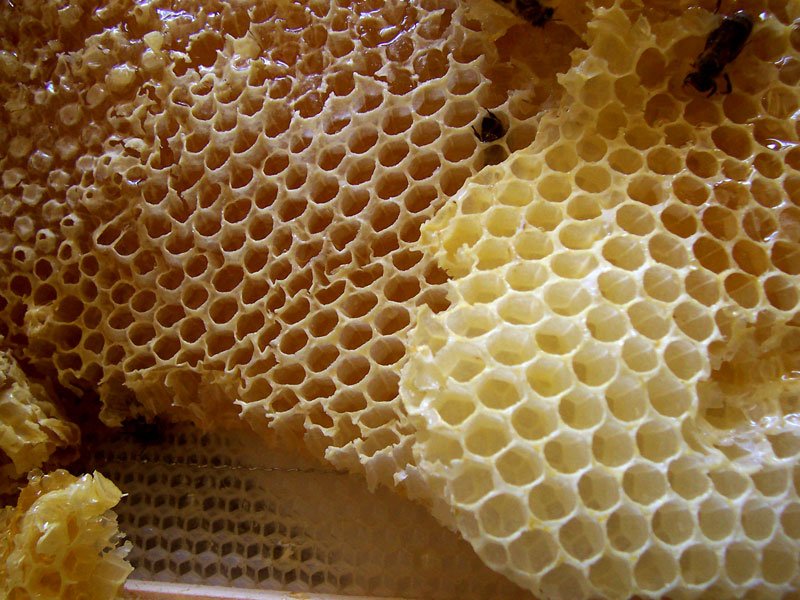
The core argument against honey’s vegan status rests on the basic definitional point that honey is an animal product taken from a living colony without that colony’s consent, produced specifically as the bees’ own food reserve rather than a substance bees create for human use. From this view, the ethical framework applied to other animal products – milk taken from a cow, eggs taken from a hen – applies with the same basic logic to honey taken from bees, regardless of whether bees are commonly perceived as less obviously sentient or sympathetic than mammals or birds. This argument does not require claiming beekeeping is equally harmful to, say, factory farming – only that it fits the same basic category of taking an animal-produced substance for human consumption.
“[Bees do this] for their own purposes – storing food so the hive can survive the winter, and to feed their baby sisters. Not for humans to steal.”
The Counterargument: Insects and Practicability
A genuine counterargument within plant-based and vegan discourse holds that insects occupy a meaningfully different ethical category than vertebrate animals for some people, given ongoing scientific and philosophical debate about the nature and degree of insect sentience compared to mammals and birds – and that the Vegan Society’s own “as far as is possible and practicable” qualifier leaves room for individual judgment about where to draw specific lines. It is honest to note that this is a real, substantive philosophical position held by some within vegan and plant-based communities, not merely a convenient rationalization – questions about insect sentience and moral consideration are genuinely unsettled areas of both scientific research and philosophical debate, not a question with one obviously correct answer this article can resolve.
The Surplus-Honey Argument
The most common concrete argument for a personal exception is not really about insects at all – it is about what is actually taken. A healthy, well-managed hive produces genuine surplus honey, well beyond what the colony needs to survive winter, and a responsible beekeeper leaves enough behind. Under that view, taking the surplus is closer to gathering a byproduct than to removing something the animal needed, a meaningfully different situation from, say, taking a calf from its mother for dairy. Some vegans extend the reasoning further and are comfortable eating honey specifically from a backyard hive or a beekeeper they know and trust, while still avoiding honey of unknown or industrial-scale origin. This is not the official position of any major vegan organization, but it is a real and common view among individual vegans, and it is the reasoning that sits behind the small-scale distinction covered below.
What the Actual Science on Insect Sentience Shows
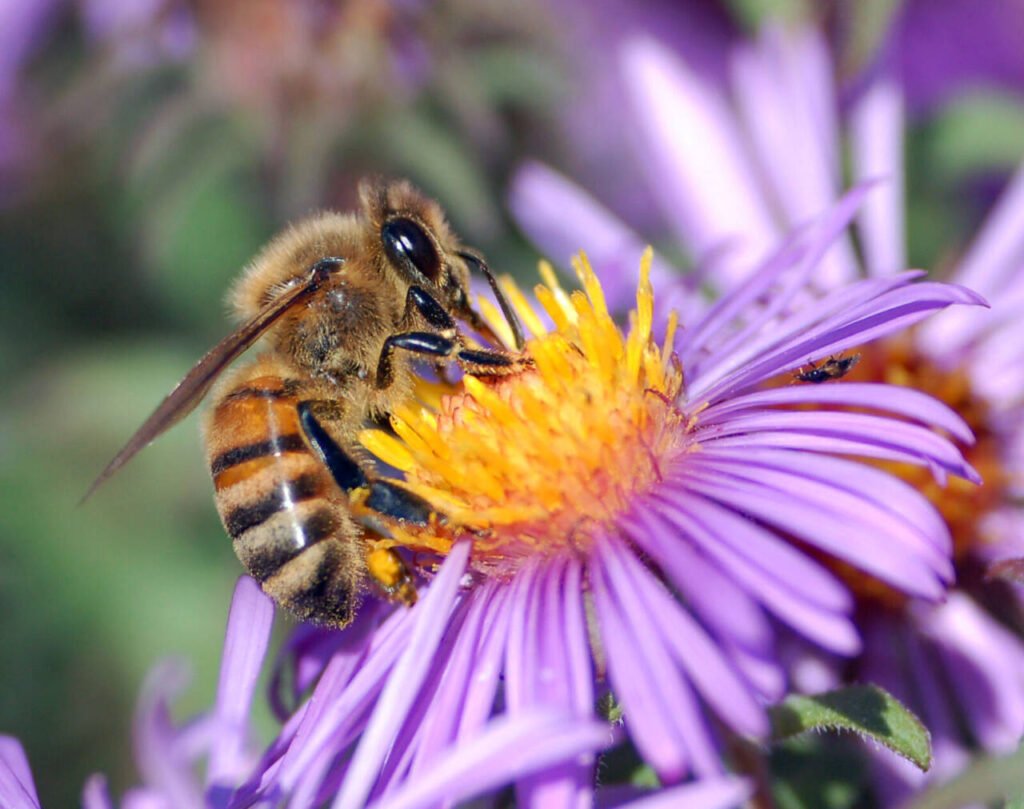
This debate doesn’t have to stay purely abstract – there is real, current research specifically on this question. The UK’s Animal Welfare (Sentience) Act 2022, built on a 2021 review led by philosopher Jonathan Birch at the London School of Economics, extended formal legal sentience recognition to decapod crustaceans (crabs, lobsters, shrimp) and cephalopod molluscs (octopuses, squid) alongside vertebrates – but explicitly stopped short of insects, reflecting where regulators judged the evidence solid enough to legislate at that time. A 2022 peer-reviewed review by Gibbons and colleagues in Advances in Insect Physiology, from the bee-cognition research group at Queen Mary University of London, applied Birch’s eight-criterion precautionary framework to six insect orders and found that adult Hymenoptera – the order that includes bees, wasps, and ants – meet 3 to 4 of the 8 criteria, characterized as “substantial evidence” for pain. That’s real evidence, but a meaningfully lower tier than the “strong evidence” (6 of 8 criteria) the same review found in flies and cockroaches, and lower than the 5-of-8 evidence found in the decapod crustaceans the UK has already extended legal protection to.
What the 2025 Sentience Review Adds
More recent work pushes in the same direction. A 2025 paper in the peer-reviewed journal Veterinary Sciences by Bava, Formato, Liguori and Castagna, “Honeybee Sentience: Scientific Evidence and Implications for EU Animal Welfare Policy,” reviewed the current evidence and found that honeybees possess mechanosensory and chemosensory structures, an opioid-like internal system, and measurable behavioral responses to injury – evidence the authors argue is substantial enough to warrant formally including honeybees under EU Directive 2010/63/EU, the law that already protects other research animals. The paper is honest about its own limits: it frames that conclusion as a precautionary approach rather than definitive proof, noting that whether bees subjectively experience suffering, as opposed to simply reacting to injury, “remains debated.”
Wider insect-cognition research points the same way without settling it either. Bumblebees can trade off risk against reward, moth caterpillars tend their own wounds, and some insects respond less to painful stimuli when given pain-relieving compounds. None of this proves insect pain the way mammalian studies can, but it has moved a growing number of researchers away from assuming insects clearly cannot suffer – which is precisely why this question stays live rather than resolving in either direction.
Real Commercial Beekeeping Practices Worth Knowing
Some commercial beekeeping practices raise real, specific ethical questions worth knowing about regardless of where one lands on the broader vegan-honey debate: harvesting a colony’s honey stores requires either leaving sufficient reserves for winter survival or providing supplemental feeding, queens are sometimes deliberately replaced or have their wings clipped to prevent swarming, and large-scale migratory pollination operations, covered in more depth in our history of migratory beekeeping, involve real, ongoing research into colony stress. None of these specific practices are universal across all beekeeping operations, and this article does not claim every beekeeper engages in every practice listed – but they represent genuine, documented aspects of commercial beekeeping worth being aware of when forming an informed view on the broader question.
Two of those practices are worth more specificity than they usually get, and one rarely comes up at all. When a large harvest is taken, the sugar-syrup substitute that replaces it lacks the micronutrients of real honey and is a lower-quality food source for the colony heading into winter. Breeding queens specifically for higher honey yield narrows the genetic pool, which some researchers link to increased disease susceptibility and colony die-offs. And scale sharpens the migratory question considerably: pollination for California’s almond bloom alone requires an estimated 1.8 million colonies each season, concentrating enormous numbers of hives in one place for a short window, which researchers have linked to increased disease and parasite transmission between colonies that would not spread as easily among smaller, geographically separated operations.
Does Small-Scale, Ethical Beekeeping Change the Calculation?
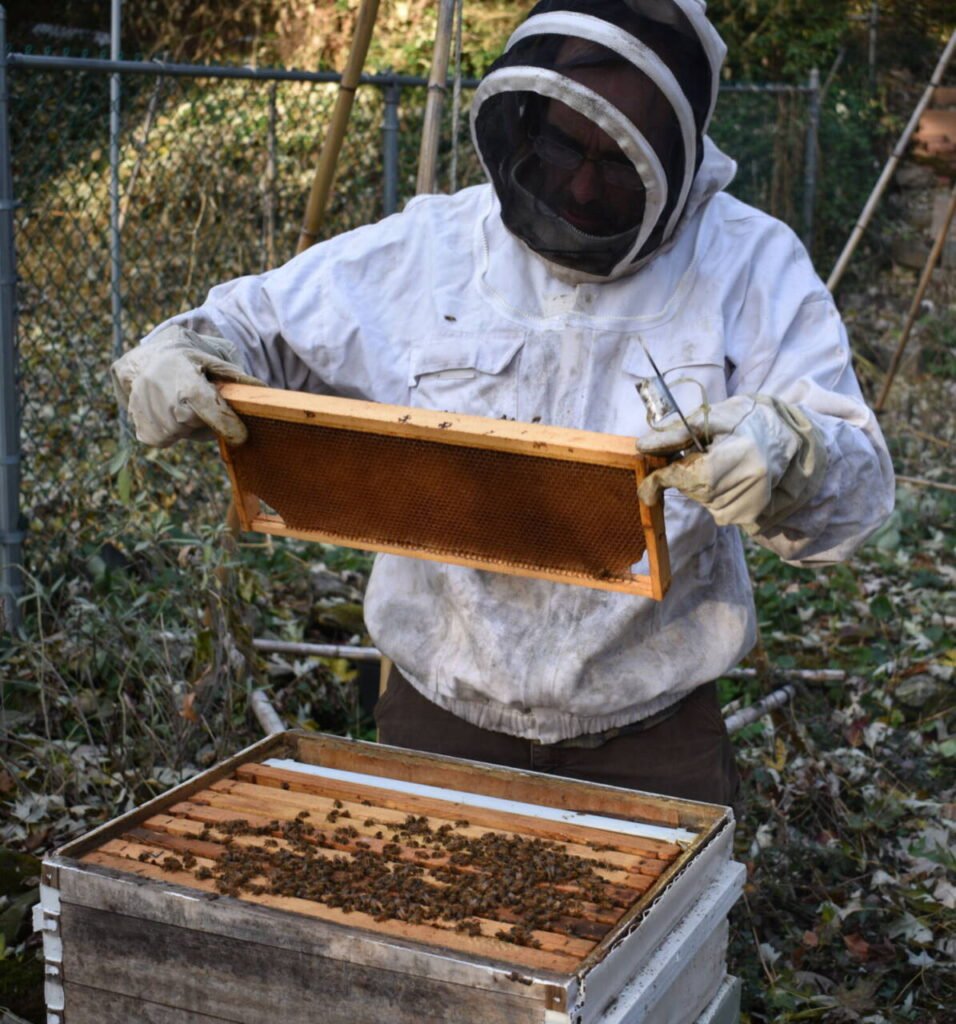
Some who otherwise identify as vegan or plant-based draw a genuine distinction between large-scale commercial honey production and small-scale, deliberately low-intervention beekeeping that leaves adequate honey reserves for the colony and minimizes stress or harm to individual bees. Whether this distinction changes the fundamental ethical calculation is itself part of the ongoing debate rather than a settled matter – some hold that any taking of honey from bees without consent remains categorically non-vegan regardless of scale or care taken, while others view meaningfully lower-impact beekeeping as a genuinely different ethical case than industrial-scale operations, similar to distinctions sometimes drawn between industrial and small-scale animal agriculture in broader vegan ethical discourse.
The Ecological Counter-Consideration
A separate, genuinely different argument sometimes raised in this debate points to bees’ critical ecological role as pollinators and suggests that supporting responsible beekeeping – which depends on maintaining healthy bee populations – can align with broader environmental and biodiversity goals many vegans and plant-based eaters also hold. This is a genuinely distinct line of reasoning from the core animal-exploitation argument, and it is worth being precise that it doesn’t directly resolve the underlying ethical question about taking honey from bees – it’s an additional ecological consideration some people weigh alongside, rather than instead of, the core exploitation question, connected to the broader case for beekeeping’s sustainability already covered elsewhere on this site.
It cuts both ways, though, and the distinction is worth keeping straight: honeybees are domesticated and actively managed rather than wild or endangered as a species, and dense concentrations of them can compete with native wild bee species for forage in some regions.
Where Self-Identified Vegans Actually Land
In practice, honey consumption is genuinely mixed among people who identify as vegan or plant-based. One informal, unscientific reader poll found roughly 20% of self-identified vegan respondents considered honey vegan, versus about 41% who did not – not a rigorous statistic, but a real illustration that many strict adherents avoid honey entirely consistent with the Vegan Society’s standard definition, while others – sometimes describing themselves as “beegan” or otherwise making an explicit personal exception – consume honey, particularly from small-scale or personally known sources. This real variation in practice is worth stating honestly rather than implying either that all vegans avoid honey or that the question is a non-issue within vegan communities – it remains a genuinely live, sometimes contentious point of internal debate rather than a fully resolved consensus position. For those who do avoid honey, our guide to substituting honey in recipes covers practical plant-based alternatives.
If You Avoid Honey, What Replaces It
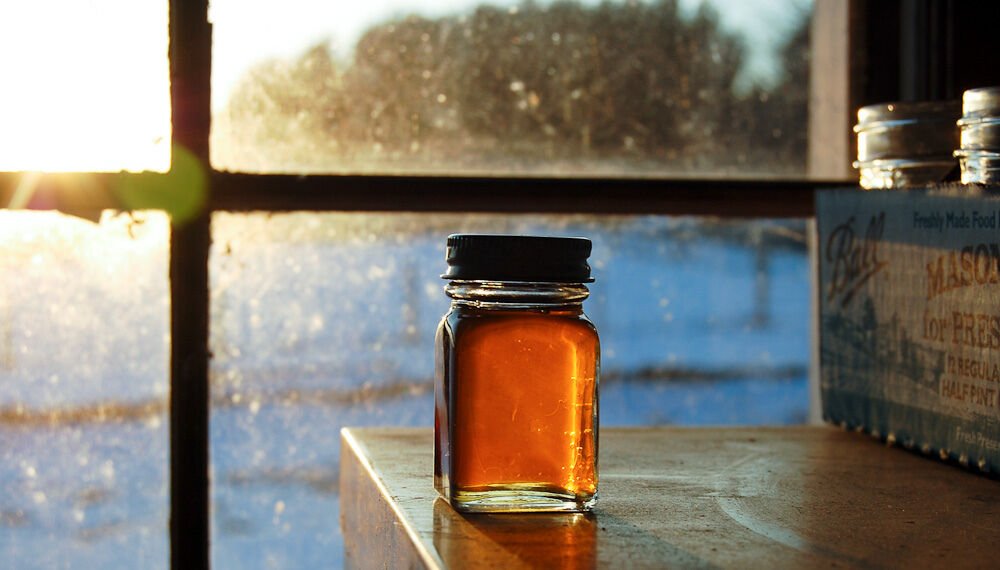
For anyone who lands on avoiding honey, several plant-based sweeteners cover most of the same uses: maple syrup, made entirely from tree sap, along with agave nectar, date syrup, brown rice syrup, and a handful of newer “bee-free honey” products formulated to mimic honey’s texture and flavor using apples or other plant sources. Each behaves a little differently in cooking and baking, so exact conversions are worth checking per recipe rather than assuming a one-to-one swap – the substitution guide linked above covers the ratios.
Making an Informed Personal Decision
Given the genuine, unresolved nature of this debate even within vegan and plant-based communities themselves, the most honest guidance this article can offer is informational rather than prescriptive: understanding the standard Vegan Society and PETA positions, the core exploitation argument, the insect-sentience counterargument and what the actual Birch-framework research currently shows, and the real variation in commercial versus small-scale beekeeping practice gives readers the actual substance needed to form their own informed position, rather than a single “correct” answer this article can hand down. This mirrors the same honest, evidence-first approach this site takes toward other genuinely debated or unsettled questions, where the goal is equipping readers with accurate information rather than pretending a contested question has one simple resolution.
Honey vs. Other Contested Vegan Questions
| Product | Standard Vegan Classification | Source of Debate |
|---|---|---|
| Honey | Generally non-vegan | Insect sentience (Hymenoptera: 3-4/8 pain criteria), scale/practice variation |
| Oysters | Debated, sometimes considered acceptable by some | Simple nervous system, limited sentience evidence |
| Decapod crustaceans (crab, lobster) | Non-vegan, broadly uncontested | Legally recognized as sentient in the UK (5/8 criteria) |
| Dairy/eggs | Non-vegan, broadly uncontested within the movement | Minimal internal debate compared to honey/oysters |
Common Misconceptions
- “All vegans agree honey is off-limits.” The standard Vegan Society definition classifies it as non-vegan, but real, documented variation exists in individual practice and belief within vegan and plant-based communities.
- “There’s no real science on insect sentience, so it’s all just opinion.” A 2022 peer-reviewed review found real, if partial, evidence for pain in bees under a formal precautionary framework – the science is incomplete, not nonexistent.
- “Small-scale beekeeping automatically resolves the ethical question.” Whether scale and care taken change the underlying ethical calculation is itself part of the ongoing debate, not something this article claims to definitively settle.
Frequently Asked Questions
Is honey considered vegan?
Under the Vegan Society’s standard definition, and PETA’s, honey is generally classified as non-vegan since it is an animal product taken from a bee colony, though real debate and variation in individual practice exist within vegan and plant-based communities.
Why do some vegans avoid honey?
Because it is taken from a living animal colony without consent, fitting the same basic ethical category as other animal products excluded under standard vegan philosophy, regardless of whether beekeeping is judged less harmful than other animal industries.
Is there scientific consensus on whether bees are sentient?
No full consensus, but there is real, current research: a 2022 review applying a formal pain-assessment framework found bees (order Hymenoptera) meet 3-4 of 8 criteria for pain – “substantial evidence,” though less than the “strong evidence” found in flies and cockroaches, or the evidence level that led the UK to legally recognize decapod crustaceans as sentient in 2022.
Why do some vegans still eat honey?
Some hold that insects occupy a different ethical category given the genuinely partial state of the sentience evidence, or draw a distinction between small-scale, low-impact beekeeping and large-scale commercial production, using the “as far as possible and practicable” qualifier in vegan philosophy to justify a personal exception.
What is “beegan”?
An informal term sometimes used to describe people who otherwise follow a vegan diet but make an explicit personal exception for honey, particularly from small-scale or personally known sources.
Does commercial beekeeping harm bees?
Some commercial practices raise genuine ethical questions PETA specifically highlights, including queen wing-clipping, queen replacement, sugar-substitute feeding after honey harvest, and colony stress from large-scale migratory pollination – though not every beekeeping operation engages in every such practice.
Is this debate settled within the vegan community?
No – an informal poll found roughly 20% of self-identified vegans considered honey vegan versus 41% who did not, illustrating real, documented internal division rather than a single, universally agreed-upon consensus position.
What can I use instead of honey if I’m avoiding it?
Maple syrup, agave nectar, date syrup, and brown rice syrup are the common plant-based substitutes, along with newer “bee-free honey” products designed to mimic honey’s texture. Substitution ratios vary by recipe and are worth checking separately for baking specifically.
Further Reading
Primary sources: The Vegan Society’s official definition of veganism; PETA on honey and bees; UK Animal Welfare (Sentience) Act 2022.