Last Updated September 16, 2026
Swapping honey in for sugar in a baking recipe isn’t a straight 1:1 trade. The tested ratio is about 3/4 cup of honey for every 1 cup of sugar a recipe calls for, along with three supporting adjustments: reduce another liquid in the recipe by about 1/4 cup per cup of honey used, add 1/4 teaspoon of baking soda per cup of honey to offset its natural acidity, and lower the oven temperature by about 25°F to control faster browning. The sections below cover those numbers plus the actual food-science reasons behind them – why honey browns faster, why it keeps baked goods moister for longer, and whether it really affects yeast – along with how the swap plays out differently across cookies, cakes, quick breads, and yeasted bread, and a long list of adjacent questions: brown sugar, non-baking uses, cost, honey variety, vegan and infant-safety notes, and the mistakes worth avoiding.
Key Takeaways
- Use about 3/4 cup of honey for every 1 cup of sugar — honey is sweeter by volume, and a 1:1 swap over-sweetens and over-moistens.
- For every cup of honey used, reduce other liquids by about 1/4 cup, add 1/4–1/2 teaspoon of baking soda, and lower the oven by about 25°F.
- Honey browns faster because its fructose caramelizes near 110°C (230°F), far below sucrose’s roughly 160°C (320°F); check bakes early.
- Moist, dense bakes (quick breads, muffins, chewy cookies) take the swap best; meringue, macarons, angel food, and pale delicate cakes do not.
- Honey does not kill bread yeast at recipe concentrations — its simple sugars are ready for yeast immediately.
- Going the other way, maple syrup replaces honey 1:1, agave needs less (about 2/3–3/4 cup), and sugar needs about 1 1/3 cups plus 1/4 cup added liquid; never give honey in any form to a child under 12 months.
Table of Contents
- The Quick Conversion Ratio
- Why It’s Not a Simple 1:1 Swap
- Adjustment 1: Reduce Other Liquids
- Adjustment 2: Lower the Oven Temperature
- Adjustment 3: Add a Touch of Baking Soda
- Quick Reference Table
- Why Honey Keeps Baked Goods Moister, Longer
- Which Recipes Work Best, By Baked-Good Category
- Substituting for Brown Sugar Specifically
- Non-Baking Cooking Uses
- Does the Honey Variety Matter?
- Does Honey Actually Work for Yeast Bread?
- Cost Comparison: Is It Worth It Financially?
- A Reminder on Age Safety
- A Note on Diabetes and Blood Sugar
- A Practical Tip for Measuring Sticky Honey
- A Note for Vegan Bakers
- Why Testing a Small Batch First Is Worth It
- Keeping Both Honey and Sugar on Hand
- Common Mistakes
- Going the Other Direction: Substitutes for Honey
- FAQ
The Quick Conversion Ratio
Use about 3/4 cup of honey for every 1 cup of granulated sugar a recipe calls for, since honey is sweeter by volume than table sugar. Some cooks prefer a slightly more conservative 1/2 to 3/4 cup range, particularly in recipes where a milder sweetness or a firmer final texture is the goal.
Why It’s Not a Simple 1:1 Swap
Honey behaves quite differently from granulated sugar in a recipe beyond just sweetness level: it’s a liquid rather than a dry ingredient, it’s naturally acidic in a way sugar isn’t, and it browns considerably faster in the oven because of its fructose content. Table sugar is almost entirely sucrose, a non-reducing sugar that doesn’t caramelize until it reaches roughly 160°C (320°F); honey is a mix of fructose and glucose, both reducing sugars, and fructose specifically starts caramelizing around 110°C (230°F). Reducing sugars also drive the Maillard reaction – the browning reaction between sugars and amino acids that gives baked goods their golden color and much of their flavor complexity, explained by Kansas State University Research and Extension – so a honey-sweetened batter gets meaningfully underway on browning well below the temperature a sugar-sweetened one needs. Swapping honey in at an equal volume without accounting for any of this is the most common reason a well-intentioned substitution turns out too moist, too dark, or oddly flat compared to the original recipe.
Adjustment 1: Reduce Other Liquids
Because honey itself is roughly 17-20% water, using it in place of dry sugar adds meaningful extra liquid to a recipe that needs to be accounted for elsewhere. As a general rule, reduce other liquid ingredients (milk, water, juice) by about 1/4 cup for every cup of honey used, adjusting further based on how wet or dry the batter looks compared to what the original recipe would normally produce.
Adjustment 2: Lower the Oven Temperature
Honey’s higher fructose content causes baked goods to brown considerably faster than the same recipe made with sugar, meaning a recipe baked at its original temperature risks a burnt or overly dark exterior before the inside finishes cooking. This isn’t just a general rule of thumb – it’s roughly matching the temperature at which a honey-sweetened batter starts browning (see the caramelization figures above) to the temperature a sugar-sweetened one would actually need. Lowering the oven temperature by about 25°F compensates for this faster browning, giving the inside time to finish without scorching the outside.
Adjustment 3: Add a Touch of Baking Soda
Honey is naturally acidic (typically pH 3.2–4.5), and in recipes that rely on baking soda or baking powder for lift, this added acidity can throw off the intended chemical leavening reaction if not accounted for. Adding baking soda per cup of honey used both neutralizes this extra acidity and helps offset the lift that honey’s density can otherwise work against, keeping the recipe’s rise and texture closer to what the original sugar-based version would produce. Published guidance on the amount ranges from 1/4 teaspoon per cup of honey (the figure the Maryland State Beekeepers Association uses) to 1/2 teaspoon per cup (the National Honey Board‘s recommendation); start at 1/4 teaspoon for delicate recipes and use 1/2 teaspoon in dense, spiced bakes where a faint soda note will not show.
“Decrease your recipe liquids by 1/4 cup for every 1 cup of honey.” … “Lower your oven temperature down by 25 degrees F.”
Quick Reference Table
| Adjustment | Amount | Why |
|---|---|---|
| Honey for sugar | 3/4 cup honey per 1 cup sugar | Honey is sweeter by volume than sucrose |
| Other liquid | Reduce by 1/4 cup per cup of honey | Honey is roughly 17-20% water |
| Baking soda | Add 1/4–1/2 tsp per cup of honey | Balances honey’s mild acidity, aids rise |
| Oven temperature | Lower by about 25°F | Fructose caramelizes ~110°C vs. sucrose ~160°C |
| Best fit | Chewy cookies, moist quick breads, cakes meant to keep well | Hygroscopic sugars retain moisture, extend freshness |
| Use caution | Crisp/snap cookies, delicate pale cakes, precise-browning bakes | Faster browning and added moisture work against these textures |
Why Honey Keeps Baked Goods Moister, Longer
Baked goods made with honey instead of sugar often stay moist longer than their sugar-based counterparts, and there’s a specific reason for it: fructose is more hygroscopic than sucrose, meaning it draws in and holds onto moisture from the surrounding air more readily. Honey’s blend of fructose and glucose (chemically similar to what food scientists call invert sugar) is especially good at this, which is why honey-based baked goods taste noticeably moister on day one and stay soft for longer before going stale, sometimes extending shelf life by a day or two compared to the original recipe. This is a genuine advantage for anything meant to be stored for a few days – banana bread, muffins, soft cookies – and a genuine consideration for anything where a drier, crisper texture is the goal, like a classic snap-crisp sugar cookie, where honey’s moisture retention actively works against it. This same moisture-retaining quality is also part of why honey-based baked goods can occasionally feel slightly stickier or denser than expected, a normal characteristic of the substitution rather than a sign something went wrong.
Which Recipes Work Best, By Baked-Good Category
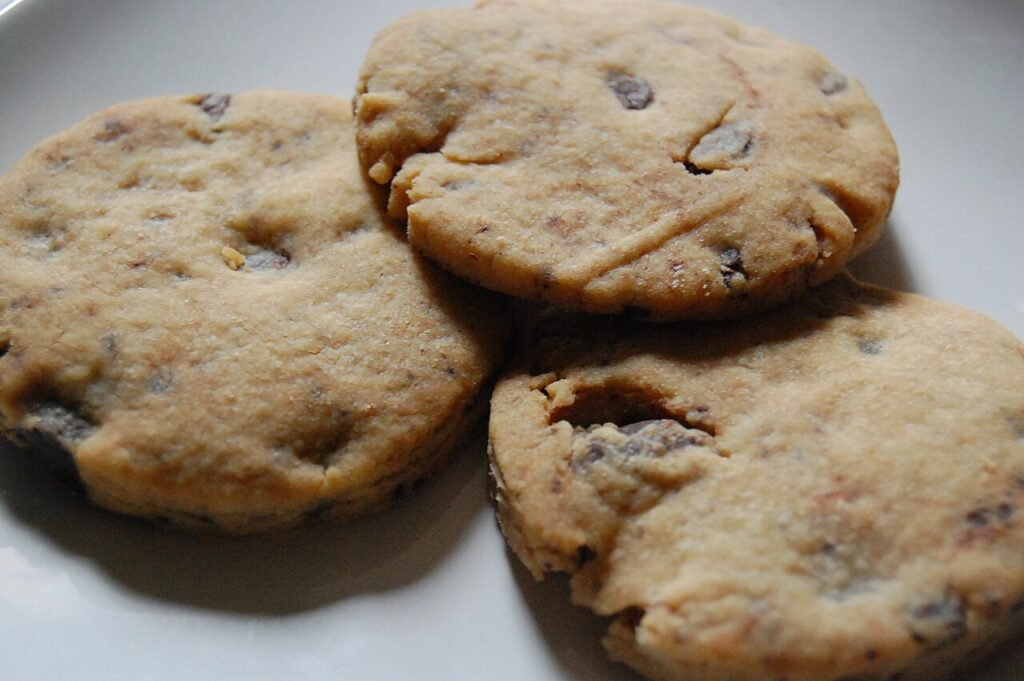
Recipes that already lean moist and dense generally handle a honey substitution well, since honey’s added moisture and flavor complexity work with rather than against the intended texture, while recipes depending on very precise, delicate structure generally don’t tolerate it, since they rely on sugar’s specific dry, crystalline properties in ways honey’s liquid, acidic nature can directly undermine. The effect plays out differently across categories, though. Cookies made with honey instead of sugar tend to spread more during baking (honey’s water content thins the dough slightly under heat) and come out chewier rather than crisp – a genuine win for a chewy chocolate-chip-style cookie and a genuine problem for a recipe built around a crisp snap. Cakes generally come out denser and moister, with a more tender, sometimes slightly gummy crumb if the liquid reduction wasn’t applied correctly – worth checking a honey cake a few minutes early, since the faster browning can make it look done on the outside before the center has finished. Quick breads and muffins handle the swap well overall and often benefit from honey’s moisture retention for a batch meant to be eaten over several days, but need the same early-check caution as cakes. Yeasted bread browns noticeably faster on the crust (fructose again) while the crumb itself behaves normally once the yeast question below is accounted for – a lower bake temperature or a shorter, watched bake time usually solves crust-browning-too-fast issues. Recipes where a very light color and neutral flavor matter, like a plain vanilla cake meant to stay pale, or where extremely precise structure is essential, like meringue, macarons, or classic angel food cake, are the poorest candidates for this swap across every category.
Substituting for Brown Sugar Specifically
Brown sugar’s molasses content already gives it more moisture and a deeper flavor than white granulated sugar, meaning honey substitutes into brown-sugar recipes somewhat more naturally than into white-sugar recipes, since the recipe was already designed to handle a less dry, more flavorful sweetener. The same core adjustments still apply, reducing other liquids and lowering oven temperature, though the moisture reduction can often be slightly less aggressive than with a white sugar swap since brown sugar recipes are already somewhat forgiving of extra moisture.
Non-Baking Cooking Uses
Outside of baking, honey substitutes for sugar quite easily in contexts like sweetening beverages, glazes, marinades, and salad dressings, where the precise chemical adjustments baking requires (leavening, browning, structure) generally don’t apply in the same way. In these more forgiving cooking contexts, taste-based adjustment, adding honey gradually and tasting as you go, works well without needing to track specific ratios or temperature offsets.
Does the Honey Variety Matter?
Milder, lighter honey varieties like clover or acacia tend to blend into recipes without significantly changing the overall flavor profile, making them a safer default choice when a recipe’s original flavor should stay recognizable – in cooking contexts like dressings and marinades as much as in baking. Stronger, more distinctive varieties like buckwheat or certain darker wildflower honeys bring noticeably more of their own flavor character, which is a wonderful enhancement in the right recipe (gingerbread or a spiced quick bread, for instance) and a genuine mismatch in the wrong one, where it can taste muddled or overpower a delicate recipe like a plain vanilla cake or shortbread. This is a consideration that doesn’t really exist when substituting the other direction, since sugar has no flavor of its own to clash with anything – tasting the honey on its own before baking with it, the same way a cook would taste a wine before cooking with it, is a simple step that prevents most flavor-clash surprises. Our honey varieties comparison chart breaks down flavor intensity and color across the common commercial types if you’re not sure where a specific honey on your shelf falls on that spectrum.
Does Honey Actually Work for Yeast Bread?
There’s a persistent baking myth that honey “kills” yeast because of its antimicrobial properties, and the real answer is more nuanced than a flat yes or no. Honey does contain genuine antimicrobial compounds – hydrogen peroxide generated enzymatically and a bee-produced peptide called defensin-1 among them – and at high enough concentration these can measurably inhibit microbial activity. But baker’s yeast (Saccharomyces cerevisiae) is a robust organism, and at the honey concentrations used in a normal bread recipe, diluted further by the dough’s hydration, there’s no meaningful inhibition of fermentation. If anything, honey has a practical advantage for bread: its fructose and glucose are already in simple form, ready for yeast to use immediately, while table sugar’s sucrose has to be broken down by the yeast’s own enzymes first, causing a brief lag before fermentation gets going. In practice, this often means honey-sweetened doughs show a slightly quicker start and a longer, steadier rise than sugar-sweetened ones, alongside a subtly sweeter flavor and softer crumb – the opposite of the “honey kills yeast” myth. The same liquid-reduction principle from Adjustment 1 still applies, adjusting the water or milk in the dough recipe to account for honey’s added moisture, though bread dough’s natural flexibility generally makes this more forgiving than in a delicate cake batter.
Cost Comparison: Is It Worth It Financially?
Honey typically costs more per pound than granulated sugar, meaning a straight cost comparison generally favors sugar for high-volume baking, though the gap narrows somewhat once accounting for honey’s added moisture and flavor complexity potentially reducing the need for other flavoring ingredients. For occasional home baking rather than commercial-scale production, the cost difference per batch is usually modest enough that flavor and personal preference matter more than the price gap.
A Reminder on Age Safety
Any recipe substituting honey for sugar, baked or unbaked, should never be given to a child under 12 months old, since baking does not eliminate the infant botulism risk covered in detail in our dedicated infant honey safety guide – heat-resistant Clostridium botulinum spores survive normal baking temperatures regardless of how the honey is incorporated into the recipe. This applies to every recipe covered in this guide without exception whenever a baby under one year might be a potential recipient.
A Note on Diabetes and Blood Sugar
Anyone managing diabetes and considering this substitution for health reasons rather than just flavor should know that honey still meaningfully raises blood glucose despite generally having a somewhat lower glycemic index than table sugar, a distinction covered in more depth in our honey and diabetes guide. This substitution guide is about achieving good texture and flavor in a recipe, not a blood-sugar-management strategy on its own.
A Practical Tip for Measuring Sticky Honey
Lightly coating a measuring cup with cooking spray or oil before adding honey lets it slide out cleanly rather than sticking to the sides, making both the measuring and the mixing steps noticeably less messy. This small step also improves measuring accuracy, since honey that clings to the measuring cup can otherwise lead to using less than the recipe actually calls for.
A Note for Vegan Bakers
Honey is an animal product, produced and modified by bees, and most people following a vegan diet choose to avoid it, meaning it isn’t a suitable sugar substitute for genuinely vegan baking regardless of its other culinary merits. Vegan bakers looking for similar moisture and flavor benefits to what honey provides generally turn to alternatives like maple syrup or agave nectar instead, which require their own separate set of conversion adjustments beyond the scope of this specific guide.
Why Testing a Small Batch First Is Worth It
Given how many variables affect the outcome, honey brand and variety, exact oven behavior, altitude, and the specific recipe’s own sensitivity to moisture and acidity, testing a honey substitution on a smaller trial batch before committing a full recipe’s worth of ingredients is a genuinely practical way to dial in the right ratio and adjustments for a specific kitchen and recipe. This is particularly worthwhile for a recipe being made for a special occasion, where a first-attempt result significantly different from expectations would be more disappointing than in an everyday bake.
Keeping Both Honey and Sugar on Hand
Rather than treating this as an all-or-nothing pantry decision, most home bakers find it practical to keep both sugar and a good local honey on hand, reaching for sugar in recipes where its dry, neutral properties genuinely matter and reaching for honey where its flavor, moisture, and browning characteristics work in the recipe’s favor. Thinking of honey as a distinct ingredient with its own strengths, rather than simply a “healthier” drop-in replacement for sugar, generally leads to better, more consistent baking results over time. Over time, most experienced home bakers develop an intuitive sense for which of their go-to recipes are honey-friendly and which genuinely need sugar to turn out right, making the whole decision far less deliberate than working through a conversion chart every single time. Keeping a small notebook or a running note on a phone with the specific ratios and adjustments that worked for a favorite recipe the first time saves considerable guesswork the next time that same recipe comes up, turning a one-off experiment into a repeatable, reliable substitution the household can count on and repeat with confidence going forward, batch after batch, without having to reinvent the whole process again completely from scratch each and every time.
Common Mistakes
Swapping honey in at a full 1:1 ratio by volume without reducing the amount used typically results in an overly sweet, overly moist final product that doesn’t match the original recipe’s intended texture. Skipping the oven temperature reduction is one of the most common causes of disappointing over-browned results when substituting honey for sugar in baking. Forgetting the baking soda adjustment is a quieter mistake with a similar effect: honey’s acidity can suppress the rise a recipe is counting on, leaving baked goods flatter and denser than intended even when the liquid and temperature adjustments were done correctly. Using this substitution in delicate, structure-dependent recipes like meringue, where honey’s liquid and acidic properties work directly against the technique, sets up an avoidable failure regardless of how carefully the other adjustments are made.
Going the Other Direction: Substitutes for Honey
Everything above assumes you have honey and want to replace sugar with it. The reverse problem — a recipe calls for honey and you are out, want a plant-based option, or are baking for a baby under 12 months who must not have honey in any form — is a different conversion with its own math. The right substitute depends on why you are substituting and what the recipe needs from the honey: sweetness, liquid, or browning.
Honey substitute ratio table
| To replace 1 cup honey | Use | Adjust other liquid | Notes |
|---|---|---|---|
| Maple syrup | 1 cup | No change needed | Closest match in sweetness and consistency; slightly thinner, with a maple rather than floral flavor |
| Agave nectar | 2/3 to 3/4 cup | Reduce by about 1/4 cup | Noticeably sweeter than honey by volume and thinner |
| Granulated sugar | 1 1/3 cups | Add about 1/4 cup | Needs the liquid added back since sugar brings none of honey’s moisture (this is simply the 3/4-cup ratio above run in reverse) |
| Brown rice syrup | 1 1/3 cups | Reduce slightly | Milder, less sweet; good where honey flavor should not stand out |
| Date syrup or paste | 1 cup | No change needed | Dark, molasses-like flavor and color; best in spiced or dark bakes |
| Corn syrup | 1 cup | No change needed | Very mild flavor; mainly useful for moisture and preventing crystallization |
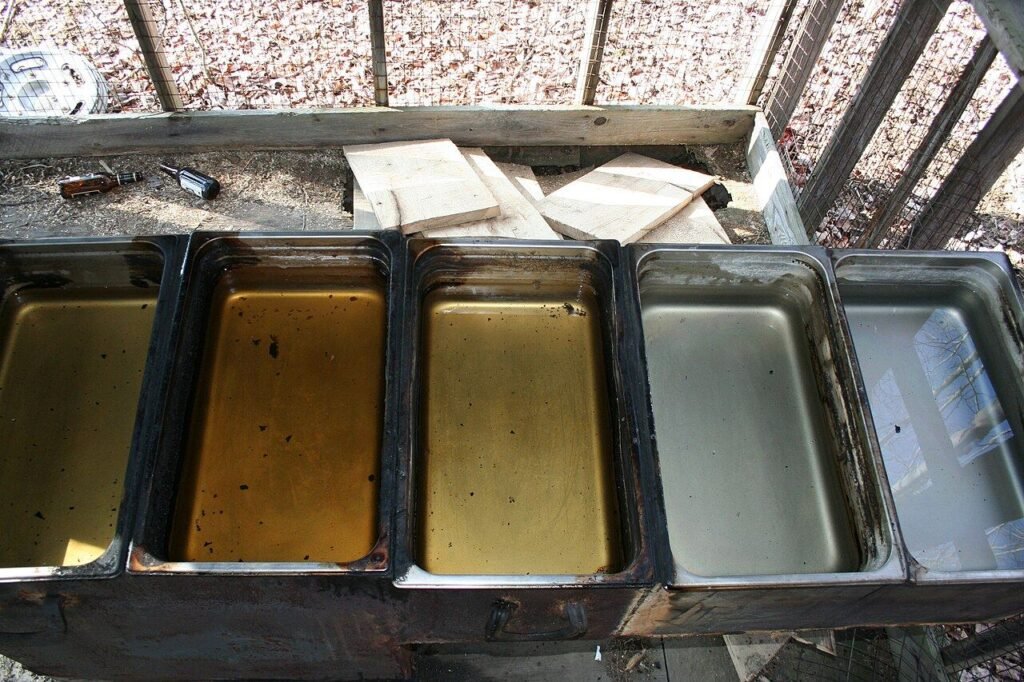
Maple syrup: the closest match
Maple syrup behaves most like honey already — both are liquid sweeteners of similar consistency — so a straight 1:1 swap works in the large majority of recipes with no other changes. It is slightly thinner and a touch less sweet, and its maple flavor is noticeable in a simple glaze or dressing but disappears into muffins, breads, and spiced bakes.
Agave nectar: use less than you would think
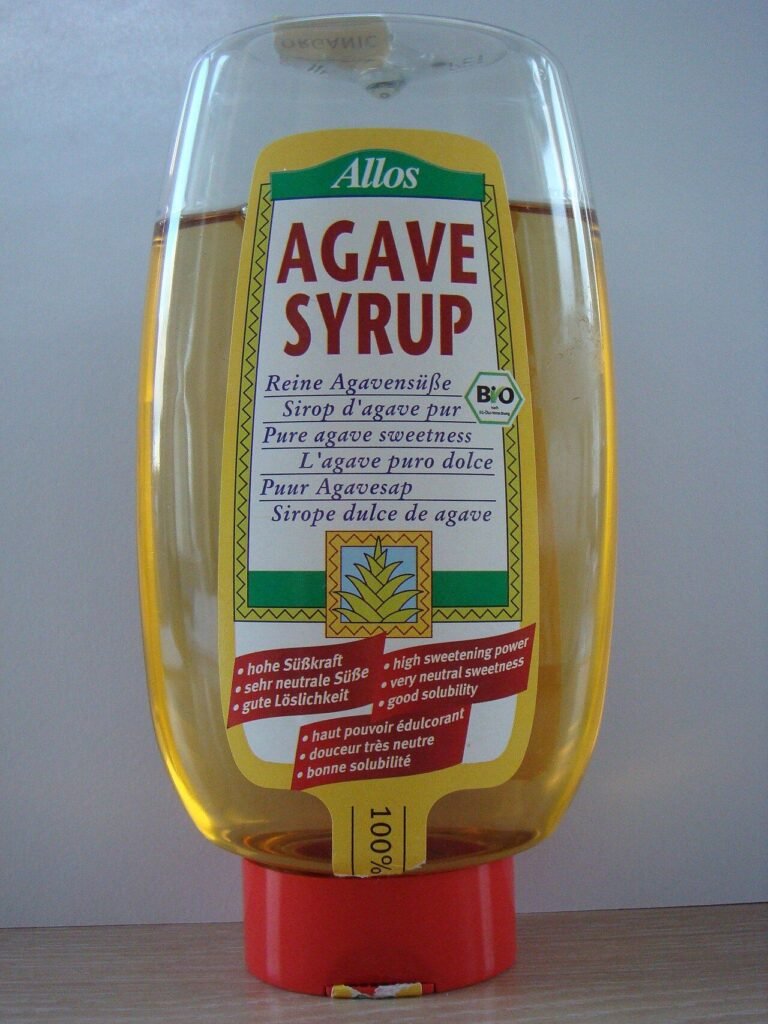
Agave nectar runs roughly 1.5 times sweeter than table sugar, against honey’s roughly 1.25 times, so a 1:1 swap over-sweetens most recipes. Use about 2/3 to 3/4 cup of agave per cup of honey called for, and trim another liquid by about 1/4 cup per cup of agave, since it is noticeably thinner than honey and otherwise leaves batter too wet.
Granulated sugar: needs an assist
Sugar is the substitute that needs the most compensation, because it is solid where honey is liquid. Use about 1 1/3 cups of granulated sugar per cup of honey and add back roughly 1/4 cup of liquid (water, milk, or whatever the recipe already uses). Skipping that liquid is the usual reason a “just use sugar” swap comes out dry and crumbly.
Brown rice syrup, date syrup, and corn syrup
Brown rice syrup is considerably less sweet than honey, so it takes about 1 1/3 cups to match a cup of honey, with a slight reduction in other liquid; its mild flavor suits recipes where chocolate, spice, or fruit should lead. Date syrup (or blended date paste) swaps in close to 1:1 and brings a dark, almost molasses-like flavor that works well in gingerbread or dark rye. Corn syrup also swaps in about 1:1 and is mainly useful structurally — adding moisture and preventing sugar crystallization in candy or caramel — rather than for flavor.
Adjustments that apply to every liquid substitute
Reduce the oven by about 25°F for any liquid sweetener, since most of them (honey included) brown faster than granulated sugar, and watch total batter wetness rather than assuming every syrup behaves identically — consistency varies enough between maple, agave, and date syrup that a recipe tuned for honey’s thickness can land slightly loose or stiff depending on the pick. All of the plant-based options here (maple, agave, date, brown rice syrup) are suitable for vegan baking; our guide to whether honey is vegan covers that debate. And the infant-safety rule above applies in reverse: for anything a child under 12 months might eat, use one of these substitutes rather than honey, because baking does not remove the botulism risk.
Sources
Conversion ratios and baking-adjustment guidance reflect established culinary practice for honey-based ingredient substitution in home baking; the caramelization-temperature and hygroscopicity figures reflect standard food-science reference points for sucrose versus fructose behavior under heat. For current, authoritative detail, see the National Honey Board’s honey varietal guide, the Maryland State Beekeepers Association’s cooking-with-honey tips, and the National Honey Board’s baking guidance.
FAQ
How much honey do I use to replace 1 cup of sugar?
Use about 3/4 cup of honey for every 1 cup of granulated sugar, since honey is sweeter by volume – some recipes work well with as little as 1/2 cup depending on the desired sweetness and texture.
Do I need to change anything else in the recipe besides the amount?
Yes – reduce other liquids by about 1/4 cup per cup of honey used, lower the oven temperature by about 25°F to prevent over-browning, and add 1/4–1/2 teaspoon of baking soda per cup of honey to offset its natural acidity.
Why does the oven temperature need to be lower when baking with honey?
Honey’s fructose starts caramelizing at a much lower temperature than table sugar’s sucrose, and it drives faster Maillard browning. A lower oven temperature keeps the outside from darkening before the inside is fully baked.
Does honey kill yeast in bread dough?
Not at normal bread-recipe concentrations. Honey does have real antimicrobial compounds, but baker’s yeast tolerates them well at the dilution used in a typical dough, and honey’s readily available sugars can actually support a steady rise.
What recipes work best for substituting honey for sugar?
Moist, dense baked goods like quick breads, muffins, granola bars, and many cookies handle the swap particularly well, especially recipes already featuring warm spices that pair naturally with honey’s flavor.
What recipes should I avoid substituting honey into?
Delicate, structure-dependent recipes like meringue, macarons, and angel food cake generally don’t tolerate the swap well, since they rely on sugar’s specific dry, crystalline properties in ways honey’s liquid, acidic nature undermines.
What can I use instead of honey in a recipe?
Maple syrup is the easiest 1:1 substitute. Agave works at about 2/3 to 3/4 cup per cup of honey, and granulated sugar needs about 1 1/3 cups plus 1/4 cup of added liquid. For a child under 12 months, always use one of these rather than honey, since baking does not remove the infant botulism risk.