A homesteader with a honey surplus and a pantry full of jars to fill eventually asks the same question: can the sugar in a canning recipe just be swapped for honey from the hive? Mostly yes, but not in a straight one-to-one swap, and not in every recipe — the difference comes down to how much of the sugar a recipe actually depends on for safety versus how much is there purely for sweetness.
Why Honey Doesn’t Threaten Canning Safety
The safety worry people sometimes have — that substituting a “natural” sweetener somehow makes home-canned food less safe — runs backward. Honey is itself acidic, typically falling in a pH range of roughly 3.5 to 5.5, which means using it in place of some sugar in canned fruit or preserves generally makes the finished product slightly more acidic, not less. For high-acid foods processed in a boiling-water canner (fruit, jam, pickles), that’s a safety non-issue. Sugar’s actual role in most of these recipes is about texture, flavor, and — in jams and jellies specifically — helping pectin set, not about preventing spoilage on its own.
The National Center for Home Food Preservation (NCHFP), the research body behind the USDA’s Complete Guide to Home Canning, puts a specific limit on how far you can push the substitution: up to one-fourth of the sugar in a tested recipe can be replaced with corn syrup or a mild-flavored honey without needing to re-validate the recipe’s safety. Beyond that fraction, you’re outside tested territory — not necessarily unsafe, but no longer backed by a recipe someone has actually validated for processing time and acidity.
How Much Honey to Actually Use
Because honey is sweeter than granulated sugar by volume and carries its own water content, a straight cup-for-cup swap oversweetens and thins the result. The commonly used conversion is roughly three-quarters of a cup of honey for every cup of sugar a recipe calls for, with a corresponding small reduction in the recipe’s other liquid to account for the water honey already contains.
| Application | How much sugar honey can replace | Notes |
|---|---|---|
| Canned fruit / syrup | Up to half the sugar | Use a mild-flavored honey; strong varieties change the fruit’s flavor and color |
| Jams and jellies (with added pectin) | Up to half the sugar | Follow the pectin package’s own tested ratios rather than a general rule |
| Jams and jellies (no added pectin) | Up to about one-fourth | Honey changes how the pectin sets; going further risks a runny set |
| Pickling brines | Small partial substitution only | Sugar-to-vinegar ratio is part of the safety-tested recipe — don’t overcorrect |
Penn State Extension’s guidance on reduced-sugar canning is blunt about where the limits of general advice run out: general substitution notes exist, but “a mild-flavored variety of honey can be used in canning syrups” is about as far as most published extension guidance goes into specifics before pointing back to tested recipes for anything beyond simple fruit syrup. That’s a useful signal for a homesteader: for fruit packed in a light or medium honey syrup, you’re on solid, well-documented ground; for a jam recipe you’re inventing from scratch with all-honey sweetening, you’re now experimenting rather than following tested guidance, and any texture or set problems are yours to troubleshoot, not a safety hazard to worry about.
Choosing the Right Honey for the Job
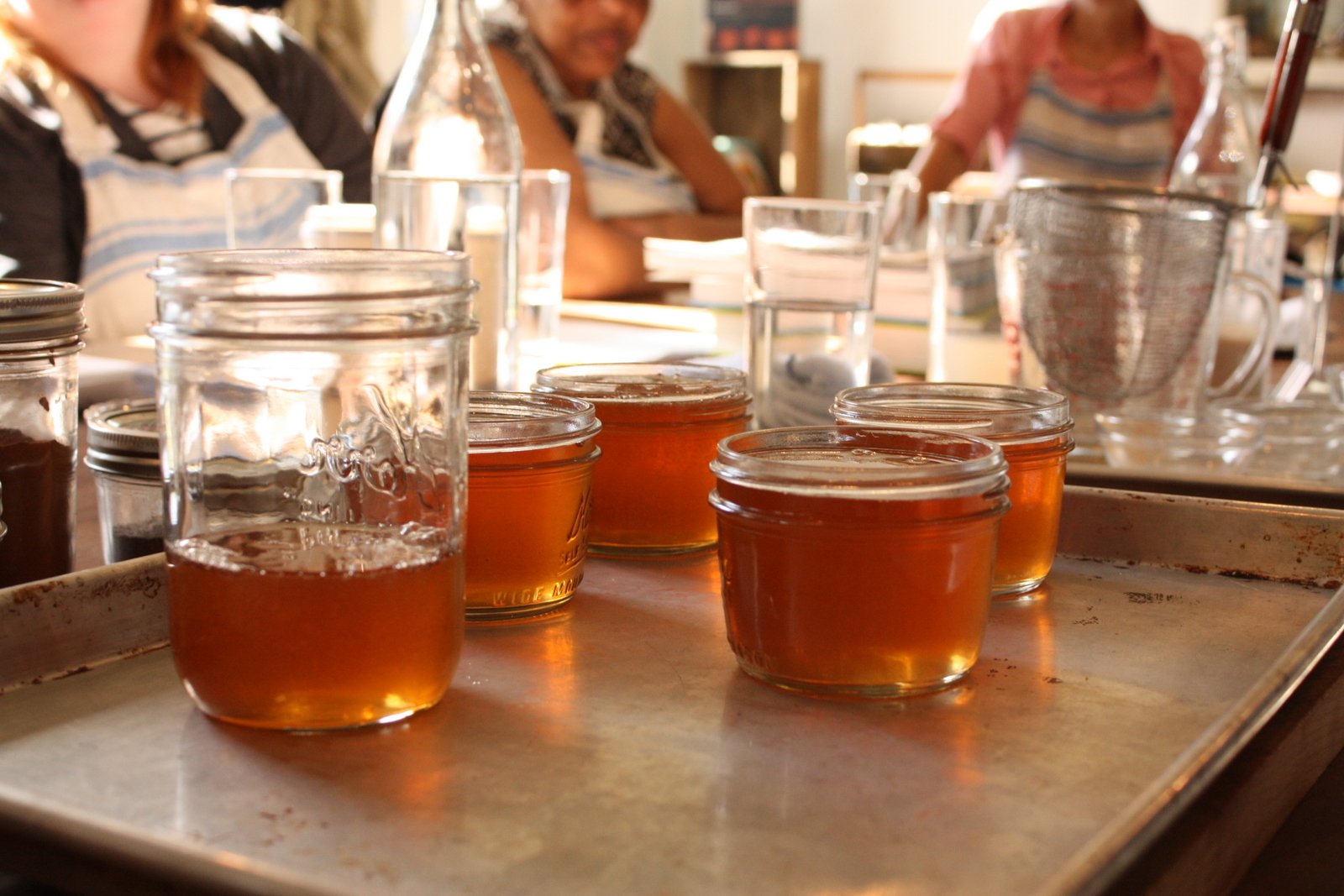
A mild, light-colored honey (clover or a similar delicate varietal) is the standard recommendation for canning specifically because a bold, dark honey — buckwheat or a strong wildflower blend, for instance — will noticeably shift both the color and flavor of whatever it’s added to. That’s not a safety concern, just a “know what you’re signing up for” one: honey-packed canned peaches taste and look different depending entirely on which honey went into the jar, and a homesteader canning a large batch for the pantry might want to test a single jar with a new honey variety before committing an entire harvest to it.
One Thing to Get Right: Age of the Household
The one hard rule that applies regardless of how the honey is used in canning: honey should never be given to a child under 12 months old, due to the small but real risk of infant botulism from spores honey can carry. This applies to the finished canned product too — a honey-sweetened jam or fruit isn’t a special case, and it should be treated the same as raw honey itself when it comes to what’s safe to feed an infant.
Frequently Asked Questions
Can I replace all the sugar in a canning recipe with honey?
Not in a tested recipe — the National Center for Home Food Preservation’s guidance caps a safe substitution at about one-fourth of the sugar without needing to treat the result as an untested recipe. Going further is possible but moves you outside validated ratios.
Does using honey instead of sugar make canned food less safe?
No — honey is itself acidic (roughly pH 3.5–5.5), so substituting it generally makes a preserve slightly more acidic, not less, which works in favor of safety for boiling-water-canned high-acid foods.
What’s the honey-to-sugar conversion ratio for canning?
A common conversion is about three-quarters of a cup of honey per one cup of sugar, with a small reduction in the recipe’s other liquid to offset honey’s own water content.
Which honey variety is best for canning?
A mild, light-colored honey such as clover is standard, since strongly flavored dark honeys will noticeably change the color and taste of the finished preserve.