This guide sets a clear path for small-scale operations in the United States. It shows how local sourcing, realistic loss planning, and timely care help keep colonies healthy and lower costs over time.
Ethical apiary management centers on three pillars: a natural approach with limited interference, harvest methods that leave enough stores, and disease control that favors non-chemical options.
Commercial migratory models move hives across the country for pollination contracts. In contrast, farms that focus locally can cut transport emissions, reduce disease risk, and build stronger overwintered stocks.
This article previews practical, field-tested steps: health-first pest control, overwintering nucleus colonies, replacing losses internally, and timing interventions to avoid annual package purchases.
For a deeper look at broader benefits, see the concise beekeeping benefits guide and use this piece as a professional roadmap to improve hive outcomes and farm resilience.
Key Takeaways
- Local sourcing cuts transport harm and disease risk.
- Plan for reasonable losses to avoid costly replacements.
- Prioritize colony health and non-chemical controls where possible.
- Harvest honey in ways that keep winter stores intact.
- Phased changes make improvements achievable for any operation.
Why sustainable beekeeping matters for small farms in the United States
Relying on nearby colonies strengthens pollination services and trims emissions tied to long-distance shipments. Local management keeps colonies matched to regional climate and forage, which helps crop yields and consistent production across the year.
Aligning hive care with pollination, food systems, and local agriculture
Healthy bees deliver steady pollination to specialty crops and diversified agriculture. That reliability supports food quality and farm revenue without the uncertainty of imported stock.
Strong local colonies are more predictable pollinators and raise honey production quality. They also preserve genetic lines adapted to a region’s seasons and forage.
Reducing carbon footprint by avoiding cross‑country bee shipments
Transporting packages and nucs each spring creates a large carbon footprint and raises disease import risks. Many clubs report 50–100% annual losses, which drives demand for replacement bees shipped nationwide.
“Leaving surplus stores and avoiding harsh chemicals protects colonies and the wider environment.”
Building local capacity lowers emissions, reduces queen and brood stress from transit, and keeps value within the community of beekeepers. These changes form a positive loop: healthier bee populations improve pollination, boost food security, and strengthen farm resilience.
- Local sourcing reinforces reliable pollination.
- Reduced transport lowers emissions and disease risk.
- Focus on habitat and fewer pesticides supports pollinators and the environment.
What “sustainable beekeeping” looks like on a small farm
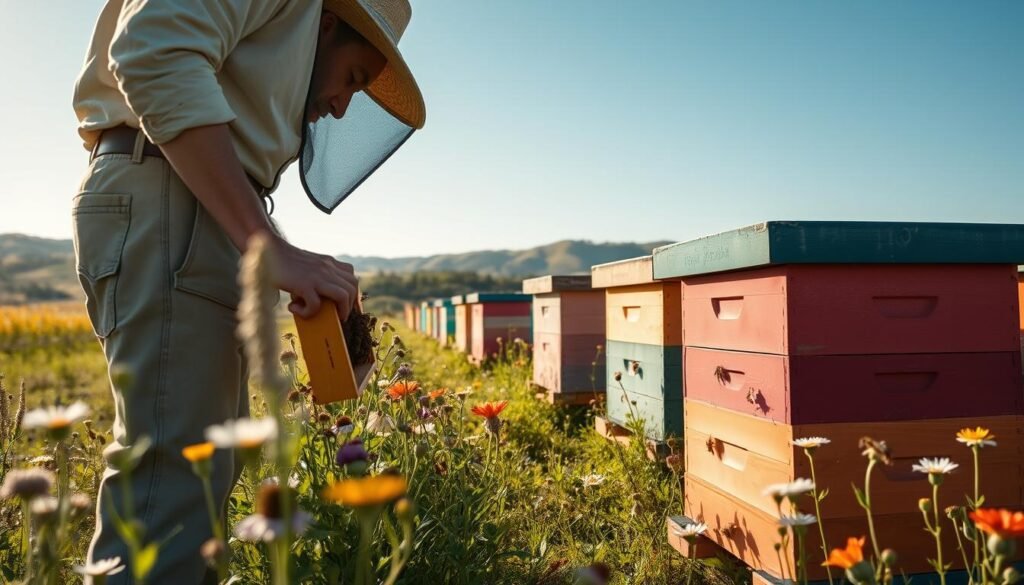
A practical, low-intervention model focuses on three pillars that keep colonies healthy while yielding good honey. This model is not neglect; it is disciplined management that aligns with ecosystem needs.
Pillars: natural approach, harvest restraint, and disease control
Natural approach: Minimize disruptive interventions. Support natural comb building and step in only when colony survival or queen function is at risk.
Sustainable harvesting: Remove only clear surplus and leave adequate stores for winter. That reduces stress and improves long-term productivity.
Disease management: Prioritize prevention: choose pesticide-free placements, control moisture and ventilation, and try organic or cultural controls before upgrading to chemicals.
Health planning, loss forecasting, and local support
Keep written protocols to track feed, treatments, and losses. Plan realistic winter loss targets and build replacements from your own stock so you do not rely on outside purchases.
Share excess splits with neighbors and clubs to strengthen regional resilience and keep genetic lines local. This community approach reduces disease import risk and keeps value in place.
How small operations differ from industrial models
Large-scale operations often over-harvest or manipulate hives to maximize short-term yield. That strategy can weaken colonies and raise mortality.
“Ethical apiary management places bee welfare first so the colony can thrive and produce surplus organically.”
Adopt written rules, track outcomes, and refine your approach over time. For more practical steps and local guidance, see local guidance on ethical apiary methods.
Sustainable beekeeping practices for small farms
Focus on local stock, timely care, and habitat to reduce losses and strengthen yields. Make replacements inside your apiary when possible. Sharing splits and nucs with nearby beekeepers lowers transport stress and disease import risk.
Think local: source and share within your community
Source bees adapted to your microclimate and trade excess colonies with neighbors. This keeps genetics close and cuts the carbon cost of shipped packages.
Respect the queen and minimize disruption
Avoid routine requeening unless performance or temperament requires it. Let queens express natural behavior so the colony stays stable and productive.
Timely management prevents avoidable losses
Regular inspections, on-time supering, and proactive swarm steps reduce winter and spring loss rates. Track queen temperament and brood patterns to guide light-touch decisions.
Harvest only surplus and protect winter stores
Remove clear surplus honey and leave ample stores to avoid syrup dependence. Place hives near pesticide-free, biodiverse plants that supply nectar across seasons.
- Share splits locally to match supply and demand.
- Site apiary near diverse forage and clean environment.
- Use data on queen performance to limit interventions.
Reducing losses through proactive hive management
On-time interventions are the most reliable way to cut annual losses. Milbrath notes that most failures come from missed or late tasks, especially Varroa control. If your loss rate tops 15% a year, stop buying replacements and review your management.
Timely actions: feeding, Varroa control, supering, and swarm steps
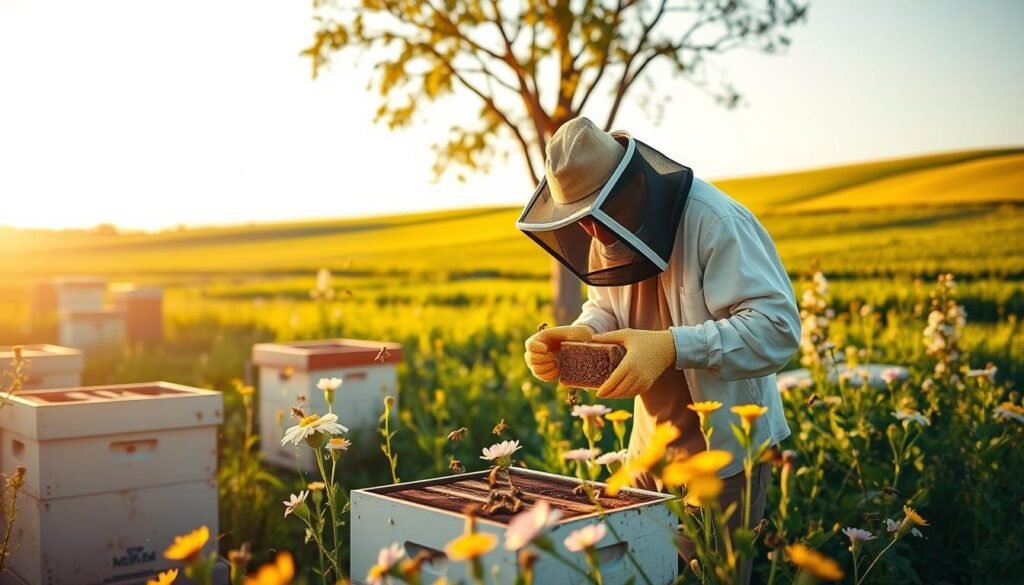
Make a calendar that assigns dates for feeding checks, mite monitoring and treatments, adding supers, and swarm control. Treat Varroa on schedule—delays invite disease and lower survival.
Set realistic loss targets and plan your capacity
Scale your hives to the time you can commit during peak season. If summer work overwhelms you, reduce colony count or arrange help with local beekeepers.
- Management calendar: assign tasks and keep them on time.
- Loss threshold: use 15% as a reassess trigger.
- Capacity planning: match hive numbers to available time.
- Document every intervention and outcome to spot patterns yearly.
| Action | Typical Timing | Primary Impact |
|---|---|---|
| Feeding checks | Late fall / early spring | Winter survival, weight |
| Varroa monitoring & treatment | Biweekly in peak season | Colony health, disease control |
| Supering | When brood expands | Prevents congestion, reduces swarming |
| Proactive splits | Pre‑swarm window | Retains assets, creates replacements |
Consistent on-time work lowers stress, stabilizes honey yields, and builds long-term resilience. For planning tools and further reading, consult this resource guide.
Building local resilience: splits, nucs, and overwintering strategies
A planned pipeline of nucs and splits gives you control over winter losses and local genetics. It moves an operation from buying replacements to producing reliable, region-adapted stock.
Make your own replacement colonies
Create nucs from strong hives late season so you enter winter with backup units. Overwintered nucs repopulate deadouts and supply queens that fit local forage and climate.
Rule of thumb: one nuc per hive
Milbrath’s rule: prepare one nucleus colony for every hive you keep going into winter. Example: ten hives + ten nucs = 20 units; a 30% loss still leaves you near target without buying bees.
Overwintering tips to improve survival
- Size nucs with 3–5 frames of brood and stores to balance survival and resource use.
- Insulate entrances, reduce wind exposure, and feed fondant or heavy syrup if needed.
- Record survival rates for full colonies and nucs to refine targets each year.
- Coordinate with nearby beekeepers to share excess nucs and boost local genetic diversity.
“Overwintered nucs enable quick spring recovery without outside purchases.”
| Item | Recommended Size | Primary Benefit |
|---|---|---|
| Nucleus colony | 3–5 frames brood & stores | Higher winter survival, quick spring buildup |
| Full hive going into winter | 8–10 frames covered with bees | Strong survival, honey production |
| Feeding contingency | Fondant or heavy syrup late fall | Prevent starvation, improve survival |
Intentional preparation before winter smooths operations across the year and cuts financial risk. For task timing and a practical calendar, see the seasonal task calendar.
Harvesting honey sustainably without compromising bee health
Good harvest timing protects the queen and keeps colonies well supplied. Take only clear surplus. Prioritize the colony’s winter needs over quick returns.
Leave enough stores for winter
Ethical harvests mean leaving ample honey so bees can overwinter without heavy syrup substitution. Check weight and inspect frames before any removal.
Assess frame-by-frame to avoid pulling frames that contain brood or marginal stores. If in doubt, leave extra and monitor after the flow.
Use the 7/10 rule when adding supers
The 7/10 rule: add a super when boxes are about 70% full. This prevents congestion and stops the colony from overextending its workforce.
It also protects the brood nest and the queen’s laying pattern. Map bloom calendars and local forage to time supering ahead of main flows.
- Harvest threshold: ensure stores meet winter needs, reducing later feeding.
- Weigh hives and check frames before pull.
- Monitor after harvest and add feed only as a contingency.
- Conservative pulls improve honey production consistency over seasons.
| Rule | When to act | Primary benefit |
|---|---|---|
| Leave winter stores | Before final extraction | Higher overwinter survival |
| 7/10 supering | At ~70% frame fill | Prevents congestion, protects brood |
| Post-harvest check | 1–2 weeks after removal | Verify resources, avoid emergency feeding |
| Forage mapping | Pre-season planning | Better timing, improved honey quality |
For a concise harvest guide that aligns growth and colony welfare, consult local calendars and adjust pulls to match flow timing.
Health-first disease and pest management with minimal chemicals
A location-first strategy pairs hive placement with diverse forage to lower disease risk and boost bee health. Sites near organic or regenerative crops reduce chemical drift and increase seasonal nutrition.
Location and environment
Prioritize pesticide-free locations and partner with landowners planting native plants and nectar corridors. A biodiverse environment supports immune function and cuts pathogen pressure.
Natural pest methods
Use screened bottom boards, powdered sugar dusting, and targeted essential oils as part of an integrated approach to Varroa and other pests. These methods reduce mite loads without routine antibiotics.
Hygienic design and monitoring
Good ventilation and moisture control limit fungal growth and brood stress. Hands-on inspections catch issues early so interventions stay light and effective.
Selective breeding and escalation
Breed from resilient queens in strong colonies to embed resistance traits over time. Document results each season and escalate to approved treatments only when thresholds are exceeded.
- Site selection lowers disease pressure and improves survival.
- Bottom boards and natural dusting reduce mite counts.
- Ventilated hives and routine checks keep colonies stable.
- Selective breeding builds long-term resilience and better honey quality.
“Health-first approaches produce purer, raw honey and stronger overwintering outcomes.”
Economics of sustainability: from replacement costs to local honey production
A clear cash‑flow view shows how changing to late‑season splits and overwintered nucs can flip annual budgets and improve production.
Comparing models: buying packages vs. overwintering your own nucs
Buying three packages at $135 each costs $405 a year with Milbrath’s 30% loss example. That recurring outlay adds up each year.
Alternatively, split to 20 units late season. Lose six (30%) and you still have 14 in spring. Sell four extra nucs at $175 and take in $700.
The net difference in that single year can exceed $1,100 when you include saved package costs and nuc sales.
Lower disease import risk and improved honey quality as added benefits
- Fewer external introductions cut pathogen imports and protect bee populations.
- Less transport stress supports queen performance and steady honey production and quality.
- Local surplus sales create a revenue stream that offsets equipment and feed contingencies.
| Model | Typical annual cost | Primary benefit |
|---|---|---|
| Buy packages | $405 | Simple replace & restart |
| Overwinter nucs | Variable (equipment + feed) | Net revenue, lower risk |
| Mixed (sell & produce) | Moderate | Improved margins, local supply |
“Overwintered local nucs reduce import risk and boost honey quality by avoiding long‑distance stress.”
Practical step: build a simple cash‑flow model that counts equipment, expected feed, nuc revenue, and honey sales. Track records yearly to prove the benefits to beekeepers and regional production.
Action plan: step-by-step approach for your apiary this year
A clear operational map helps you turn annual goals into on-the-ground actions this year.
Assess capacity and set targets
Audit your available time, equipment, and labor. Then set a realistic number of hives you can service on schedule.
Milbrath’s advice: do not accept high loss rates; scale to what you can maintain.
Make late-season splits and overwinter nucs
Plan splits late in the season and build nucs sized to survive winter. Overwintered nucs let you replace deadouts without buying stock.
Commit to timely tasks and harvest limits
Create a calendar covering feeding, Varroa checks, supering, and swarm control. Add buffers so weather or work delays do not miss critical time.
Harvest only surplus and confirm post-harvest stores before winter.
Share excess and standardize methods
Share extra colonies with local beekeepers to strengthen community and cut imports. Track queen performance and requeen only when data show a need.
- Audit capacity and set hive count.
- Set loss expectations; adjust before acquiring stock.
- Plan late-season splits and overwinter nucs.
- Create a management calendar with buffers.
- Apply sustainable harvest thresholds; verify stores.
- Record interventions and outcomes each year.
- Share excess with nearby beekeepers.
- Track queen health; requeen only by evidence.
- Standardize inspection, mite counts, and supering rules.
- Review year-end results and update targets.
| Task | Timing | Benefit |
|---|---|---|
| Capacity audit | Pre-season | Matches hives to available time |
| Late-season splits | Late summer/early fall | Local replacements, better survival |
| Management calendar | Annual | On-time interventions, fewer losses |
For expansion tips and local sourcing methods, see this expansion guide and an example of a regional apiary approach at Uncommon Bee Farm.
Conclusion
A clear conclusion ties on‑farm choices to better colony health and steadier honey output.
Prioritize bee welfare, local genetics, biodiverse plants, and good hive design. These elements underpin stronger survival and lower disease risk.
Set capacity, build overwinter nucs, harvest conservatively, and keep a timely calendar of tasks. This operational blueprint turns losses into dependable production across the year.
Collaboration among beekeepers to share stock and data boosts regional supply and protects bee populations. Measure results each season and refine methods to match local conditions.
By combining ethical pillars with disciplined management, small operations can protect the environment and deliver high‑quality honey to their communities.
FAQ
What are the core goals of responsible hive management on a small farm?
The main goals are keeping colonies healthy, reducing disease risk, and ensuring bees have enough food through winter. Aim to minimize long-distance bee purchases, maintain strong genetics locally, and manage frames and supers so you only take surplus honey. Regular inspections, timely Varroa monitoring, and simple remediation keep colonies resilient while supporting on‑farm pollination.
How do I source new colonies without increasing disease risk?
Source nucleus colonies or queens from trusted nearby suppliers, apiary clubs, or cooperative extensions. Make splits from your own hives when possible. Avoid ordering package bees shipped long distances because that raises pathogen and parasite import risk. Local sourcing also improves adaptation to regional forage and climate.
When should I harvest honey to avoid weakening my bees?
Harvest only current-season surplus after fall nectar flows finish and before frost threatens. Use the 7/10 rule for supering: add supers when bees fill about 70% of available comb, and remove frames with fully capped honey, leaving at least what the colony needs for winter. Leave ample stores or supplemental feed if winter resources look short.
What simple Varroa control methods work without heavy chemical use?
Integrated methods include screened bottom boards for passive mite drop, powdered sugar dusting to disturb mites, drone frame removal to reduce mite reproduction, and essential oil treatments like thymol when needed. Frequent monitoring with sugar rolls or alcohol washes guides interventions. Combine these with hygienic stock selection to lower long-term reliance on treatments.
How do I plan for expected hive losses and replacement colonies?
Set a reasonable annual loss target based on experience and regional averages. Plan to create one nucleus colony per hive going into winter as a buffer. Late‑season splits and overwintered nucs can cover spring losses. Budget time and materials for making nucs so replacements are on hand without buying distant stock.
What hive designs and equipment help promote colony health?
Use well‑ventilated boxes, screened bottom boards, and proper insulation for cold climates. Choose frames and foundation that encourage natural comb patterns and hygienic behavior. Ensure hive entrances face away from prevailing pesticide drift and are raised to reduce damp and pest pressure.
How can I reduce chemical exposure from surrounding farmland?
Map nearby crop spray schedules and maintain good communication with adjacent farmers. Position apiaries near biodiverse forage and buffer strips such as wildflower borders. When possible, relocate hives temporarily during high‑risk spray windows and advocate for pollinator‑safe practices with neighbors and extension agents.
What feeding strategies support colonies without overdependence on sugar?
Feed fondant, dry sugar, or thin syrup only when natural forage is insufficient—late winter or early spring and during dearths. Aim to build natural pollen reserves by planting native flowering species and cover crops. Use feed as a stopgap, not a long‑term replacement for healthy forage.
How do I manage swarms and prevent sudden colony loss?
Monitor for queen cells and congestion in spring. Use timed splits, add space with supers, and requeen if colonies show swarm tendencies. Collect cast swarms promptly and integrate them as nucs if healthy. Preventative management and timely actions reduce the frequency of lost swarms.
What role does breeding and genetics play in colony resilience?
Selecting queens from locally adapted, hygienic, and productive lines reduces disease susceptibility and improves overwinter survival. Work with regional queen producers or raise queens from your best colonies. Over time, local selection lowers treatment needs and strengthens pollination performance.
How can small operators balance honey production with colony needs economically?
Compare costs of buying replacements versus overwintering your own nucs. Retain enough colonies to meet on‑farm pollination needs before harvesting surplus honey. Track labor and material costs, and sell small batches of local honey or nucs to neighbors to offset replacement expenses while keeping disease risk low.
What immediate steps should I include in an annual action plan?
Assess hive numbers and realistic loss targets, schedule inspections for Varroa and brood health, plan late‑season splits and nuc creation, and set harvest thresholds that leave winter stores. Build time for hands‑on monitoring and coordinate with local beekeeping groups for swarm and queen resources.