

Wild visits by predators can ruin a season. Nighttime raids stress bees, cut honey yields, and damage equipment. Beekeepers should treat predator defense as part of apiary design, not a quick fix.
Start with site choice, secure hive hardware, and elevation. Add electrified barriers and visual deterrents like red glow lights that do not disturb bees but can discourage raccoons. Electric netting made for bears also helps smaller predators if vegetation does not short the wires.
Plan layered strategies that fit your budget and scale. Regular checks for tracks, scratches, or toppled boxes let you adapt defenses before losses grow. For practical tips and a deeper guide, see a detailed apiary resource and management ideas at apiary predator page and reference beekeeping resources at Beekeepers Realm.
Key Takeaways
- Layer defenses: combine placement, barriers, and deterrents for best results.
- Red glow lights can deter nocturnal predators without stressing bees.
- Electric netting works for large and small predators if maintained clear of vegetation.
- Regular monitoring reveals problems before they become costly.
- Plan for regional risks—seasonal bears and year-round raccoons—and follow safety rules.
Understand wildlife threats and how they target your hives
Spotting early evidence of wildlife visits helps protect colonies before damage spreads. Inspect the ground and the lower board each morning. Small clues reveal whether an animal is investigating or has begun nightly raids.
Signs of raccoon activity versus skunk and mouse interference
Raccoons often leave muddy paw prints and may pry lids or shift boxes. Look for lifted outer covers or scattered frames.
Skunks leave methodical scratches low at the entrance and piles of chewed bee parts nearby. They scratch at night to draw guard bees out.
In fall, mice move into beehives for warmth. You’ll find nesting material and chewed comb or foundation, but they usually avoid live adults.
Why repeated visits stress colonies and reduce honey production
Nighttime raids keep bees on alert and interrupt brood care. That forces workers to spend less time foraging and storing nectar.
“Repeat disturbances change colony behavior — queens may cut egg laying and cold control can fail.”
- Daily checks of the entrance and nearby ground reveal early damage and tracks.
- Proximity to woodlines, water, or animal corridors raises risk and needs closer monitoring.
- Traps may remove one animal, but they rarely stop return visits and can catch non-target wildlife.
Build a layered defense around your apiary
A well-planned site makes it harder for wildlife to reach colonies and easier for you to spot trouble. Plan placement, barriers, and sight lines together so each layer supports the others.
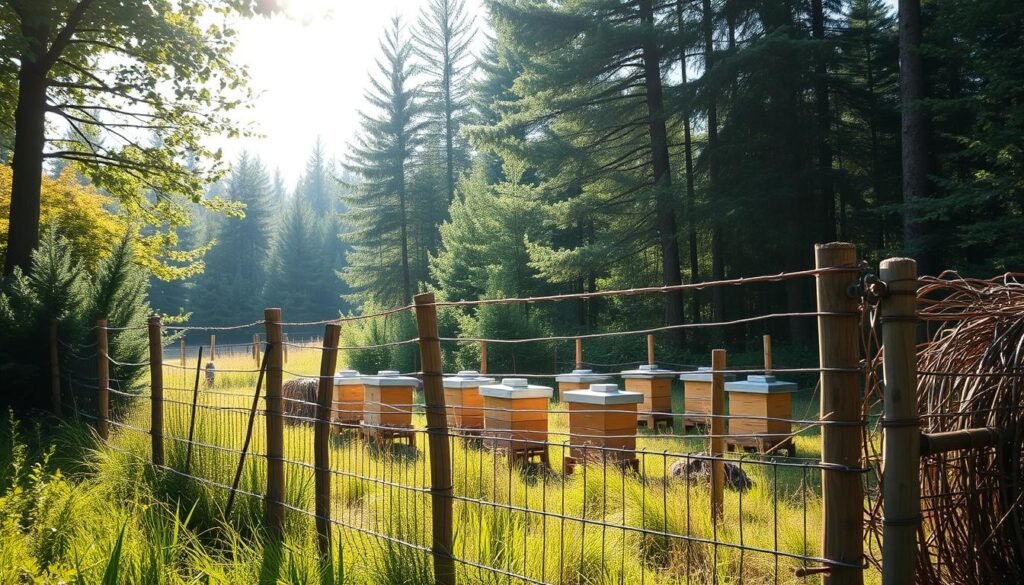
Smart hive placement: elevation, entrance orientation, and location
Elevate each hive on a sturdy stand. This exposes a skunk’s underbelly and makes raccoon leverage harder without blocking the entrance flight lane.
Set the entrance toward morning sun and clear flight paths. That improves guard visibility and makes signs of animal activity easier to find.
Designing growth-ready fencing that accounts for digging and climbing
Design fencing for digging and climbing. Bury or flare the base and trim overhanging wood to remove ladder routes.
Keep future colonies in mind. Leave space so new boxes do not end up next to the fence or on straight approach lines animals use.
Protecting guard bee activity while reducing predator access
Use carpeting tack boards or spike strips above mouse guards to deter skunks and raccoons without blocking bee traffic. Separate entrances slightly so guards can identify intruders and reduce drift between colonies.
Keep service paths clear so you can work safely without stepping on deterrents. Monitor tracks and adjust layers when an animal probes the perimeter.
| Measure | Primary Benefit | Quick Action | Notes |
|---|---|---|---|
| Elevation | Reduces skunk access | Stand 12–18 in. | Keep entrance clear for flight |
| Perimeter fence | Blocks large animal entry | Bury base 12 in. or flare out | Trim nearby wood to stop climbing |
| Entrance spacing | Supports guard patrols | Offset by 6–12 in. | Helps colony recognition |
“Layered defenses reduce surprise visits and preserve colony behavior.”
Document the layout and signs you see. Track visits and refine your strategies as the apiary grows.
12. how to protect hives from bears and raccoons
Effective defense blends voltage, fasteners, and visual cues so wildlife think twice before approaching your apiary.
Bear deterrence: Install an electric perimeter fence with solid tension and firm corners. Use higher-voltage energizers where legal and safe, and keep vegetation clear so the charge stays strong.
Bait the hot wire with bacon grease or a dab of peanut butter on foil tabs. That encourages nose contact through fur and teaches the animal to avoid the fence.
Raccoon-proofing: Secure each hive lid with ratchet straps or place a heavy rock on the outer cover. Add spike strips or carpeting tack boards around the stand to stop climbing and prying.
Electric netting made for bears also deters raccoons that test perimeter weak spots. Recheck fasteners after storms and tighten straps if boxes shift.
Red “glowing eyes” lights: Use red-spectrum flashers like Nite Guard aimed along approach routes. These devices act as a low-impact visual deterrent that does not disrupt bees or beehives when sited correctly.
- Keep a cleared strip under the fence and re-bait foil tabs after exposure to weather.
- Combine straps, spikes, and fencing for layered protection that reduces surprise visits.
“Layered defenses teach animals to move on while preserving colony health.”
Fencing, wire, and power: practical setups that work
A reliable electric perimeter starts with the right posts and planned wire heights. Portable fiberglass posts make a flexible, low-cost option that resists rot and moves as your apiary grows.
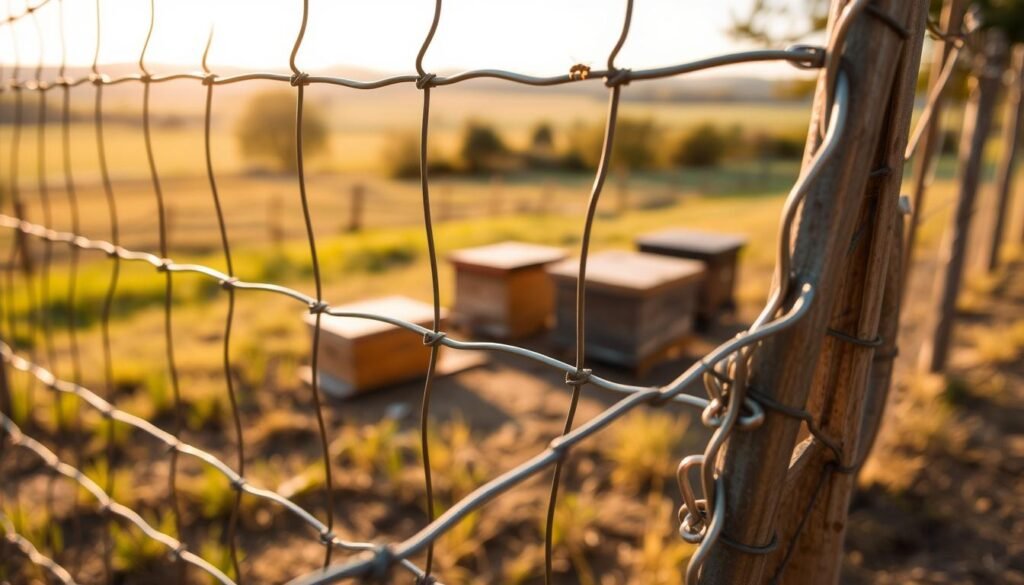
Place multiple hot wires at staggered heights. Set upper lines for a bear’s shoulder and mid levels that will stop climbing attempts. Add a low line near the ground to deter raccoons that probe gaps.
Choosing posts and wire
Use fiberglass posts for easy repositioning. Tension wires so they do not sag and anchor corners firmly. Keep gates aligned for safe access when you work the hives.
Burying edges and clearing vegetation
Bury or flare the base to block digging and compact the soil along the ground. Trim grass and remove brush so no vegetation touches the wire and drains current.
- Test output with a voltage tester after installation and after storms.
- Avoid continuous landscape fabric under the fence; it can invite wasps.
- Combine perimeter fencing with straps on each hive so boxes stay secure if an animal tests the barrier.
fence performance testing helps beekeepers document settings and maintain reliable deterrent operation.
“A well-tuned fence reduces visits and keeps colony disturbance low.”
Small predator defenses: skunks, mice, and other pests
Nighttime pests probe the lowest points of a hive; block that access and you block most damage.
Skunk deterrents begin with elevation. Raise each hive on a stable stand so a skunk must rear up and expose its belly to guard bees.
Fit a two-foot-wide wood panel or carpeting tack board around the base. Pointed nails or tack points facing up make approach uncomfortable without harming people or bees.
Practical base defenses
Use poultry netting when skunks are the main pests; they do not climb well. Bury or flare the netting at the ground line to block digging.
Keep service lanes clear and mark spike edges so inspections remain safe. Remove temporary boards when you need full access for maintenance.
Mouse guards and seasonal timing
Install mouse guards in fall when mice look for a warm home. Choose entrance reducers sized for bees but too small for rodents.
Sweep the bottom board with a long stick before fitting a guard to ensure no mouse stays inside. Watch for chewed wax, shredded material, or gnawed frames — signs that traps or cleanup may be needed.
| Measure | Benefit | When to Apply |
|---|---|---|
| Elevation on stand | Discourages skunks | Always — year-round |
| Wood panel / tack board | Blocks approach at entrance | Install at setup and check after weather |
| Mouse guards / reducers | Stops rodents entering hive | Fit in fall; remove or adjust in spring |
“Small, consistent barriers preserve colony behavior and keep honey yields steady.”
Conclusion
A consistent, layered plan keeps colonies productive while keeping animals at bay.
Combine smart placement, a reliable fence, spike or tack boards, and secure covers so beehives stay intact and bees can work without nightly stress. Strap lids or set a rock on outer covers, and use baited hot wires and red lights where allowed.
Install mouse guards in fall, clear vegetation under lines after storms, and log tracks or toppled lids so you can refine access controls. For practical raccoon advice, see this guide.
Regular maintenance and simple routines keep defense effective, safe, and humane. With steady attention, your apiary will remain productive at home even where wildlife pressure is high.
FAQ
What signs show raccoon activity versus skunk or mouse interference?
Raccoons leave torn hive covers, scattered frames, and paw prints near entrances. Skunks work at ground level, often scratching soil and pulling bees at night without climbing. Mice make small chewed holes near the bottom board and nest inside winter stores. Look for disturbed honey, crushed comb, urine or droppings, and tracks to tell them apart.
How do repeated predator visits affect colony health and honey production?
Frequent disturbances raise stress hormones in bees, reduce foraging, and slow brood development. Energy spent on defense cuts honey yields and weakens winter stores. Repairing damaged comb also diverts worker activity away from nectar processing and pollen collection.
Where should I place hives for better protection and bee behavior?
Elevate hives on sturdy stands 2–3 feet off the ground to deter skunks and small mammals. Face entrances toward morning sun and away from prevailing winds to encourage early foraging. Position colonies near clear lines of sight so you can spot predators and maintain a tidy, trimmed perimeter to reduce hiding spots.
What fencing design keeps bears and raccoons out without harming bees?
Use a layered approach: a strong perimeter fence with 4–6 electrified wires plus a grounded mesh base to stop digging. Space wires starting at 6–8 inches above ground, then 12–18 inches apart. Insulate and tension wires correctly. Keep vegetation cleared 3–4 feet from the fence to avoid shorting the charge.
Are electric fences safe for honeybees and people?
Properly installed electric fences deliver short, non-lethal pulses that deter large predators. Position wires around the apiary perimeter, not the hives themselves, and provide clear signage. Follow manufacturer guidelines for voltage and grounding to protect both animals and keepers.
What materials work best for posts and wiring in an apiary fence?
Fiberglass or treated wooden posts resist rot and hold insulators well. Use polywire or high-tensile steel for durability. Choose insulators rated for your fence system and local conditions. Strong corner braces keep tension stable over seasons.
How deep should I bury the fence edge to prevent digging animals?
Bury mesh or hardware cloth 6–12 inches below grade or extend an L-shaped apron 12–18 inches outward. This prevents raccoons and smaller predators from tunneling under. Regularly inspect for erosion or burrow attempts after heavy rain.
How can I protect hive covers and frames from raccoon damage?
Secure lids with cam straps, carriage bolts, or ratchet straps and add a weighted rock if needed. Install forearms or metal straps over corners. Inside, use frame rests and limit loose supers that raccoons can flip or pull apart.
What bear deterrents work best when electrified fencing isn’t an option?
Combine strong wooden posts and woven wire with motion-activated lights, noisemakers, and bear-proof storage for equipment. Keep honey and supers locked in bear-resistant containers. Temporary portable electric systems can also supplement a physical barrier when permitted.
Do flashing “glowing eyes” lights deter nocturnal predators without harming bees?
Low-intensity, motion-activated red or amber lights can startle predators while minimizing disruption to bee navigation. Avoid bright white lights and constant illumination near hive entrances, which can disorient foragers and alter behavior.
What measures stop skunks from raiding hives at night?
Raise hives on stands at least 24 inches high and fit tack or spike boards around the base to block skunks from reaching entrances. Clearing vegetation and placing hives on smooth metal or concrete pads also denies skunks leverage for climbing.
When should mouse guards be installed and what size openings work?
Install mouse guards in fall before temperatures drop and mice seek shelter. Choose guards that limit entrances to about 3/8 inch (10 mm) to block mice while allowing worker bees through. Remove or expand guards in spring as bee activity increases.
How can I maintain guard bee activity while reducing predator access?
Keep entrances tidy and avoid strong chemical scents near hives. Provide a clear landing area and small entrance reducers during high-risk periods. Healthy colonies with robust guard populations deter many pests naturally, so focus on nutrition and disease control.
Are traps recommended for raccoons, and what legal/ethical concerns apply?
Live traps can work but require knowledge of local wildlife laws and humane handling. Check state regulations and obtain permits if needed. Relocation is often restricted; work with wildlife control professionals to ensure ethical, legal solutions.
What routine checks help prevent predator damage over the years?
Inspect fences, posts, and insulators monthly and after storms. Check for burrows, chewed covers, and fresh tracks. Rotate honey and secure stores off-site when possible. Regular maintenance prevents small issues from becoming destructive losses.


