This practical guide laid out a clear framework to design, plant, and maintain a garden that attracts pollinators and supports them across the year.
You learned which plants to prioritize for reliable color and forage, and how to structure beds for movement and nesting.
Simple design choices linked to proven landscaping practices so nectar and pollen were available in every season.
The guide emphasized resilient combinations of native species, keystone plants like milkweeds, and easy maintenance routines.
Whether you managed containers, a small plot, or a larger landscape, the step-by-step approach made it achievable to support pollinators and see results by year’s end.
Key Takeaways
- Build a plan that balances aesthetic flowers with ecological function.
- Choose plants that provide nectar and pollen across the season.
- Design for movement, nesting, and low-risk maintenance.
- Include local keystone species to boost resilience.
- Measure success by visits from pollinators and improved fruit set.
Why Pollinators Matter to Your Garden’s Health
Pollinators are vital partners for home growers. Their visits move pollen between flowers, which directly increases fruit and seed set. That means better yields on tomatoes, cucumbers, berries, and tree fruits.
Bees beyond honey bees
North America hosts over 4,000 native bees and related species. Many nest in bare soil or hollow stems. Ground-nesting bees need small patches of open ground. Stem-nesting bees use hollow or pithy stalks.
Butterflies, moths, and more
Butterflies and moths also move pollen while their caterpillars become food for birds. A diverse mix of bloom shapes and bloom times helps many species forage under different conditions.
The pollination payoff
Supporting pollinators gives measurable returns: higher fruit set and more reliable seed production. Simple steps — leave stems, provide continuous food from early spring through fall, and avoid stagnant water — all help.
“A robust pollinator community signals a healthy, resilient garden.”
- Leave bare soil patches and dead stems for nesting.
- Provide varied flowers across the season for steady food.
- Manage standing water and use targeted larval controls like Bti when needed.
46. pollinator-friendly gardening USA: A quick-start how-to framework
Start with a clear map of sun, shade, and usable square feet. Note soil type and water access, then sketch a season-long bloom plan that gives pollinators steady food.
Plan, plant, protect: the three-part guide to a pollinator garden
Plan: Map your beds and match plant choices to soil and water realities. Group species by need to keep blooms reliable.
Plant: Use drifts of three or more of the same species and cluster containers to make foraging efficient for bees and other pollinators.
Protect: Reduce disturbance near nesting spots, avoid broad spraying, and add shallow water with stones so insects can drink safely.
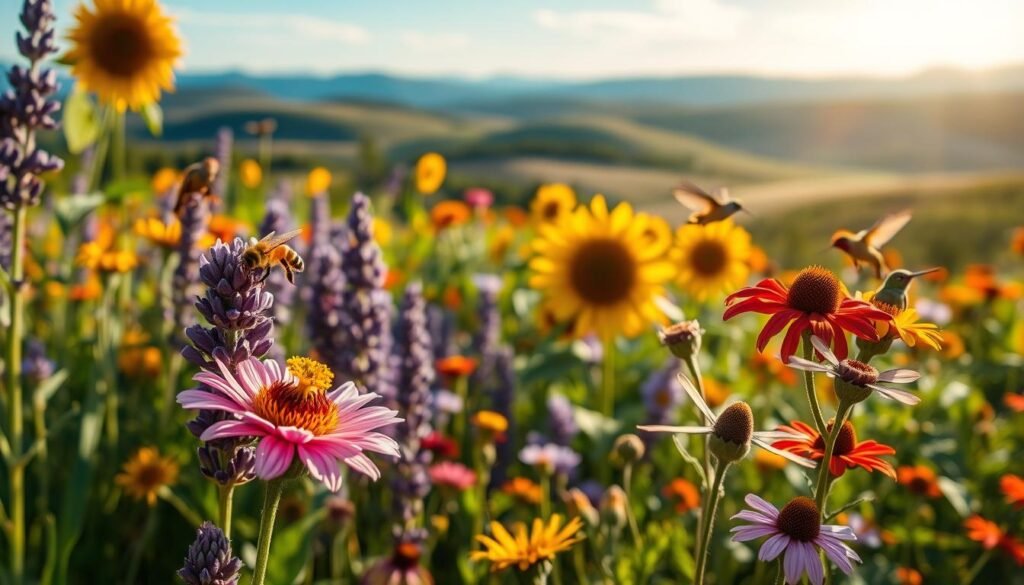
From a few feet to full yards: scaling designs for any space
In small spaces measured in a few feet, go vertical: trellises, window boxes, and tight pot clusters put flowers at eye level.
On a larger yard, layer beds from tall to short and keep sunny open soil patches for ground-nesting species. Loosen compacted soil and top-dress with compost rather than using fabric that blocks nesting.
- Observe: Repeat plants that attract visitors; replace those that don’t.
- Track: Keep a seasonal checklist to refresh containers and monitor how your gardens evolve.
For a quick reference on native pollinator support, see attracting native pollinators.
Build a season-long bloom calendar from early spring to late fall
Plan blooms so pollinators find steady food from early spring right into late fall. Start by listing what blooms in your area, then slot plants so one set hands off to the next.
Early spring blooms to kick-start the season
Stock the start of the growing season with dependable natives like red columbine, wild lupine, serviceberry, or Oregon grape. These early spring flowers break winter scarcity and supply urgent nectar and pollen.
Summer nectar and pollen to fuel peak activity
Layer milkweeds, prairie blazing star, bergamot, and blanketflower to feed heavy summer foraging. Group species in blocks a few feet wide so bees and butterflies find food fast.
Late fall flowers to bridge the season’s end
Finish with asters and goldenrods—New England aster and wrinkleleaf goldenrod keep nectar flowing into late fall. This prevents a nutritional crash as other flowering plants fade.
| Season | Typical natives | Site notes | Benefit |
|---|---|---|---|
| Early spring | Red columbine, wild lupine, serviceberry | Sunny to part shade; protect early bloomers | Immediate food for emerging pollinators |
| Summer | Milkweeds, blazing star, blanketflower | Full sun; clustered plantings best | High nectar and pollen during peak |
| Fall | New England aster, goldenrod, asters | Open beds or edges; tolerates varied soils | Extends forage into late fall |
Tip: Track gaps mid-season and add varieties that hold bloom. For guidance on timing and pairing annuals with perennials, see annual and perennial timing.
Choose native plants by U.S. region for reliable results
Selecting true regional natives makes it easier to get reliable blooms and steady nectar through the growing season. Start by listing species suited to your climate and soils, then pick varieties that have proven local success.

Pacific and Pacific Southwest
Use common camas, Lewis mock orange, California poppy, and narrowleaf or showy milkweed. These plants establish well and supply nectar from spring into summer.
Southwest
Antelopehorn milkweed, lemon beebalm, and prairie sunflower tolerate heat and drought while keeping flowers available for pollinators.
Midwest and Southeast
In the Midwest, mix prairie blazing star, common milkweed, and New England aster for a strong summer-to-fall handoff. In the Southeast, pair butterfly milkweed with Joe-pye weed and blue mistflower to hold blooms through humid spells.
| Region | Key species | Bloom window | Site note |
|---|---|---|---|
| Pacific | Common camas, mock orange | Spring–early summer | Part shade to sun |
| Southwest | Antelopehorn milkweed, prairie sunflower | Summer | Heat and drought tolerant |
| Midwest | Prairie blazing star, common milkweed | Summer–fall | Full sun; clustered drifts |
| Alaska & Mountain-Prairie | Fireweed, showy milkweed, blanketflower | Short summer | Choose hardy varieties |
Tip: Plant in clusters a few feet wide so foraging species find food faster. Favor straight species over heavily bred cultivars to preserve nectar and pollen quality. For a regional planting guide, see native bee-friendly plants.
Design habitat features that support pollinators year-round
Design small, connected pockets of habitat so nesting and foraging needs are met close together. This reduces travel for pollinators and keeps energy use low across the year.
Nesting sites
Leave stems standing and preserve sunny bare soil patches because many native bees nest in soil and some use hollow stems. Cut perennial stems in late winter and leave 12–18 inches as stubble to allow spring nests to form.
Avoid heavy mulch and landscape fabric in chosen spots. Ground-nesting species need open soil; cavity nesters benefit from a small, well-kept bee hotel inspected seasonally.
Water and shelter
Provide shallow water with stones or sand so insects drink safely. Add damp puddling spots for minerals some species need and keep these near beds of flowering plants and low shrubs.
Shrubs give structure and wind protection. Replace large wood mulch areas with low groundcover as a living “green mulch” while keeping patches of open soil for nesting sites.
- Design nesting sites by leaving stems and sunny soil patches.
- Install and maintain a bee hotel for cavity nesters.
- Provide shallow water, puddling spots, and nearby shelter in the yard.
- Use descending plant layers to link flowers, cover, and nesting areas.
| Feature | Purpose | Quick tip |
|---|---|---|
| Open soil patches | Ground nesting bees | Keep small sunny areas free of mulch and fabric |
| Standing stems | Cavity and stem-nesting sites | Cut late winter leaving 12–18″ stubble |
| Shallow water/puddles | Hydration and minerals | Provide stones for perches and change water weekly |
| Shrubs & green mulch | Shelter, corridors, soil cover | Use low sedges and ferns to knit soil while preserving open patches |
Garden maintenance that helps, not harms: IPM and pesticide reduction
Small timing and tactic changes let you manage pests while protecting bees and butterflies. Adopt a clear Integrated Pest Management plan: monitor, set thresholds, and favor cultural and mechanical controls before chemical fixes.
Integrated Pest Management
Watch first, act second. Check plants regularly, record problems, and use targeted treatments only when needed. Limit pesticides and avoid systemic neonicotinoid products that can move into flowers and soil.
Mowing and cleanup timing
Shift from No Mow May to a Slow Mow Summer to allow turf flowers and clover to bloom. Time stem cleanup to late winter and leave 12–18 inches of stems so solitary bees can nest safely in spring late season.
- Use Bti for mosquito control and remove standing water to protect pollinator use of soils and blooms.
- Avoid blanket sprays; apply spot treatments at dusk and keep sprays off blooms and nesting zones.
- Coordinate with neighbors, keep records, and review local pesticide rules to strengthen block-level results.
“Choose the right plant, site, and timing — and you reduce pests without risking pollinators.”
Look to leading U.S. cities and programs for inspiration
Cities and organized programs offer practical models you can copy at home. Local policy, coordinated plantings, and volunteer networks show how landscaping choices scale from a single yard to whole neighborhoods.
Seattle, Atlanta, Baltimore: policies, waystations, and pesticide-free zones
Seattle leads recent rankings with pesticide-free zones in 22 parks and a law that limits substances harmful to bees. Native choices like common camas, yarrow, and mock orange are promoted in public landscapes.
Atlanta demonstrates the power of coordinated effort: 81 butterfly gardens and 38 waystations show how dense networks of small sites transform the broader landscape into effective habitat corridors.
Baltimore links landscaping to species recovery. Programs highlight Maryland natives to help at-risk species such as the Baltimore checkerspot and encourage residents to include native seeds in restoration plantings.
Join Bee Friendly Gardening: registration, badges, and member resources
Bee Friendly Gardening (BFG) offers low-cost membership and clear registration criteria: season-long bloom with at least five pollinator-supporting plants (three native), nesting sites, and an IPM plan.
- Members get a personalized planting guide and webinars.
- Register to display a sign and add your garden to the member map.
- Join the associated iNaturalist projects to track visits and collect local data.
Tap Bee City USA and local native plant societies for community support
Fifty-four Bee City USA affiliates and dozens of local plant societies provide policy guidance, volunteer days, and seed or plant swaps. These groups help you source regionally adapted seeds and align private landscapes with public goals.
Practical next step: See the Bee City USA annual report for program examples and partnership ideas at Connecting and Blooming.
Conclusion
Small changes can convert a few square feet into a reliable source of food and shelter for pollinators. Start with a few seeds, choose native plants, and add at least one milkweed where it fits your site.
Keep water shallow and fresh, preserve open soil for nests, and cluster flowers so bees and butterflies find food quickly. Observe through spring, summer, and fall to note which plants attract the most visitors and repeat those successes.
Your patch matters. Simple swaps — replacing a strip of turf or adding a container of nectar-rich flowers — build habitat over the year. For research on garden-scale impact see the study on gardens and pollinators, and for timing tips consult seasonal beekeeping tasks.
FAQ
What are the easiest ways to start a pollinator garden this spring?
Begin small: pick a sunny spot, choose three to five flowering species that bloom at different times, and plant in clusters. Include early spring bloomers like crocus or native willow to feed emerging bees, then add summer and fall nectar sources. Mulch lightly, avoid pesticides, and provide a shallow water source with stones for perching.
Which native plants support the most pollinator species in my region?
Select plants adapted to your U.S. region—Pacific gardeners can use California poppy and narrowleaf milkweed, Midwest yards benefit from common milkweed and prairie blazing star, and Southeast landscapes favor butterfly milkweed and Joe-Pye weed. Native plants offer locally tuned nectar, pollen, and host relationships that boost survival for bees, butterflies, and moths.
How do I build a season-long bloom plan from early spring to late fall?
Map bloom times so flowers overlap across seasons. Plant early spring bulbs and shrubs, midseason perennials for summer nectar, and asters or goldenrod for late fall. Include spring, summer, and fall varieties in each bed so pollinators always find food throughout the growing season.
Can small yards or containers really help pollinators?
Yes. Even a few clustered containers with native nectar plants or a small flower bed a few feet across can provide meaningful forage and nesting opportunities. Place containers together to make pollinators’ visits efficient and use native species whenever possible.
What nesting and shelter features should I add for solitary bees?
Leave some bare, sunny patches of soil, keep dead stems standing through winter, and install bee hotels with varied hole diameters. Position nesting areas where they get morning sun and are sheltered from heavy rain and strong winds to support different solitary bee species.
How do I provide water for pollinators safely?
Offer shallow water sources like a dish with pebbles or a birdbath with flat stones so insects can land. Keep water fresh and place it near plantings but sheltered from strong sun. Puddling areas—moist bare soil—also help butterflies obtain salts and minerals.
What are best practices to reduce pesticide harm while managing pests?
Use Integrated Pest Management (IPM): monitor pest levels, encourage predators, and apply controls only when necessary. Choose targeted, low-toxicity options and spray in evening when bees are less active. Avoid systemic neonicotinoid-treated plants and read labels carefully to protect pollinators.
How should I time mowing and cleanup to support insects year-round?
Practice delayed mowing in summer to allow flowering and nesting, and leave stems standing through winter for overwintering insects. Perform major cleanup in late winter or early spring before new activity begins, and use “slow mow” approaches to preserve habitat patches.
Are milkweeds necessary for supporting monarch butterflies?
Yes. Milkweeds are essential as monarch caterpillar host plants. Plant regionally appropriate species—common milkweed in the Midwest, butterfly milkweed in the Southeast, and showy milkweed in Mountain-Prairie zones—to support breeding and migration needs.
How can I scale a design from a few feet of planting to a whole yard?
Start with focal patches of clustered plants, then add connected corridors of blooms and native shrubs. Increase structural diversity—grasses, forbs, and woody plants—and expand in phases, prioritizing high-impact sites near water, shelter, or nesting areas to create a continuous habitat.
Where can I find local resources and community programs for pollinator habitats?
Contact local native plant societies, extension offices, or programs like Bee City USA and the Xerces Society. Cities such as Seattle and Baltimore offer model policies and waystation guidance. These groups provide plant lists, workshops, and certification options to help you get started.
What soil and light conditions do pollinator-friendly plants need?
Most nectar and pollen-rich perennials prefer full sun and well-drained soil. Some native species tolerate part shade or poorer soils; check regional plant guides and match species to your yard’s conditions. Amending soil moderately and avoiding heavy mulching near stems improves early-season warm-up for ground-nesting bees.
How important is plant diversity and variety selection?
High plant diversity ensures continuous food and host resources for many pollinator species. Include a mix of flower shapes, colors, and bloom times, plus native grasses and shrubs. Diverse plantings support more species and create resilient habitat through changing seasons.