Reviewed by Thomas B. · Last Updated September 27, 2026 · How we review
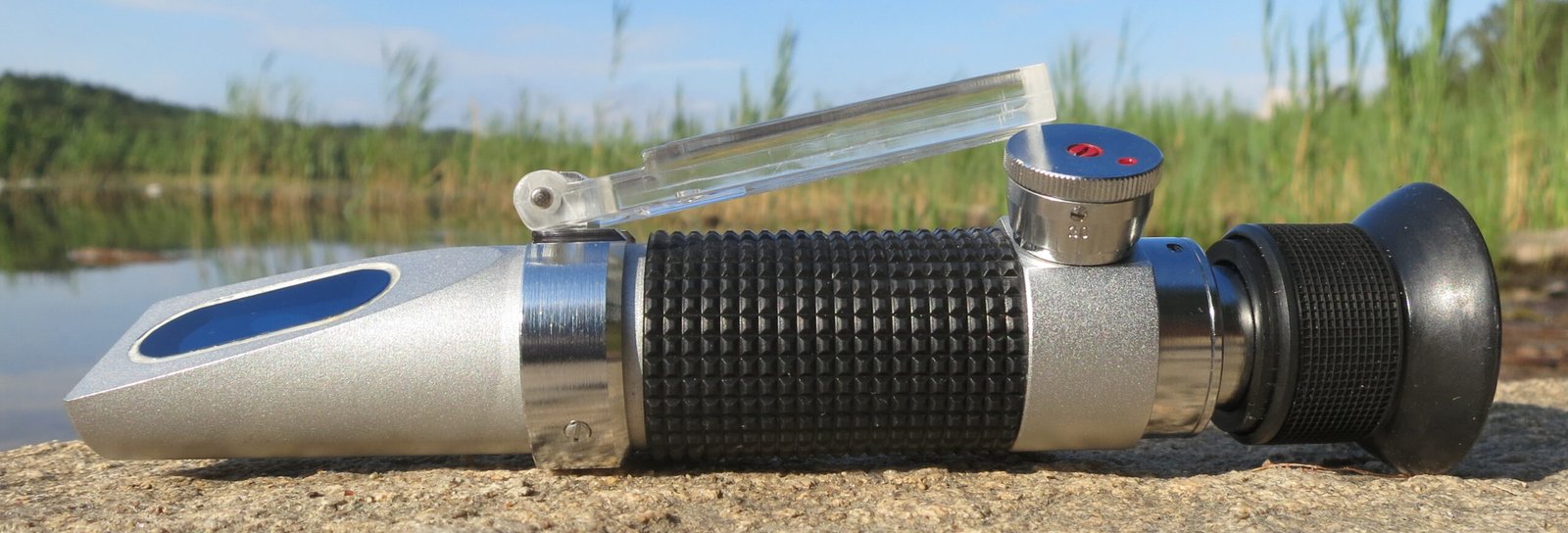
Any honey refractometer reading above 18.6% water means don’t bottle yet if you want to sell the honey as U.S. Grade A or keep it for months. Above 19%, honey can be expected to ferment. Between 17.1% and 18.6% it usually keeps, but only if its yeast count is low and it is stored cool. This guide turns each reading band into a bottling decision and covers what to do with a wet batch.
Key Takeaways
- USDA grade standards allow at most 18.6% moisture (81.4% soluble solids) for Grade A and B, and 20.0% for Grade C.
- USDA research found honey under 17.1% water will not ferment in a year regardless of yeast count. Between 18.1% and 19%, it is safe only with 10 or fewer yeast spores per gram.
- In that USDA survey, honey from the West North Central region, which includes the Dakotas and Minnesota, averaged 18.2% moisture. That is very close to the Grade A limit.
- Honey that will be creamed, or that granulates fast (like canola honey), needs a lower reading than honey sold liquid.
- Wet honey can be dried, blended or frozen.
Table of Contents
What Each Reading Means for Bottling
Two government sources set the numbers. The United States Standards for Grades of Extracted Honey (USDA Agricultural Marketing Service, effective 1985) sets the legal-style grade limits, measured by refractometer at 20 °C (68 °F). The fermentation limits come from J. W. White Jr. and Landis Doner’s chapter “Honey Composition and Properties” in USDA Agriculture Handbook 335 (revised 1980). Put together, they give this decision table:
| Moisture reading | USDA grade | Fermentation risk (White and Doner) | Bottling decision |
|---|---|---|---|
| 17.0% or lower | Grade A/B | Will not ferment in a year, whatever the yeast count | Bottle. Best for long storage and creamed honey. |
| 17.1% to 18.0% | Grade A/B | Safe for a year if yeast count is 1,000 spores per gram or less | Bottle. Store sealed and cool. |
| 18.1% to 18.6% | Grade A/B, but no margin | Safe only if yeast count is 10 spores per gram or less | Bottle only for quick sale or use. Blend or dry down for long storage or creaming. |
| 18.7% to 19.0% | Grade C only | Safe only at very low yeast counts | Don’t bottle yet. Dry or blend. |
| 19.1% to 20.0% | Grade C only | Expected to ferment even at 1 spore per gram | Don’t bottle. Dry, blend or freeze. |
| Above 20.0% | Fails Grade C (substandard) | Will ferment | Don’t bottle as table honey. Freeze and use, or make mead. |
USDA grades are voluntary and state rules differ, so check what applies where you sell. If your refractometer reads Brix, subtract the reading from 100 to get moisture.
Why the Real Safety Line Is Lower Than 18.6%
Most guides stop at 18.6% because that is the grade limit. White and Doner were clear that the grade limits “represent limits and do not indicate the preferred or proper moisture content for honey.” The real risk depends on three things together: water content, how many yeasts are in the honey, and storage temperature.
Honey with less than 17.1 percent water will not ferment in a year, irrespective of the yeast count.
You can’t measure yeast counts at home, and the same chapter says “all honey should be considered to contain yeasts.” So an 18.5% reading passes grading but is a risk for honey you plan to keep until spring.
Why this matters more in the northern plains. The same USDA chapter reports average moisture by region from 490 samples. West North Central honey, the region that includes North Dakota and Minnesota, averaged 18.2%, the wettest of the seven regions listed. Intermountain West honey averaged 16.0%. Red River Valley honey starts closer to the line.
Granulation raises the risk. When honey crystallizes, the liquid left between the crystals holds more water than the batch average, and White and Doner note that honey is more liable to ferment after granulation. Canola honey, common in this region, granulates especially fast. If you plan to cream a batch or expect it to set in the jar, aim for 17.5% or lower. The chapter itself lists 17.5% in summer as a proper moisture content for making finely granulated honey. Our guide to granulation vs. fermentation shows how to tell the two apart in a jar.
Make Sure the Number Is Real
A reading of 18.4% from one drop off the top of a bucket tells you little about the whole batch. Before you decide:
- Calibrate first with the standard or procedure the maker specifies. Our guide to testing honey moisture with a refractometer covers calibration and technique.
- Stir, then sample three spots: top, middle and near the honey gate. Honey from different supers stratifies, and wetter honey tends to sit on top.
- Read at room temperature. The USDA method reads at 20 °C (68 °F) and corrects for other temperatures. Automatic temperature compensation helps, but it works best when the honey and the instrument are both near room temperature.
- Use the highest reading, not the average, if the samples disagree. Then stir more and retest.
Testing frames before you pull supers catches most wet honey earlier. See our guide to ripe honey moisture content.
What to Do With a Wet Batch
A high reading does not mean the honey is ruined. It means it isn’t ready for the jar.
Blend it with drier honey
This is the quickest fix if you have a drier batch. Moisture blends as a weighted average. For example, 100 lb at 19.4% mixed with 150 lb at 17.0% gives (100 × 19.4 + 150 × 17.0) ÷ 250 = about 18.0%. Stir the blend thoroughly and retest. Don’t rely on the arithmetic alone.
Dry it in a dehumidified room
White and Doner cite E. C. Martin’s finding that honey absorbs moisture when stored above 60% relative humidity. So drying only works if the room air is well below that. Run a dehumidifier and a fan in a small, warm room, with honey in wide, shallow containers stirred daily. Drying supers before extraction is much faster than drying buckets. A fan alone just moves damp air around.
Keep it cold, and use it
According to the same USDA chapter, storage below 50 °F (10 °C) prevents fermentation during storage, but not afterward. Freezing wet honey keeps it for household use, baking or mead. See our guide to making mead from your own honey.
Strong heat is not a fix. White and Doner note that 150 °F for 30 minutes kills honey yeasts, but it barely removes water and it darkens honey and dulls its flavor. Gentle warming for bottling is fine (see our honey bottling temperature guide).
If a batch has already started to foam or smell sour, see what causes honey to ferment after bottling and whether fermented honey can be saved.
Frequently Asked Questions
What refractometer reading is too high to bottle honey?
Anything above 18.6% water fails USDA Grade A and B. For honey you plan to store for months or cream, aim for 17.5% or lower. Above 19%, USDA research says honey can be expected to ferment.
Is 18.5% moisture honey OK to bottle?
It meets Grade A, but it has no margin. It is safe only if the yeast count is very low. Bottle it for quick sale or use and store it cool, or blend it down before long storage.
Will honey at 19% moisture ferment?
Likely, given time. White and Doner found honey between 18.1% and 19% keeps only with 10 or fewer yeast spores per gram, and above 19% it can be expected to ferment even at one spore per gram.
How do I convert a Brix reading to honey moisture?
Subtract the Brix reading from 100. A reading of 81.4 Brix corresponds to 18.6% moisture in the USDA conversion table.
Can I bottle wet honey if I keep it in the fridge?
Storage below 50 °F prevents fermentation while it stays cold, but it can start once the honey warms up. Freezing is the safer choice for household use. Don’t sell wet honey as Grade A.
The Bottom Line
Treat 18.6% as the most you can accept, not the goal. Bottle confidently at 18.0% or lower, aim for 17.5% or lower for creamed or long-stored honey, and dry, blend or freeze anything above 18.6%. Northern plains honey starts closer to that limit, so test every batch.