Reviewed by Thomas B. · Last Updated September 24, 2026 · How we review
Ripe honey should contain 18 percent water or less, and 17 percent or less is better for long storage. The U.S. Grade A limit is 18.6 percent, and the international Codex limit for most honey is 20 percent. On the hive, frames that are at least 90 percent capped on both sides and don’t drip when shaken are usually ripe. Because capping can mislead in humid weather, check the uncapped cells with a refractometer before you pull the supers. If the least-ripe honey you are taking reads 18 percent or lower, the batch will be fine.
This guide is about deciding ripeness on the frame, before the supers come off. For the refractometer technique itself, see how to test honey moisture with a refractometer. For extracted honey that reads high, see refractometer readings that mean don’t bottle yet.
Key Takeaways
- Target 18 percent or less. Below about 17 percent there is very little risk of fermentation. The USDA Grade A limit is 18.6 percent.
- Use capping as a guide, then test. A frame that is 90 percent capped on both sides is usually ripe, but a wet season can produce capped honey that is too wet.
- Test the uncapped cells. They set the risk for the whole batch. If they read 18 percent or lower, the frame is ready.
- Sample several frames from each super. Outside frames and top supers often ripen last.
- Pull supers on a dry day and extract promptly. Honey out of the hive can absorb moisture from humid air, even through cappings.
Table of Contents
- Moisture Targets for Ripe Honey
- The Capping Rule and Its Limits
- How to Test Ripeness on the Hive
- Deciding When to Pull Supers
- Partly Capped Frames: The Blending Math
- Timing the Pull in the Red River Valley
- Frequently Asked Questions
Moisture Targets for Ripe Honey
Nectar starts out far too wet to keep, and bees evaporate it down before sealing it. According to the National Honey Board’s reference composition for U.S. honey, based on USDA survey data, finished honey averages 17.2 percent moisture, with a range from 13.4 to 22.9 percent. The high end of that range is why checking matters. The official lines are:
| Moisture | What it means | Source |
|---|---|---|
| 17% or less | Very little risk of fermentation | Bogdanov, Bee Product Science |
| Under 18% | Ideal range to minimise the chance of fermentation | Southern Cross University fact sheet |
| 18.6% or less | Meets U.S. Grade A and Grade B (minimum 81.4% soluble solids) | USDA grading standard |
| Up to 20% | U.S. Grade C limit and the Codex limit for most honeys | USDA; Codex CXS 12-1981 |
| Over 20% | Fails the Codex standard; fermentation is likely | Codex CXS 12-1981 |
The USDA Standards for Grades of Extracted Honey express the limit as soluble solids: Grade A needs at least 81.4 percent, which is 18.6 percent moisture. The Codex Standard for Honey allows up to 20 percent for most honeys and 23 percent for heather honey.
Moisture and yeast work together. Southern Cross University’s fermentation fact sheet notes that honey with a very low yeast count may not ferment at up to 19 percent moisture, while honey with a high yeast count is more likely to. You can’t see the yeast count, which is why 18 percent is the safe working target rather than the legal limit. Moisture also affects what you can make: creamed honey, for example, needs honey at about 18 percent or lower. See our creamed honey seeding guide.
The Capping Rule and Its Limits
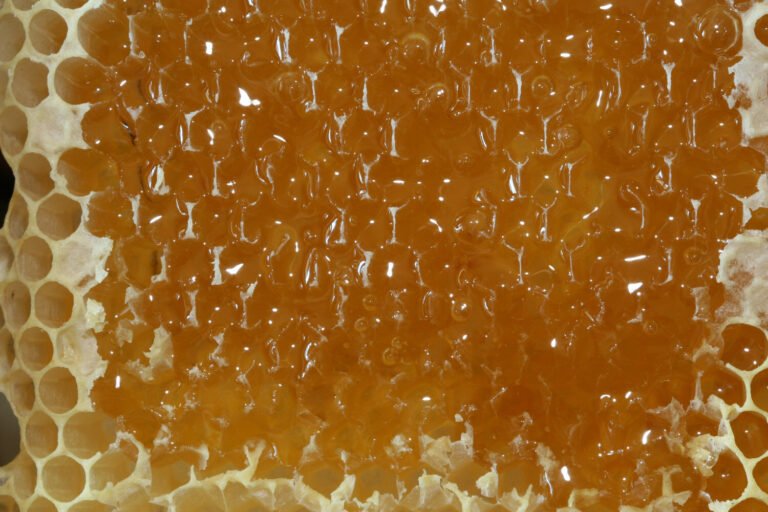
Bees seal cells with wax once the honey inside is dry enough, so capping is the traditional sign of ripe honey. The Southern Cross University fact sheet gives a clear version of the rule:
“A frame containing honey that is over 90% capped on both sides is ready to extract.”
It pairs this with a shake test: hold the frame flat over the open hive and give it a sharp shake. If no nectar drips from the uncapped cells, that is a good sign. Our guide to testing honey moisture without an instrument explains what the shake test can and can’t tell you.
The capping rule has two weaknesses:
- Capped doesn’t guarantee dry. Stefan Bogdanov, in his chapter on the physical properties of honey, notes that in a moist climate bees have difficulty keeping moisture down to safe levels. In a wet, humid season, capped honey can read above 18.6 percent. If capped frames do read high, handle them like partly capped ones: use the blending math below, or leave them on for a few more days of flow.
- Uncapped doesn’t always mean wet. At the end of a flow, bees sometimes leave the last cells unsealed even though the honey in them is ripe. A reading, not the wax, tells you whether those frames can come off.
How to Test Ripeness on the Hive
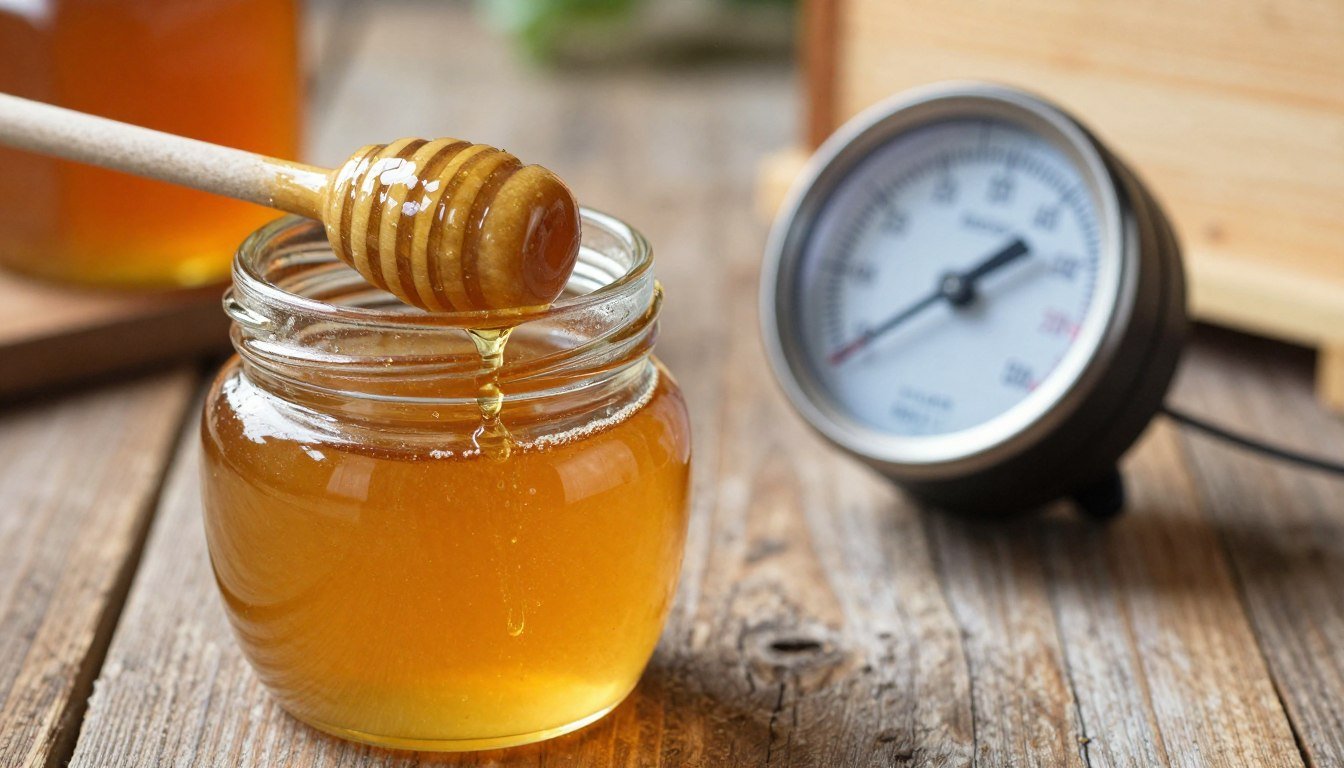
A pocket refractometer with automatic temperature compensation (ATC) lets you decide at the hive instead of guessing. Calibrate it before the season. Our refractometer testing guide covers calibration and temperature correction.
Step 1: Choose frames that represent the super
Pick at least three frames per super: one from the centre, one from next to the centre, and one outside frame. Outside frames and the top super on the stack usually ripen last, so they give you the worst-case reading.
Step 2: Sample the uncapped cells, not the capped ones
Draw a drop from the uncapped cells with a clean toothpick or the tip of a plastic spoon. The uncapped honey is what might be wet, so it sets the batch risk. If you also want a baseline, break a couple of cappings and test beneath them.
Step 3: Read it right away
Put the drop on the prism, close the cover, and read it within a minute or two. Honey is hygroscopic, and a drop left open in humid air can pick up moisture. Wipe the prism with a damp cloth and dry it between samples.
Step 4: Write down every reading
Note the hive, super, frame position and reading. A few seasons of notes show you how your locations and flows ripen, and which hives you can trust on capping alone.
Bogdanov notes that refractometer readings slightly overestimate the true water content compared with laboratory Karl Fischer measurements, so a reading at the edge of your target is, if anything, a conservative one. For a short visual demonstration, the University of Guelph Honey Bee Research Centre has published a video on measuring honey moisture.
Deciding When to Pull Supers
| Frame condition | Reading from uncapped cells | Decision |
|---|---|---|
| 90% or more capped on both sides, no drip on shake | Spot-check only | Pull |
| Mostly capped, some open cells | 18.0% or lower | Pull |
| Mostly capped, some open cells | 18.1 to 20% | Pull only if blending with drier frames keeps the batch at or below 18%. Otherwise leave it on for a few more days of flow |
| Large areas uncapped, or nectar shakes out | Over 20%, or not worth testing | Leave on the hive |
| Flow over, frames won’t finish | Stuck above 18% | Leave for the bees’ winter stores, or pull and extract separately and keep that honey apart |
If you need to clear bees from ripe supers, a bee escape board gives the bees a day or two to leave. Use that time well: an escape board left on through a humid spell gives the honey time to take up moisture.
Partly Capped Frames: The Blending Math
The 90 percent rule is conservative because it assumes you know nothing about the uncapped honey. With a refractometer you do, and you can estimate the whole batch. Moisture blends roughly by weight, so a batch is close to the weighted average of its parts.
A worked example: a super holds frames that are, on average, 80 percent capped. The capped honey reads 17.0 percent and the uncapped cells read 20.0 percent. The blend is about (0.8 × 17.0) + (0.2 × 20.0) = 13.6 + 4.0 = 17.6 percent, which is under the 18 percent target. If the uncapped cells read 23 percent instead, the blend rises to about 18.2 percent. That is still within Grade A, but above the working target, so leave the frames on or blend with drier supers.
Use this math to decide which frames to pull, not to justify taking unripe nectar. Very wet uncapped honey is also the most likely to carry active yeast, and extracted honey can pick up more water later. For how that happens, see how humidity affects extracted honey.
Timing the Pull in the Red River Valley
In eastern North Dakota and western Minnesota, the main flow is short and heavy, and the decisions come quickly:
- Pull on dry afternoons. Morning dew and rainy spells raise the humidity around the boxes. The Southern Cross fact sheet advises against taking honey from the hive or extracting during rainy weather, and warns that once frames are out of the hive, moisture from the air can get through the cappings.
- Extract within a day or two. Supers stacked in a humid garage or honey house take on water. Bogdanov’s equilibrium table for clover honey shows honey at about 18.3 percent moisture balances with air at 60 percent relative humidity, and at 20.9 percent with air at 65 percent. Above about 60 percent relative humidity, extracted honey tends to absorb water rather than lose it.
- Take canola off as soon as it is capped. Canola ripens fast and can crystallize in the comb. See why some honeys crystallize faster than others.
- Test late-season supers carefully. Cooler nights and a fading flow slow ripening. The last supers of the year are the ones most likely to be capped but still wet, or wet and never capped.
For how the colony ripens honey and how harvest timing differs by region, see how honey matures in the comb.
Moisture content is not the whole story; see water activity vs moisture content in honey.
Frequently Asked Questions
What moisture content is ripe honey?
Ripe honey is at or below about 18 percent moisture. Below 17 percent gives very little fermentation risk. The U.S. Grade A limit is 18.6 percent, and the Codex limit for most honey is 20 percent.
Is capped honey always ripe?
Usually, but not always. In wet, humid seasons bees can cap honey that is still above 18.6 percent moisture, so test a few capped cells as well when the weather has been damp.
How many frames should I test before pulling supers?
Test at least three frames per super, including an outside frame, and focus on the uncapped cells. Test the top super separately, since it usually ripens last.
Can I extract frames that are not fully capped?
Yes, if the uncapped cells read 18 percent or less, or if blending with drier frames keeps the whole batch at or below 18 percent. If nectar shakes out of the frame, leave it on the hive.
Why do my refractometer readings vary from frame to frame?
Frames ripen at different speeds depending on their position, how recently nectar was stored in them, and the weather. Uncalibrated instruments and cold samples also cause variation, so calibrate the refractometer and let samples reach room temperature.
Does honey keep drying after I pull the supers?
Only in dry air. Below about 60 percent relative humidity, supers in a warm room with a dehumidifier can lose a little moisture. In humid air they gain it, so extract promptly.
The Bottom Line
Ripe honey is at or below 18 percent moisture. The 90 percent capped rule is a good starting point, but a refractometer reading from the uncapped cells is what should decide when the supers come off. Test several frames per super, pull on dry days, extract promptly, and use the blending math to take partly capped frames only when the whole batch stays at or below 18 percent.