Reviewed by Elena P. · Last Updated September 23, 2026 · How we review
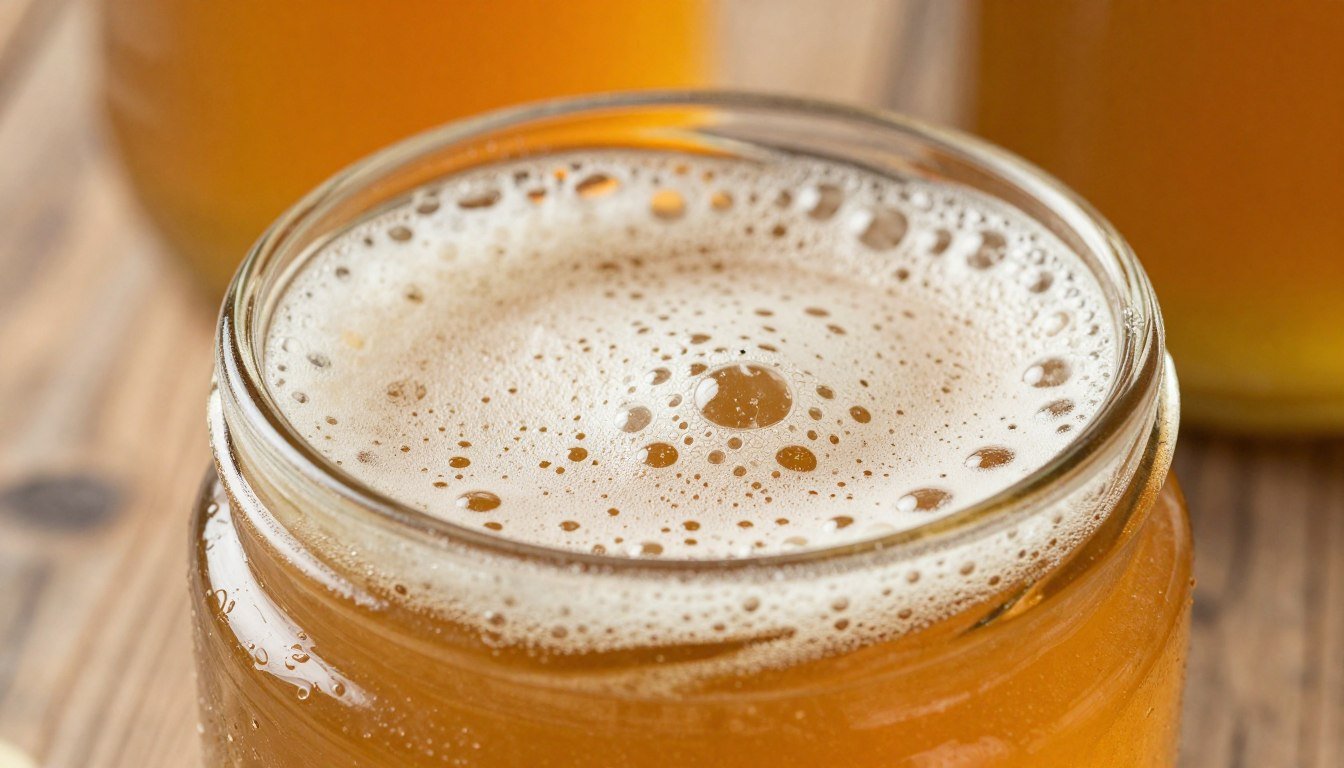
The foam on honey after bottling is almost always air: tiny bubbles whipped in during extraction, straining and pouring, carrying fine specks of wax and pollen up with them as they slowly rise. It is safe to eat, doesn’t change the honey underneath, and can be skimmed off or left alone. The main exception is foam that keeps growing and smells sour or yeasty. That is fermentation, and it has a different cause and a different fix.
Below: why the foam shows up a day or two after the jars are filled rather than straight away, how to tell harmless foam from fermentation and from the white “frosting” of crystallizing honey, and what bottlers can do to keep it out of the jar.
Key Takeaways
- Bottling foam is trapped air plus fine wax, pollen and protein particles. It is harmless and more common in raw, lightly strained honey.
- It appears after bottling because small bubbles rise very slowly through thick honey. By our Stokes’ law estimate, a bubble 0.1 mm across can take more than a day to climb a jar.
- Fermentation foam is different: it keeps forming, smells sour or alcoholic, and comes from yeast in honey that is too wet.
- White streaks on the jar shoulder or sides are usually frosting, a crystallization effect, not foam.
- Settling honey for a day or two in a warm tank and filling jars gently from the bottom removes most foam before it reaches customers.
Table of Contents
What the Foam Actually Is
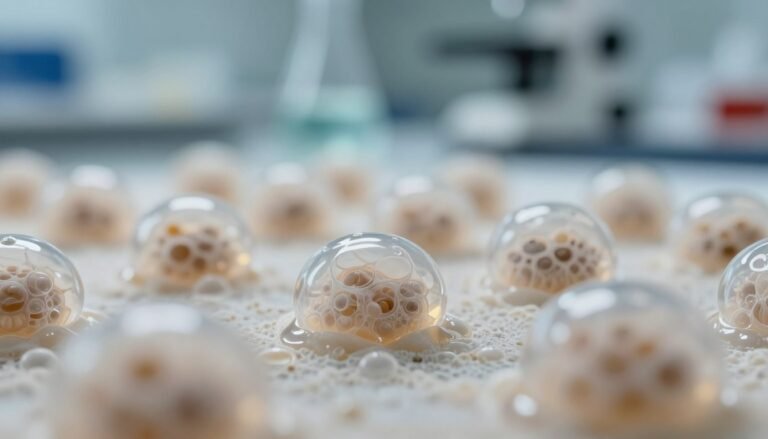
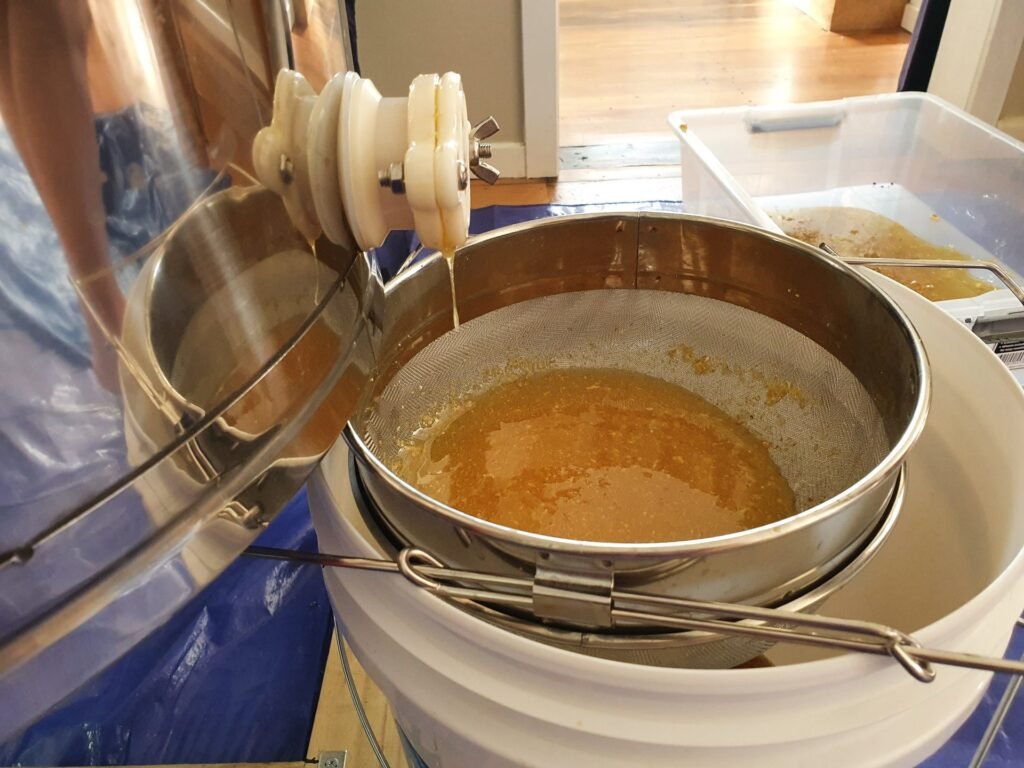
Honey foam is a layer of fine air bubbles held together at the surface, usually white or pale cream and from a few millimeters to a centimeter thick. The air gets in during every step that stirs or drops honey: spinning in the extractor, falling through a strainer, pumping, and pouring into jars.
Two things make that air form a lasting layer instead of just popping at the surface:
- Particles. Raw, lightly strained honey carries very fine wax, pollen and propolis particles. They rise with the bubbles and help hold the foam together, which is why the foam can look slightly speckled.
- Protein. Honey contains small amounts of protein from nectar and from the bees themselves. Proteins stabilize bubble surfaces, the same way they do in beer foam or whipped egg white. Beekeepers commonly report more foam on darker, stronger honeys such as buckwheat.
Heavily filtered and heated commercial honey rarely shows foam, because the heat thins the honey so bubbles rise and escape during processing, and fine filtration removes the particles. Foam in a jar is therefore a sign of gentle handling, though not proof of quality by itself.
Why It Appears After Bottling, Not Before
Many beekeepers fill jars that look clear, and find a white cap on them the next morning. That delay comes down to viscosity.
A bubble rises through a liquid at a speed that increases with the square of its size and falls in proportion to the liquid’s viscosity. This is Stokes’ law. Honey is very viscous: Yanniotis and colleagues measured values from about 0.4 to more than 23 pascal-seconds across honeys, moisture levels and temperatures between 25 and 45°C. Viscosity was highest in cooler, drier honey (Journal of Food Engineering, 2006). Water, for comparison, is about 0.001.
Plugging typical numbers into Stokes’ law gives a feel for the timescale. These are our own estimates, assuming honey at about 1.4 g/ml and a viscosity of 10 Pa·s, typical of room-temperature honey:
| Bubble diameter | Approx. rise speed | Time to rise 10 cm (a typical jar) |
|---|---|---|
| 1 mm | about 27 cm per hour | under 30 minutes |
| 0.3 mm | about 2.5 cm per hour | about 4 hours |
| 0.1 mm | about 0.3 cm per hour | about 1.5 days |
| 0.1 mm in cool honey (viscosity doubled) | about 0.14 cm per hour | about 3 days |
Big bubbles clear quickly, but the fine ones that make up foam take hours to days, so the layer builds up after the lids go on. Warmer honey clears much faster, because viscosity drops steeply as honey warms. That is why settling tanks are usually kept warm. It is also why foam can keep appearing in jars stored somewhere cool.
Bubbles Suspended Through the Jar
Sometimes the air never makes it to the top. Tiny bubbles can hang in the body of the honey for days, giving a jar a slightly cloudy or sparkly look. The physics is the same as for foam: the smallest bubbles rise so slowly through cool, thick honey that they seem to stand still (see the table above).
- In liquid honey, suspended bubbles usually rise and join the foam layer over a few days if the jar is kept at a warm room temperature. Standing the jar in warm, not hot, water speeds this up.
- In crystallized or creamed honey, bubbles trapped as the honey set stay put for good, because the crystals hold them in place. They are harmless. Near the glass they can look much like frosting.
- Bubbles that keep appearing weeks after bottling, together with a sour smell, fizzing when the lid comes off or a domed lid, are a different matter. That is carbon dioxide from fermenting yeast, not trapped air.
A simple check: note how many bubbles and how much foam a jar has, keep it at room temperature and look again a week later. Trapped air stays the same or clears; fermentation gas keeps increasing.
Foam, Fermentation or Frosting?
Three different things can put white material at the top of a honey jar, and only one of them is a problem.
“Fermented honey has a strong sharp smell, is often very runny, and sometimes foamy.”
Southern Cross University, Fermentation in Honey fact sheet
| Sign | Bottling foam (air) | Fermentation | Frosting |
|---|---|---|---|
| Where it appears | Top surface only | Top surface, sometimes throughout | White streaks on the jar shoulder and sides |
| When | Hours to days after bottling, then stable | Weeks to months later, and keeps increasing | As honey crystallizes, often in creamed or set honey |
| Smell and taste | Normal honey | Sour, yeasty or alcoholic | Normal honey |
| Other clues | Stays put after skimming or reforms slightly | Runny honey, domed or leaking lids, fizz when opened | Honey is solid or setting underneath |
| Safe to eat? | Yes | Not as table honey | Yes |
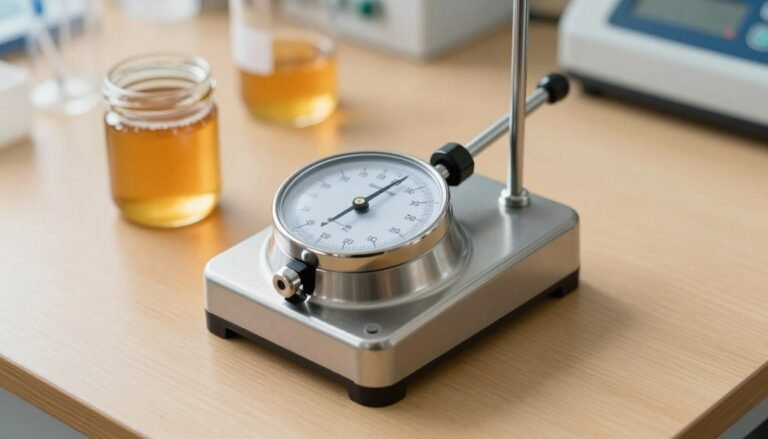
Fermentation happens when naturally present yeasts grow in honey with too much water. The Southern Cross University fact sheet lists moisture above 18% and temperatures over 10°C (50°F) among the main causes. Check suspect honey with a refractometer; our guide to using a honey refractometer explains how. See also what causes honey to ferment after bottling and how to identify fermented honey.
Frosting is covered in depth by Scotland-based beekeeper and virologist David Evans at The Apiarist. It spoils the look of a jar but not the honey. For how frosting and granulation differ from fermentation, see honey granulation vs fermentation. Layers that form lower down in liquid honey are a separate issue again; see why honey separates in the jar.
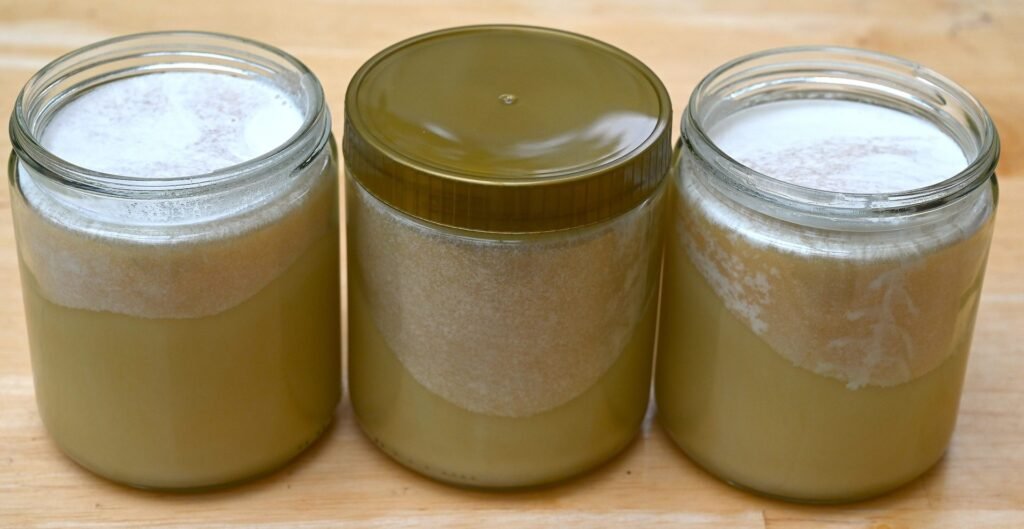
What to Do With Foam in a Jar
- Leave it. It is honey with air in it. Many buyers of raw honey like it and spread it on toast.
- Skim it. A clean, dry spoon lifts it off in seconds. Keep water out of the jar, because added moisture is what makes honey ferment.
- Stir it in. This works, but stirring adds new air, so a thinner layer often comes back.
If you sell honey, skimming jars before labeling gives a cleaner look. Settling out the foam before bottling, below, is the better fix.
How Bottlers Keep Foam Out of Jars
- Settle before you bottle. Let strained honey stand in a bottling tank long enough for bubbles to rise, typically a day or two, then skim the top or draw honey from the bottom gate so the foam stays behind. Our guide on how long to let honey settle covers timing.
- Keep it warm, not hot. Warming the room or tank lowers viscosity so bubbles clear faster, without the quality losses of high heat. See honey bottling temperatures.
- Don’t let honey fall. Run strainer outlets and filling gates close to the surface, and tilt jars so honey runs down the side instead of splashing to the bottom.
- Stop before the dregs. The last honey out of the tank carries the accumulated foam. Bottle it separately for home use.
For the full bottling routine, see avoiding air bubbles when bottling honey.
Frequently Asked Questions
Is the white foam on top of honey safe to eat?
Yes. Bottling foam is honey with trapped air and fine wax and pollen particles. It tastes the same as the rest of the jar. Only foam that keeps growing and smells sour suggests fermentation.
Why does foam appear the day after I bottle honey?
Fine bubbles rise very slowly through thick honey. Bubbles around 0.1 mm across can take more than a day to reach the surface of a jar at room temperature, so the foam layer builds up after filling.
How can I tell if foam means my honey is fermenting?
Smell and time tell. Bottling foam smells like honey and stops growing within a few days. Fermenting honey smells sour or yeasty, keeps producing foam, and may push up lids. A refractometer reading above about 18% moisture supports fermentation.
Does foam mean the honey is raw?
It suggests the honey was not heavily heated or finely filtered, but it is not proof on its own. Raw honey that was settled carefully may show no foam at all.
Why are there tiny bubbles all through my jar of honey?
They are air that has not finished rising. Fine bubbles move very slowly through thick honey, especially when it is cool. In liquid honey they usually clear within days in a warm room. In crystallized honey they stay trapped for good. Neither affects safety unless the bubbles keep increasing and the honey smells sour, which points to fermentation.
Will stirring the foam back in get rid of it?
Temporarily. Stirring breaks up the layer but also adds new air, so a thinner layer usually returns. Skimming is the cleaner fix.
Why does some honey foam more than others?
Honeys higher in protein and fine particles hold foam longer, and cooler, thicker honey clears its bubbles more slowly. Beekeepers commonly see more foam on dark honeys such as buckwheat, and on honey that was pumped rather than gravity-fed.
The Bottom Line
Foam on honey after bottling is slow-rising air, not a defect. Eat it, skim it, or settle your honey longer and warmer before bottling to keep it out of the jar. Only foam that keeps growing and smells sour needs attention, and that points to moisture and fermentation.