
Reviewed by Thomas B. · Last Updated September 23, 2026 · How we review
For raw honey, bottle at about 95–105°F (35–40°C), measured in the honey itself. That’s close to brood-nest temperature. It’s warm enough for the honey to flow cleanly through a honey gate and for air bubbles to rise, and cool enough that a day or two at that temperature costs very little enzyme activity. You can go up to about 120°F (49°C) briefly to speed up a big run. Above 140°F (60°C) you’re pasteurizing, not bottling.
What damages honey is heat multiplied by time, not a single temperature. The rest of this guide covers why the flow benefit tops out around 105°F, how to run a bottling day at the right temperature, and how to handle fast-granulating northern honeys. For the chemistry of enzyme loss, see how heating alters honey enzymes.
Key Takeaways
- The target is 95–105°F in the honey for raw bottling. Going up to 120°F is acceptable for short runs, and holding above 140°F is heat treatment.
- Warming gives you diminishing returns. National Honey Board viscosity data shows the biggest drop in thickness happens between room temperature and about 103°F.
- Time counts as much as temperature. A week in a hot warming box can do more damage than an hour at a higher setting.
- Check moisture before you warm the honey. Heat makes wet honey easier to bottle, but it doesn’t make it safe from fermentation.
- Fill jars to at least 95% of capacity (the USDA-recommended fill), and store the finished jars at 64–75°F.
Table of Contents
Temperature Targets at a Glance
| Stage | Target (in the honey) | Why |
|---|---|---|
| Buckets waiting to be bottled | 64–75°F (18–24°C) | The National Honey Board’s recommended storage range. Cooler storage speeds up granulation. |
| Warming before bottling | Cabinet or water jacket set to about 100–105°F | Brings the honey up evenly without hot spots |
| Honey at the gate while filling | 95–105°F (35–40°C) | Flows well, lets bubbles rise, and costs little in enzymes |
| Short, faster runs | Up to about 120°F (49°C) | Faster straining and filling. Keep the time at this temperature short. |
| Heat treatment (on purpose) | 140–160°F (60–71°C) | Stops yeast and delays granulation. The honey is no longer raw. |
If you’ve seen 130°F quoted from the USDA grade standards, that’s the temperature graders use to liquefy crystallized samples before scoring them. It isn’t a bottling recommendation.
Why Warm Honey Bottles Better: The Viscosity Curve
Honey thins out dramatically as it warms, but most of the gain comes early. These figures come from the National Honey Board’s Honey: A Reference Guide to Nature’s Sweetener, for honey at 16.1% moisture:
| Honey temperature | Viscosity (poise) | What it’s like to bottle |
|---|---|---|
| 57°F (13.7°C) | 600 | Barely pours. A typical unheated honey house in October. |
| 84°F (29°C) | 68.4 | Workable, but slow through a strainer. Bubbles rise slowly. |
| 103°F (39.4°C) | 21.4 | Flows freely. The practical sweet spot. |
| 119°F (48.1°C) | 10.7 | Fast, but you’ve added 16°F to halve the viscosity again. |
| 160°F (71.1°C) | 2.6 | Pasteurization territory |
Going from 84°F to 103°F cuts viscosity by about 70%. Going on to 119°F only halves it again, and every extra degree speeds up enzyme loss and HMF formation. That’s the reason the 95–105°F range works: it gets most of the flow benefit for very little of the cost.
Moisture matters here too. The same guide notes that a 1% difference in moisture changes viscosity about as much as 3.5°C (roughly 6°F) of temperature. So a dry 15.5% honey will feel stiffer at the same temperature than an 18% honey. That doesn’t mean the stiff honey needs more heat. It usually just needs more time.
Why Hotter Isn’t Better: Time Times Temperature
The international honey standard is explicit that heating must stay below the point of damage:
“Honey shall not be heated or processed to such an extent that its essential composition is changed and/ or its quality is impaired.”
What that means in practice depends on how long the honey stays hot. USDA half-life figures put diastase at roughly 1,500 days at 68°F but only about 2.5 days at 130°F. Invertase is more sensitive still. A few hours at 105°F on bottling day barely registers. A bucket forgotten in a warming cabinet over a long weekend is another matter. The National Honey Board also notes that honey stored above 85°F for long periods darkens and picks up subtle flavor changes. So a hot shed in August is also “heating” your honey, just slowly.
Three habits keep the time short:
- Warm only what you’ll bottle that day.
- Use a thermostat, and check it with a separate probe thermometer in the center of the bucket.
- Don’t reheat the same honey several times. Each warming adds to the total.
A Bottling-Day Routine, Step by Step
Step 1: Check moisture before you warm anything
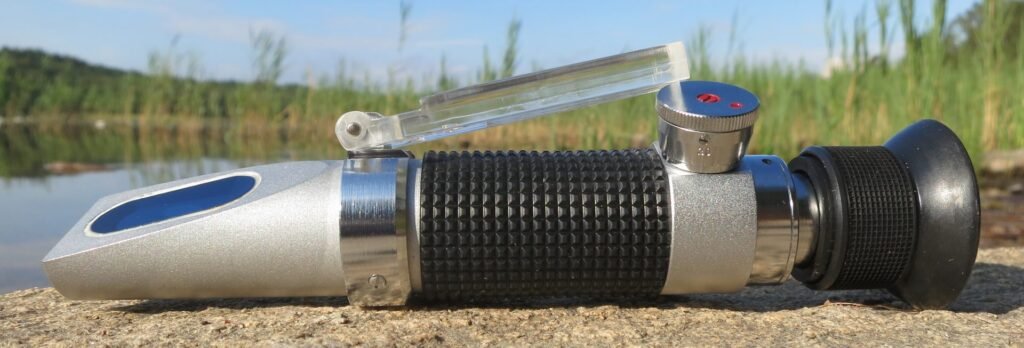
Take a refractometer reading from the mixed bucket. The USDA grade limit for Grades A and B is 18.6% moisture. Warming wet honey makes it pour beautifully, but it doesn’t make it safe. The jars will ferment on the shelf later.
Step 2: Warm evenly, not quickly
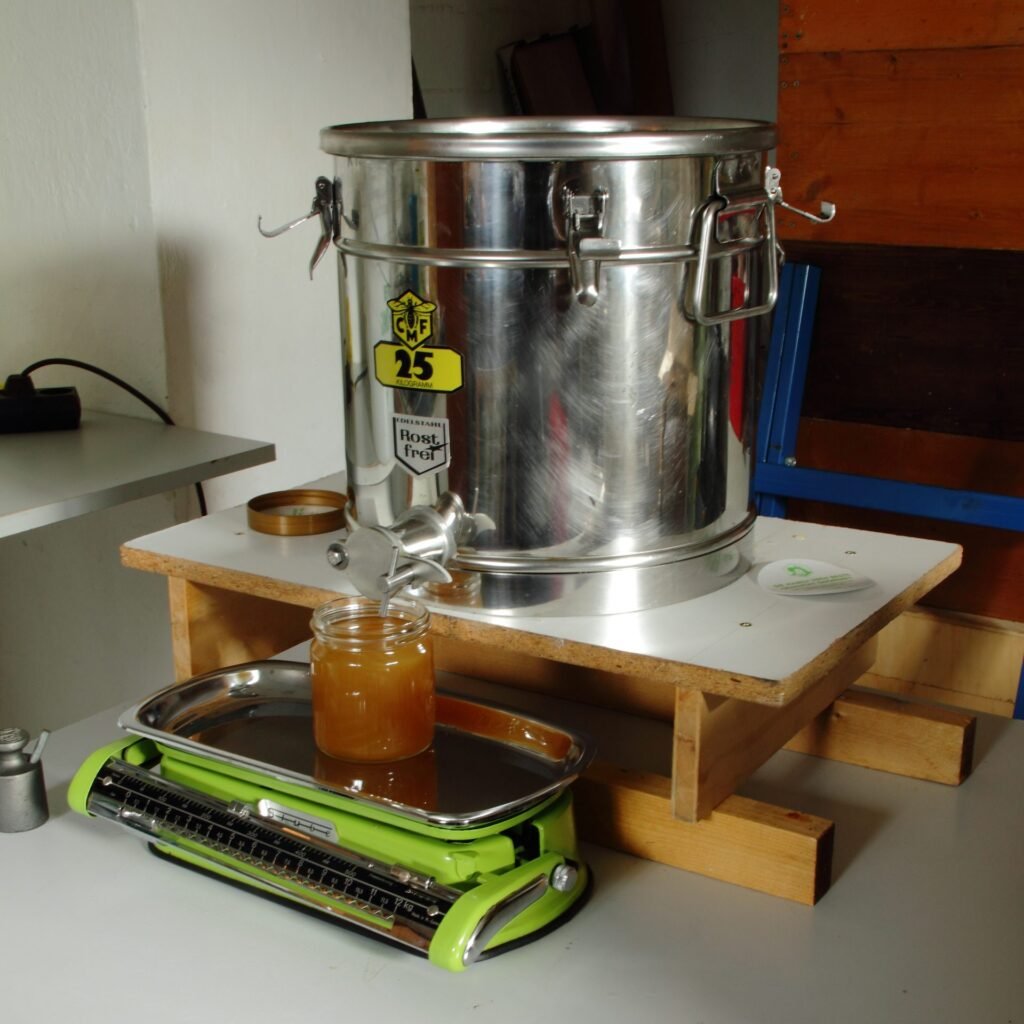
Use a water-jacketed tank, a honey warming cabinet, or a bucket heater blanket set at about 100–105°F. A 60-lb bucket that starts out cold can take many hours to warm all the way through. Plan to start the night before rather than turning the heat up. Direct flame and stovetop pots create scorched hot spots.
Step 3: Let it settle while it’s warm
Warm honey releases air far faster than cold honey. Let the tank sit so bubbles and fine wax rise to the top. For how long is long enough, see how long honey can sit in a settling tank. For choosing a tank, see the settling tank size guide.
Step 4: Skim, then fill from the bottom gate
Skim the foam layer off the top and draw honey from the bottom gate. The cleanest honey is below the surface layer. Fill slowly down the side of the jar to avoid folding air back in. See how to avoid air bubbles when bottling honey.
Step 5: Fill to the right level
The U.S. Standards for Grades of Extracted Honey recommend that honey fill at least 95% of the capacity of any container of a gallon or less. More detail is in our headspace guidelines. Honey is labeled by net weight, not volume, so check-weigh the first few jars of each run on a scale and raise the fill line if they come up light. Keep jars at room temperature rather than in a cold garage. Room-temperature glass takes warm honey without trouble.
Step 6: Cap, code and cool
Cap the jars, write the lot code on each one (see lot tracking), and let the jars come down to room temperature before you case them. Store them at 64–75°F.
Choosing a Warming Method
How you warm the honey matters about as much as the setpoint. You’re looking for gentle heat spread over a large surface, and a thermostat you’ve checked against a probe thermometer.
| Method | Best for | Watch out for |
|---|---|---|
| Warming cabinet (insulated box with a thermostat) | Several buckets at once, overnight warming | Forgotten buckets. Set a timer or alarm. |
| Bucket heater blanket | One or two 5-gallon pails | The honey against the wall gets hotter than the center. Stir before you check the temperature. |
| Water-jacketed bottling tank | Regular bottling runs | Cost. Check the water temperature and the honey temperature separately. |
| Warm-water bath for jars | A few jars, or small batches | Loosen lids, and keep water out of the jar. |
| Stovetop, microwave or direct flame | Not recommended | Scorching and local hot spots far above the average temperature |
For tank materials and sizes, see stainless steel vs plastic bottling tanks.
Special cases: chunk honey and creamed honey
Chunk (cut-comb-in-jar) honey: pour the liquid honey at the low end of the range, around 95°F. Beeswax melts at roughly 144–147°F (62–64°C) and starts softening well below that, so hot honey poured over comb can slump or cloud it. Creamed honey: don’t warm it after seeding. Pack it while it’s still pourable at cool room temperature, then move it somewhere cool so the fine crystals set. See creamed honey vs whipped honey.
Troubleshooting by Temperature
| Problem | Likely temperature cause | Fix |
|---|---|---|
| Cloudy jars full of fine bubbles | Bottled too cold, or right after extraction | Warm to 95–105°F and settle before filling |
| White froth on top a day later | Air and wax rising in honey that wasn’t settled long enough | Settle longer. See foam on honey after bottling. |
| Honey darker or “cooked” tasting | Held too hot or too long, or stored above 85°F | Lower the setpoint, shorten the hold, and move storage somewhere cooler |
| Jars granulate within weeks | Seed crystals weren’t fully dissolved, or cool storage | Warm long enough to dissolve crystals, and store at 64–75°F |
| Strainer keeps clogging | Honey too cold for the mesh size | Warm to the target range, or strain coarse first and fine second |
| Lids domed or leaking weeks later | Fermentation: moisture was too high | Not a temperature fix. See whether fermented honey can be saved. |
Fast-Granulating Honey in the Red River Valley
Canola, sunflower and sweet clover honeys from eastern North Dakota and western Minnesota often start to granulate within weeks. Canola can go faster than that. The honey house is usually cold by the time the last supers come off. The National Honey Board notes that storage between 35°F and 60°F speeds up crystallization, which describes an unheated October honey house exactly.
- Bottle soon after extraction and settling, while the honey is still liquid, rather than warming granulated buckets again later.
- If a bucket has already set, liquefy it gently rather than quickly. See how to reliquefy crystallized honey without damage.
- Or turn the granulation to your advantage and sell it as creamed honey. See the seeding ratio for creamed honey.
Warming to 95–105°F slows re-granulation a little by dissolving the smallest crystals. It won’t stop a canola honey from setting. The only thing that reliably delays it is the heat treatment that also ends its “raw” status.
Frequently Asked Questions
What temperature should honey be for bottling?
About 95–105°F (35–40°C) in the honey itself. It flows well at that temperature and loses very little quality over a normal bottling day.
Should honey be bottled warm or cool?
Slightly warm. At 95–105°F honey flows cleanly and air bubbles rise out of it, and a normal bottling day at that temperature costs very little enzyme activity. You can bottle liquid honey cool, but it will be slow and trap more air: honey at 57°F is almost nine times as viscous as honey at 84°F, based on National Honey Board figures. What harms honey is being held hot for a long time, not being bottled warm.
Does warming honey to 110°F destroy its enzymes?
Not in a few hours. Enzyme loss depends on temperature and time together. A bottling day at 105–110°F costs a small fraction of the activity that a year of warm storage does.
Should I bottle honey straight from the extractor?
Usually not. Letting it settle first gets rid of air and wax. See can you bottle honey straight from the extractor.
Can I still call honey raw if I warm it to bottle it?
US federal rules don’t define “raw” honey. Most beekeepers use the term for honey that’s warmed no more than the hive itself does and is strained rather than fine-filtered. See raw vs processed honey.
How should bottled honey be stored?
In sealed jars at 64–75°F, out of direct sun. Cooler storage speeds up granulation, and long storage above 85°F darkens honey.
The Bottom Line
Warm honey gently to 95–105°F, let it settle, and bottle it the same day. That gets you nearly all of the flow benefit with very little quality loss. Check moisture before you warm anything, keep the time at temperature short, and store the finished jars at room temperature.



.jpg)