Reviewed by Daniel M. · Last Updated September 24, 2026 · How we review
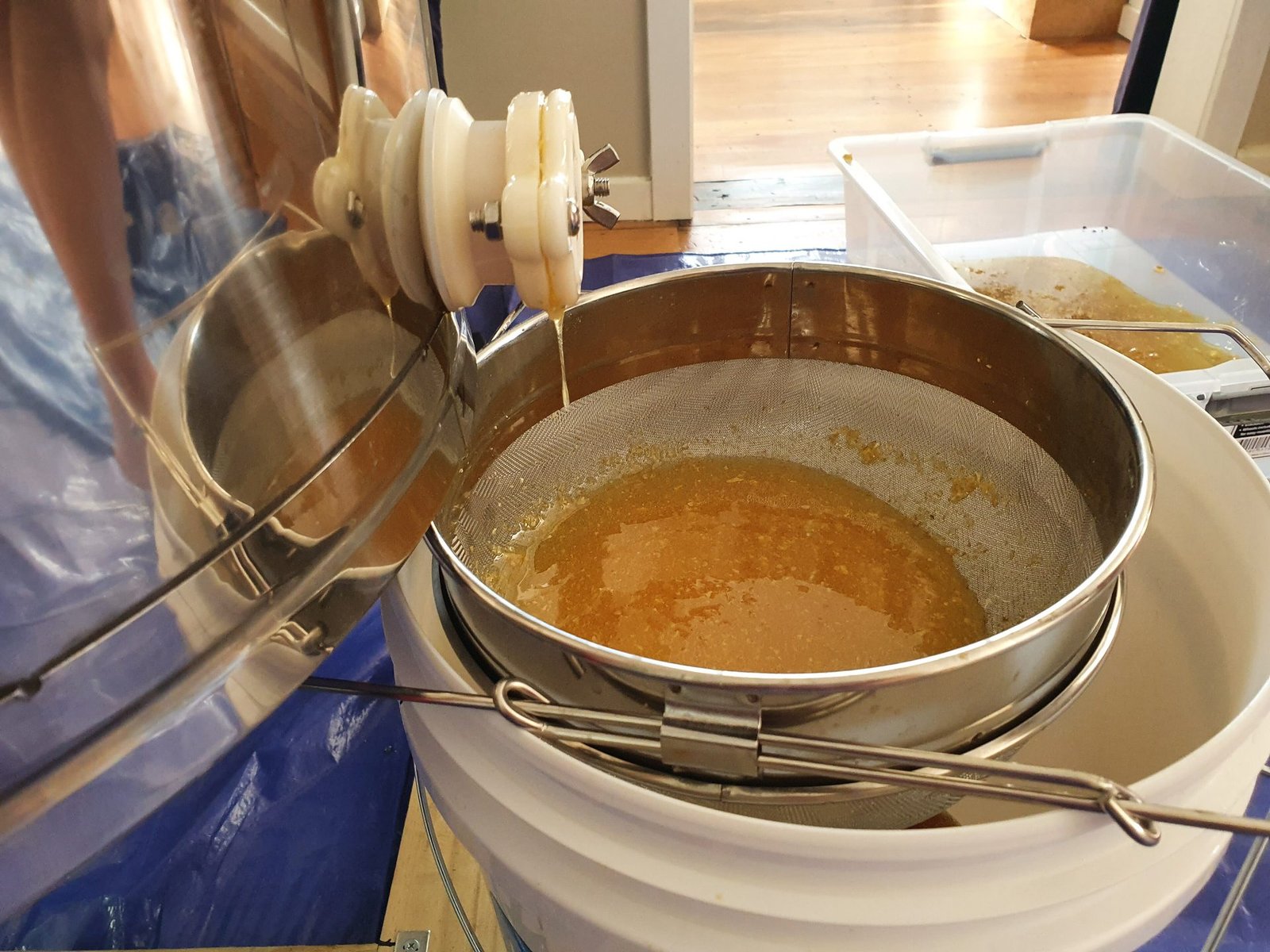
Yes, you can bottle honey straight from the extractor. Nothing about it is unsafe if the honey is ripe and strained. You’ll get jars with more foam, bubbles and specks of wax, though. Honey fresh from the extractor is full of air whipped in by spinning, and it carries wax fragments. Strain it into a bucket and let it stand warm for a day or two. The wax and bubbles rise, and you can fill clean jars from the bottom gate. The one check you can’t skip is moisture. Test the mixed batch, and bottle it only if it reads 18.6% or less, the USDA Grade A limit. Wet honey can ferment in the jar, and settling won’t fix that.
This guide is about the decision to bottle now or wait. For the details of each step, see our guides to how long honey can sit in a settling tank, honey bottling temperature and avoiding air bubbles when bottling honey.
Key Takeaways
- Bottling straight from the extractor is allowed and safe for ripe honey. The trade-off is appearance: foam, bubbles and wax specks.
- Always strain. Unstrained extractor honey doesn’t even meet the USDA definition of “strained” honey, which requires most comb and propolis particles to be removed.
- Moisture is the real go/no-go test. The USDA Grade A limit is 18.6% water, and above that fermentation risk rises.
- Test the mixed batch in the bucket, not individual frames. The extractor blends frames of different ripeness.
- A 24–48 hour settle in a warm room removes most bubbles and wax. Settling can’t make wet honey drier.
- If you’re in a hurry, bottle into food-grade pails first and into retail jars later.
Table of Contents
What’s in Honey Straight from the Extractor
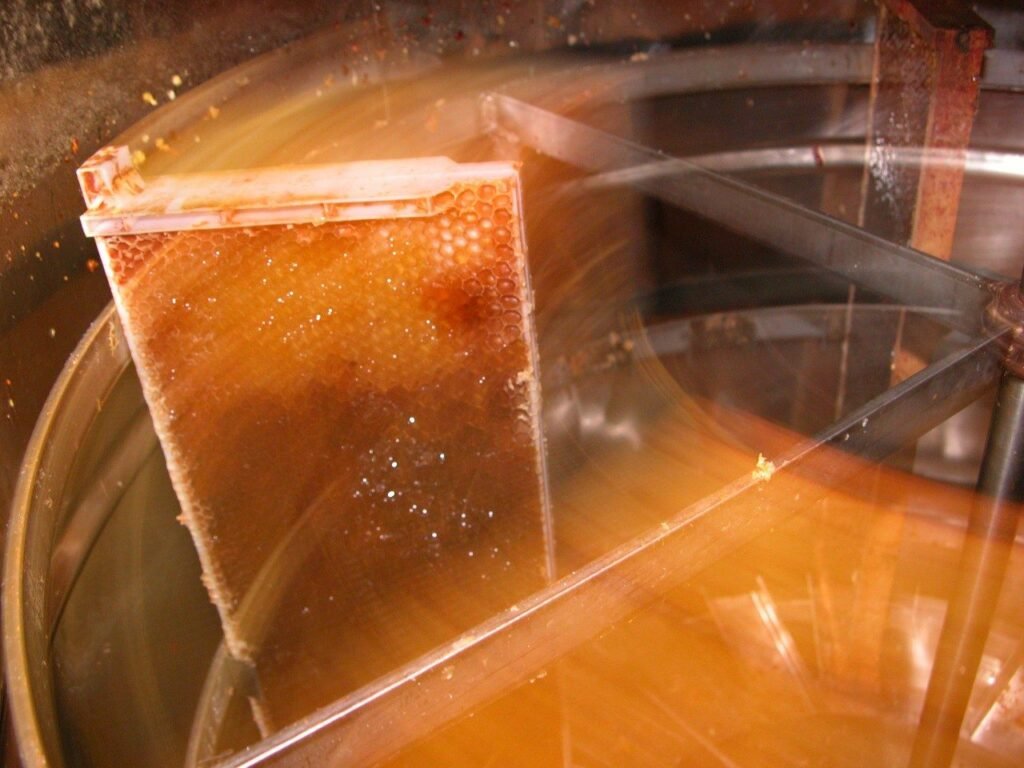
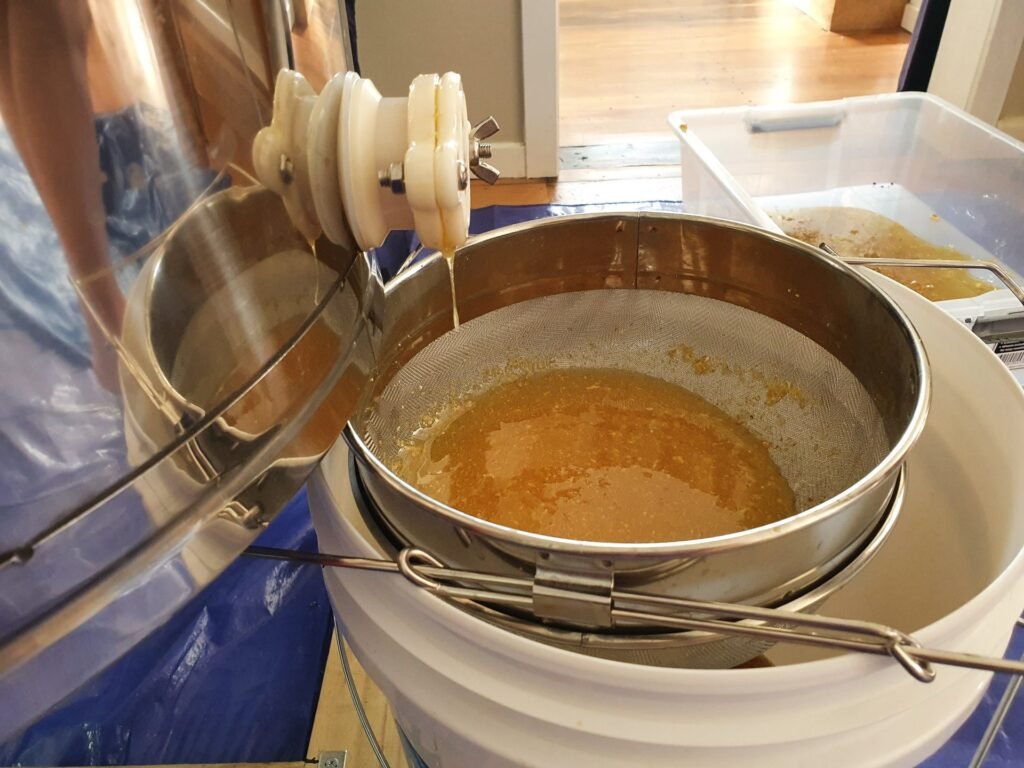
An extractor flings honey out of the cells against the drum wall. The honey runs down the wall, pools, and pours out of the gate into a bucket. Each of those steps folds air into it. The uncapping step also leaves bits of cappings wax and the odd propolis flake, and sometimes a bee part. None of this is harmful. It’s why fresh extractor honey looks cloudy and grows a foam layer after a few hours.
The USDA’s standards for grades of extracted honey define the processing styles:
“Strained honey is honey of any type defined in these standards that has been strained to the extent that most of the particles, including comb, propolis, or other defects normally found in honey, have been removed.”
The same standard says strained honey normally still contains pollen grains, small air bubbles and very fine particles. So honey poured straight through a strainer into a jar is already a normal, recognized product. Honey poured straight from the gate with no strainer isn’t.
Four Checks Before You Bottle Immediately
| Check | Pass | If it fails |
|---|---|---|
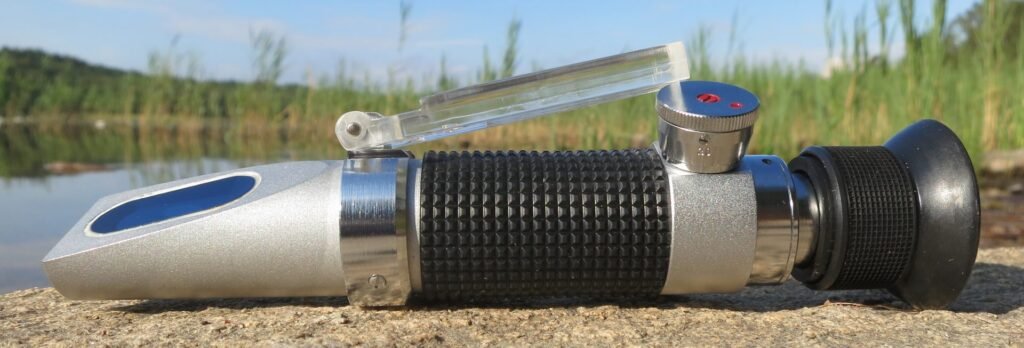
| 1. Moisture of the mixed batch | 18.6% or lower on a calibrated refractometer (USDA Grade A) | Don’t bottle. Dry the honey or keep it for feeding bees. See our refractometer guide |
| 2. Strained | Passed through a double sieve or a gate strainer | Strain first. See when to use a honey gate strainer |
| 3. Temperature | Honey warm enough to flow freely (room-warm or a little above) | Cold honey holds bubbles. Warm it gently before straining |
| 4. Clean, dry jars and a bee-tight room | Jars dry inside, lids ready, no bees or dust getting in | Wait. Water left in a jar raises moisture at the surface |
Why test the batch and not the frames? Capped honey is usually ripe, but capped honey can still be high in moisture. Supers often hold some uncapped cells too. The extractor blends everything you spin into one batch. Stir the bucket, then take your sample. The USDA standard measures moisture by refractometer at 20°C (68°F), with a correction for other temperatures. Many beekeeping refractometers have automatic temperature compensation (ATC).
When Bottling Straight Away Makes Sense
| Situation | Bottle straight away? | Why |
|---|---|---|
| A few frames for your own kitchen | Yes, strained | Bubbles and a little foam don’t matter to you |
| Honey going into 5-gallon pails for later bottling | Yes | Pails settle too. Foam and wax rise in the pail, and you bottle from it later |
| Fast-granulating honey, such as canola, that you’ll cream or sell soon | Often | Waiting can mean honey granulates in the tank. Strain, test moisture, bottle warm |
| Clear jars for a market table or shop | Better to settle first | Foam at the top and bubbles through the jar look like a flaw to buyers |
| Honey that tests above 18.6% | No | Risk of fermentation in the jar |
In the northern Plains, the canola case comes up often, because canola is a major crop across eastern North Dakota. Honey Bee Suite notes that canola honey is high in glucose, and that extracted canola may granulate in the jar within three to four weeks. It’s usually bottled or creamed promptly instead of being left in a settling tank. If it sets in the tank, see how to reliquefy crystallized honey without damage.
A Same-Day Method if You Can’t Wait
If you need jars today, this sequence gets you as close to a settled product as possible:
- Extract in a warm room. Warm honey flows faster through strainers and releases air faster. Stay within gentle temperatures. Our bottling temperature guide explains why about 95–105°F is the working range.
- Strain in two stages. Use a coarse screen to catch cappings, then a finer one. Let the honey run down the side of the bucket instead of dropping from a height, which whips in air.
- Test moisture once all the honey is in the bucket and stirred.
- Give it even a few hours. The largest bubbles and wax flakes rise first. Skim the top, or leave it and bottle from the bottom gate. See skimming wax and foam after extraction.
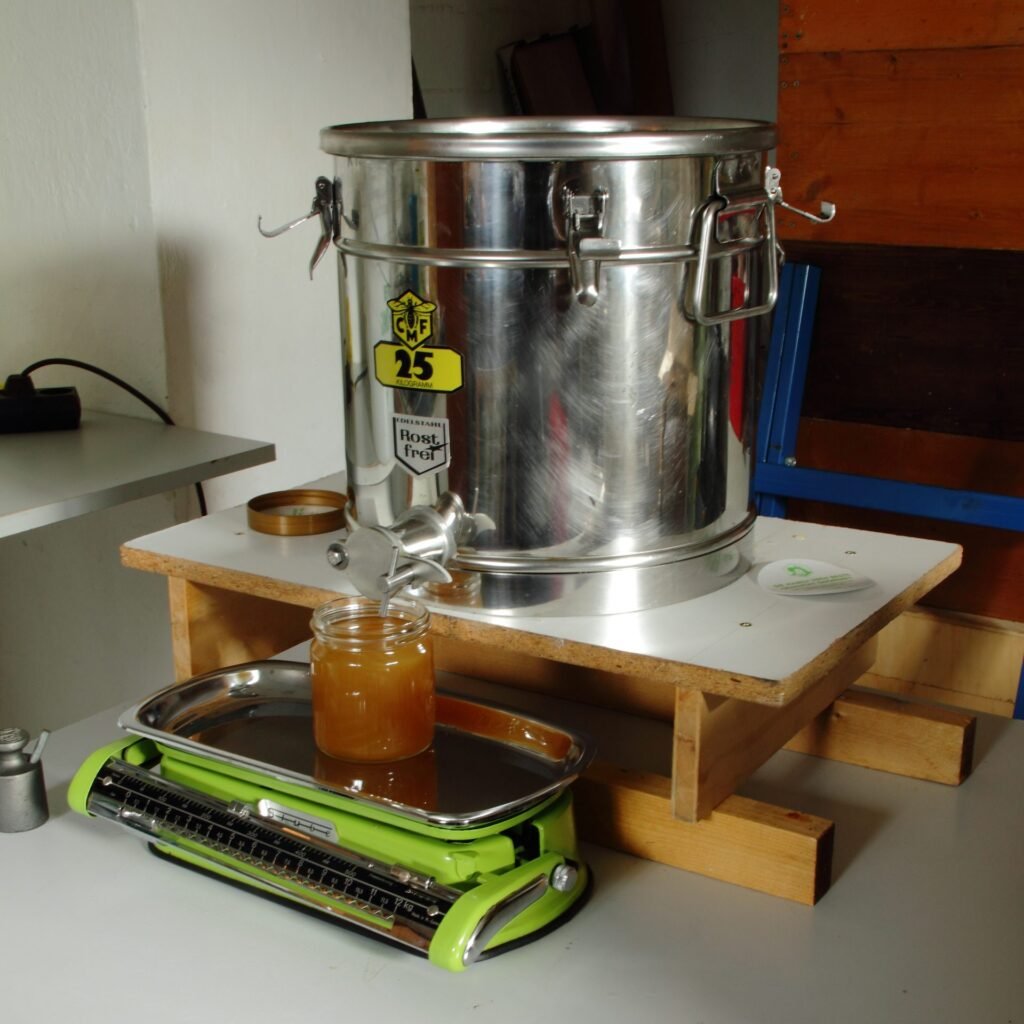
- Fill from the bottom gate with the stream running down the inside of the jar, and leave a little headspace.
- Hold the jars a day before labeling. Remaining bubbles rise to the top, where they’re easy to remove.
What You Can and Can’t Fix After Bottling
| Problem in the jar | Fixable? | What to do |
|---|---|---|
| Foam or a white layer at the top | Yes | Skim, or accept it for home use. See foam on honey after bottling |
| Bubbles throughout | Mostly | Stand the jars somewhere warm. Bubbles rise over a day or more |
| Wax specks | Partly | They rise with time. For sale jars, pour the honey back, re-strain and re-settle |
| High moisture | No, not in the jar | Pull the jars. Honey that’s already fermenting needs a decision. See can fermented honey be saved |
Most problems from bottling too soon are cosmetic and fade within days. High moisture is the exception. That’s why the moisture check comes before everything else.
If You Sell the Honey
USDA grades are voluntary, but they’re a useful benchmark. Grade A honey must contain at least 81.4% soluble solids, which means 18.6% moisture or less. It must also be practically free of defects such as comb and propolis particles. Rules for selling honey vary by state. The Minnesota Department of Agriculture treats honey from hives you own or rent as a product of the farm that doesn’t need a food license. It still expects all food businesses to produce safe, sanitary food, and adding off-farm ingredients such as flavorings ends the exemption. North Dakota and other states set their own rules, so check before your first sale.
Whatever the rules, keep a batch record for every bucket: extraction date, moisture reading and jar count. It costs nothing and lets you trace any problem jar back to its bucket. Our lot tracking guide for small sellers shows a simple system.
Once the last batch is out, clean the extractor before it sits idle.
Frequently Asked Questions
Is it safe to bottle honey right after extracting?
Yes, if the honey is ripe and strained. Settling is about appearance: it clears bubbles and wax. Moisture is what affects keeping quality. Test the mixed batch and bottle it only at 18.6% or below.
How long should honey settle before bottling?
Many beekeepers let it stand 24–48 hours in a warm room, then bottle from the bottom gate. Cooler honey takes longer. See our settling tank guide for how temperature changes the timeline.
Why is my honey cloudy straight from the extractor?
Spinning and pouring fold air into the honey, and uncapping leaves fine wax particles. The cloudiness is mostly tiny bubbles and wax, not a defect in the honey. Much of it rises out within a day or two.
Do I need to strain honey if I bottle straight from the extractor?
Yes. Straining removes cappings wax, propolis and bee parts. The USDA’s “strained” style means most of these particles have been removed, while pollen and small bubbles can stay.
Can I bottle honey that reads above 18.6% moisture?
It’s not recommended. Above the USDA Grade A limit, honey is more likely to ferment in the jar, and settling won’t lower the reading. Dry it before bottling or keep it for feeding your own bees.
Will bubbles in freshly bottled honey go away?
Most will rise to the top within a day or so, faster if the jars are kept warm. The foam layer they form is harmless and can be skimmed off.
The Bottom Line
Bottling straight from the extractor is a trade: it saves time and costs clarity. It isn’t a food-safety shortcut. Strain every batch and test the mixed bucket for moisture. For jars you’ll sell, give the honey a warm day or two to settle and fill from the bottom. Skip that settle only when the honey is for your own table or headed into bulk pails.