Reviewed by Daniel M. · Last Updated October 8, 2026 · How we review
To clean a honey extractor, drain the last honey through the gate, rinse the drum with cool water so leftover wax stays firm, wash with warm water and a little unscented dish soap, rinse, then sanitize, drain and air-dry it with the lid open. Before you fill the drum with water, find out where the bottom bearing sits: at least one manufacturer warns that flooding the drum can damage it.
Maintenance is lighter than most guides suggest. Some hand-crank gearboxes, including Lyson’s, are greased at the factory and should be left alone. What matters is keeping water out of the bearings, keeping the honey gate sealing and storing the machine dry. Still choosing how to harvest? Compare honey harvesting methods first.
Key Takeaways
- Drain first, then rinse cool. Warm wax smears; beeswax melts at about 144 to 147°F.
- Open the gate while washing and keep water out of the bottom bearing. Lyson’s W229E manual says not to fill the extractor with water.
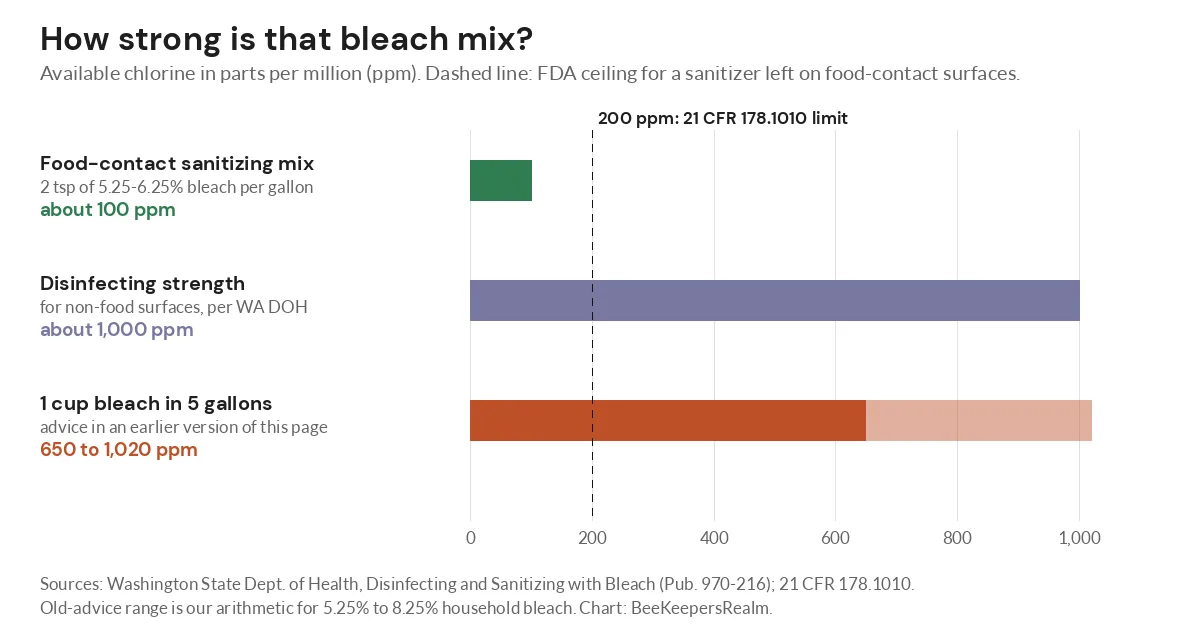
- Sanitize at about 100 ppm: 2 teaspoons of 5.25-6.25% unscented bleach per gallon. Drain and air-dry; don’t rinse.
- Don’t set a sticky extractor out for the bees. It open-feeds honey from every hive you extracted.
- Don’t grease a factory-greased gearbox. Use food-grade grease only where the manual says.
- Store it dry, covered and above freezing.
Table of Contents
- Drain and Scrape Before Any Water
- Wash Cold First, Then Warm
- Sanitize Without Overdoing the Bleach
- Why Not Let the Bees Clean It?
- Bearings, Gearbox, Gate and Motor
- Drying and Off-Season Storage
- Frequently Asked Questions
- The Bottom Line
Drain and Scrape Before Any Water
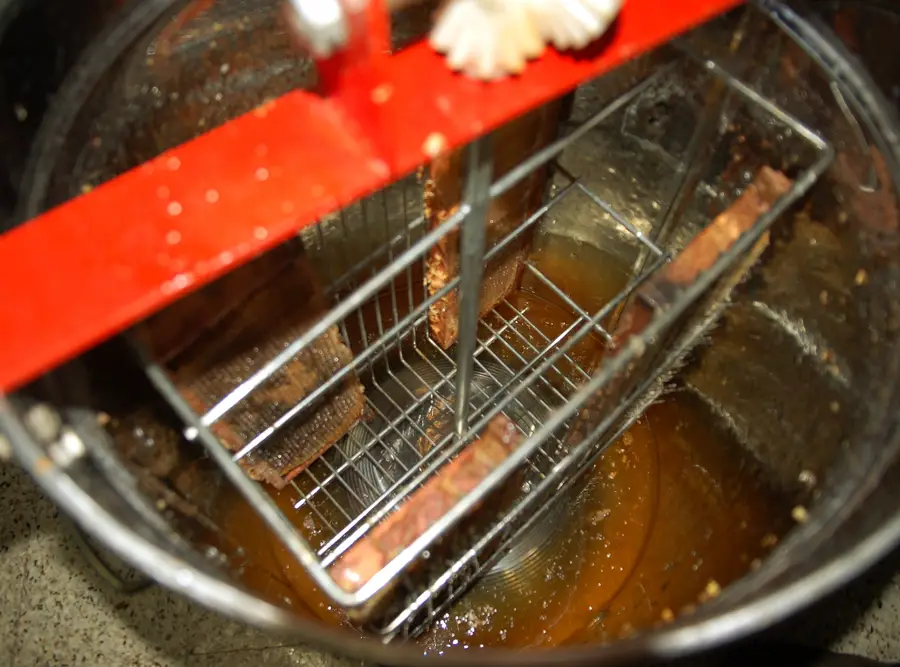
A used extractor still carries honey on the walls and in the seam at the floor. Close the gate, tip the extractor so honey runs toward it and leave it overnight in a warm room. David Evans, who writes The Apiarist, often recovers a pound or more this way. It may be frothy, so strain it and let it settle before jarring.
Then lift out the basket if your model allows it and scrape wax and cappings off with a rubber or silicone spatula. Metal scrapers and scouring pads scratch stainless steel, and scratches hold residue. Save the scrapings for rendering cappings wax.
Wash Cold First, Then Warm
Start with cool or cold water. It dissolves honey slowly but keeps wax firm, so it flakes off instead of smearing. Charlotte Anderson, a master beekeeper who runs Carolina Honeybees, keeps her rinse water under 120°F. Dribble water down the walls, loosen the bottom seam with the spatula and let it drain through the open gate.
With the wax gone, wash the drum, basket and gate with warm water, a little unscented dish soap and a soft brush. Betterbee’s hand-crank extractor instructions call for hot water and “a small amount of dish detergent”; the cool rinse first leaves little wax to smear. Rinse until nothing smells of soap, because residue is what taints honey.
Check the bearing before you flood the drum
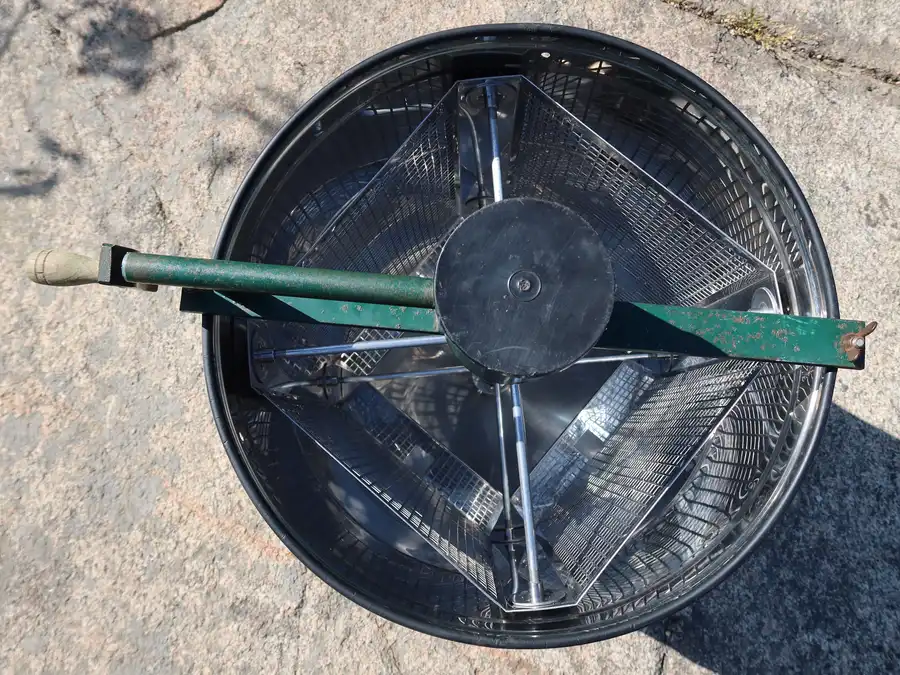
A popular shortcut is to close the gate, fill the drum with cold water and leave it overnight. That only works if water cannot reach the lower bearing. Betterbee tells owners to open the gate while washing so water drains, and to cover exposed lower bearings with plastic wrap. Lyson’s manual for its W229E electric extractor goes further:
“Do not fill the extractor with water as this can damage the bearings.”
If your manual is silent, look down the shaft. If the bearing sits in the drum floor below the water line, rinse and wipe instead of soaking.
Sanitize Without Overdoing the Bleach
Washing removes honey; sanitizing cuts the microbes left on a food-contact surface. Cornell extension associate Emma Mullen’s guide Producing Honey in New York State recommends cleaning all equipment at season’s end with hot water, power washing or approved cleaners, then applying a food-safe sanitizer.
| Sanitizer | Mix | Contact | Rinse? |
|---|---|---|---|
| Unscented bleach, 5.25-6.25% | 2 teaspoons per gallon (about 100 ppm) | Wet for 2 minutes | No; drain and air-dry |
| Unscented bleach, 8.25% | 1 teaspoon per gallon (about 100 ppm) | Wet for 2 minutes | No; drain and air-dry |
| Commercial food-contact sanitizer | Per label | Per label | Only if the label says |
Bleach amounts follow the Washington State Department of Health’s bleach chart for food-contact surfaces, which also says to mix a fresh batch daily in cool water.
“Food grade sanitizers used at the correct concentrations do not require rinsing and should not be rinsed.”
Rinse after detergent, not after sanitizer, but do let the drum drain: federal rules require sanitized equipment to drain before it touches food.
Don’t use a stronger mix. An earlier version of this guide suggested 1 cup of bleach in 5 gallons of water. By our arithmetic that is about 650 to 1,020 ppm: disinfecting strength, far above the 200 ppm ceiling in 21 CFR 178.1010 for chlorine sanitizers on food equipment. Strong chlorine also attacks stainless steel where it pools. Save heavy disinfection for disease cases; see sanitizing an extractor after sick colonies.
This is educational information, not regulatory advice. If you sell honey, your state department of agriculture sets the rules for your extracting room.
Why Not Let the Bees Clean It?
Setting a sticky extractor in the yard is common advice, and the bees do get their honey back. But the residue blends honey from every colony whose frames went through the machine, plus any bought or borrowed frames, so you are open-feeding honey of mixed origin. The University of Georgia Bee Lab advises against feeding bees honey from unknown sources and says American foulbrood spores can last indefinitely on equipment.
“The feeding frenzy that results is a perfect way to spread disease.”
Anderson, who has stopped doing it, adds that the frenzy can turn into robbing of a weak hive and that bees drown in honey pooled in the bottom seam. See how to stop robbing behavior.
Bearings, Gearbox, Gate and Motor
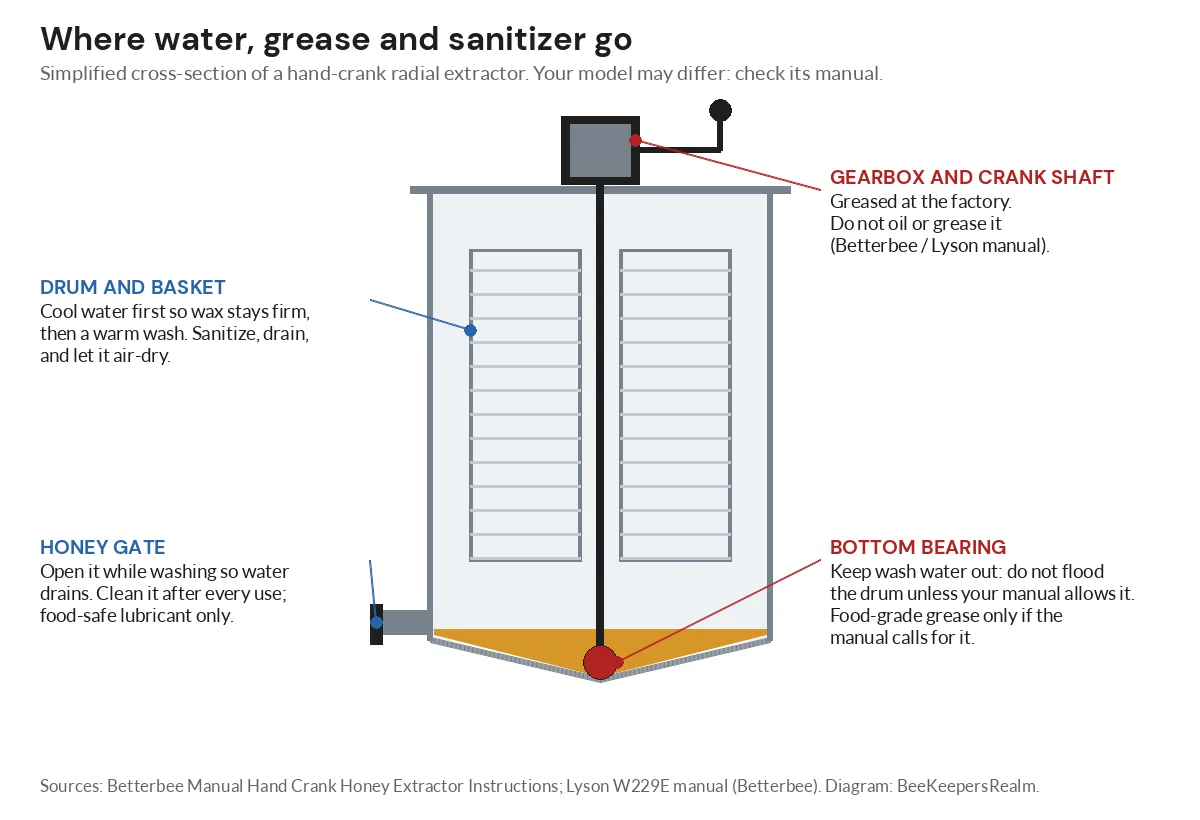
Extractor manuals ask for less lubrication than most owners give. Betterbee’s instructions for Lyson hand-crank extractors say the gearbox is greased at the factory and the crank shaft runs without lubrication, so neither should be oiled or greased. Other makes may differ; check your manual.
| Part | What to do | What to avoid |
|---|---|---|
| Gearbox and crank shaft | Wipe dry; keep water out | Oil or grease |
| Sealed bearings (8 frames and up) | Nothing routine; replace if they fail | Soaking them |
| Bottom ball bearing (2 to 4 frames) | If needed: clean, dry, add a little food-grade grease | Ordinary grease or oil |
| Honey gate | Clean after every use; set the pivot screw so it moves freely but seals | Non-food-safe lubricant |
| Motor and controller | Unplug; cover with waterproof material when washing | Hoses or pressure washers near them |
Sources: Betterbee hand-crank extractor instructions (PDF); Lyson W229E manual.
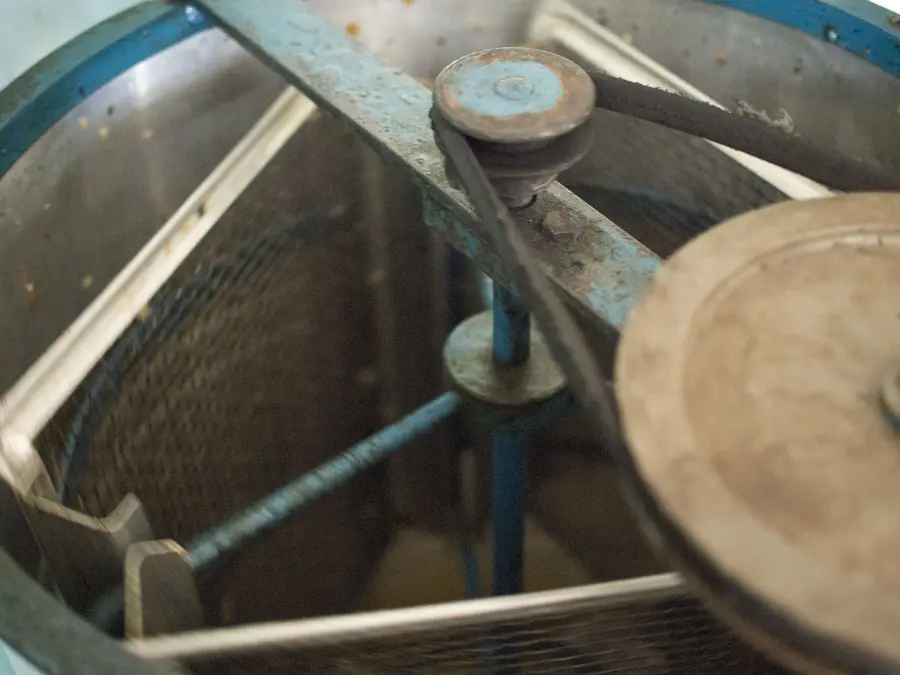
Lyson also says to protect the motor and controller from moisture in storage, and its setup steps include adjusting belt tension as needed. Before each season, check for wobble that persists once frames of similar weight sit opposite each other, a rough or noisy bottom bearing, or a dripping gate. A gate that won’t seal can be swapped; see choosing a replacement honey gate.
Drying and Off-Season Storage
Dry it completely. Leave the lid open, or do what Evans does: hang a hair dryer on its lowest heat inside the drum and move it now and then to reach the corners. Wipe the gate and bottom seam, then cover the machine.
In the northern states, think twice about an unheated shed. Lyson’s manual says to store the extractor in a dry room above 32°F (0°C), not to run it below about 41°F (5°C), and to let it warm to room temperature after a cold room. A barn in a Dakota January fails all three.
Wet supers off the extractor need their own plan; see storing supers between honey flows. Before next season’s first extraction, wash and sanitize again and give the basket a slow test spin.
If you are still choosing a machine, see choosing between a manual and electric extractor.
Frequently Asked Questions
Can I use soap to clean a honey extractor?
Yes, a little unscented dish soap after the cold rinse. Rinse until no scent remains.
Should I let the bees clean my extractor?
Better not. It open-feeds honey from many colonies, can trigger robbing and can spread disease.
How often should a honey extractor be cleaned?
Before it sits idle. Anderson skips a full clean only if she will extract again within five to seven days.
How do I clean a new honey extractor before first use?
Wash it with water and a little dish detergent, keeping water out of the bearings, then rinse and dry.
Can I use bleach on a stainless steel extractor?
Yes, at about 100 ppm for a couple of minutes. Drain it fully and never let strong bleach pool.
Can I leave honey in the extractor until next time?
No. Honey absorbs moisture from the air and can ferment, and it draws ants.
Why is my stainless steel extractor rusting?
Usually water left in the drum or seams. Scratches from metal scrapers can make it worse.
The Bottom Line
Drain, rinse cold, wash, sanitize lightly, dry fully and leave a factory-greased gearbox alone. Your uncapping knife needs the same end-of-day care; see cleaning an uncapping knife.
Image credits: Photo: R. Henrik Nilsson, via Wikimedia Commons, CC BY 4.0, resized; Photo: Prosperosity, via Wikimedia Commons, CC BY-SA 4.0, cropped.