Reviewed by Elena P. · Last Updated September 24, 2026 · How we review
Honey is hygroscopic: it trades water with the air until the two are in balance. Above about 60% relative humidity, normally ripe honey starts absorbing water. Below that, it slowly gives water up. An FAO table based on U.S. research by White shows the scale. At 60% humidity, honey settles at about 18.3% water. At 70% humidity it settles at about 24%, well past the USDA Grade A limit of 18.6%. The absorbed water collects at the surface first, which is where fermentation usually starts. Humidity matters when honey is exposed: in the extracting room, in open settling tanks, in loosely lidded buckets and in cappings. A sealed jar is protected.
This article explains what humidity does to honey after extraction. For drying wet honey before it’s extracted, see why capped honey can still have high moisture.
Key Takeaways
- Honey reaches equilibrium with the air around it. At about 60% relative humidity (RH), that equilibrium is around 18% water. At higher humidity, honey takes on water quickly.
- The change isn’t linear. Each step up in humidity above 60% adds more water than the step before.
- The absorbed water starts at the surface, so the top layer can ferment even when the whole batch tested fine.
- Granulation makes it worse: as honey crystallizes, water is freed and the liquid part gets wetter.
- For drying or holding honey, University of Florida extension guidance sets a maximum of 58% RH. Measure it with a hygrometer.
- A sealed container makes room humidity irrelevant. Humidity matters for honey left open or loosely covered.
Table of Contents
The Humidity–Moisture Balance
Every batch of honey has a humidity level at which it neither gains nor loses water. That level is its equilibrium point. If the air is wetter than that, honey absorbs water. If the air is drier, honey slowly releases it. The FAO’s beekeeping products manual gives the equilibrium values for clover honey:
| Air relative humidity | Honey water content at equilibrium | What it means |
|---|---|---|
| 50% | 15.9% | Dry air. Honey slowly loses water |
| 55% | 16.8% | Comfortable for storage |
| 60% | 18.3% | Close to the USDA Grade A limit (18.6%) |
| 65% | 20.9% | Above grade limits. Fermentation risk |
| 70% | 24.2% | Honey keeps absorbing water |
| 75% | 28.3% | Far too wet to keep |
| 80% | 33.1% | Far too wet to keep |
Source: FAO, Value-added products from beekeeping, Chapter 2, citing White (1975). Values are approximate and vary between honeys.
Normal honey with a water content of 18.3 % or less will absorb moisture from the air at a relative humidity of above 60%.
The University of Florida’s extension publication Moisture in Honey (ENY130, Malcolm Sanford, reviewed 2011) points out that the curve is uneven. A drop from 70% to 60% RH lowers the equilibrium water content by 5.9 points. A drop from 60% to 50% lowers it by only 2.4 points. Wet honey is easier to dry than honey that’s already nearly ripe. It also means small humidity rises above 60% cost you more water than you might expect.
What Absorbed Water Does to Honey
- Fermentation risk. All raw honey carries sugar-tolerant yeasts. The FAO manual notes that only honeys with less than 18% water can be stored with little or no risk of fermentation. ENY130 describes what happens above that: yeasts produce alcohol, which can break down to acetic acid. The result is a sour taste, a runny texture, small bubbles and foaming. See what causes honey to ferment after bottling.
- A wet surface layer. Honey is thick, so water absorbed from the air spreads through it only slowly. It builds up in the top layer, so that layer can ferment while a sample from lower down still reads fine.
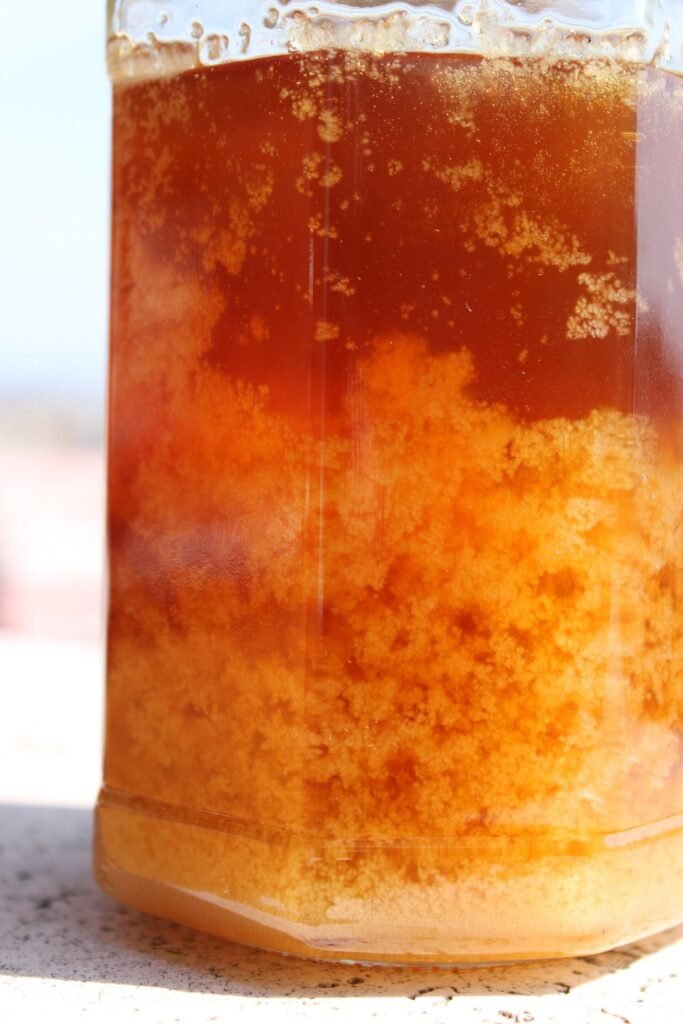
- Granulation adds to it. The FAO manual explains that water is freed during crystallization, so the liquid part of the honey gets wetter and fermentation risk rises. Honey that absorbed a little water and then granulated is at particular risk. See granulation vs fermentation.
- Grade and sale value. USDA Grade A extracted honey needs at least 81.4% soluble solids, which means 18.6% moisture or less, under the U.S. grade standards for extracted honey.
Humidity also works the other way. In air below honey’s equilibrium point, honey slowly loses water. That’s the principle behind drying honey with dehumidified or warm, dry air. It is slow for honey in a deep tank, because only the surface is exposed.
Where Extracted Honey Picks Up Water
| Point of exposure | Risk | Fix |
|---|---|---|
| Uncapped frames waiting overnight in a humid room | High. Cells are open and exposed across a large surface | Extract the same day, or keep supers in a dehumidified room |
| Open extractor and strainers during a long extracting day | Moderate | Keep lids on between batches |
| Settling tank with a loose lid | Moderate. The surface layer absorbs water over days | Use a tight lid. Test from the gate before bottling |
| Bulk pails in a damp basement or unheated shed | Moderate to high over months | Seal the lids. Store somewhere dry |
| Sealed jars | Low | Nothing, as long as lids seal properly |
Before bottling, test the mixed batch on a calibrated refractometer. Our refractometer guide covers the steps. If you’re deciding whether to bottle right after extraction, see can you bottle honey straight from the extractor.
Day and Night Humidity on the Prairie
Afternoon humidity is a poor guide to the risk. ENY130 includes July air data from three Saskatchewan locations, which have a prairie summer climate. Daytime conditions averaged about 29–31°C at 41–50% RH, dry enough to take water out of honey. From 6 p.m. to 10 a.m., the averages were 10–11°C and 95–100% RH.
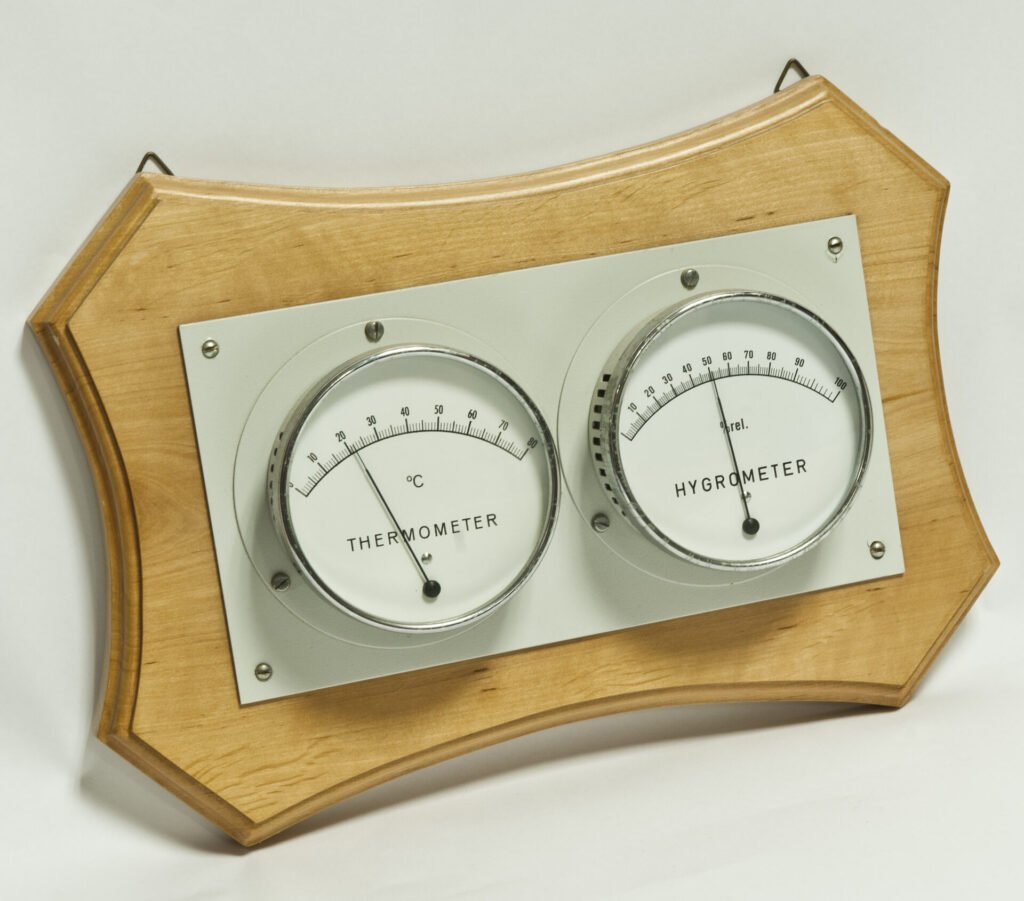
The lesson for eastern North Dakota, the Red River Valley and western Minnesota is simple. A honey room that is comfortable at 3 p.m. can be damp by morning. Honey left open overnight, in uncapped frames, an open tank or unlidded pails, sits in that damp air for hours. Close everything at the end of the extracting day. A cheap digital hygrometer in the honey room tells you more than the forecast does.
Humidity Targets for Your Honey Room
| Task | Humidity target | Basis |
|---|---|---|
| Drying supers of honey before extraction | 58% RH or lower, warm room (about 27°C / 80°F) | UF ENY130 summary checklist |
| Extracting and settling | Below 60% RH, or keep honey covered | Equilibrium table above |
| Long-term storage of sealed honey | Humidity matters little if sealed. A dry, cool place is still best | FAO; container seal |
ENY130 notes that household dehumidifiers remove roughly 10 to 30 lb of water per 24 hours. Size the unit to the room, keep the door closed, and check the hygrometer rather than assuming. Air also has to move across the honey. Honey in a deep bucket barely dries, while honey in open, uncapped combs dries far faster. Don’t try to drive water out with high heat. The FAO manual notes that heating forms HMF, its main indicator of honey deterioration, and warm storage costs aroma. See honey bottling temperature for safe limits.
Frequently Asked Questions
Does honey absorb moisture from the air?
Yes. Honey is hygroscopic. Ripe honey at 18.3% water or less absorbs water from air above 60% relative humidity, according to the FAO manual. It keeps absorbing until it reaches the equilibrium level for that humidity.
What humidity is too high for storing honey?
For open or loosely covered honey, anything over 60% RH. University of Florida guidance keeps drying and storage rooms at 58% RH or below. Honey in properly sealed jars or pails isn’t affected by room humidity.
Can humid weather make bottled honey ferment?
Not through a sealed lid. Fermentation in bottled honey comes from honey that was already too wet, lids that didn’t seal, or jars opened often in humid rooms. Test moisture before bottling and use lids that seal properly.
Why did only the top of my honey ferment?
Water absorbed from humid air builds up at the surface first. That top layer can pass the fermentation threshold while the honey below stays sound. Skim or discard the affected layer, and see can fermented honey be saved for options.
Can low humidity dry out wet honey?
Slowly. Air below honey’s equilibrium point pulls water out, but only from exposed surfaces. That’s why beekeepers dry honey in open supers in a warm, dehumidified room rather than in a deep bucket.
The Bottom Line
Humidity affects extracted honey only when the honey is exposed. When it is, anything over about 60% RH adds water, starting at the surface. Keep honey covered from the extractor to the jar, and watch the room at night as well as during the day. Test moisture before bottling, and aim for 58% RH or less when drying honey.
Image credits: Photo: Patafisik, CC BY-SA 3.0.