Reviewed by Elena P. · Last Updated September 23, 2026 · How we review
Yes, fermented honey can often be saved, just not as the honey it was. You can stop the fermentation by chilling the honey below 52°F or by heat-treating it, and lightly fermented honey is still good for cooking, baking, mead or honey vinegar. What you can’t do is reverse it. The alcohol, acids and yeasty flavor the yeasts have already made stay in the honey, and fermented honey doesn’t meet any USDA grade or the Codex definition of table honey.
Rescuing it comes down to three questions: how far has it gone, where is the honey (jar, bucket or comb), and what do you want to use it for? This guide goes through each one. If you’re still trying to work out why it happened, start with what causes honey to ferment after bottling. If you aren’t sure it’s fermenting at all, see granulation vs fermentation.
Key Takeaways
- Fermentation can be stopped but not undone. Chilling or heating stops the yeast, but it doesn’t take out the flavors or the alcohol.
- Stopping it takes one of two things. Keep the honey below 52°F (11°C), or heat-treat it. The National Honey Board lists 140°F (60°C) for 30 minutes or 160°F (71°C) for 1 minute.
- Early and active fermentation can usually be saved for cooking, mead or vinegar. Throw out anything with mold, a putrid smell or slime.
- Fermented honey fails every USDA grade and the Codex honey standard. In the EU it can only be sold as “baker’s honey” labelled “intended for cooking only.”
- Only feed fermented honey back to bees in small amounts, in the flying season, and only if it came from your own healthy colonies. Never leave it in the hive as winter stores.
Table of Contents
What “Saving” Fermented Honey Can and Can’t Do
Every jar of raw honey contains sugar-tolerant (osmophilic) yeasts. They come in with the nectar and with the bees. According to the National Honey Board’s Honey: A Reference Guide to Nature’s Sweetener, fermentation will not occur in honey that has less than 17.1% moisture, is stored below 52°F (11°C), or has been heat-treated. Once one of those conditions fails and the yeasts start growing, they turn sugar into alcohol and carbon dioxide. That gas is the foam and the domed lids. If air can get in, acetic acid bacteria can then turn some of the alcohol into vinegar, which is where the sharp sour smell comes from.
So “saving” the honey means two separate jobs:
- Stop the process so it doesn’t get worse. This part is fully within your control.
- Find a use for what’s left. The flavor change is permanent. Drying the honey down, filtering it or blending it with good honey won’t take the yeasty, winey or sour notes out.
Blending needs its own warning. Stirring a fermenting bucket into a good batch doesn’t dilute the problem away. It spreads live yeast through honey that was stable. Keep fermenting honey separate from the moment you find it.
Triage First: How Far Has It Gone?
Before you do anything, smell the honey, look at it, and taste a small amount from the top and from deeper down. How far it has gone decides what you can do with it.
| Stage | What you see and smell | Can it be saved? | Best path |
|---|---|---|---|
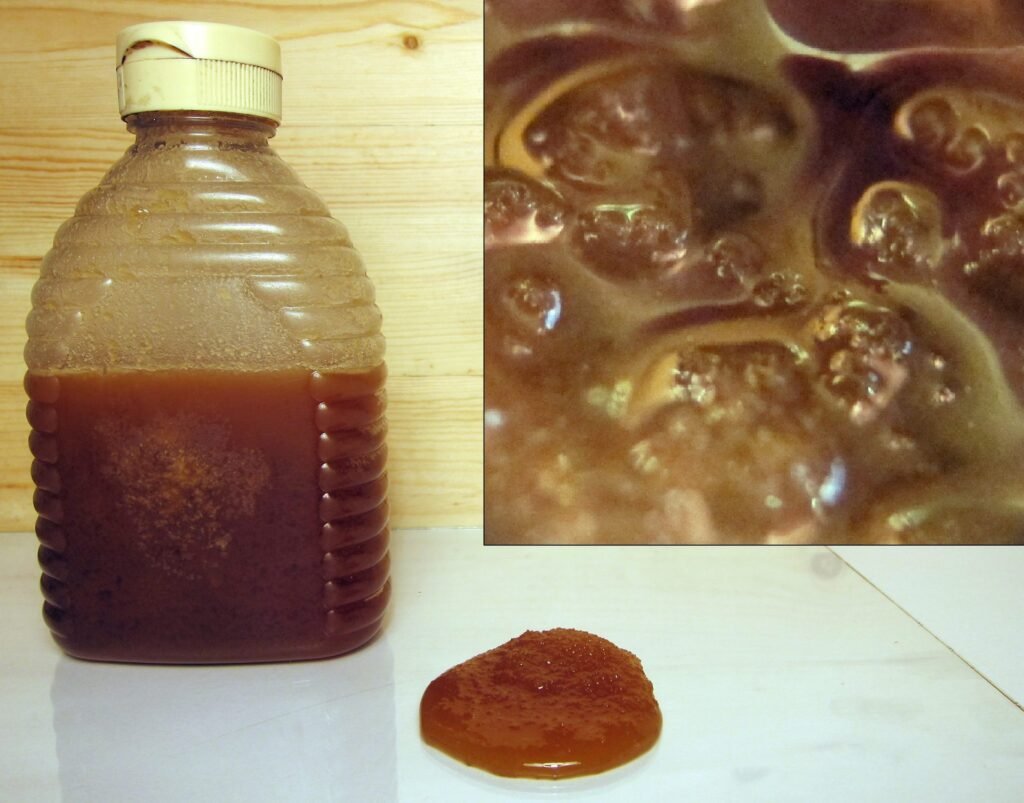
| Early | Faint yeasty or beery smell, a few bubbles at the surface, a thin wet layer over crystals | Yes | Remove the wet top layer, then chill or heat-treat. Use for cooking or baking soon. |
| Active | Foam that keeps building, domed or leaking lids, a clear alcohol or sour smell all the way through | Partly, but not as table honey | Heat-treat, then use for mead, cooking, glazes or honey vinegar |
| Advanced | Strong vinegar smell, sharp sour taste, thin and runny texture | Only as a vinegar base | Honey vinegar, or compost |
| Spoiled | Fuzzy mold, slime, a rotten or putrid smell | No | Discard. Don’t eat it and don’t feed it to bees. |
If what you have is foam that appeared within a day or two of bottling and smells like normal honey, you probably don’t have a fermentation problem. See foam on honey after bottling. For more sensory checks, see how to identify fermented honey.
How to Stop Fermentation
Option 1: Chill it (keeps the most flavor, but only for as long as it stays cold)
Put the honey somewhere below 52°F. A refrigerator, a cold garage in late fall, or a chest freezer all work. The yeasts go dormant, but they aren’t dead. Once the honey warms up again, fermentation starts again. Chilling is a way to buy time while you decide what to do. It doesn’t fix anything, and cold storage also speeds up crystallization, which can create a new wet layer later.
Option 2: Heat-treat it (permanent, but it costs some quality)
The National Honey Board lists heat treatments that stop osmophilic yeasts. You can hold the honey at 140°F (60°C) for 30 minutes, or at 160°F (71°C) for one minute. Packers also use 170°F (77°C) for two minutes followed by rapid cooling. At home, the practical method is a water bath:
- Loosen the lids first. Fermenting honey is under gas pressure.
- Set the jars in a pot of water and heat it until a probe thermometer in the center of the honey reads 140°F. The water temperature isn’t the honey temperature.
- Hold it at 140°F for 30 minutes, then take the jars out and let them cool at room temperature.
- Tighten the lids only once the jars are cool. Label them as heat-treated cooking honey.
Heat that strong lowers enzyme activity and raises HMF, the same changes covered in how heating alters honey enzymes. That’s an acceptable trade for honey that’s going into a marinade anyway. It’s one more reason heat-treated honey shouldn’t be sold as raw.
Rescue Steps for Jars, Buckets and Comb
In the jar
Fermentation in a jar usually starts at the surface, where a loose lid or crystallization has left a wetter layer. For an early-stage jar, spoon off the top layer, then chill or heat-treat the rest. If several jars from the same batch are affected, treat the whole batch as suspect. Pull every jar with that lot code. Lot tracking makes this take minutes instead of guesswork.
In a bucket or bottling tank
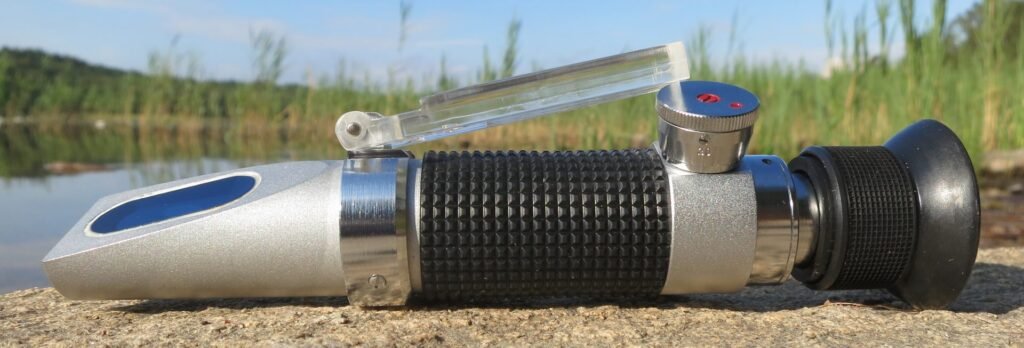
Wetter honey is lighter than dry honey. The National Honey Board gives a specific gravity of 1.4350 at 15% water and 1.4171 at 18%. That means wet honey tends to float and collect at the top of an unmixed bucket, which is why buckets often start fermenting from the top down. Take a refractometer reading from the top inch and another from the middle. If only the top is high, you may be able to draw off the dry honey below through the honey gate and set aside just the top few inches. If both readings are high, treat the whole bucket as cooking honey.
Still in the comb
Frames with fermenting uncapped cells tend to show up at the end of the season, in supers pulled during a humid spell. Honey Bee Suite’s Rusty Burlew suggests shaking out the unripe nectar before extracting. That works for frames where only the uncapped cells are fermenting. Extract those frames separately and never add them to your main batch. Frames with mold or a putrid smell belong in the discard or cleaning pile, not in a hive.
The Best Uses for Salvaged Honey
- Cooking and baking. Barbecue sauce, glazes, marinades, baked beans and dark breads all hide a mild wine-like note. Heat-treat the honey first if it will sit in storage.
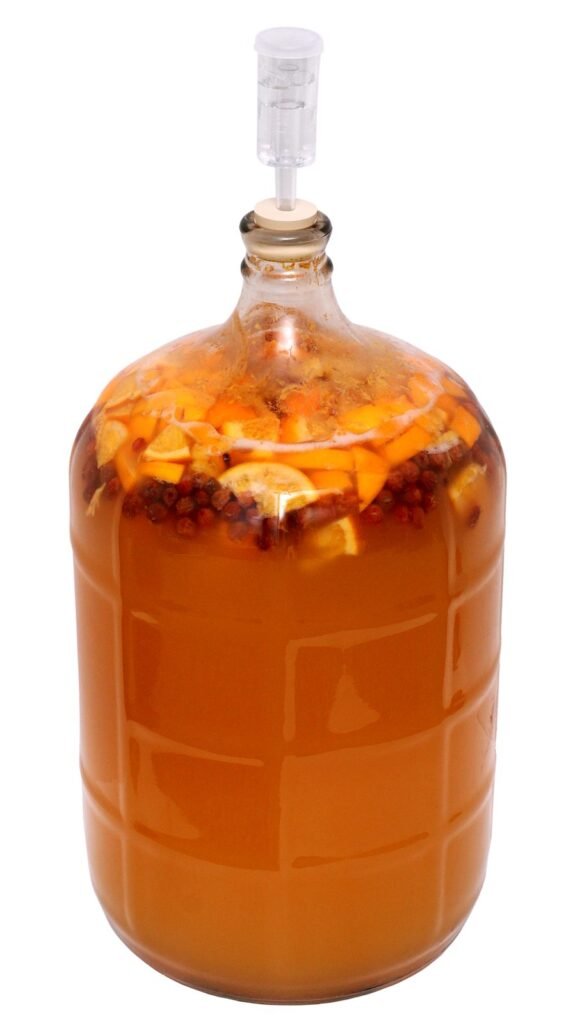
- Mead. Lightly fermented honey can go into a mead, because the pitched wine yeast takes over. Any off-flavors carry through, though. Use it in a spiced or fruit mead rather than a delicate traditional mead. See how to make mead from your own honey.
- Honey vinegar. Honey that has started to sour is already partway there. See the two-stage honey vinegar guide.
- Not good for: table honey, creamed honey, gifts, or anything you’d put your name on.
Can You Feed Fermented Honey Back to Bees?
This is the most common question, and the usual answers go too far in both directions. Many beekeepers are told never to feed fermented honey because it causes dysentery. The research is less clear-cut than that. In his review of the causes of dysentery, Randy Oliver of Scientific Beekeeping summarizes Alfonsus’s 1935 feeding trials. Those trials found that fermenting syrup did not produce dysentery. What caused it was too much water in the gut when the bees couldn’t fly. Rusty Burlew’s view is that a small amount of fermented honey won’t harm a colony.
A sensible middle ground:
- Only feed honey from your own colonies that you know are disease-free. Honey from unknown sources can carry American foulbrood spores, whether or not it has fermented.
- Feed small amounts during the flying season, when bees can take cleansing flights.
- Never leave fermenting honey in the hive as winter stores, and never feed anything moldy.
Can You Still Sell It?
Not as honey. The international standard is explicit:
“The honey shall not have begun to ferment or effervesce.”
The U.S. Standards for Grades of Extracted Honey say the same thing in their own way. Grades A, B and C all require the honey to be free from objectionable flavor caused by fermentation. Honey that fails the flavor test scores as Substandard, whatever its color or moisture. The European Union’s honey directive (Directive 2001/110/EC) does allow a category called baker’s honey, which may have fermented. It has to be sold for industrial or ingredient use and labelled “intended for cooking only.” The US has no federal equivalent, so if you want to sell cooking-grade honey, check with your state department of agriculture first. For how grading works in more detail, see USDA honey grading standards.
A Red River Valley Rescue Timeline
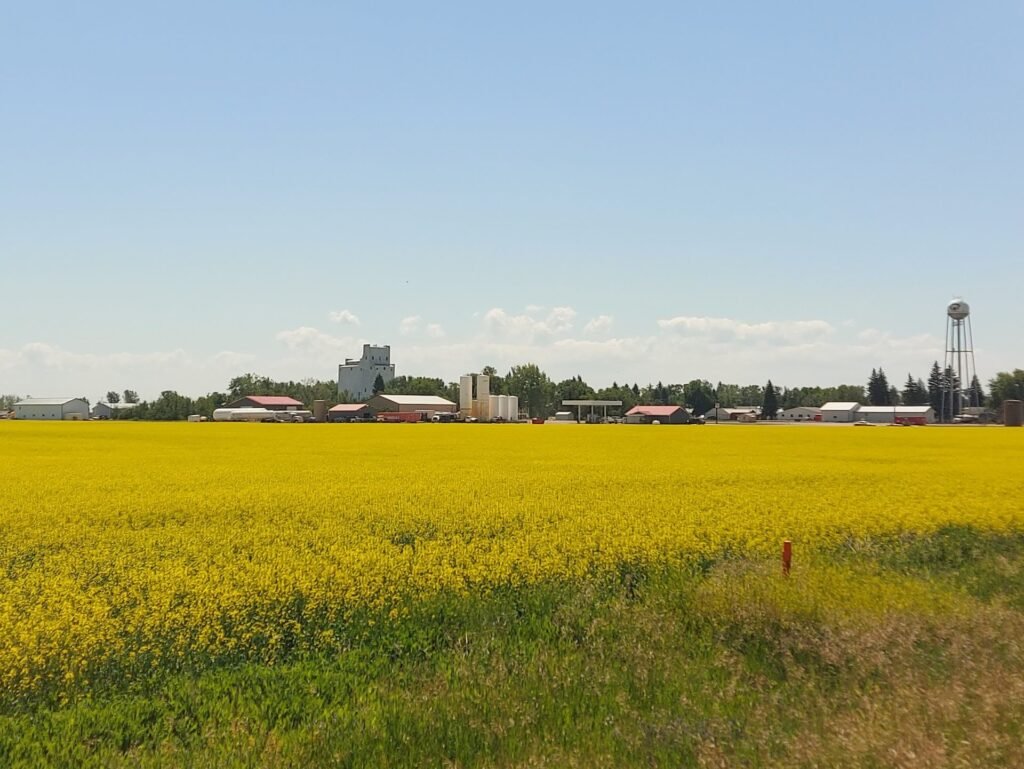
In eastern North Dakota and western Minnesota, fermented honey usually follows a familiar path. Supers come off during a muggy stretch in late August. The canola or sweet clover honey granulates quickly in a cool basement, and the jars start weeping and fizzing when they move upstairs in spring. Local crops add to the risk. Stefan Bogdanov’s Honey Book notes that rape (canola) and sunflower honeys tend to carry more osmotolerant yeast than other honeys and are less stable, and both are major crops in this region. If that sounds familiar:
- When you notice it: check every jar from that lot, and move the good ones back to cool storage.
- Within a week: heat-treat the affected jars or move them to the freezer, then decide what to use them for.
- Before next harvest: take refractometer readings from the finished batch, not just from a few frames. If you don’t have a meter, see testing moisture without an instrument. Aim for under about 17.5% for fast-granulating honey. Readings in the danger zone are covered in readings that mean don’t bottle yet.
Frequently Asked Questions
Is it safe to eat honey that has fermented?
Fermentation by honey’s own yeasts is a quality problem rather than a food-poisoning problem, and plenty of lightly fermented honey ends up in kitchens. It won’t taste like honey should, though. Throw out anything with mold, slime or a putrid smell. Heat-treat the rest before storing it.
Does putting fermented honey in the fridge stop it?
It pauses fermentation. Below 52°F the yeasts stop growing, but they start again once the honey warms up. For a permanent fix, heat-treat it.
Can I dry fermented honey back to normal?
No. Lowering the moisture stops more fermentation, but the flavors and alcohol already made stay in the honey.
Can fermented honey be used to make mead?
Yes, if it’s only lightly fermented and has no mold. Its flavors carry through, so it suits spiced or fruit meads better than a traditional mead.
Will mixing fermented honey with good honey fix it?
No. It spreads active yeast into stable honey and puts the whole batch at risk. Keep fermenting honey separate.
How do I stop the rest of my harvest from fermenting?
Bottle below about 17.5–18% moisture, keep lids tight, and store at a steady room temperature. For step-by-step prevention, see how to prevent honey fermentation.
The Bottom Line
Fermented honey is usually recoverable as cooking honey, mead or vinegar, but not as table honey. Stop the yeast first by chilling or heat-treating, sort what you have by how far it has gone, and keep it apart from your good honey. The best rescue is still a refractometer reading before the honey goes into jars.
Image credits: Photo: R. Henrik Nilsson, CC BY 4.0, via Wikimedia Commons (https://commons.wikimedia.org/wiki/File:1990s_portable_German_Graze_WYM_5_honey_refractometer.jpg).