Reviewed by Elena P. · Last Updated September 23, 2026 · How we review
Heating does not flip honey’s enzymes off at one magic temperature. It speeds up a slow, steady decay that happens at every temperature, and time matters as much as heat. USDA research found that invertase, the most heat-sensitive of the main honey enzymes, loses half its activity in about 800 days at 68°F, about 50 days in the 90s°F, about 13 hours at 130°F and about 40 minutes at 160°F. The practical surprise is that a few hot months in storage can strip more enzyme activity than a careful day of warming to decrystallize.
Key Takeaways
- The three enzymes that matter most are invertase, diastase and glucose oxidase. Invertase is more heat-sensitive than diastase. Glucose oxidase drives honey’s peroxide-based antibacterial activity, which is sensitive to heat and light.
- Enzyme loss is about time multiplied by temperature. As USDA’s J.W. White put it, the damage done by heating and by storage is the same, and the two are additive.
- Storage often does more harm than processing. By USDA’s half-life figures, a year at 77°F costs roughly two-thirds of the invertase.
- Gentle decrystallizing near 100 to 104°F for a day costs only a few percent of invertase by our estimate. Pasteurization at 160°F for 30 minutes costs about 40%.
- Diastase (Codex minimum 8) and HMF (Codex maximum 40 mg/kg in most honey) are the standard lab markers of heat and age damage.
Table of Contents
The Enzymes in Honey and What They Do
Most of honey’s enzymes are added by worker bees as they process nectar. Our article on how honey cures inside the hive covers that process. Three enzymes matter most for quality:
- Invertase splits sucrose into glucose and fructose. It does most of its work while nectar ripens, but stays active in the jar. It is the most heat- and storage-sensitive of the three, which is why some countries use it as a freshness marker.
- Diastase (amylase) breaks down starch. There is little starch in nectar, so its role in honey is unclear. But it is easy to measure and fairly stable, which made it the international standard for spotting overheated or old honey. See our explainer on the diastase number.
- Glucose oxidase turns glucose into gluconic acid, honey’s main acid, and releases hydrogen peroxide in the process. White and Doner’s chapter in USDA’s Beekeeping in the United States identifies that peroxide as the basis of honey’s heat-sensitive antibacterial activity. It also notes the activity is sensitive to light.
One honest caveat: honey is not a meaningful dietary enzyme supplement. The main reasons enzyme activity matters are that it signals careful handling, and that glucose oxidase supports honey’s natural antibacterial properties. For the broader picture, see our guide to the benefits of raw honey.
Heat Damage Is a Rate, Not a Threshold
Most articles give a single cutoff, usually “enzymes are destroyed above 104°F (40°C).” That is not how enzyme decay works. At any temperature, a fraction of enzyme activity is lost per unit of time. Raising the temperature raises that fraction, and it rises steeply as honey gets hotter. So the question is never just “how hot?” but “how hot, for how long?”
USDA chemist J.W. White Jr. and colleagues measured this directly. They stored three types of honey at six temperatures for two years and used the results to predict honey’s quality life under any storage conditions.
“The damage done to honey by heating and by storage is the same. For the lower storage temperatures, simply a much longer time is required to obtain the same result. It must be remembered that the effects of processing and storage are additive.”
J.W. White Jr. and L.W. Doner, “Honey Composition and Properties,” USDA Agriculture Handbook 335 (rev. 1980)
The USDA Half-Life Figures
A half-life is the time it takes for half of the enzyme activity to disappear. These are the figures reported in the USDA handbook chapter:
| Temperature | Diastase half-life | Invertase half-life | Typical situation |
|---|---|---|---|
| 68°F (20°C) | about 1,500 days (4 years) | about 800 days (2.25 years) | Cool pantry |
| 77°F (25°C) | about 540 days | about 250 days | Warm kitchen |
| 90s°F (about 32 to 35°C) | about 126 days | about 50 days | Hot shed, garage or honey house in summer |
| 130°F (54°C) | about 2.5 days | about 13 hours | Overheated warming box, hot car |
| 145°F (63°C) | about 16 hours | about 3 hours | A common pasteurization setting (30 minutes) |
| 160°F (71°C) | about 2.5 hours | about 40 minutes | Heating to prevent granulation (30 minutes) |
The handbook does not list 104°F (40°C), the temperature many beekeepers use to decrystallize honey. Interpolating between the 90s°F and 130°F figures, we estimate invertase’s half-life at 104°F is roughly 10 to 15 days, and diastase’s roughly 30 to 45 days. Treat those as estimates, not measurements.
The handbook also warns about cooling. After pasteurizing at 145°F, a large batch that is not flash-cooled can take many hours to get back to a safe temperature, and it keeps losing enzymes the whole time.
What Common Situations Actually Cost
Most guides warn about heat but never put storage and warming side by side. Using the half-lives above, and assuming the simple exponential decay that a half-life implies, here is roughly how much enzyme activity common situations remove:
| Situation | Diastase lost | Invertase lost |
|---|---|---|
| One day in a warming cabinet near 104°F (our estimate) | about 2% | about 5 to 7% |
| Pasteurized at 145°F for 30 minutes, rapidly cooled | about 2% | about 11% |
| Six hours at 130°F, such as a hot car | about 7% | about 27% |
| Heated to 160°F for 30 minutes | about 13% | about 41% |
| One year in a cool 68°F pantry | about 16% | about 27% |
| Two months in a 90s°F shed or garage | about 28% | about 56% |
| One year in a warm 77°F kitchen | about 37% | about 64% |
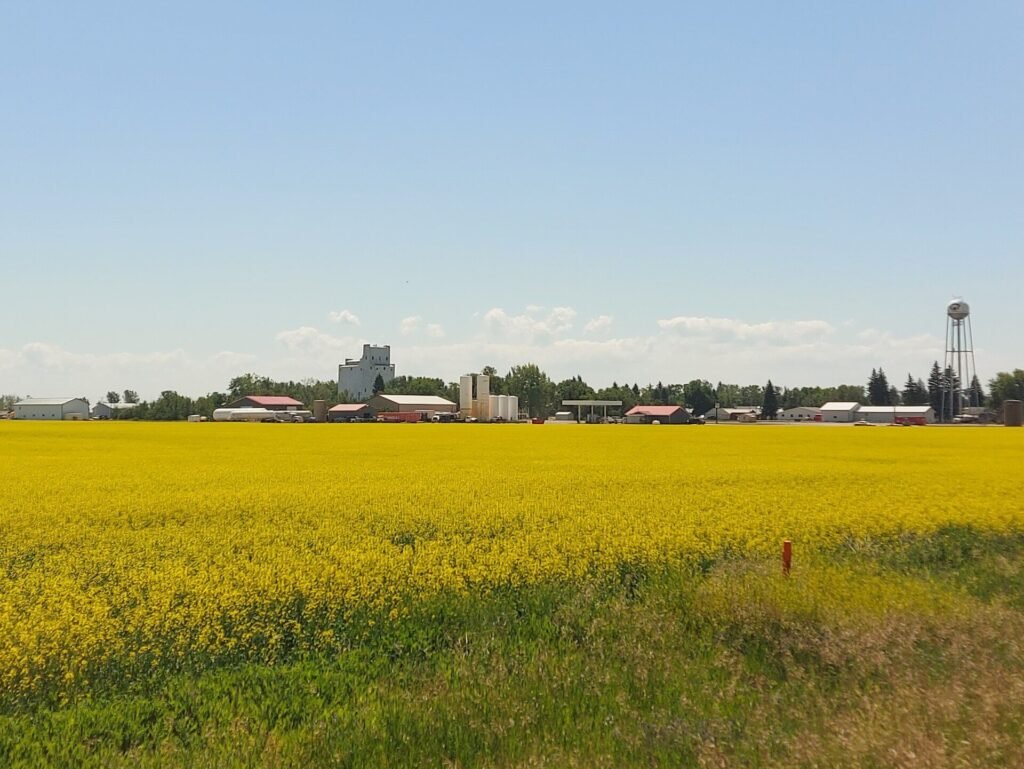
Two lessons stand out. First, a careful warm-up to decrystallize is cheap compared with warm storage. Second, high-temperature processing is expensive in a short time. That matters on the Northern Plains. North Dakota produced about 30.8 million pounds of honey in 2025, more than any other state and roughly a quarter of the U.S. crop, according to USDA NASS. Much of that is canola, clover and sunflower honey that crystallizes quickly, so warming honey is routine here. Being careful about how, and how long, you warm it pays off across a lot of jars.
HMF and Other Heat Markers
Hydroxymethylfurfural (HMF) forms as fructose breaks down. It is almost absent from fresh honey and rises with heat and age. Stefan Bogdanov’s Honey Book, chapter 5 gives the standards: the Codex Alimentarius and EU honey rules set a maximum of 40 mg/kg HMF for most honey, with a higher allowance for tropical honey, and a minimum of 8 diastase units. Bogdanov also notes a point that matches the half-life data. Short heat treatment raises HMF only slightly, while storage causes a steady, temperature-dependent rise.
Heat also darkens honey and can dull delicate floral aromas, which some tasters notice before any lab test would. Chemical changes in sugars, minerals and most acids are small by comparison. Heated honey is still honey. It is simply less fresh by every standard marker.
Practical Rules for Beekeepers and Buyers
For beekeepers
- Store cool. Buckets stored in a hot shed or honey house over summer lose more enzyme activity than anything you do in the kitchen. A basement is usually the best storage spot in our region.
- Decrystallize low and slow. A honey warming cabinet set around 100 to 105°F, or a warm-water bath, is gentle. Warm only what you will bottle soon, since each warming adds to the total. See how to reliquefy crystallized honey without damage.
- Watch the extraction line. Heated uncapping knives, sump heaters and bottling tanks can overheat honey locally. Our guide on avoiding overheating during extraction covers the equipment.
- Avoid microwaves and direct flame. They create hot spots far above the average temperature of the jar.
- Bottle at the lowest temperature that flows. Slightly warm honey fills jars faster, but every hour in a heated bottling tank counts toward the total. See whether to bottle honey warm or cool.
- Creamed honey is enzyme-friendly. Creaming is done cool, with seeded honey held at around 57°F while fine crystals form. The only heat involved is any warming used to liquefy the base honey first.
Storage temperature: the numbers that matter
The same USDA chapter puts the storage trade-off in plain terms. Ten days at 90°F does as much damage as 100 to 120 days at 70°F. One hour at 145°F during processing equals about 40 days of storage at 77°F. A single summer heat wave in an uninsulated honey house can undo months of careful cool storage.
Temperature also drives the other two storage problems. According to White and Doner:
- Fermentation is strongly slowed below 50°F.
- Granulation is fastest between 55 and 60°F, and temperature swings around 50 to 55°F can trigger it.
- The best storage for unpasteurized honey is below 50°F, which for us means a cold room or an unheated but frost-protected space through a northern winter.
White and Doner also suggest a simple check. Put a representative sample of fresh honey in the freezer at harvest. Months later, warm it to room temperature and compare its color, flavor and aroma with the honey from your normal storage. Any difference is storage damage you can see and taste.
For buyers
- “Raw” has no single legal definition in the U.S., so ask producers how hot and how long they warm and store honey.
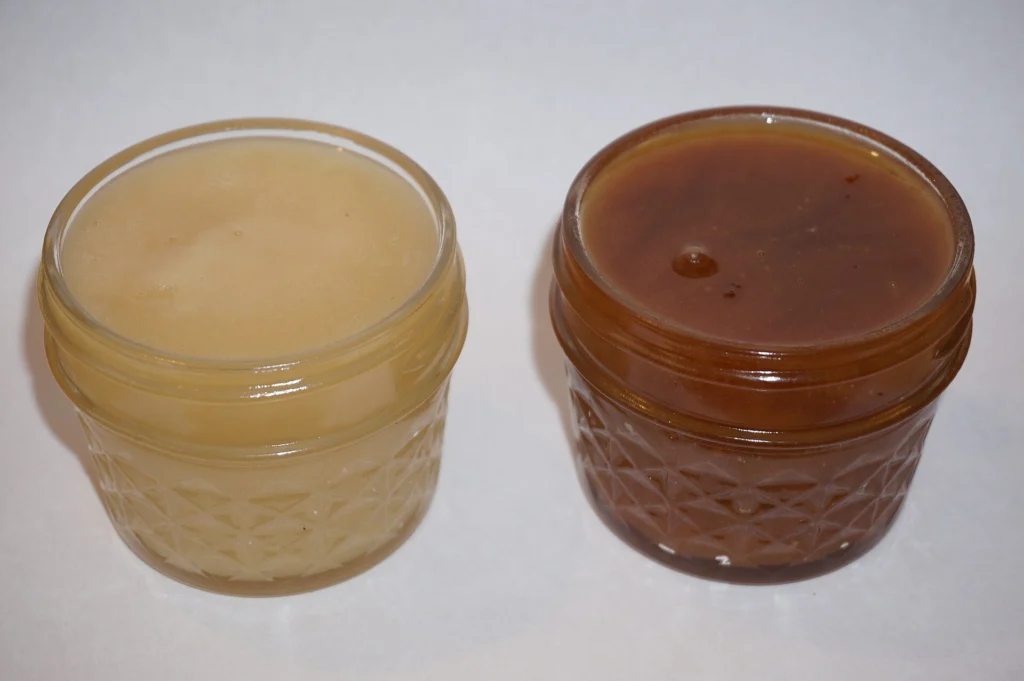
- Crystallization is not a defect. It is usually a sign the honey was not heavily heated. See why honey crystallizes.
- Keep your jar in a cool, dark cupboard, away from the stove. Stir honey into tea once the cup is comfortable to hold.
Testing a sample cold is covered in what a freezer does to honey.
Frequently Asked Questions
At what temperature are honey enzymes destroyed?
There is no single temperature. Enzymes decay at every temperature, faster as it rises. By USDA figures, invertase’s half-life drops from about 800 days at 68°F to about 13 hours at 130°F and about 40 minutes at 160°F.
Does warming honey to decrystallize it ruin it?
Not if you keep it gentle. By our estimate from USDA data, a day at about 104°F costs only a few percent of invertase and less diastase. The bigger losses come from warm storage and from high-temperature processing.
Is heated honey unsafe to eat?
No. Heating reduces enzyme activity, raises HMF and can change flavor and color, but heated honey is still a normal food. HMF limits exist as quality standards for commercial honey.
Does adding honey to hot tea destroy its enzymes?
A very hot drink will reduce enzyme activity quickly, but you are only exposing a spoonful for a few minutes. If enzymes matter to you, let the tea cool until the cup is comfortable to hold before adding honey.
Which honey enzyme is most sensitive to heat?
Of the two enzymes with standard measurements, invertase is clearly more sensitive than diastase, losing activity roughly two to five times faster in the USDA data. Glucose oxidase’s antibacterial output is also heat- and light-sensitive and varies widely between honeys.
How should I store honey to keep its enzymes?
Cool, dark and sealed. At 68°F diastase has a half-life of about four years, but at 77°F it drops to about a year and a half, and in the 90s°F to about four months. For long-term storage, below 50°F is best. Avoid sheds, garages and sunny windowsills.
Conclusion
Heat changes honey’s enzymes on a sliding scale of temperature and time, and storage counts just as much as processing. Keep honey cool, warm it gently and briefly when you have to, and avoid high-temperature processing if you care about enzyme activity.