Reviewed by Sofia T. · Last Updated September 23, 2026 · How we review
To reliquefy crystallized honey without damaging it, warm it slowly to about 100–110°F (38–43°C) and hold it there until every crystal is gone, then cool it to room temperature. A jar in a warm-water bath takes somewhere between half an hour and a couple of hours. A 5-gallon pail in a warming cabinet can take a day or two. What does the damage is going hotter to save time, not the time spent at a gentle temperature. So be patient rather than turning up the heat, and never use a microwave, a boiling pot or a hot car.
This guide covers the practical side: which method suits which container, how long each takes, how to tell when the honey is fully done, and why honey that is only partly melted crystallizes again quickly. If you want to understand why honey granulates in the first place, see why honey crystallizes.
Key Takeaways
- Aim for 100–110°F in the honey. At that temperature, a day costs only a small fraction of the honey’s enzyme activity. Higher temperatures work faster but cost more.
- How long it takes depends mostly on the size of the container and the type of crystal. Fine, hard-set canola honey is the slowest.
- Keep going until the honey is completely clear. Leftover microcrystals act as seeds, and the honey will granulate again within days or weeks.
- Stir once it’s liquid. Crystallization leaves a wetter layer in the jar, and stirring puts that moisture back evenly through the honey.
- Crystallized honey is still perfectly good honey. You don’t have to reliquefy it, and for some honeys creamed honey is the better choice.
Table of Contents
What “Damage” Actually Means
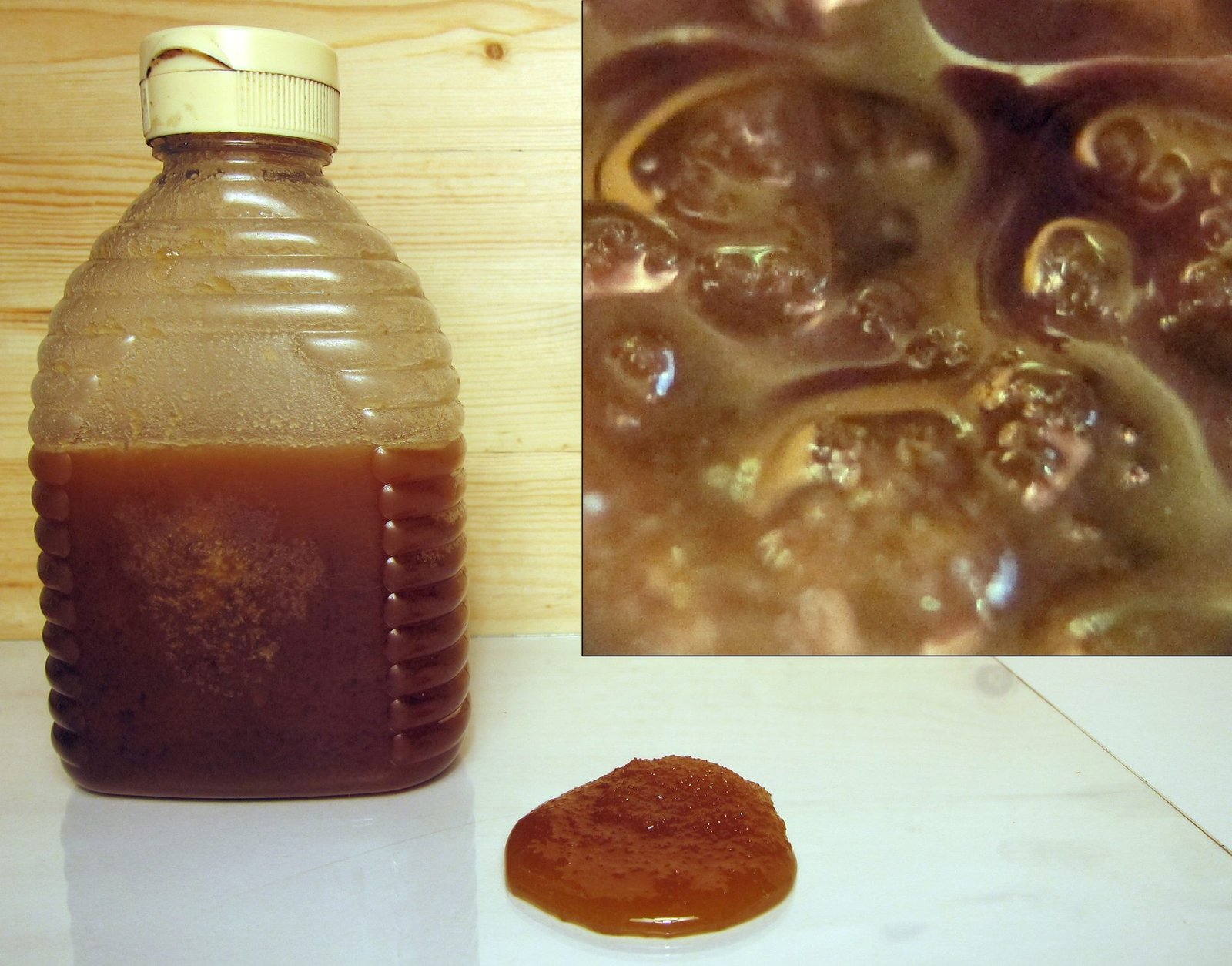
Crystallization is a physical change. Honey holds more glucose in solution than it can keep dissolved, so the glucose gradually comes out as crystals. The National Honey Board’s Honey: A Reference Guide to Nature’s Sweetener describes it as glucose precipitating out of a supersaturated solution. Warming dissolves the crystals again. The honey itself is unchanged.
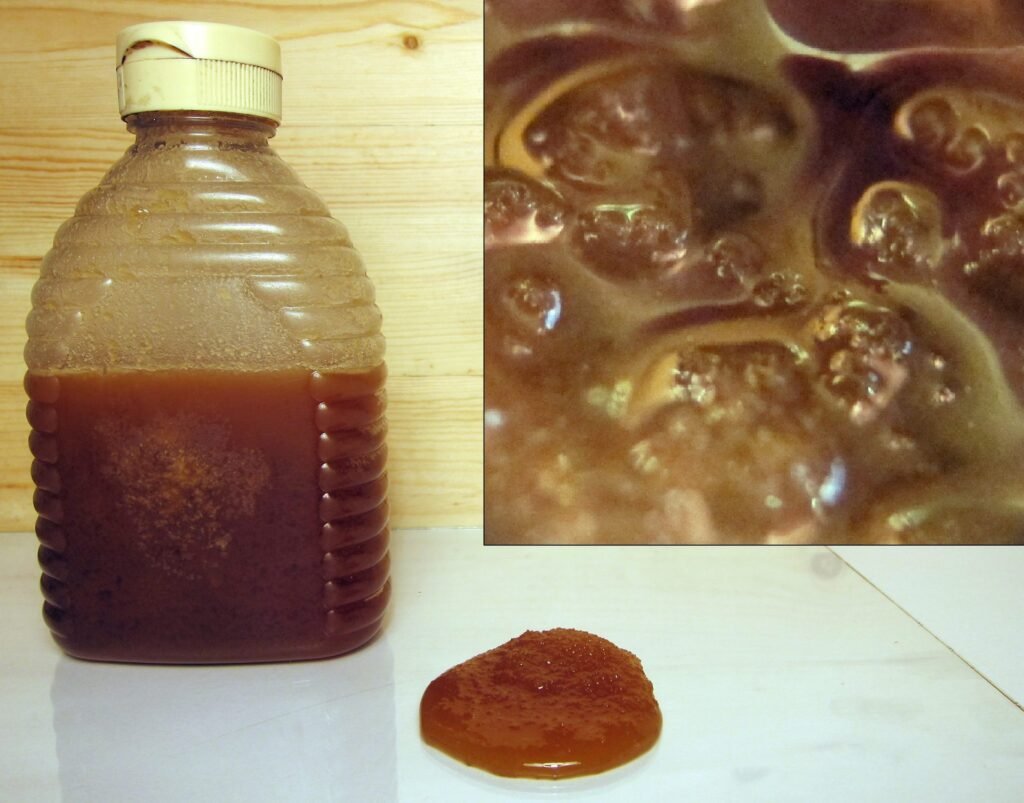
Heat does cause some real losses, and all of them depend on temperature and time together:
- Enzyme activity. Invertase is the most sensitive enzyme, and diastase is tougher. USDA half-life figures put diastase at roughly 1,500 days at 68°F but about 2.5 days at 130°F. That’s why a day at 105°F costs little and a day at 130°F does not. See how heating alters honey enzymes.
- HMF and color. HMF rises and honey darkens gradually with heat. The National Honey Board notes that honey kept above 85°F for long periods darkens and its flavor changes.
- Aroma. Delicate floral aromas fade first with high or prolonged heat.
The Codex honey standard sets the principle: honey “shall not be heated or processed to such an extent that its essential composition is changed and/or its quality is impaired” (section 3.2 of the Codex Standard for Honey). A slow, gentle reliquefying stays well inside that line.
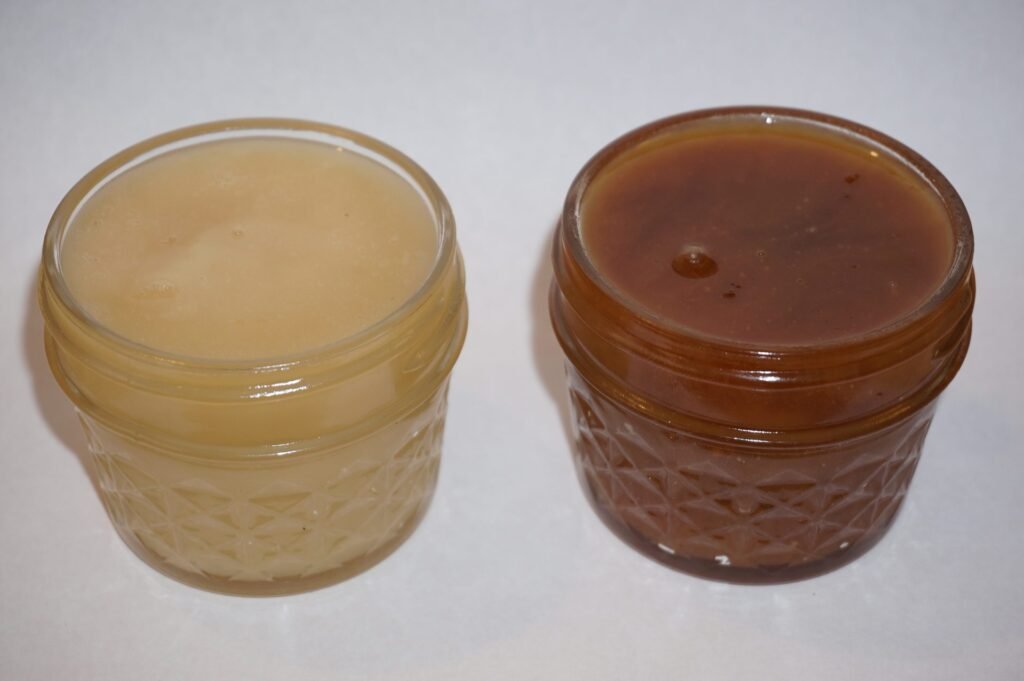
For comparison, the U.S. Standards for Grades of Extracted Honey tell graders to liquefy crystallized samples by heating them to about 130°F, then cooling them to about 68°F before scoring. That’s fine for a small sample that is heated briefly and then assessed. It isn’t a sensible temperature to hold a 60-lb pail at for two days, and that difference is why time at temperature matters as much as the peak temperature.
Methods by Container Size
| Container | Best method | Setting | Typical time |
|---|---|---|---|
| Small jar (up to 1 lb) | Warm-water bath | Water at 105–115°F, topped up as it cools | 30–90 minutes |
| Several jars | Sous vide or a water bath with a thermostat | 104–108°F | 1–3 hours |
| Squeeze bottles (plastic) | Warm-water bath | No hotter than about 110°F | 30–60 minutes |
| 5-gallon pail / 60-lb bucket | Warming cabinet or bucket heater blanket | Around 104°F | 24–48 hours |
| Drums and large tanks | Purpose-built drum heater or hot room | Around 104–110°F with stirring | Several days |
For pails, aim for about 104°F (40°C) for 24–48 hours, staying under 113°F (45°C). Fine-grained, hard-set honey needs the longer end of every range.
Step by Step: Reliquefying a Jar
Step 1: Loosen the lid and set the jar in warm water
Use a pot or bowl of water about as warm as a hot bath, roughly 105–115°F. Keep the water level below the lid so none gets into the honey. Don’t put the jar directly on a burner.
Step 2: Keep the water warm, not hot
As the water cools, replace some of it with warm water. Boiling water is tempting, but it overheats the honey closest to the glass while the center is still solid.
Step 3: Stir once the edges turn liquid
Stirring breaks up the solid core and spreads the heat. Put the lid back on loosely between stirs.
Step 4: Keep going until it’s crystal-clear
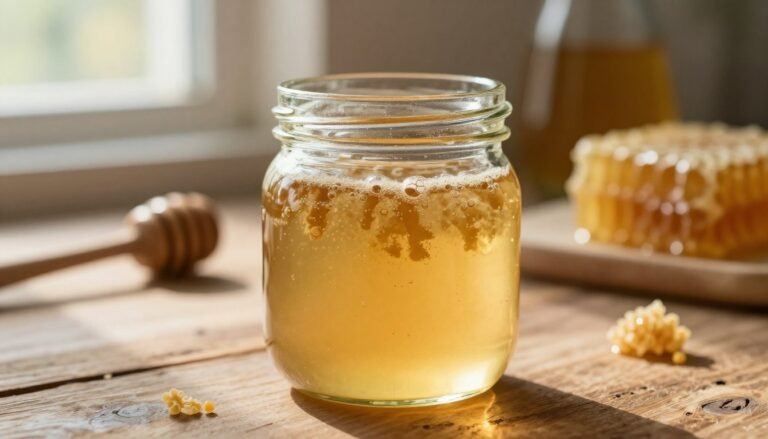
Hold the jar up to the light. Any haze or “sparkle” means crystals are still there. Give it another 15–30 minutes after it looks clear.
Step by Step: Reliquefying a Pail or Bucket
Step 1: Check the thermostat before you trust it
Put a probe thermometer in the cabinet or blanket and check it against the setting. Many cheap controllers drift by several degrees. For choosing and setting up a cabinet, see the honey warming cabinet guide.
Step 2: Warm it with the lid off, covered with a cloth
This lets you probe and stir without condensation dripping back into the honey.
Step 3: Stir and probe every few hours once the top softens
Take the temperature in the center. The honey against the wall of the pail will be warmer than the core.
Step 4: Take it out as soon as the pail is clear
Don’t leave it in the cabinet “to be safe.” Time adds up. If you’re bottling, move straight to the honey bottling temperature routine while it’s still warm.
Finishing Properly So It Stays Liquid
Honey that granulates again within a week or two was almost always only partly reliquefied. The crystals you can’t see act as seeds for the next round of crystallization. Keep it warm a little past the point where it looks clear, and stir it so the batch is the same all the way through.
Stirring matters for another reason. As glucose crystallizes out, the liquid left between the crystals is wetter than the original honey. That wetter layer is where fermentation starts in granulated jars (see granulation vs fermentation). Stirring the fully liquid honey spreads that moisture evenly again. If the reliquefied honey smells yeasty or sour, it was fermenting before you started. See whether fermented honey can be saved.
Afterward, store it at 64–75°F. The National Honey Board notes that 35–60°F speeds up crystallization, so a cool basement undoes your work fastest.
Methods to Avoid
- Microwave. It heats unevenly and can scorch spots in seconds while the rest stays solid.
- A slow cooker left on “low” or “warm.” The USDA says slow cookers cook food at about 170–280°F, and the warm setting is meant to hold cooked food at 140°F or above, which is heat-treatment territory for honey. A slow cooker only works as a water bath if you check the water with a thermometer and switch it off before the water passes about 115°F.
- Boiling water or stovetop pots. Glass on a burner or in boiling water puts the honey against the wall far above 110°F.
- A parked car or hot shed. On a sunny day a closed car can get far hotter than honey should, and there’s nothing controlling the temperature. It’s easy to forget a bucket and leave it for days.
- Adding water. It dissolves crystals but raises the moisture content and invites fermentation.
- Additives. Codex section 3.3 prohibits chemical or biochemical treatments to influence crystallization in honey sold as honey.
Hard-Set Canola and Honey in the Comb
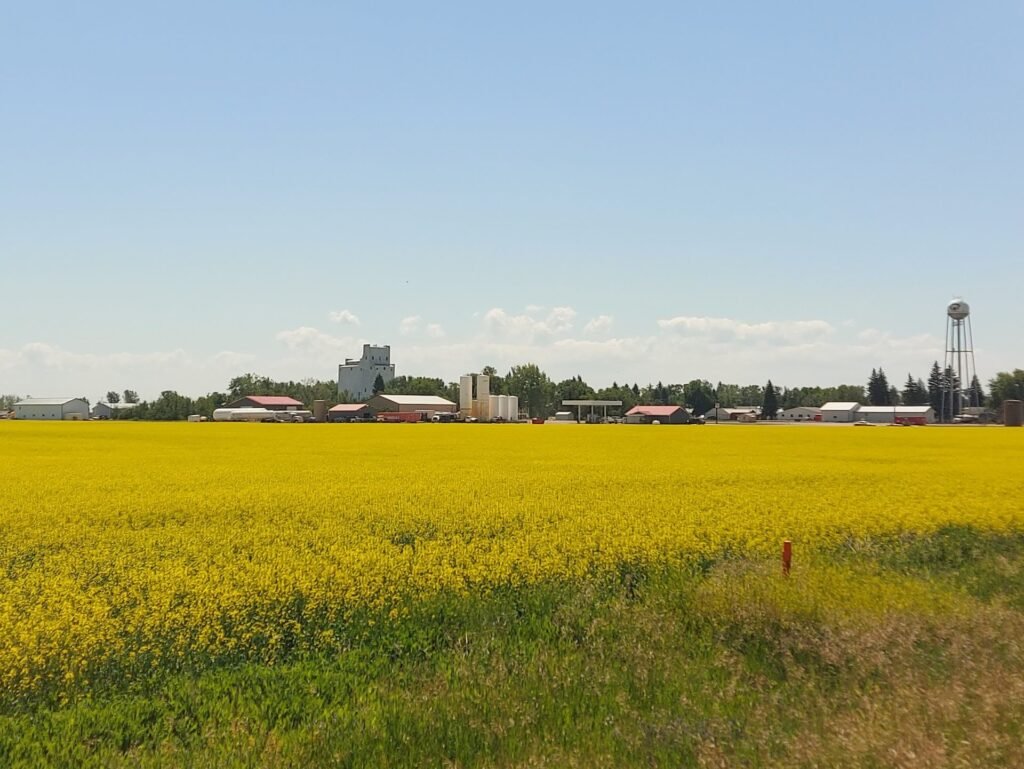
In the Red River Valley, the hardest honey to reliquefy is canola. It granulates fast, into a fine, dense set, sometimes within days or weeks of extraction, and occasionally in the comb before extraction. Two practical points:
- Canola in pails: plan on the full 48 hours or more at 104°F rather than turning up the heat. If you’ll be reliquefying it every few months anyway, consider selling it as creamed honey. Its fine natural crystals make an excellent seed. See the seeding ratio for creamed honey.
- Honey set in the comb: warming whole frames enough to melt granulated honey risks softening or slumping the comb, since beeswax melts at roughly 144–147°F. It’s usually better to extract canola supers promptly. Frames that have already set can go back to the colony as feed, if they came from your own healthy hives.
For why some floral sources set so much faster than others, see why some honeys crystallize faster.
Frequently Asked Questions
What is the best temperature to decrystallize honey?
About 100–110°F (38–43°C) in the honey. It’s warm enough to dissolve glucose crystals in a reasonable time and gentle enough that a day at that temperature costs little quality.
How long does it take to decrystallize a bucket of honey?
Usually 24–48 hours in a warming cabinet at around 104°F. Fine, hard-set honey like canola can take longer.
Why did my honey crystallize again right after I melted it?
Microscopic crystals were left behind and seeded new growth. Warm it a little longer after it looks clear, stir it, and store it at room temperature rather than somewhere cool.
Can I reliquefy honey in a plastic bottle?
Yes, in a warm-water bath no hotter than about 110°F. Hotter water can soften and deform squeeze bottles.
Does reliquefying honey make it no longer raw?
Gentle warming close to hive temperature is generally accepted for raw honey. Heating to pasteurization temperatures (140°F and up) is not. See raw vs processed honey.
Is crystallized honey safe to eat without reliquefying it?
Yes. Crystallization doesn’t spoil honey. Many people prefer the spreadable texture, which is the whole idea behind creamed honey.
The Bottom Line
Reliquefying honey without damaging it comes down to low heat and enough time. Keep the honey at about 100–110°F until the last crystals are gone, stir it, and store it at room temperature. Save the higher temperatures for honey you’re deliberately heat-treating, not honey you want to keep raw.