
Reviewed by Elena P. · Last Updated September 23, 2026 · How we review
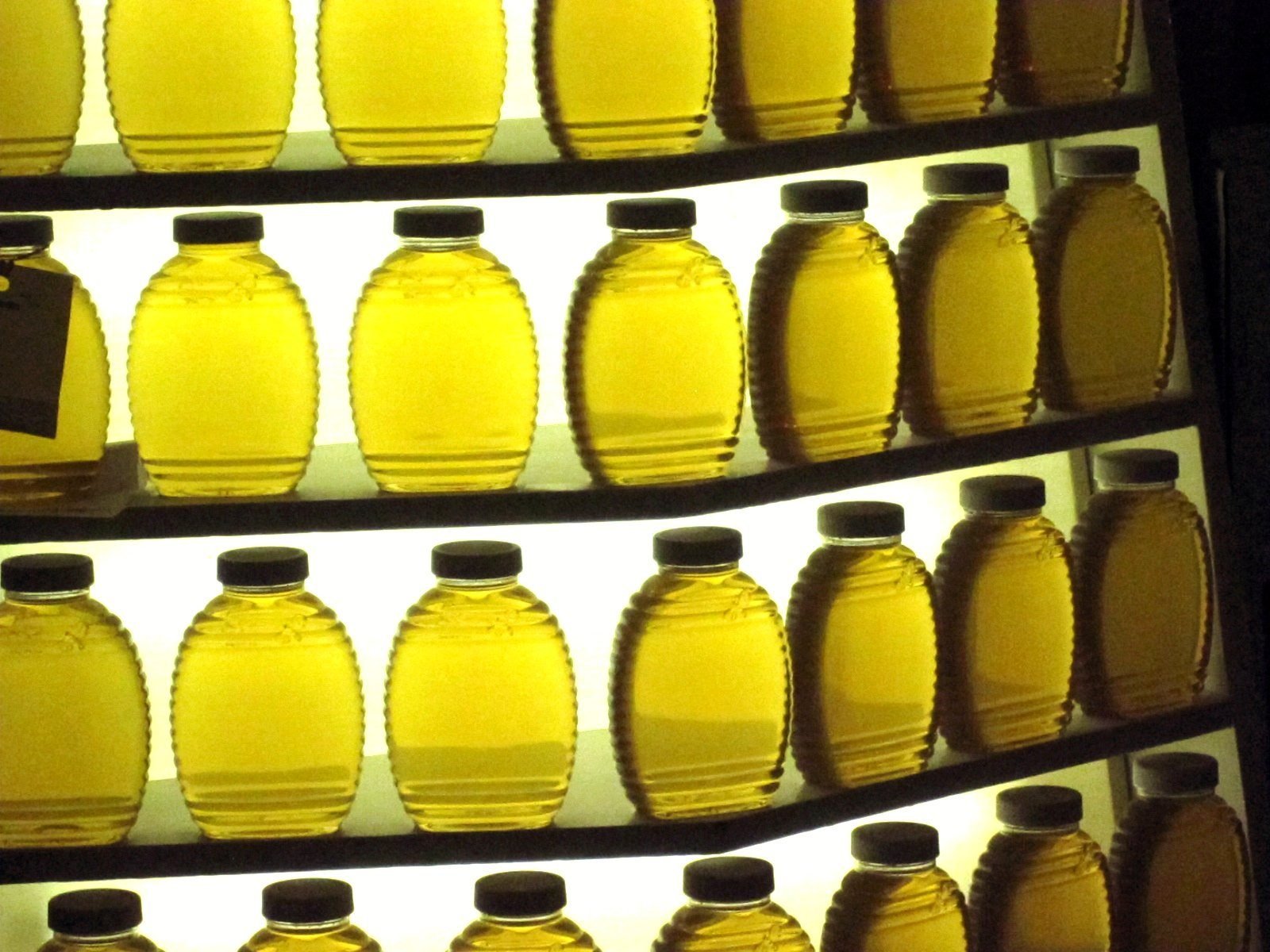
Raw honey is honey that has been extracted and strained, but not heated beyond what it would see in the hive and not pushed through fine filters. Processed honey, the clear “regular” honey on most supermarket shelves, is usually heated and pressure-filtered. Heating slows crystallization, prevents fermentation and helps the honey flow through filters. Filtering removes pollen, fine wax particles and air bubbles so the jar stays brilliantly clear. Both have the same sugars and calories. Raw honey keeps more of its heat-sensitive enzymes and nearly all of its pollen. It also crystallizes sooner, which is normal. And neither kind is safe for babies under 12 months.
Most articles stop there. This one also shows how much of honey’s main enzyme survives at each processing temperature, based on published lab data. It covers what the USDA’s definitions of “strained” and “filtered” actually say, and why a jar of raw honey from here in North Dakota, the country’s top honey-producing state, often turns solid within weeks.
Key Takeaways
- There is no official U.S. federal definition of “raw” honey. The word on a label is a producer’s claim, not a certification.
- Heat is the main difference. In lab tests, invertase, the enzyme bees add to honey, starts declining at hive temperature (95 °F) and is almost gone after a day at 149 °F.
- Filtering is the second difference. USDA definitions say filtered honey has had most of its pollen and fine particles removed, while strained honey keeps them.
- Sugar, calories and infant-botulism risk are the same for raw and processed honey. No honey is safe for children under 12 months.
- Fast crystallization is normal for raw honey, especially honey from canola and sunflower. It isn’t proof of rawness, and a runny jar isn’t proof of processing.
Table of Contents
What “Raw” and “Processed” Actually Mean
The first surprise for most shoppers is that “raw” has no legal meaning in the United States. The National Honey Board, the industry’s research and promotion body, says so directly:
“While there is no official U.S. federal definition of ‘raw’ honey, it generally means honey that has not been heated or filtered.”
National Honey Board, Honey FAQ
“Processed” has no fixed definition either. It covers everything from honey that’s been gently warmed and coarsely strained to honey that’s been heated, pressure-filtered and blended from several countries. In practice, the terms describe two ends of a range:
- Raw end: Honey is spun out of the comb, strained through a sieve to catch wax and bee parts, left to settle so air bubbles rise, and bottled. It may be warmed slightly to help it flow, but not much beyond the temperature of a beehive.
- Processed end: Honey is heated well above hive temperature and pushed through fine filters under pressure. It’s often blended so every jar looks and tastes the same, then bottled so it stays liquid and clear on the shelf for months.
Most honey sold by small beekeepers sits near the raw end, whether or not the label says so. Most national-brand squeeze bottles sit near the processed end. Our step-by-step guide to how honey is processed from comb to jar walks through each stage in the extraction room.
Side-by-Side Comparison
| Factor | Raw honey | Processed honey |
|---|---|---|
| Heating | None, or gentle warming near hive temperature | Typically heated well above hive temperature |
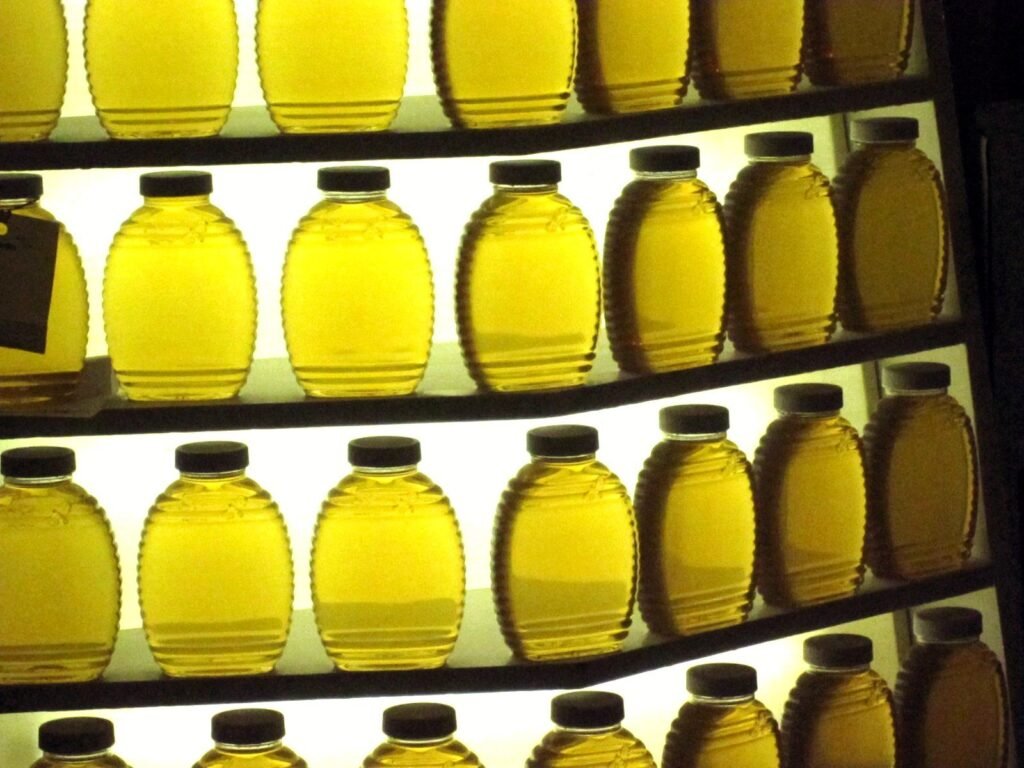
| Filtering | Strained; pollen and very fine particles remain | Filtered; most pollen, fine particles and air bubbles removed |
| Enzymes (invertase, diastase) | Close to what the bees left | Reduced; how much depends on temperature and time |
| HMF (heat-and-age marker) | Low when fresh | Higher; rises with heat and storage time |
| Appearance | Often cloudy; may have fine specks | Brilliantly clear |
| Crystallization | Often within weeks, depending on nectar source | Delayed, often for many months |
| Flavor | Varies with floral source and season | Consistent, usually milder |
| Sugar and calories | About the same | About the same |
| Safe for infants under 12 months | No | No |
What Heat Does: The Enzyme Ladder
Honey’s most heat-sensitive ingredients are its enzymes. Bees add invertase to nectar to split sucrose into glucose and fructose. Diastase and glucose oxidase are also present. Glucose oxidase is the enzyme behind honey’s mild hydrogen-peroxide activity. Because these enzymes are proteins, heat unfolds them, and they don’t recover.
A study by Sophia Karabournioti and P. Zervalaki of a Greek honey quality lab, published in Apiacta in 2001, measured this directly. They held five honeys at set temperatures for 24 hours and measured the invertase left and the HMF (hydroxymethylfurfural) formed (full paper, PDF). HMF is a compound that forms when honey’s sugars are heated or aged. One of the five was sunflower honey, and sunflower is a major honey plant in North Dakota. We converted their raw numbers into the share of invertase that survived:
| 24-hour hold at | Invertase remaining (range across 5 honeys) | Sunflower honey | HMF result |
|---|---|---|---|
| 95 °F (35 °C), about brood-nest temperature | 79–97% | 97% | Minimal change |
| 113 °F (45 °C) | 53–87% | 78% | Small rise |
| 131 °F (55 °C) | 29–61% | 31% | All five still under 40 mg/kg |
| 149 °F (65 °C) | 3–15% | 3% | Three of five over 40 mg/kg |
| 167 °F (75 °C) | 0–2% | 0% | All five over 40 mg/kg |
The 40 mg/kg line in the last column is the HMF limit for processed honey in the international Codex Alimentarius Standard for Honey. It allows 80 mg/kg for honey from tropical climates.
“The decomposition of invertase is very fast and starts from 35°C, temperature which in many countries can be obtained during summer.”
Sophia Karabournioti and P. Zervalaki, “The Effect of Heating on Honey HMF and Invertase,” Apiacta 4, 2001
Three honest caveats about this table. First, these were 24-hour holds. Commercial heating is usually much shorter, so a real jar heated to 149 °F for minutes loses less than the table shows. The direction and the thresholds still hold. Second, 95 °F is about the temperature bees keep their brood nest at, so even honey straight from the hive has already been warm. “Raw” means not heated beyond that, not never warmed. Third, the paper notes that honeys vary a lot in how well they resist heat, and orange and pine honey held up better than the others. That’s why this ladder is a guide, not a precise prediction for any one jar.
The practical takeaway is simple. Warming honey to about body temperature to help it flow or to dissolve crystals does little harm. Holding it at 130 °F and above is where most of the enzyme loss happens. Our guide to reliquefying crystallized honey without damage applies the same idea at home.
What Filtering Removes
Straining and filtering sound alike but mean different things. The USDA’s United States Standards for Grades of Extracted Honey define them separately:
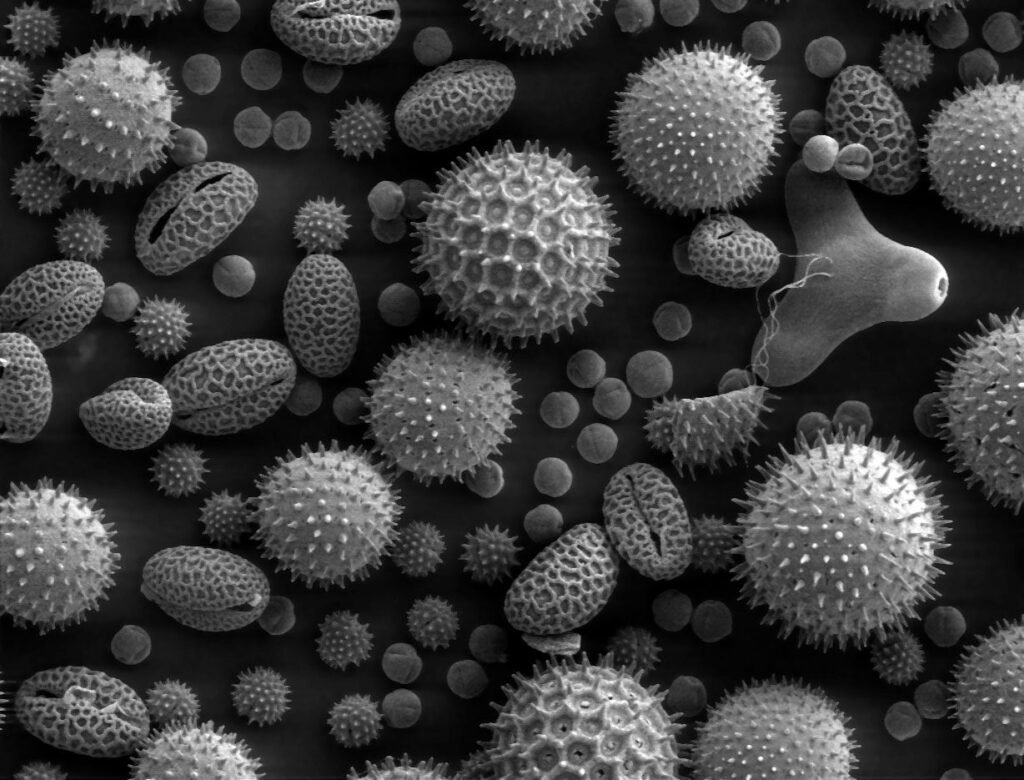
- Strained honey has had most particles removed, such as bits of comb and propolis. Pollen grains, small air bubbles and very fine particles normally stay in.
- Filtered honey has had all or most of the fine particles, pollen grains and air bubbles removed.
That difference matters for two reasons. First, pollen is honey’s fingerprint. Labs use it to confirm where a honey came from and which flowers the bees visited, so removing it removes a key way to check origin. Second, the particles and bubbles are what honey crystals start growing on. The National Honey Board notes that filtering delays crystallization and keeps honey liquid far longer than unfiltered honey. For more detail on the range in between, see raw honey filtration levels explained and pollen content in unfiltered honey.
Why Packers Heat and Filter at All
Processing isn’t a trick to cheapen honey. It solves real problems for anyone bottling at scale, and knowing them makes the trade-off easier to judge.
- Shoppers expect liquid honey. A jar that turns solid on the shelf gets returned, even though crystallized honey is perfectly good. Heating dissolves the existing crystals, and filtering removes the particles that new crystals would grow on.
- Yeast and moisture. Honey naturally carries some yeasts. If the honey holds too much water, they can ferment it. The USDA grade standard requires at least 81.4% soluble solids for Grade A, which works out to about 18.6% moisture. Honey near or above that line is at real risk. Heating kills the yeasts, which is why honey that will sit in warehouses and on shelves for a long time gets heated. Beekeepers get the same protection by extracting only ripe, capped honey. Our guide to target moisture content for ripe honey explains how.
- Speed. Warm honey is much thinner than cool honey. Heating it lets a bottling line pump and filter thousands of pounds an hour instead of waiting on gravity.
- Consistency. Blending and filtering make every jar look and taste the same from one season to the next, which national brands need.
A small beekeeper bottling a few hundred pounds a year faces none of these pressures at the same scale. That’s the main reason raw honey is so much easier to find from local producers than from national brands.
Nutrition and Safety: The Honest Differences
Much of what’s written about raw honey overstates the gap. Here’s what holds up:
- Sugar and calories are essentially identical. Heating and filtering don’t change the sugar content in any meaningful way. Both are concentrated sugar and should be treated that way in a diet.
- Raw honey keeps more enzymes and pollen. That’s shown above. Whether those enzymes do anything for you once eaten is a separate question, and the evidence there is thin.
- Antioxidant content depends more on the flower than on processing. Darker honeys such as buckwheat generally test higher than light clover honey, whatever the processing. Heat and filtering can reduce some compounds, but a jar’s color and source usually matter more.
- Pollen can cut both ways. People with pollen or bee-product allergies should be more cautious with raw, unfiltered honey. The popular idea that local raw honey treats seasonal allergies isn’t well supported.
On infant safety, raw and processed honey are the same. The CDC’s guidance is plain: do not give a child honey before 12 months, because it can cause infant botulism. The National Honey Board explains that Clostridium botulinum spores can be present in honey. The heating used in processing isn’t designed to sterilize honey, so “processed” doesn’t mean baby-safe. For a fuller, evidence-graded look at health claims, see our guide to the benefits of raw honey.
How to Tell What You’re Buying
Since “raw” isn’t regulated federally, the label and the seller are what you have to go on. Here’s how to read the common terms:
- “Raw”: A claim that the honey wasn’t heated or filtered. It carries weight only if you trust the producer.
- “Unfiltered” or “strained”: Pollen should still be in the jar. This is the more specific and more useful claim.
- “Pure” or “100% honey”: Nothing added. It says nothing about heat or filtering.
- “Organic”: About how the honey was produced and sourced. Organic honey can still be heated and filtered.
- “Grade A”: A voluntary USDA quality score based mostly on moisture, clarity, defects and flavor. It says nothing about rawness, and heavily filtered honey scores well on clarity. See our explainer on USDA honey grades.
Home tests like the “thumb test” or the “water test” don’t reliably separate raw from processed honey. Crystallization isn’t proof either. Some raw honeys, such as sage and tupelo, stay liquid for a long time, while canola honey can set in days. The most reliable approach is to buy from someone who can tell you how they handle their honey. Our guides to U.S. honey labeling rules and the best raw honey brands you can actually buy can help. If you’re weighing raw against Manuka or “local,” those are separate questions, covered in raw vs Manuka vs local honey.
The View From a North Dakota Extraction Room
North Dakota has led the nation in honey production for more than two decades. According to the USDA’s National Agricultural Statistics Service, the state produced about 30.8 million pounds in 2025, from roughly 460,000 colonies, out of a national total of 115.7 million pounds (NASS Honey report, March 2026). Much of that crop comes from sweet clover, alfalfa, canola and sunflower. That mix explains a lot about raw honey from this region.
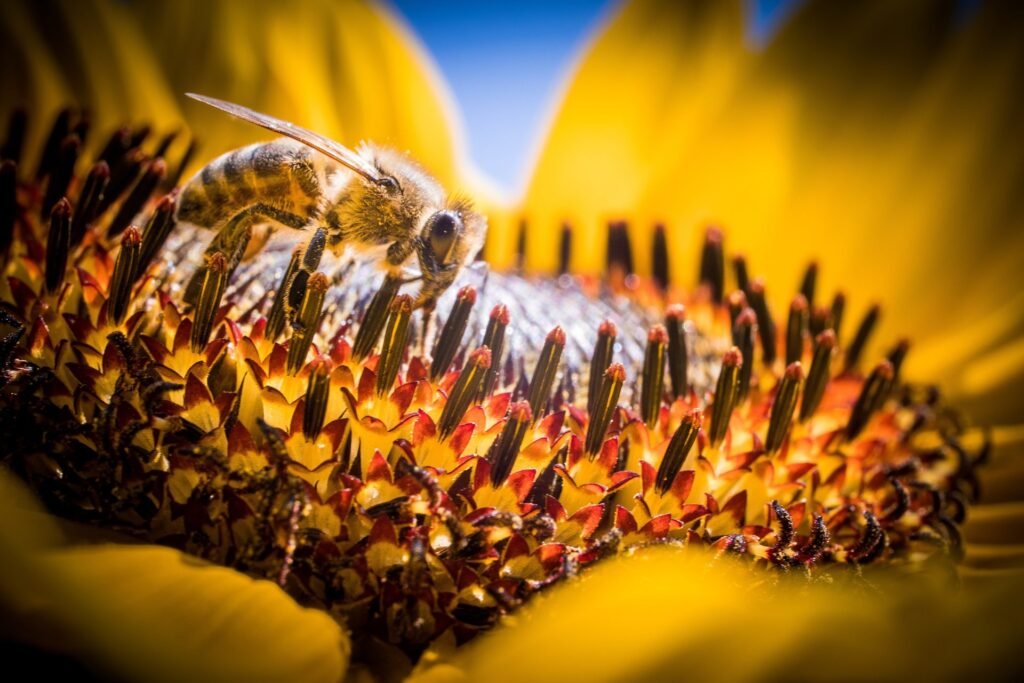
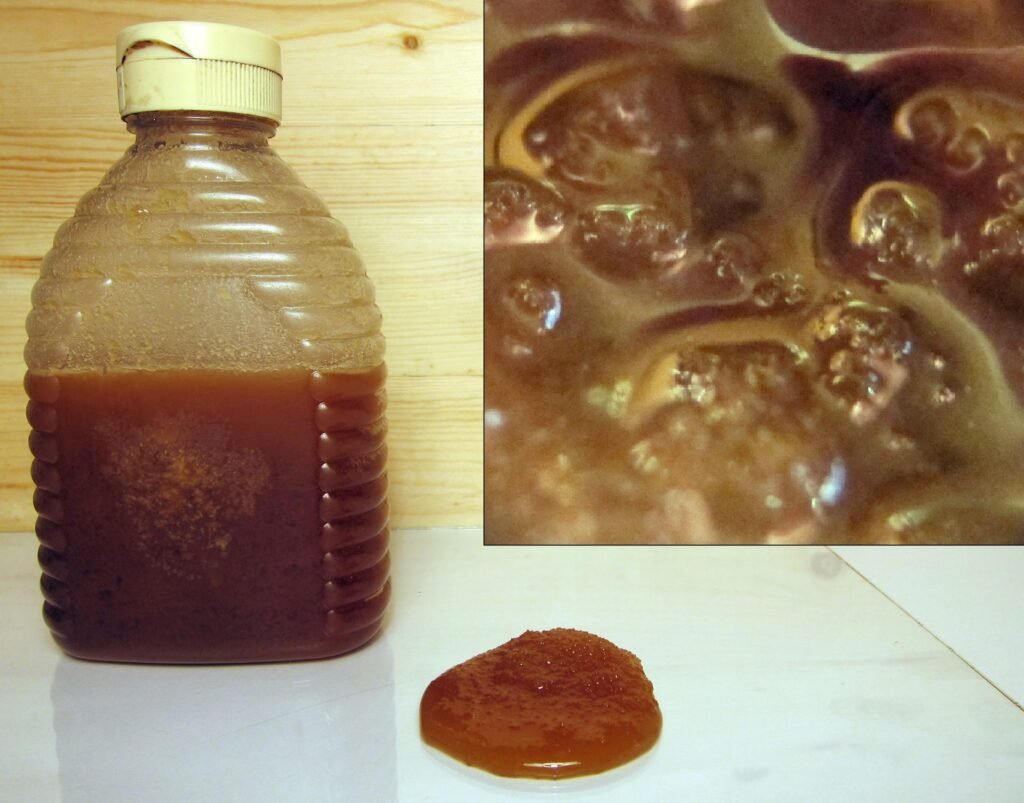
Canola and sunflower honeys are high in glucose, and glucose is the sugar that crystallizes. So raw honey from a Red River Valley hobbyist often turns cloudy and then firm within weeks of bottling. A heated, filtered jar of the same honey would stay liquid on a store shelf for months. That’s the main reason large packers heat and filter: shoppers expect liquid honey. Local beekeepers who want to sell raw honey often lean into the crystals instead and sell it as creamed honey, which is crystallized on purpose into a fine, spreadable texture. Our guide to honey crystallization explains why it happens.
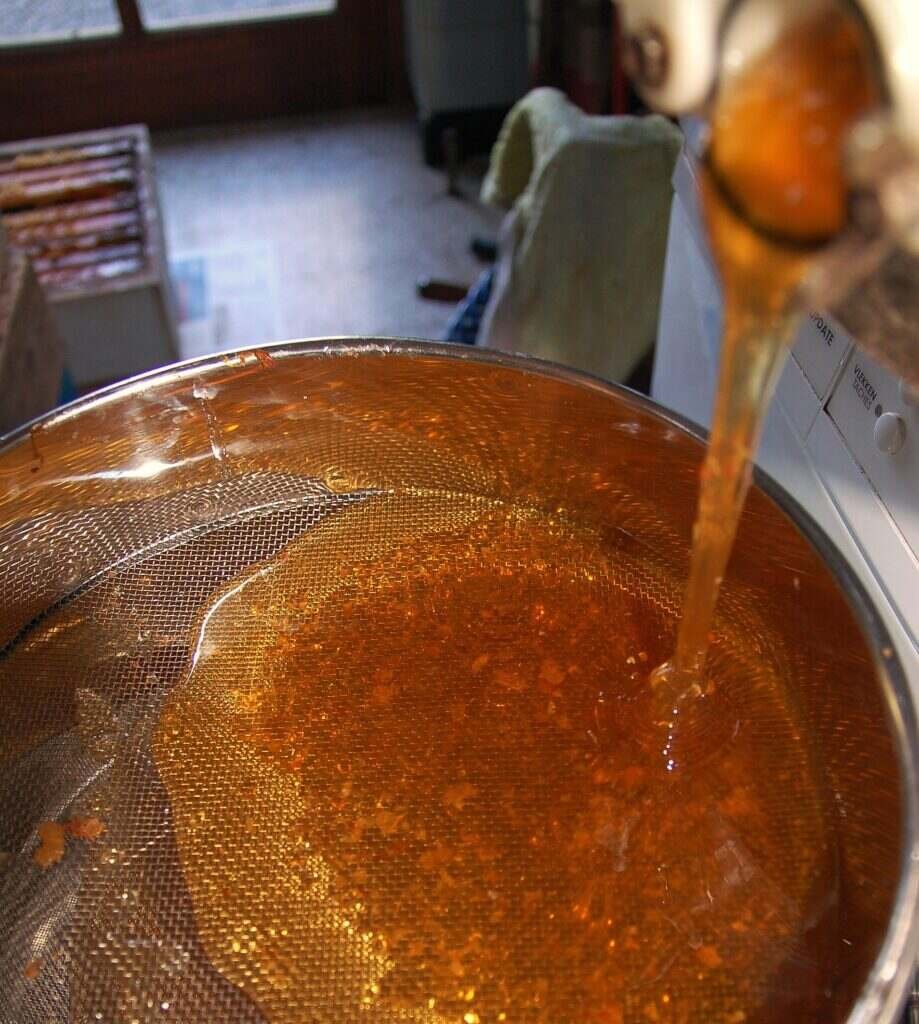
A small-scale raw process usually looks like this. Capped frames are extracted in a warm room, and the honey runs through a coarse sieve into a settling tank. It sits for a day or two so bubbles and wax rise, and then it’s bottled. If a bucket crystallizes before bottling, it goes into a warming cabinet held near hive temperature, below where the ladder above shows real enzyme loss. Nothing in that process needs a filter press or a flash heater.
For one common question, see whether raw honey is safe during pregnancy.
Frequently Asked Questions
Is raw honey healthier than processed honey?
Slightly different, not dramatically healthier. Raw honey keeps more enzymes and pollen, but the sugar and calories are the same. The antioxidant level depends more on the flower source than on processing. Treat both as a sweetener, not a supplement.
At what temperature does honey stop being raw?
There’s no legal cutoff. Lab data show invertase declining from about 95 °F and falling sharply above roughly 130 °F. Many beekeepers keep honey near hive temperature and call anything well above that processed.
Does pasteurized honey kill botulism spores?
Don’t count on it. Processing heat isn’t designed to sterilize honey. The CDC advises no honey of any kind for children under 12 months, raw or processed.
Why does raw honey crystallize faster?
Raw honey still contains pollen, tiny wax particles and air bubbles, and glucose crystals grow on them. Filtering removes them and delays crystallization. Crystallized honey isn’t spoiled and can be gently rewarmed.
Is “pure honey” the same as raw honey?
No. “Pure” means nothing was added. It says nothing about whether the honey was heated or filtered.
Is organic honey raw?
Not necessarily. Organic certification covers production and sourcing, not processing. Organic honey can still be heated and filtered. Look for “raw” or “unfiltered” if that’s what you want.
Can you tell raw honey by looking at it?
Not reliably. Cloudiness and early crystallization suggest the honey is unfiltered, but some raw honeys stay clear and liquid for a long time. Knowing the producer is the best test.
The Bottom Line
Raw and processed honey are the same food handled differently. Processing trades enzymes and pollen for clarity and a long liquid shelf life. The difference is real but modest, it depends mostly on how hot and how long the honey was heated, and it doesn’t change sugar content or infant safety. If you want the enzymes and pollen, buy unfiltered honey from a producer who can tell you how warm it got, and expect it to crystallize.



.jpg)
