Reviewed by Thomas B. · Last Updated September 23, 2026 · How we review
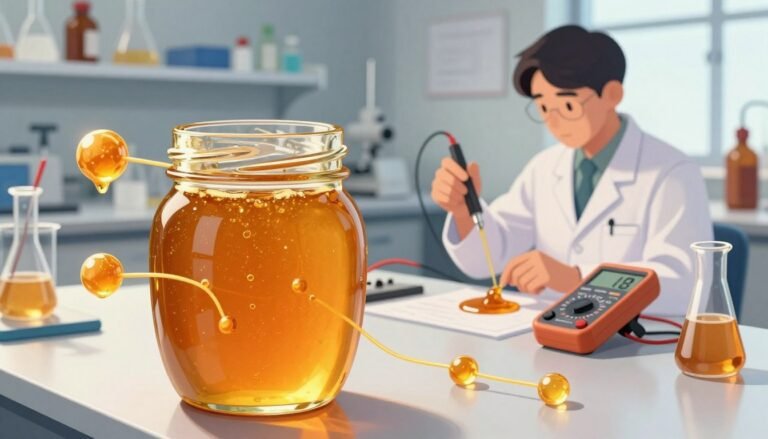
Unfiltered honey usually contains tens of thousands of pollen grains in every 10 grams. Most mixed-flower honeys fall between about 21,000 and 100,000 grains per 10 g in the International Honey Commission’s classification. Pollen is a tiny share of the honey by weight, but it’s a detailed record of which plants the bees worked. Normal beekeeper straining leaves nearly all of it in. Only fine pressure filtration takes it out, and US and international standards call honey processed that way “filtered.”
This guide covers how much pollen is typical, how it gets into honey, why the pollen count doesn’t always match the nectar source, and what filtering really removes. For filtration equipment and methods, see raw honey filtration levels explained.
Key Takeaways
- Pollen in honey is counted in grains per 10 g. Most multifloral honeys fall between 21,000 and 100,000. Pressed honey can go above 1,000,000.
- Pollen gets in from the nectar, inside the hive, during extraction, and from the air. Extracting frames that contain stored pollen adds more.
- Pollen share doesn’t equal nectar share. Canola pollen is over-represented and alfalfa pollen is under-represented, which matters for varietal labels.
- Hobby strainers (hundreds of microns) let pollen through. Lab filters that capture all of it use 3-micron membranes.
- Pollen is honey’s origin fingerprint. Its value as nutrition or as an allergy remedy is small or unproven.
Table of Contents
How Much Pollen Is in Unfiltered Honey?
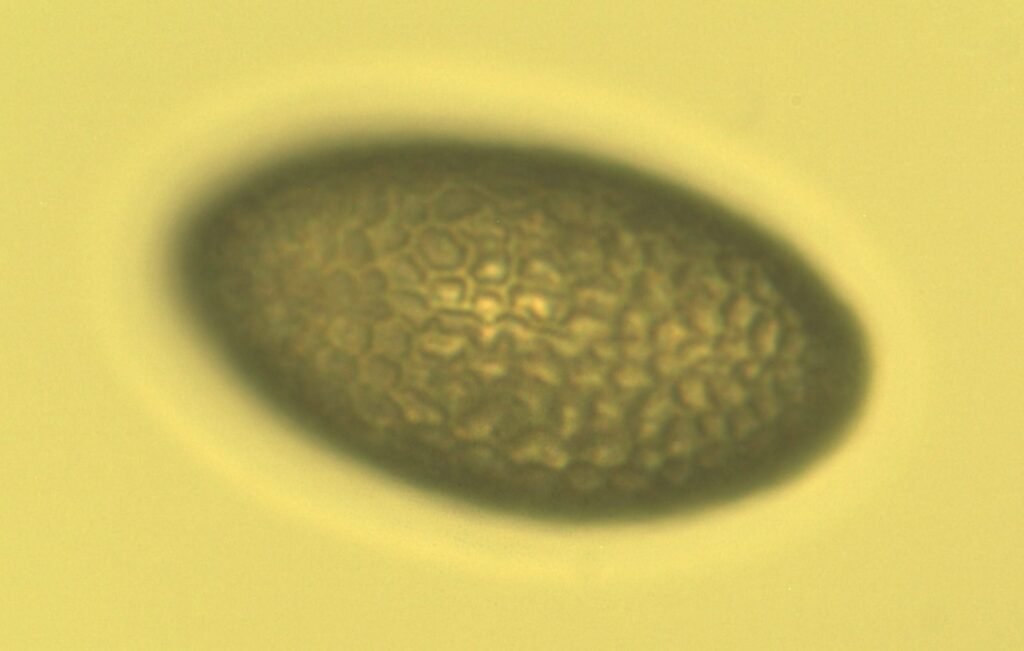
Labs measure pollen by dissolving 10 g of honey, catching the solids on a fine membrane, and counting under a microscope. The International Honey Commission’s Harmonized Methods of Melissopalynology (von der Ohe et al., Apidologie, 2004) sorts honeys into five classes by the number of plant elements per 10 g:
| Class | Pollen and plant elements per 10 g | Typical honeys |
|---|---|---|
| I | Up to 20,000 | Single-flower honeys whose pollen is under-represented |
| II | 21,000–100,000 | Most multifloral honeys, honeydew honeys, and mixtures |
| III | 101,000–500,000 | Single-flower honeys with over-represented pollen, and honeydew honeys |
| IV | 501,000–1,000,000 | Strongly over-represented single-flower honeys, and some pressed honeys |
| V | Over 1,000,000 | Almost only pressed honey |
So a teaspoon of ordinary strained wildflower honey can hold thousands of pollen grains, which is plenty for a lab to read its botanical and geographic origin. Those counts are for the whole honey. Filtering is what moves a honey down the scale toward zero.
Where the Pollen Comes From
The IHC paper describes pollen entering honey in stages:
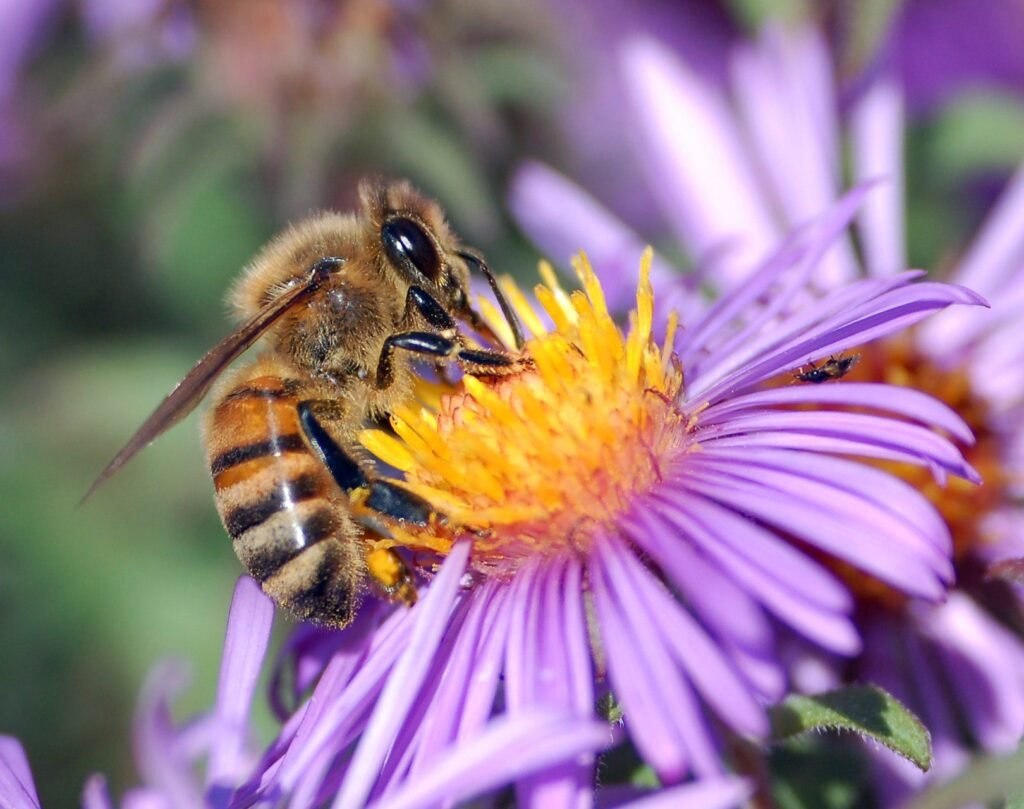
- Primary: pollen that falls into the nectar while it’s still in the flower.
- Secondary: pollen picked up inside the hive as bees handle and store nectar next to stored pollen.
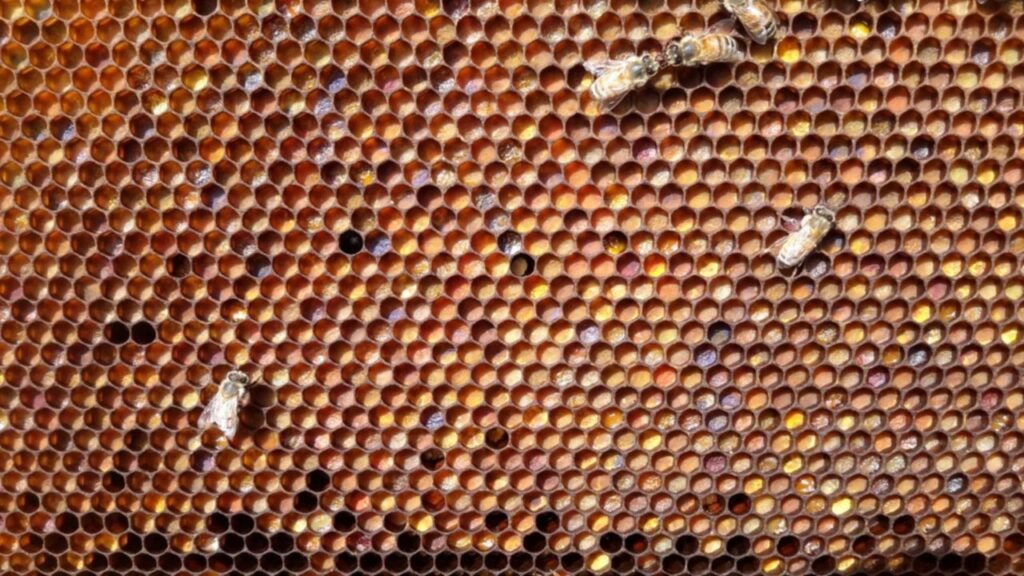
- Tertiary: pollen added during extraction. That happens especially when frames containing cells of stored pollen (bee bread) are uncapped and spun.
- Quaternary: airborne contamination.
The tertiary route is why pressed honey and honey from brood-nest frames carry far more pollen than honey spun from clean supers. For how bees collect and pack pollen in the first place, see how honey bees collect and carry pollen.
Why Pollen Percentages Don’t Match the Nectar Source
Under the IHC’s general rule, a honey is considered to come mainly from one plant when that plant’s pollen makes up more than 45% of the count. But plants release very different amounts of pollen into their nectar, so the rule has to be adjusted. The same paper lists typical pollen percentages found in single-flower honeys:
| Plant | Pollen share in its own single-flower honey | Representation |
|---|---|---|
| Canola / rapeseed (Brassica napus) | Over 60% | Over-represented |
| Sunflower (Helianthus) | 12–92% | Can be under-represented |
| Dandelion (Taraxacum) | 5–40% | Under-represented |
| Alfalfa (Medicago) | 1–10% | Under-represented |
| Citrus | 2–42% | Under-represented |
This matters in the Red River Valley. Canola honey from eastern North Dakota will be packed with canola pollen. A genuine alfalfa honey from the same county may show only a few percent alfalfa pollen. If you ever send honey for pollen analysis to back up a varietal label, the lab will interpret the results with these differences in mind. A low alfalfa percentage doesn’t mean your label is wrong. For how labs identify pollen types, see melissopalynology for beginners.
What Straining and Filtering Actually Remove
EAS Master Beekeeper Adam Hickman of Foxhound Bee Company puts the average pollen grain at about 25 microns wide, with the largest near 100 microns. Common hobby strainers are rated at 200, 400 or 600 microns. Pollen passes straight through them. For comparison, the IHC counting method catches pollen on a 3-micron membrane.
US grade standards draw the same line. The U.S. Standards for Grades of Extracted Honey (7 CFR 52.1393) define two styles:
“Grains of pollen, small air bubbles, and very fine particles would not normally be removed.”
Filtered honey, by contrast, has had “all or most” of its fine particles and pollen grains removed. The Codex honey standard goes further. It says no pollen may be removed except where that can’t be avoided while removing foreign matter, and honey filtered enough to remove a significant amount of pollen must be labeled “filtered honey.”
How common is heavy filtering? A 2011 Food Safety News investigation had Texas A&M palynologist Vaughn Bryant test store-bought honey. It reported that more than 75% of honey sold in the US had had its pollen filtered out, which also removes the evidence of where the honey came from. For how straining grades compare, see coarse strain vs fine strain honey.
What Pollen in Honey Does and Doesn’t Do
- Proves origin. This is its real value. Pollen analysis is the standard way to confirm a honey’s floral and geographic origin and to spot some kinds of adulteration.
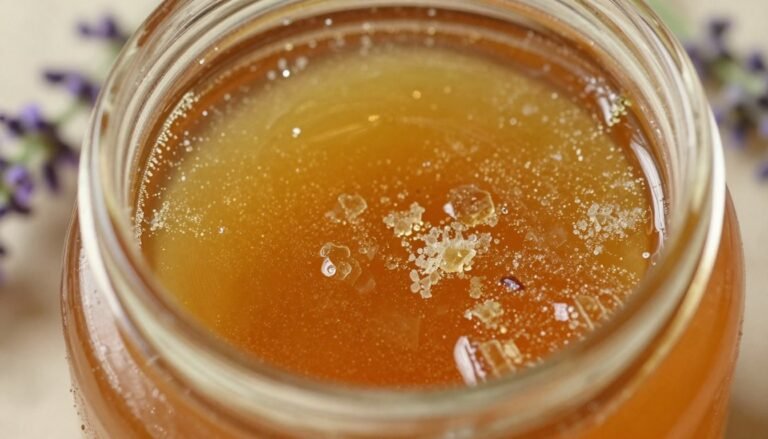
- Affects crystallization. Pollen and other fine particles act as seeds for crystals, so strained honey tends to granulate sooner than filtered honey. That’s a sign it’s less processed, not a flaw.
- Nutrition: minor. At these amounts, pollen adds very little protein or other nutrients to a spoonful of honey.
- Allergies: unproven. In the best-known US trial (Rajan et al., 2002, PubMed 11868925), neither local unfiltered honey nor filtered honey relieved hay-fever symptoms any better than a corn-syrup placebo. Bee-collected pollen mostly comes from insect-pollinated flowers, while hay fever is mostly triggered by wind-borne pollen. People with pollen allergies can occasionally react to honey. See can you be allergic to honey.
For Beekeepers: Keep the Pollen, Lose the Debris
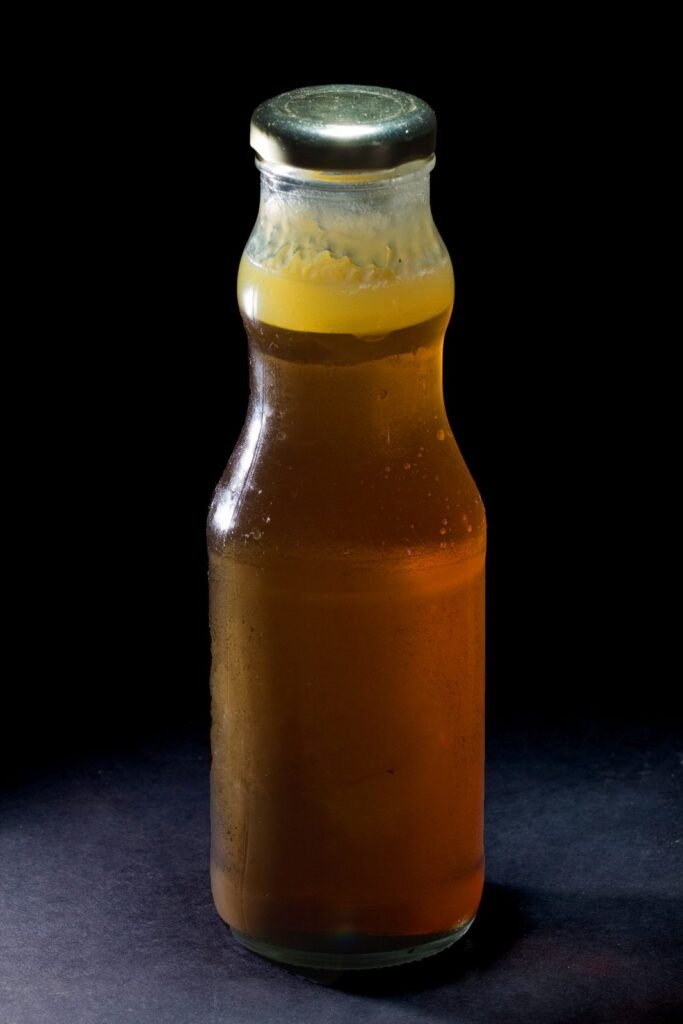
- Strain in two stages, coarse then fine, and settle the honey warm. That removes wax and bee parts while leaving the pollen.
- Extract frames that are heavy with bee bread separately, or leave them for the bees. They add a lot of pollen and can cloud the honey.
- Label honey as “strained” or “unfiltered” only if you haven’t pressure-filtered it. Keep a lot record so you can answer customers’ questions. See lot tracking.
- For what “raw” can honestly mean on a label, see raw vs processed honey.
Frequently Asked Questions
Does raw unfiltered honey contain pollen?
Yes. Strained honey normally contains tens of thousands of pollen grains per 10 g. Beekeeper strainers are far too coarse to remove it.
Does straining honey through cheesecloth remove pollen?
Not in any meaningful amount. Cheesecloth and nylon strainer bags catch wax and debris. Pollen grains are a few tens of microns across and pass through.
Why would a packer filter the pollen out?
Fine filtration gives a sparkling-clear honey that stays liquid longer on the shelf. It also removes the pollen that would show where the honey came from, which is why filtered honey has to be labeled that way under Codex rules.
Can you see pollen in honey?
Not individual grains. They’re microscopic. Heavily pollen-laden honey can look slightly cloudy, but cloudiness more often comes from air bubbles or early crystals.
Does eating local honey with pollen help seasonal allergies?
The evidence doesn’t support it. A randomized trial found no benefit over placebo. See an allergist rather than relying on honey.
Is pollen in honey the same as bee pollen?
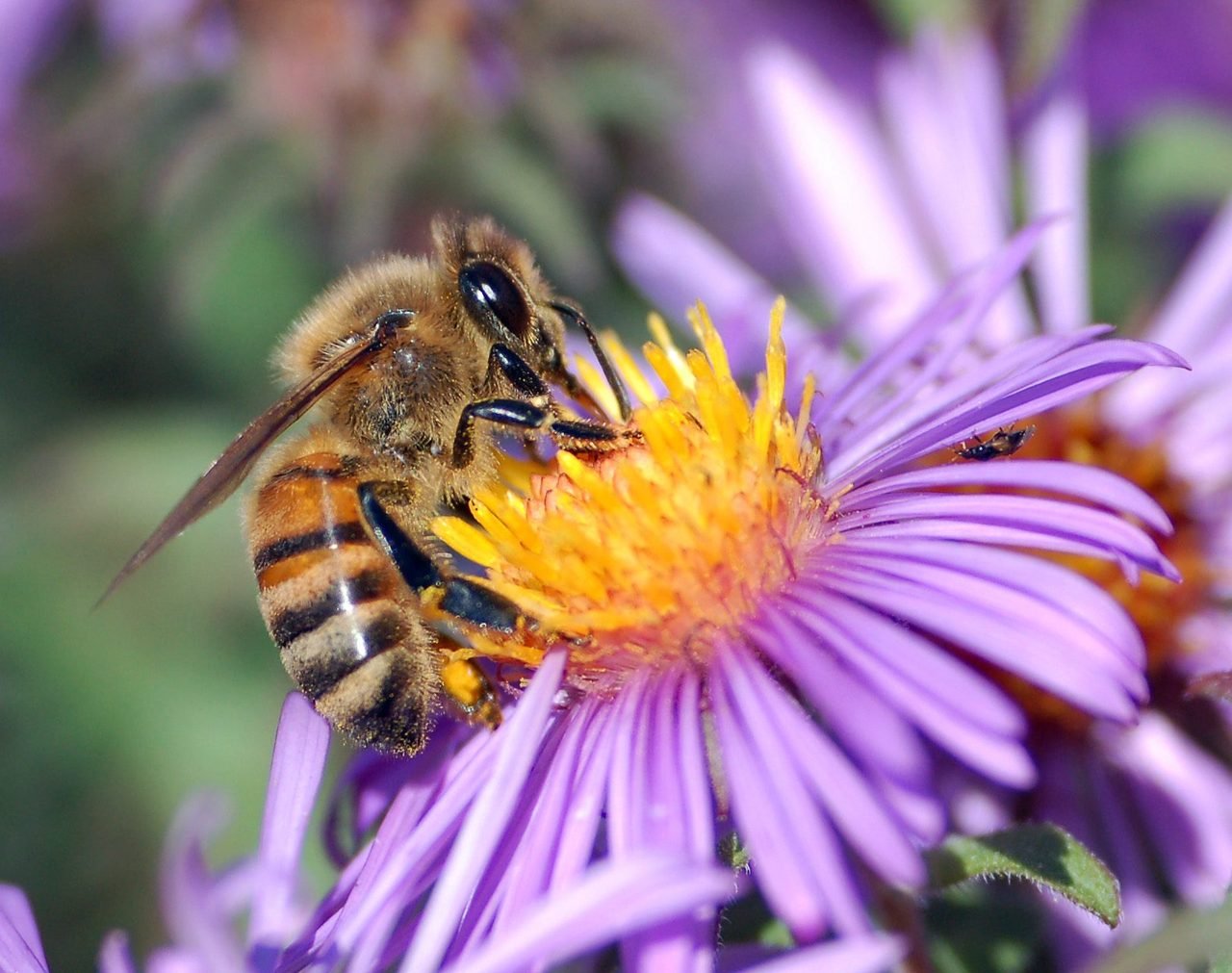
No. Bee pollen is the packed pollen pellets foragers bring home, sold as a separate product. The pollen in honey is a trace of scattered grains.
The Bottom Line
Unfiltered honey carries a large but tiny-by-weight load of pollen that records exactly where the bees foraged. Straining keeps it and pressure filtration removes it, and the standards require filtered honey to say so. Value pollen as proof of origin rather than as a health claim.