Reviewed by Thomas B. · How we review
Local climate shapes every beekeeping choice. Temperature, rainfall, humidity, and seasonal flow guide how you protect bees and secure honey through winter and heat waves.
This short guide compares targeted changes for cold and hot regions, from insulation and ventilation to entrance hardware and shade. Expect clear priorities: conserve warmth and stores in cold weather and shed heat and moisture in hot, humid conditions.
Field-proven practices such as screened bottoms, inner covers with absorbent layers, windbreaks, and smart wrapping (tar paper or Bee Cozy, never tight plastic) are highlighted. Aim for regional honey stores — roughly 80–90 lb north, 50 lb central, 30 lb south — and plan fall feeding like 2:1 syrup or winter fondant as needed.
Microclimate-aware placement and simple hardware changes raise colony survival and reduce problems like comb collapse or deadly condensation. For a deeper regional guide, see beekeeping in different climates, and for a look at what’s next in climate-adapted equipment, see this site’s guide to future hive designs for extreme climates.
Key Takeaways
- Match insulation and ventilation to local weather for better survival.
- Provide shade, water, and airflow in heat; wraps and entrance reduction in cold.
- Target honey stores by region and use fall feeding to fill gaps.
- Prevent condensation with breathable covers and avoid tight plastic wraps.
- Small hardware and placement changes boost resilience and honey yields.
Why climate-specific hive design matters for colony survival and honey yields
Adapting boxes and routines to local weather directly steers colony survival and annual honey totals. Matching management to regional nectar flows and temperatures sets the schedule for supering, feeding, and inspections. Proper timing helps colonies capture peak blooms and convert nectar into honey efficiently.
Humidity and rainfall patterns affect colony health. In muggy climates, poor ventilation raises mold and small hive beetle risk. In arid areas, shade and water sources prevent heat stress and dehydration. These differences change how you protect brood and stores.
Seasonal steps matter: spring expansion, summer swarm control and shade, autumn consolidation, and winter entrance reduction and feeding. Hot regions need earlier supering or splits to curb swarming pressure. Cold zones require stronger late-season food reserves and insulation to carry colonies through long months.
- Small choices add up: vent openings, entrance size, and materials alter thermoregulation and moisture control.
- Monitor local temperatures and adjust configuration across the months to reduce losses and keep bees productive.
Cold-climate vs warm-climate hive design tweaks
Practical tweaks at the hive level focus either on trapping heat for winter survival or letting heat escape in summer.

Core goals: conserve warmth or prevent overheating
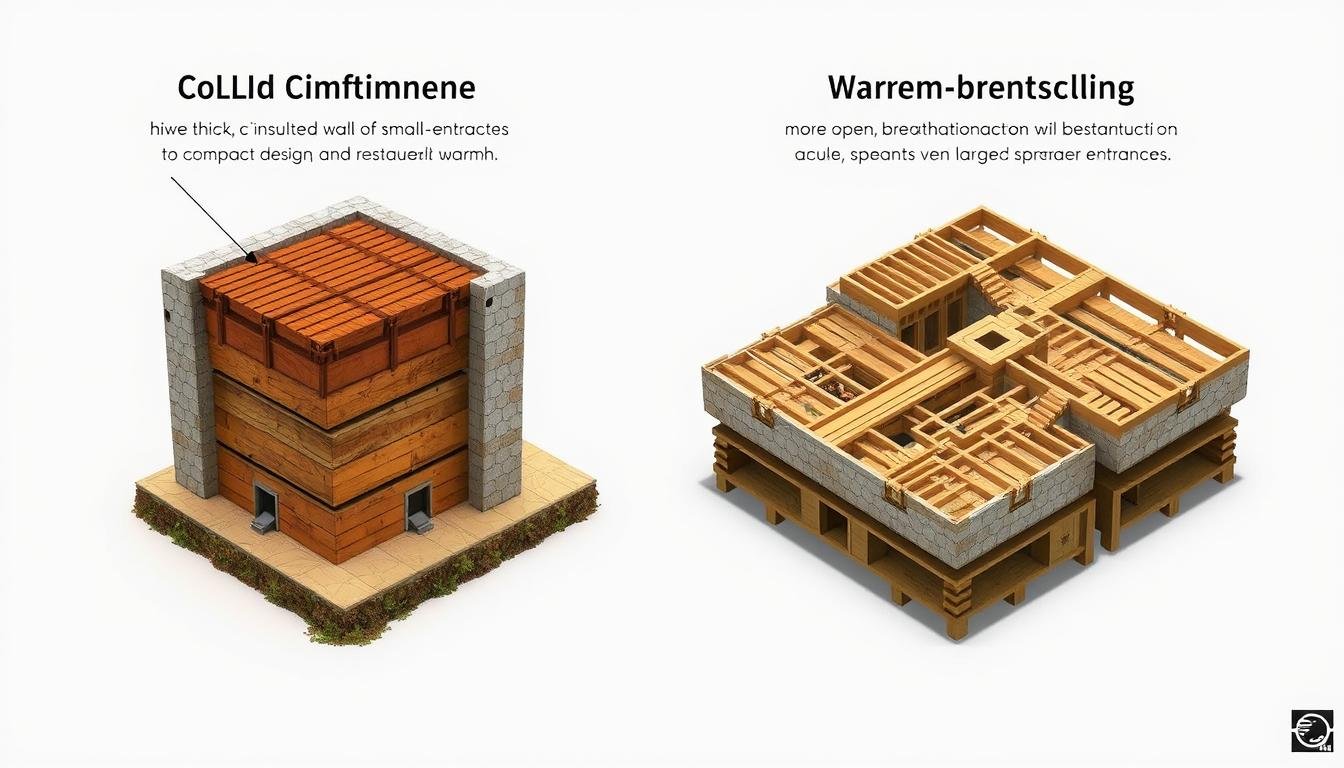
In cold regions, the priority is to conserve warmth and cut drafts so the cluster can hold heat. Insulated boxes, wraps, and reduced entrances keep the queen and brood snug.
In hot areas, the goal is rapid heat loss. Shade, screened bottoms, and top vents help keep internal temperature below levels that harm brood or melt comb.
Bee behavior differences: clustering, activity, and swarming pressure
Below about 50°F foraging stops and bees form a tight cluster around the queen. That behavior demands dry, draft-managed interiors and smaller upper entrances.
At higher temperatures, colony activity spikes and brood rearing rises, which can increase swarming pressure in summer. Add supers early or split colonies to relieve congestion.
- Flexible hardware: use removable screens and plugs to switch between retention and ventilation.
- Monitor activity: adjust entrance size and vents based on daily bee movement.
- Outcome-focused: these tweaks boost brood viability, lower absconding, and extend foraging windows.
Insulation and ventilation: balancing warmth, airflow, and energy use
Effective insulation must be paired with deliberate airflow paths to keep colonies healthy and energy-efficient.
Cold regions: wraps, insulated boxes, and windbreak placement
In colder zones, use insulated boxes and breathable wraps like tar paper or Bee Cozy to conserve warmth. Add windbreaks—straw bales or fencing—to cut convective heat loss.
Avoid tight plastic wraps; they trap humidity and restrict gas exchange, raising condensation risks.
Warm regions: screened bottoms, top ventilation, and shade strategy
Hot areas benefit from screened bottoms and top vents to increase airflow and lower humidity without directing cold drafts at the brood. Shade or reflective covers reduce solar gain while keeping necessary air movement.
Avoiding condensation: why ventilation is as critical as insulation
Moisture control matters as much as thermal control. Inner covers with absorbent layers (newspaper, burlap, straw) capture vapor and prevent drip-back that can chill bees.
- Balance insulation to save colony energy while providing proper ventilation paths: bottom intake, top exhaust, and baffles to block direct wind on the cluster.
- Monitor under-cover condensation and tweak vents to match local temperatures and humidity.
Hive entrances, winds, and airflow control
Entrance management and local wind sheltering are simple, high-impact steps that protect colonies through seasonal change.

Entrance reducers for winter winds and critter control
Use reducers to narrow openings so cold winds don’t strip heat from the cluster. A small lower entrance helps guard bees defend against pests while still allowing gas exchange.
Orientation, windbreaks, and microclimates
Map prevailing winds and point the hive’s back toward the strongest gusts. Place fencing, straw bales, or shrubs as windbreaks to buffer sudden drops.
- Seasonal setup: small lower openings in winter; wider entrances in warm months to boost airflow.
- Elevate stands slightly to avoid cold-air pooling and improve drainage around the environment.
- In hotter regions, use a medium entrance with screened bottoms to increase airflow without losing guard control.
- Avoid opposing openings that create crosswinds; they can strip heat from the brood.
Watch entrance traffic and bearding patterns as real-time signals to resize openings.
Feeding strategies: honey stores, sugar syrup, and seasonal timing
Feeding strategy should match region, season, and the colony’s visible stores to avoid late-season starvation.
Regional store targets and frame estimates
Set clear targets: Northern colonies need 80–90 lb, Central about 50 lb, and Southern about 30 lb to overwinter well.
Use frame weights to audit stores: deep frames hold ~5–8 lb honey; medium frames ~3–5 lb. Lift frames or the back of the boxes to judge remaining food.
When to use sugar syrup versus fondant or candy
Feed 2:1 sugar-to-water sugar syrup in early fall to backfill light frames so bees can cure and cap stores before nectar stops.
Switch to solid winter supplements (fondant or candy boards) when freezing weather arrives. Liquid feeds during freezes raise internal moisture and condensation risk.
“Feed early and finish early: give bees time to process syrup before temperatures fall.”
Water and summer food planning
In hot climates provide shallow, textured water sources near the apiary. Bees need water for cooling and mixing brood food.
Consistent access reduces risky flights in heat and helps stabilize internal temperature.
- Assess food by weighing hives, estimating frame weights, and lifting the rear to sense store levels.
- Avoid overfeeding syrup during nectar flows to prevent honey adulteration.
- Add internal or top feeders when robbing risk or weather limits flight.
- Check stores after cold snaps and dearths to prevent late-season starvation.
| Region | Target stores (lb) | Deep frames ≈ | Medium frames ≈ |
|---|---|---|---|
| Northern | 80–90 | 5–8 lb | 3–5 lb |
| Central | 50 | 5–8 lb | 3–5 lb |
| Southern | 30 | 5–8 lb | 3–5 lb |
Moisture management in cold and humid climates
Bees and brood create warm, humid air; where that vapor goes determines winter outcomes.
Warm exhaled air and brood humidity rise into the upper space. Without proper exhaust the vapor cools on the lid and forms droplets that fall back onto frames.
Inner covers, quilt boxes, and absorbent layers
Place an inner cover or quilt box filled with burlap, wood shavings, or straw to trap moisture while keeping insulation around boxes.
Swap damp material during mid-winter warm spells to keep absorption effective and reduce mold risk.
Vent paths that vent moisture without dumping heat
Provide a small upper notch or screened hole for steady vapor escape. Pair that with a reduced lower entrance to maintain defense and limit heat loss.
Adjust vents slowly based on outdoor humidity and wind to prevent over-venting and wasted energy.
Recognizing and preventing mold, drip-back, and frostbite risks
Inspect for condensation under lids, damp frames, or mold on inner covers and top bars.
Drip-back chills clusters and can cause frostbite on outer comb and bees, harming spring recovery and overall health.
- Coastal or humid areas: increase ventilation and use more absorbent media to limit mold.
- Inspection tip: check absorbent layers during warm days and replace if saturated.
- Outcome: good moisture control lowers disease pressure, improves brood patterns, and reduces cluster energy use.
| Issue | Sign | Action |
|---|---|---|
| Condensation / drip-back | Water under lids; wet frames | Add quilt box or replace damp absorbent; open small top vent |
| Mold growth | Black/green spots on inner cover or comb | Increase airflow; replace media; inspect frames |
| Frostbite risk | Dead bees at entrance; damaged outer comb | Reduce drafts; maintain insulation; prevent drip-back |
Seasonal beekeeping timelines by climate
A clear seasonal calendar helps beekeepers match interventions to local weather and bloom cycles.
Fall to winter: consolidating boxes, stores, and mite management
In fall, verify a strong queen and check brood pattern early in the months before cold sets in.
Treat Varroa in late fall, consolidate boxes to reduce void space, and confirm target stores. Combine weak colonies into strong ones—never weak-to-weak—to improve overwinter survival.
Before deep cold, reduce entrances, install breathable wraps where appropriate, set windbreaks, and keep a small ventilation path to limit condensation.
Spring to summer: supers, shade, swarm control, and heat mitigation
In spring, inspect for winter survival and expand the brood nest slowly. Add supers ahead of major nectar flows to avoid congestion and extra swarming pressure.
During summer months prioritize shade, water provisioning, and added ventilation to lower internal temperatures and support foraging activity.
In hot or tropical areas plan earlier splits and regular swarm-control cycles. In cooler zones guard against late frosts that can stall buildup.
“Time interventions to local bloom calendars and adjust supers to prevent congestion and swarming.”
- Fall tasks: verify queen, treat mites, consolidate, confirm stores.
- Winter routines: entrance reduction, breathable wraps, windbreaks, ventilation checks.
- Spring actions: careful expansion, add supers before peaks, inspect frames for brood health.
- Summer focus: shade, water, ventilation, and active swarm control where needed.
Record observations each season to refine timing for your area. Small, regular adjustments across the months prevent emergencies and keep colonies productive.
For a full month-by-month calendar, see the beekeeping calendar.
Equipment and materials: what to modify for each climate
Smart gear choices let beekeepers tune airflow and insulation quickly as weather shifts from hot spells to cold snaps.
Wood boxes versus insulated options
Standard wood boxes suit temperate zones. They are durable and simple to ventilate. They work well with shims or vented lids when moisture climbs.
Insulated boxes excel in colder regions by saving colony energy. Note: when you pair insulated boxes with screened bases, check for condensation traps and add an upper vent to keep moisture moving.
Screened bases, entrance hardware, and ventilation aids
Use screened bases in hot areas to boost airflow and reduce pests. Add adjustable entrance hardware for seasonal control of airflow and defense.
Top ventilation aids—vented lids or shallow shims—help vent moisture without blowing cold drafts across the cluster.
Wraps, plastics, and protective gear
Use breathable wraps like tar paper or Bee Cozy in cold months. Avoid tight plastic wraps; they suffocate internal airflow and raise condensation risk.
For PPE, choose breathable jackets and ventilated gloves for summer work, and full suits with solid veils for cold or defensive inspections.
- Assemble a seasonal kit: reducers, screens, corks/plugs, and windbreak materials for quick changes.
- Inspect seams and joints regularly to maintain draft control without suffocating the colony.
- Maintain entrance hardware on a schedule to deter rodents while preserving airflow.
Good equipment choices reduce the cluster’s energy needs and protect brood integrity. For broader strategies, see beekeeping by climate.
Site selection and hive placement for local weather patterns
Strategic siting uses sun, shade, and shelter to smooth daily temperature shifts around colonies. Choose an area with good drainage so stands stay dry and mold pressure stays low.
Morning sun and afternoon shade help bees start foraging early while limiting heat stress in the afternoon. In hot, dry places add shade; in humid zones favor airflow and avoid waterlogged spots.
Provide a shallow water source nearby so bees can cool the nest and mix brood food. Use windbreaks—natural or built—to reduce strong gusts that strip heat from the cluster in cold spells.
Monitor local quirks: coastal humidity, desert heat, or mountain frost pockets change ideal placement. Use inexpensive loggers to track temperatures and refine location choices.
“Place hives where the local environment helps, not hinders, seasonal survival.”
- Evaluate wind corridors and frost pockets before placing boxes.
- Pick slightly elevated sites to improve airflow and access during bad weather.
- Reassess seasonally as vegetation and weather shift.
For more on managing airflow and moisture, see the ventilation guide.
Conclusion
Practical, seasonal adjustments help bees use less energy and keep brood healthy when temperatures shift. Tailor insulation, proper ventilation, and entrance management to local conditions to protect colonies through winter and hot months.
Confirm stores and feed early with 2:1 syrup in fall, then switch to fondant or candy in deep cold. Manage humidity with absorbent layers and controlled vents to stop condensation and preserve brood health.
Site choices—windbreaks, water access, and exposure—cut weather stress. Regular checks on the queen, colony activity, and equipment lower risk across the months.
Beekeepers, plan seasonally, track results, and refine methods to match your area’s microclimate. For a practical timeline of seasonal tasks see seasonal beekeeping tasks.
FAQ
Why does hive planning differ between cold and warm regions?
Climate changes how bees use energy, stores, and behavior. In cooler zones colonies cluster to conserve heat and need insulation and wind protection. In hotter areas colonies work to avoid overheating; they rely on ventilation, shade, and water. Matching hive features to local weather improves survival, reduces stress, and often raises honey yields.
What are the primary goals for hive setup in colder weather versus hot weather?
In cold months the goal is to conserve warmth and minimize energy loss so the colony can survive on existing stores. That means added insulation, reduced draft, and blocking excess entrances. In heat the aim is to prevent overheating through increased airflow, shade, and shallow water sources so bees can cool brood and maintain activity without wasting stores.
How does bee behavior change with climate and how does that affect hive choices?
Bees cluster tightly in cold months to maintain brood temperatures and cut activity; they need compact space and reliable food. In warm climates bees forage more, fan to cool the hive, and may swarm more often. Those behavioral shifts determine whether you emphasize insulation and entrance guards or screening, top vents, and extra supers.
What insulation and ventilation strategies work best for northern winters?
For harsh winters use breathable wraps, an insulated inner box or quilt box with absorbent material, and a snug outer cover. Keep ventilation low but steady to avoid condensation. Place a windbreak upwind and reduce entrances to limit cold drafts. Avoid sealing hives so tightly that moisture can’t escape.
What ventilation and shading should be used in warm regions to prevent overheating?
Use screened bottom boards, add top vents, and provide afternoon shade, especially during heat waves. Ensure unobstructed airflow through the brood chamber and keep extra empty frames or supers available to give bees space to move and cool. Position hives to catch morning sun and block intense midday heat.
How do I prevent condensation and moisture damage in cold, damp climates?
Provide an escape path for moisture—vented inner covers, small top vents, and a quilt box with absorbent burlap or wood shavings work well. Keep frames consolidated so bees cluster without forcing air to cool. Regularly inspect for mold or drip-back and replace wet bedding to prevent brood loss and frostbite.
Should I reduce the hive entrance for winter winds and pests?
Yes. Use an entrance reducer to limit cold drafts and make it easier for guard bees to defend against mice and other critters. In very cold zones a smaller entrance helps the colony maintain temperature. Remove or widen entrance reducers during hot spells or heavy foraging periods so bees can ventilate and move freely.
How should I orient and place hives to manage wind and microclimates?
Face hives toward morning sun where possible to warm early activity. Use natural or constructed windbreaks on the prevailing wind side to reduce chill in winter. Elevate hives off wet ground to reduce humidity and choose locations with good drainage and nearby forage to reduce foraging stress.