This concise guide explains how thoughtful plant choices can rebuild habitat in yards, containers, and small beds. The U.S. has lost vast acreage to sprawl and lawns that offer little value to wildlife. Small changes at home can create stepping stones that help bees, butterflies, and other beneficial species move across the landscape.
Native plants evolved with local wildlife, so they often need less water and care while giving better food and shelter than many ornamentals. This guide shows season-by-season picks, woody anchors, and pairing ideas to deliver continuous forage from spring through late season.
Use practical tips and tools like the federal pollinator garden guide and local plant lists to match selections to your zip code. You’ll find species and vetted cultivars that keep nectar and pollen accessible and that support a thriving garden without extra work.
Key Takeaways
- Small plantings can make a big difference for local wildlife and pollinator movement.
- Choose species that bloom across seasons to ensure continuous forage.
- Favor straight species or vetted cultivars that keep nectar and pollen reachable.
- Use resources like the native bee planting guide to find regional matches.
- Perennial plantings reduce maintenance and boost long-term habitat value.
Why Native Plants Supercharge Pollinators and Your Garden
Selecting plants that evolved in your area delivers reliable blooms, deep roots, and real habitat value. These species are tuned to local soil and climate, so they usually need less water and fewer chemicals. That saves time while helping bees and other beneficial insects.
Beauty with benefits: blooms, seed heads, and four-season interest
Locally adapted species supply steady flowers and vivid fall color. Seed heads add winter structure and provide food for birds.
Leaving stems standing through cold months gives shelter to native bees and small insects. In spring, many of these stems still support emerging pollinators.
Less work, more impact: drought resistance, healthy soil, and cleaner water
Deep roots improve soil structure and increase water infiltration. That reduces runoff and helps recharge groundwater in urban and suburban landscapes.
- Low inputs: fewer fertilizers and irrigation needs.
- Habitat value: nectar and pollen sustain bees and other beneficial insects throughout the year.
- Small footprint: pocket plantings act as stepping stones for wildlife in developed areas.
| Advantage | What it does | How to apply |
|---|---|---|
| Deep roots | Filter rain, reduce runoff | Choose drought-tolerant species; avoid heavy mulching over crowns |
| Seed heads | Food and winter shelter | Leave stems ~18 inches tall through winter; cut in late winter |
| Bloom succession | Continuous nectar and pollen | Mix early, mid, and late-season bloomers in clusters |
| Low maintenance | Less water and chemicals | Match species to sun/shade and soil moisture on site |
Quick-Pick Guide: Matching Plants to Bees, Butterflies, and Hummingbirds
Think like a pollinator: choose blooms with accessible nectar and pollen and you’ll see more visits all season. Match flower shape, color, and bloom time to the creature you want to support.
Bee magnets for peak pollination and honey production
Bees favor blue, purple, and yellow blooms with open or tubular forms they can reach. Prioritize Anise hyssop (Agastache foeniculum), Purple coneflower (Echinacea purpurea), Bee balm (Monarda), Yarrow (Achillea millefolium), and Blazing star (Liatris spicata).
Butterfly favorites and essential host plants
Butterflies need nectar and host leaves. Include milkweed (Asclepias spp.) for monarch larvae and nectar sources like Joe Pye weed and New England aster to keep adults fed.
Nectar-rich tubular flowers for hummingbirds
Hummingbirds chase tubular blooms. Choose Bee balm, Cardinal flower where native, and vertical spires like Blazing star to keep hummingbirds visiting repeatedly.
- Group plants in masses to make larger landing pads.
- Stagger bloom times from early spring through fall to provide food across seasons.
- Provide shallow water and patches of bare soil for ground-nesting species.
| Visitor | Top choices | Flower shape | Site tip |
|---|---|---|---|
| Bees | Anise hyssop, Echinacea, Monarda | Open & tubular | Masses in sunny patches |
| Butterflies | Milkweed, Joe Pye weed, Aster | Flat clusters | Host plants plus nectar |
| Hummingbirds | Monarda, Cardinal flower, Liatris | Long tubular | Tall groups, sheltered sunny spots |
Want a longer list of regional picks? See this 25 native plant picks to match choices to your area.
22. best U.S. native plants for pollinators
A seasonal mix of reliable bloomers keeps nectar moving through every week of the gardening year. Use grouped selections to ensure spring, summer, and late-season flowers overlap so foragers always find food.
Spring standouts: Winterberry (Ilex verticillata), Bleeding heart (Dicentra), Witch alder (Fothergilla), and Blue false indigo (Baptisia australis) jump-start activity with early pollen and blossoms.
Summer bloom powerhouses that sustain activity
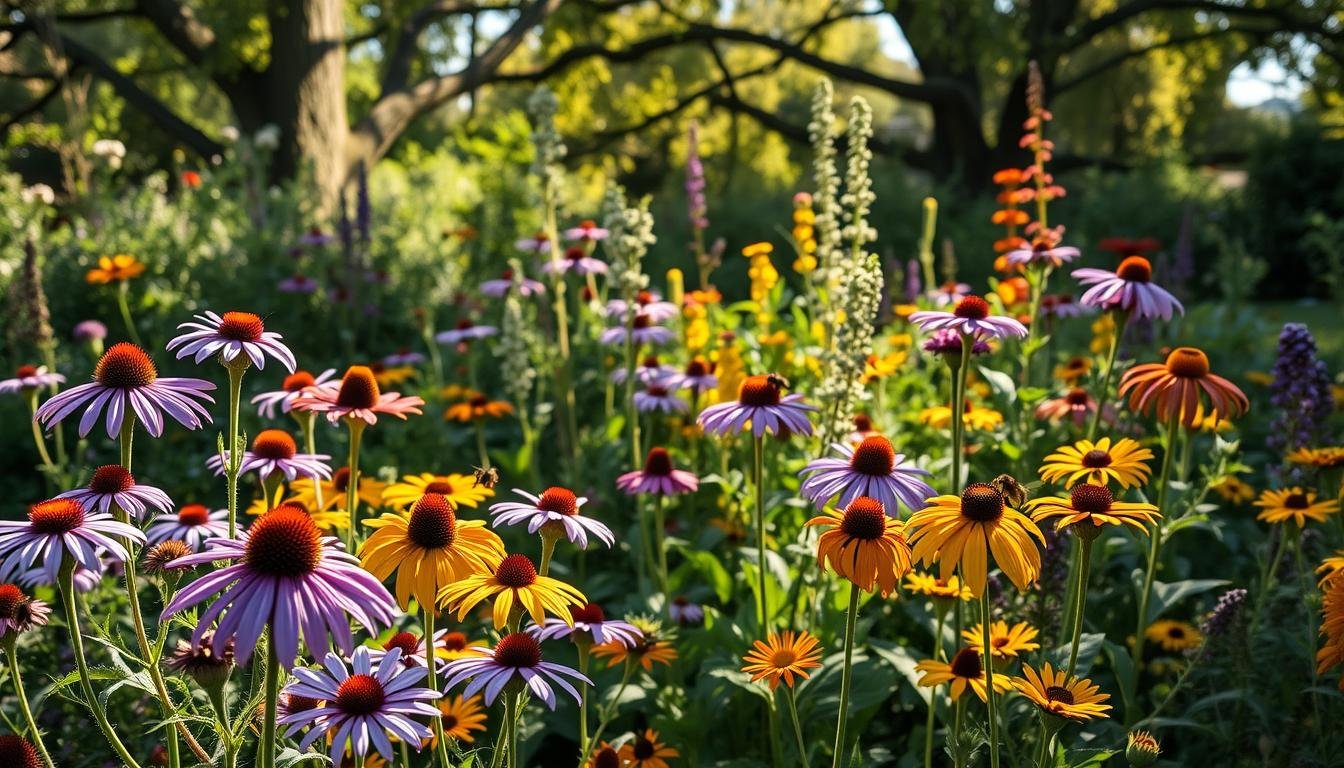
Rose milkweed (Asclepias incarnata), Butterfly weed (A. tuberosa), Purple coneflower (Echinacea purpurea), Bee balm (Monarda), Anise hyssop (Agastache foeniculum), and Blazing star (Liatris spicata) provide abundant nectar during peak season.
Late-summer and fall bloomers that carry pollinators through the season
Goldenrod (Solidago), New England aster (Symphyotrichum novae-angliae), Sneezeweed (Helenium), Joe Pye weed (Eutrochium spp.), and Cup plant (Silphium perfoliatum) extend forage into cool months.
- Assemble clusters of like bloomers to boost visitation.
- Prioritize straight species and noted host species such as milkweed where possible.
- Match each species to sun and soil on your site for long-term success.
| Season | Key species | Site tip |
|---|---|---|
| Spring | Winterberry, Bleeding heart, Fothergilla, Baptisia | Part shade to sun; moisture varies by species |
| Summer | Asclepias spp., Echinacea, Monarda, Agastache, Liatris | Full sun; good drainage; group in masses |
| Late summer–Fall | Solidago, Symphyotrichum, Helenium, Eutrochium, Silphium | Tolerates varied soils; leave stems for winter shelter |
See this honeybee planting resource for additional selection tips and photos that help match species to your garden.
Spring Bloom Stars: Early Nectar for Native Bees and Birds
Spring’s first flowers are small but powerful resources for native bees and migrating birds. These species jump-start activity and add structure to the garden before summer takes over.
Winterberry (Ilex verticillata)
White spring flowers offer early nectar to bees, and the later red seed-rich berries draw birds. This shrub gives multi-season interest and habitat value.
Bleeding heart (Dicentra)
Shade-tolerant and delicate, it supplies early nectar to bees and hummingbirds when few other species bloom. Plant in cool, moist soil and partial shade.
Witch alder (Fothergilla)
Fragrant, white bottlebrush flowers attract early pollinators. It prefers acidic, well-drained soil and adds scent and texture near paths.
Blue false indigo (Baptisia australis)
Deep roots tolerate drought. These flowers appear in late spring and draw native bees, butterflies, and moths while stabilizing soil.
“Early-season bloomers bridge the hungry weeks and support the first flights of native bees.”
Design tip:
- Group sun and shade species near entries to boost daily sightings.
- Leave stems standing through early spring to shelter overwintering insects.
| Species | Bloom time | Site tip |
|---|---|---|
| Winterberry | Early spring; fall berries | Wet to moist soils; full sun to part shade |
| Bleeding heart | Early spring | Part to full shade; consistent moisture |
| Witch alder | Early spring | Acidic, well-drained soil; fragrant blooms |
| Blue false indigo | Late spring–early summer | Dry to average soil; drought-tough |
Summer Bloom Essentials: Nectar-Rich Natives for Peak Activity
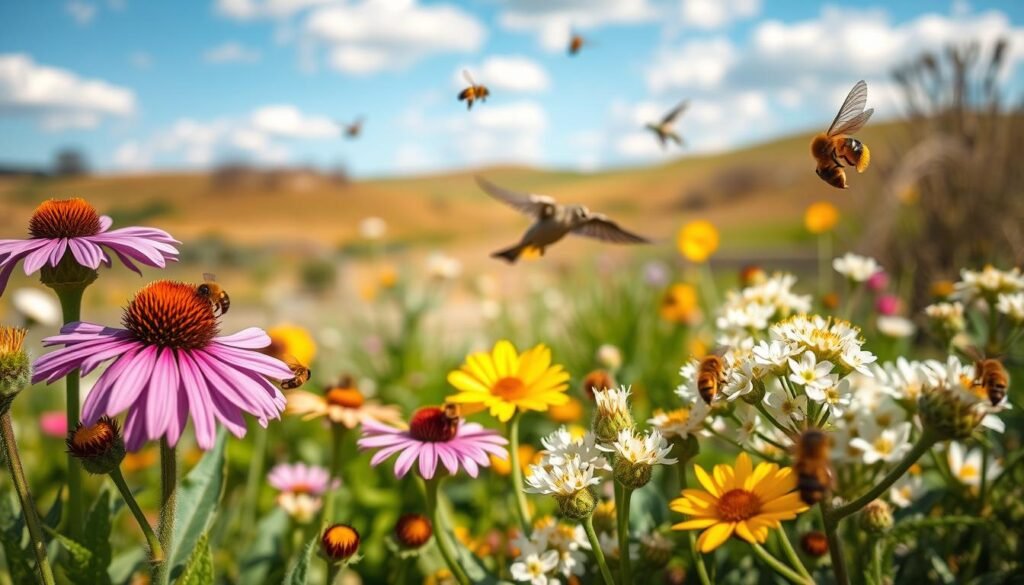
Bright summer borders that hum with activity need a strategy: choose nectar-rich species that flower when demand peaks. Grouping and staggered bloom times keep bees, butterflies, and hummingbirds visiting throughout hot months.
Rose milkweed and butterfly milkweed
Asclepias incarnata and A. tuberosa draw monarchs and provide abundant nectar and pollen for bees. Plant them together in sunny, well-drained beds to create a reliable feeding station.
Purple coneflower (Echinacea purpurea)
This drought-tough flower lasts through heat spells and forms seedheads that feed birds late into fall. Use as a medium-height anchor in mixed borders.
Bee balm, anise hyssop, and blazing star
Monarda offers tubular blooms and aromatic foliage that attract hummingbirds and butterflies. Choose mildew-resistant selections where needed.
Agastache foeniculum is a mint-family bee magnet valued by native bees and honey producers.
Liatris spicata adds vertical spikes that butterflies and hummingbirds love. Mix heights and leave some seedheads to support birds later.
- Favor sunny exposures and well-drained soil; group 3–5 of each species.
- Pick straight species first; avoid double forms that hide nectar.
- Deadhead selectively to extend blooms but allow some seedheads to mature.
| Species | Key benefit | Site tip |
|---|---|---|
| Asclepias incarnata & A. tuberosa | Monarch host; nectar & pollen for bees | Full sun; moist to well-drained soil; group together |
| Echinacea purpurea | Heat tolerant; long bloom; bird food from seedheads | Full sun; good drainage; leave seedheads |
| Monarda, Agastache, Liatris | Attracts bees, butterflies, hummingbirds | Sunny borders; mix heights; choose mildew-resistant cultivars |
Late-Summer to Fall Heroes: Keep Food Flowing into Late Fall
As days shorten, targeted choices keep nectar and pollen available into late fall. These late-season species sustain colonies when many garden blooms fade. Planting a mix of tall and medium bloomers extends forage and supports a wide range of insects.
Goldenrod (Solidago)
Goldenrod delivers dependable late-season flowers that feed bees and native bees into cooler weeks. It often blooms when other sources have shut down, powering colony activity through fall.
New England aster (Symphyotrichum novae-angliae)
This aster serves as a true pollinator lifeline. Its range reaches west to North Dakota and New Mexico and south to Alabama, so it adapts across many regions.
Sneezeweed (Helenium)
Sneezeweed adds sunset-tone, daisy-like flower heads that attract diverse insects. Use it to brighten borders in the shoulder season and keep visits steady.
Joe Pye weed (Eutrochium spp.)
Joe Pye weed forms supersized clusters loaded with nectar. Butterflies travel to these tall heads, making them a prime late-season draw.
Cup plant (Silphium perfoliatum)
Cup plant offers dual benefits: nectar-rich flower heads plus leaf “cups” that catch rainwater. It self-sows and provides small water pockets birds and insects can use.
- Group these species near vegetable plots to boost late pollination and extend garden productivity.
- Site in full sun with regular moisture where possible, and choose local selections, especially in places like New Mexico.
- Leave stems standing through winter to shelter overwintering moths and other insects; cut back only after hard freezes.
- Avoid pesticides during peak fall foraging; even low-toxicity options can harm beneficial visitors when food is scarce.
| Species | Key benefit | Site tip |
|---|---|---|
| Solidago | Reliable late flowers for bees | Sunny patches; tolerates varied soils |
| Symphyotrichum novae-angliae | Pollinator lifeline across regions | Full sun; adaptable to many soils |
| Eutrochium & Silphium | Large nectar clusters; water-holding leaves | Moist, sunny sites; allow self-sowing |
“Late-season flowers are the bridge that carries bees and butterflies into colder months.”
Underused Native All-Stars to Round Out Your 22
Consider several overlooked species that bridge bloom gaps and invite a wider range of visitors. These selections add height, scent, and durable nectar without demanding extra care.
Culver’s root (Veronicastrum virginicum) forms tall, elegant spires of tiny flowers that bloom for weeks. Place it toward the back of borders to add vertical interest and steady nectar through midsummer.
Yarrow (Achillea millefolium) makes flat-topped clusters attractive to short-tongued native bees and other small visitors. It tolerates dry, well-drained soil and works well as a drought-resilient groundcover that resists deer.
Wild bergamot (Monarda fistulosa), a mint-family species, brings aromatic foliage and accessible nectar. It pairs nicely with grasses and offers both scent and repeated visits from bees and butterflies.
Blue vervain supplies airy texture and long-lasting flowers that appeal to bees, butterflies, and nocturnal moths. Use it in mixed borders or near water where its airy umbels can show movement.
- Mass yarrow as a low-maintenance matrix that fills gaps.
- Tuck Culver’s root behind shorter blooms to avoid crowding.
- Combine wild bergamot and blue vervain to mix scent and texture.
- Opt for straight species to keep nectar and pollen accessible.
- Prep soil for good drainage and avoid heavy fertilizing to sustain blooms.
“These underused species act as vertical accents, matrix fillers, and nectar bridges that tie seasonal waves together.”
Woody Natives That Work Hard: Shrubs and Trees for Structure and Forage
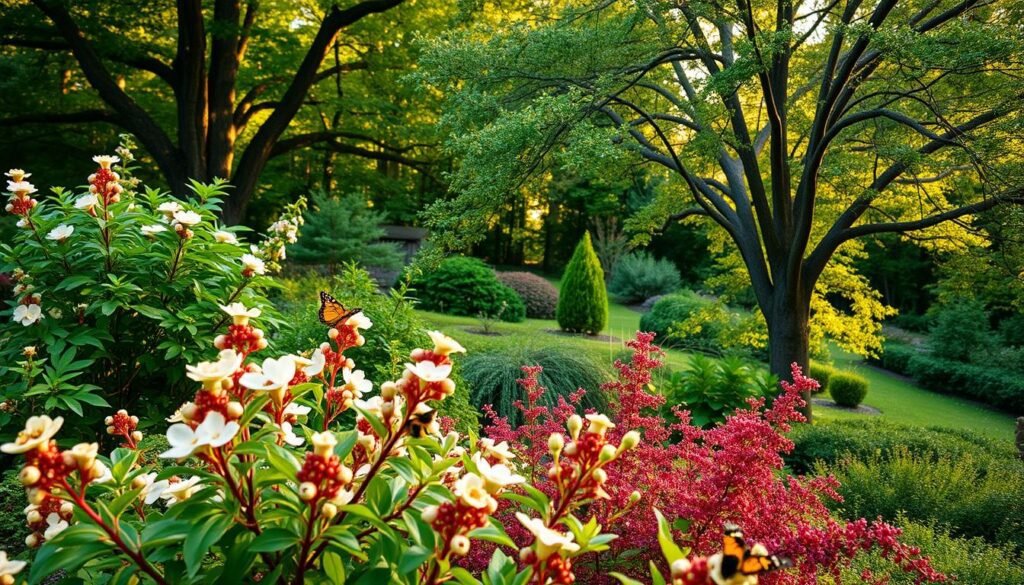
Shrubs and canopy trees create layers of habitat that feed insects and birds across seasons. Choose long-lived woody species to give the garden year-round interest, shelter, and food.
Oakleaf hydrangea (Hydrangea quercifolia), highbush blueberry (Vaccinium corymbosum), and Diervilla anchor beds with bold foliage, summer flower clusters, and fall colors. Oakleaf hydrangea supports bees and shows strong autumn hues.
Eastern redbud, serviceberry, and American linden as canopy nectar sources
Cercis canadensis (redbud) blooms early in spring and jump-starts bee activity. Amelanchier (serviceberry) offers white flowers and edible berries that feed birds later on.
Tilia americana (American linden) is a neighborhood-scale nectar tree whose fragrant flower heads draw heavy bee visitation during peak bloom.
- Diervilla’s tubular flowers attract small bees and make durable hedges.
- Source woody species from reputable nurseries or a local nursery that propagates regional ecotypes.
- In regions such as New Mexico, confirm local nativity or pick analogous species suited to the climate.
- Prune lightly after blooms to keep flower buds and protect nesting wildlife.
“Woody species add layers of food and shelter that simple beds cannot match.”
| Species | Benefit | Site tip |
|---|---|---|
| Oakleaf hydrangea | Summer blooms; fall colors; bee forage | Part shade; well-drained soil |
| Highbush blueberry | Spring flowers for bees; summer fruit for birds | Acidic soil; full sun to part shade |
| American linden | Heavy nectar source for bees | Plant as a medium canopy tree in sun |
Designing a Pollinator Garden: From Soil and Sun to Plant Placement
A carefully planned layout links sun, soil, and bloom timing to create efficient foraging routes across your yard. Start by reading light and moisture patterns over the growing season so you put summer performers where they thrive.
Plant in masses for easy “landing pads” and higher visitation
Group 3–7 of each selection so nectar concentrates and bees spend less energy searching. Repeat color and form across beds to guide visits and create rhythm in the landscape.
Layering by height: tall in back, low in front for access and airflow
Place the tallest types—Joe Pye weed and Cup plant—at the rear, mid-height species like Echinacea and Monarda in the middle, and low growers such as Yarrow in front. This maintains airflow and keeps blooms accessible.
Bloom succession: staggered flowering from spring through late fall
Overlap flowering windows to ensure continuous forage. Check soil drainage and texture, map afternoon shade, and document plant counts and bloom dates by the number to refine plans next year.
- Use paths and spaced clusters for maintenance access without compacting soil.
- Mix herbaceous perennials, grasses, and woody layers to add structure and habitat.
- Add a shallow water feature and refresh it often to attract bees and other visitors.
For layout guides and further reading, see this planting resource.
Habitat, Host Plants, and Maintenance Best Practices
Leave plant structure standing and add shallow water to turn a garden into year‑round habitat for bees and other beneficial insects. Small changes to how you cut back and care for beds create lasting food and shelter.
Winter stems and pesticide avoidance: Wait until consistent spring warmth before cutting perennials. Leave about 18 inches of stems to protect nesting sites in hollow stems and pithy canes. Skip pesticides, including systemic options, which can linger in tissues and harm pollinator life stages.
Water, bare soil, and leaf litter
Provide shallow water dishes and maintain small patches of bare, compacted soil for ground‑nesting bees. Keep leaf litter in sheltered corners; it shelters overwintering insects and boosts soil life.
Choose straight species and careful cultivars
Prefer straight native plant species or vetted cultivars that leave nectar and pollen accessible. This supports both adult foragers and developing larvae by ensuring food is usable.
Seasonal habits that build soil and habitat
- Deadhead selectively and delay major cleanup until spring to avoid removing overwintering insects.
- Mow less and convert lawn edges to habitat strips to increase forage continuity through the year.
- Compost onsite and top‑dress in fall to build soil without heavy fertilizers that can harm beneficial insects.
- Include host plants (such as milkweed) so gardens provide food and shelter across full life cycles.
- Monitor and remove invasive weeds early to protect resources for native bees and other beneficial insects.
“Simple, low‑effort maintenance can multiply habitat value and keep pollinator networks healthy into the next season.”
For guidance on practical conservation steps and policy‑level practices, see the pollinator best practices guide.
Find the Right Native Plant for Your Region and Source Responsibly
Confirm local ranges and seed provenance before you buy to ensure new plantings thrive and actually support wildlife. Start by gathering reliable resources that match species to climate, elevation, and soil conditions.
Use the Pollinator Conservation Resource Center and USDA PLANTS Database
Pollinator Conservation Resource Center offers region-specific lists, seed mixes, and conservation guides. It links to vetted seed producers and nursery networks by region.
USDA PLANTS Database confirms county-level ranges and standardized names so you order the right species.
Search the Lady Bird Johnson Wildflower Center and state societies
Filter by bloom time, light, and soil at the Lady Bird Johnson database to build a full‑season plan. Then contact state native plant societies for local expertise, plant walks, and nursery referrals.
Locate regional nurseries, seed producers, and seed mixes
Choose nurseries that list provenance and avoid heavy pesticide use to protect bees and beneficial insects. Add keystone species such as milkweed and prefer ecotype‑matched stock when possible.
- Keep a sourcing log with vendor, lot number, and provenance.
- Use Audubon and NWF finders to double‑check regional suitability, including in New Mexico and other arid states.
- Favor suppliers with the largest number of locally adapted offerings to boost long‑term wildlife success.
| Resource | Primary use | When to use |
|---|---|---|
| Pollinator Conservation Resource Center | Region lists, seed mixes, nursery contacts | When assembling initial planting lists |
| USDA PLANTS Database | Range maps, scientific names | Before ordering or planting |
| Lady Bird Johnson Wildflower Center | Filter by bloom, light, soil | During design and plant selection |
“Verify range and provenance before you order—local ecotypes give the best value to wildlife.”
Conclusion
Thoughtful selections and simple care turn small yards into useful habitat that supports bees, butterflies, and other beneficial insects. Even modest plantings reduce runoff, cut inputs, and lift season-long color and function across the landscape.
Layered design, continuous flowers, and light maintenance make a garden a durable refuge rather than a static display. From spring into summer and fall, staged bloom keeps steady food and shelter available all year.
Prioritize straight species and regionally sourced stock, watch what attracts the most visits, and expand those groupings next season. Over time, your choices will transform a yard into a vibrant habitat that looks beautiful and helps local wildlife now and into the future.
FAQ
What makes native plants so effective at supporting local pollinators?
Native species co-evolved with local pollinators, offering the right nectar, pollen, bloom timing, and host relationships. They tend to require less water and fertilizer, improve soil health, and provide year-round resources like seeds and habitat that benefit bees, butterflies, moths, hummingbirds, and seed-eating birds.
How do I choose plants to support bees, butterflies, and hummingbirds?
Match flower shape and bloom time to visitor needs. Flat, open clusters suit short-tongued bees; tubular flowers attract hummingbirds and long-tongued bees; and specific host plants like milkweed support monarch caterpillars. Plant in groups, stagger species for continuous forage from spring through late fall, and include shrubs and trees for structure and seasonal food.
Can I create a pollinator-friendly yard without a lot of space or maintenance?
Yes. Even small containers or a narrow border planted with nectar-rich species such as bee balm, asters, or salvia provide high-impact foraging. Choose drought-tolerant, low-maintenance species, mulch to reduce weeding, avoid pesticides, and leave some leaf litter and bare soil for nesting native bees.
Which late-summer and fall flowers keep pollinators nourished into late fall?
Goldenrod, New England aster, sneezeweed, Joe Pye weed, and cup plant are strong late-season choices. They offer abundant nectar and pollen when other resources wane, supporting migrating or overwintering insects and nectar-feeding birds.
Are cultivars as useful as straight species for pollinators?
Some cultivars perform well, but choose forms that retain nectar, pollen, and accessible floral structures. Avoid heavily double-flowered or sterile varieties that block nectar. When possible, buy regionally adapted straight species or pollinator-friendly cultivars from reputable native plant nurseries.
How should I arrange plants to maximize pollinator visits?
Plant in dense groups of the same species to create visible “landing pads.” Layer heights with tall perennials and shrubs at the back and low plants in front to improve access and airflow. Stagger bloom times so nectar and pollen are available from early spring through late fall.
What maintenance practices support habitat and nesting for native bees?
Leave stems and seed heads standing through winter, provide small patches of bare, well-drained soil, and preserve leaf litter. Minimize tilling and avoid systemic and broad-spectrum pesticides. Light annual pruning and targeted weeding keep the site healthy without destroying habitat.
How do I source region-appropriate plants and reliable seed mixes?
Use resources like the USDA PLANTS Database, Lady Bird Johnson Wildflower Center, Pollinator Conservation Resource Center, and state native plant societies to identify local species. Buy from specialized native plant nurseries and reputable seed producers that label provenance and use region-specific mixes.
What woody species provide multi-season forage and structure?
Shrubs and trees such as highbush blueberry, oakleaf hydrangea, Diervilla, eastern redbud, serviceberry, and American linden supply early nectar, fruit, and structural habitat. They also produce seeds and nesting sites that benefit birds and insects across seasons.
Can creating a pollinator garden help with stormwater and soil health?
Yes. Deep-rooted perennials and native shrubs improve infiltration, reduce erosion, increase drought resilience, and support beneficial insects that can reduce pest pressure. Native plantings also promote healthier soil biology and cleaner runoff compared with turf-dominated landscapes.