Reviewed by Michael R. · How we review
Secure reliable pollination to boost fruit set and overall yield. Roughly one-third of the human diet depends on pollination in some form, and about 130 U.S. crops need consistent bee activity to set fruit reliably, including many of the berry varieties grown commercially across North America. That makes managed colonies a core part of modern agriculture, not an optional extra for growers chasing consistent harvests.
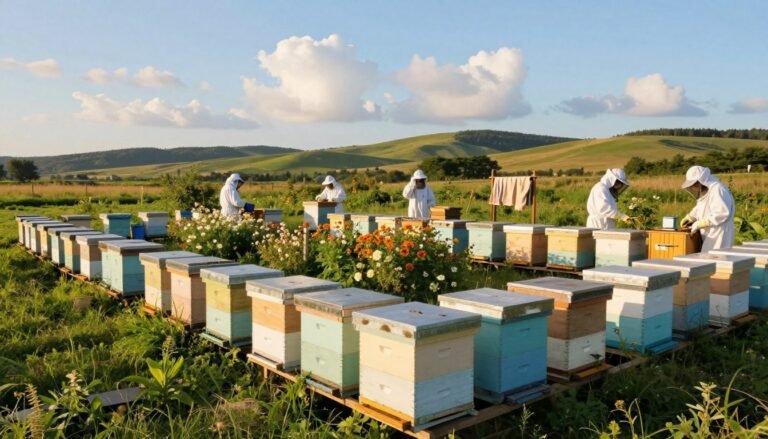
Commercial growers often choose a rental model to match hive placement with bloom windows, since building and maintaining a permanent apiary demands equipment, training, and year-round labor most berry operations cannot spare. Timely delivery and healthy colonies drive uniform fruit development and higher quality harvests, which matters most for berry crops sold fresh rather than processed. Missing peak bloom can cut yield with no second chance, because most berry varieties flower for only a narrow window each season.
Partnering with expert providers lets growers focus on harvest tasks while specialists handle colony health and timing, freeing up labor that would otherwise go toward learning and maintaining an apiary from scratch. Learn more about coordinated pollination options through a trusted marketplace like bee pollination services or a practical guide on renting bees for pollination.
Key Takeaways
- Managed colonies increase fruit set and crop quality across an entire growing season.
- Timing delivery to bloom is essential—missed bloom lowers yields with no way to make up the loss later in the season.
- Over 130 U.S. crops rely on bee pollination and need healthy, actively foraging bees.
- Using professional pollination services reduces management burden for growers without in-house beekeeping expertise.
- Investment in a rental agreement can safeguard seasonal production against the risk of an under-pollinated crop.
Table of Contents
- The Agricultural Impact of Renting Hives for Berry Farms
- How Professional Pollination Services Work
- Essential Site Requirements for Successful Hive Hosting
- Conclusion
- FAQ
The Agricultural Impact of Renting Hives for Berry Farms
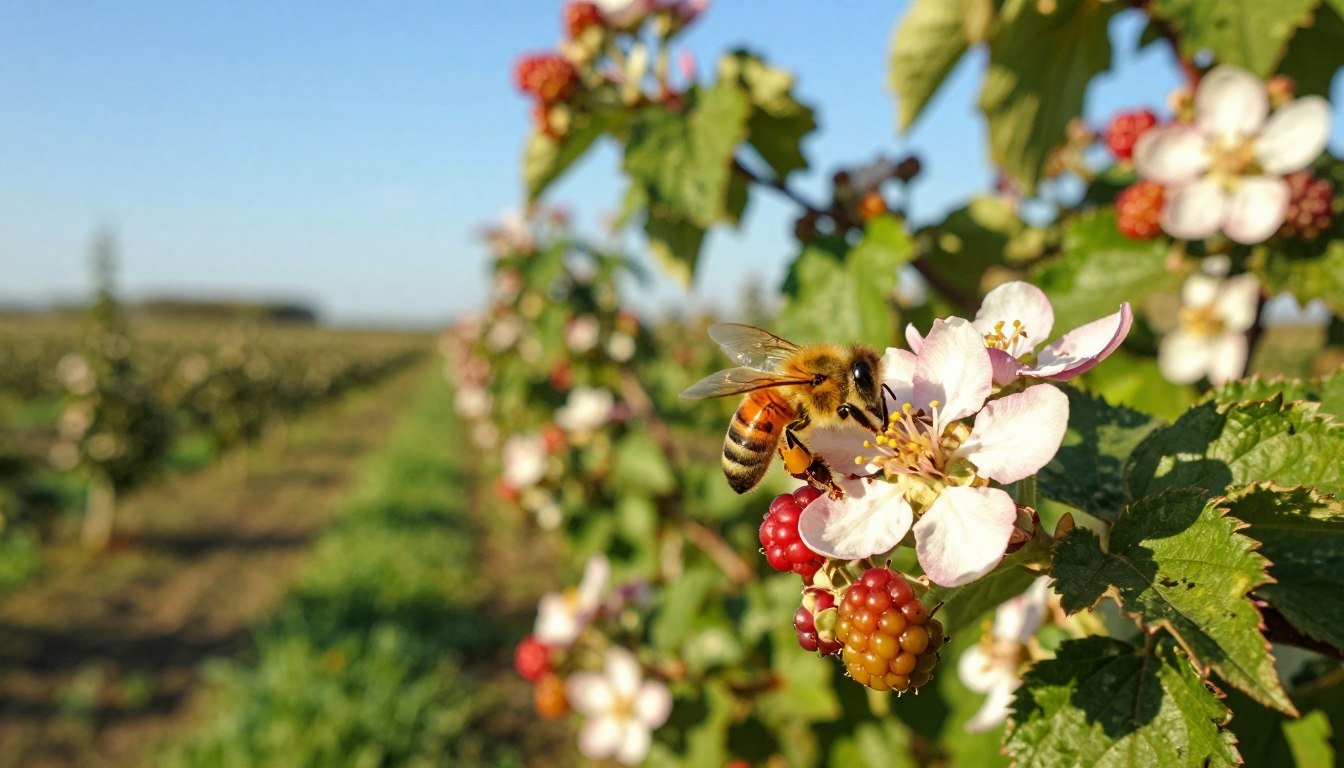
A dense population of honey bees during bloom is one of the most reliable ways to increase fruit set and overall yield, since more foraging visits per blossom generally translates directly into more seeds and larger, better-formed fruit.
This video shows a managed hive actively working a bloom, illustrating the density of flower visits discussed above.
Boosting Crop Yields and Quality
A healthy hive can contain about 30,000 residents in mid-summer. That density improves flower visits and fruit set, since a strong workforce of foragers can cover far more blossoms per hour than a weak or understaffed colony. Growers see better uniformity and larger berries when pollination is managed, with fewer misshapen or undersized fruits at harvest.
Local production also adds value. With roughly 70% of U.S. honey imported, largely from countries with lower production costs and looser quality standards, hosting a hive helps produce raw, regional honey while supporting harvests and giving growers a marketable secondary product tied directly to their land.
Supporting Local Ecosystems
Colony losses are real—up to 40% per year to Colony Collapse Disorder, pesticide exposure, and parasite pressure from Varroa mites. Managed placements help restore numbers and stabilize pollination across the landscape, giving commercial beekeepers a steady source of income that supports continued colony breeding and replacement.
“Every managed colony acts as a cornerstone for a thriving local environment.”
| Metric | Benefit | Outcome |
|---|---|---|
| 30,000 bees | High flower visitation | Improved crop set |
| Reduced colony loss | Stronger local populations | Reliable pollination |
| Local honey | Regional product | Added farm revenue |
Learn more about targeted bee pollination, practical beekeeping benefits, and climate-resilient practices to protect yield and promote sustainable agriculture.
How Professional Pollination Services Work
Professional pollination providers deliver targeted pollination support that aligns colony activity with a crop’s critical flowering period.
Guaranteed yield of local honey: Many rental agreements include a honey-yield guarantee. Each hosted hive is tracked and managed so the host receives at least 15 pounds of raw honey annually, which the provider extracts and bottles and returns as a premium, local product.
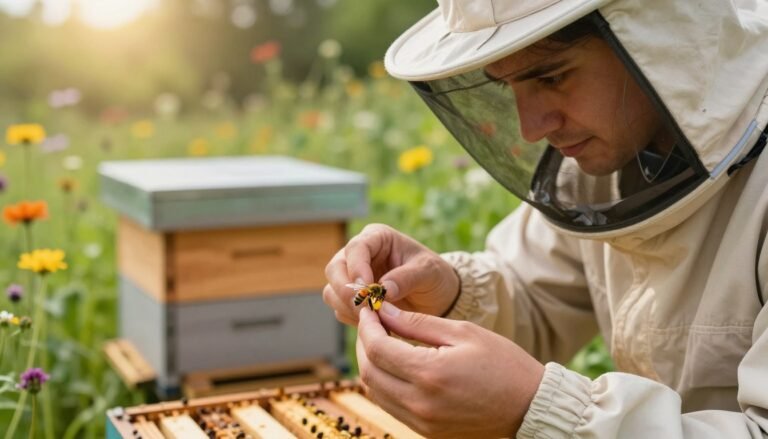
Routine care and clear reporting: Professional beekeepers perform scheduled inspections and provide concise health reports. These checks keep colonies productive and reveal issues early, before a small problem like a failing queen or a mite outbreak can spread through the whole colony.
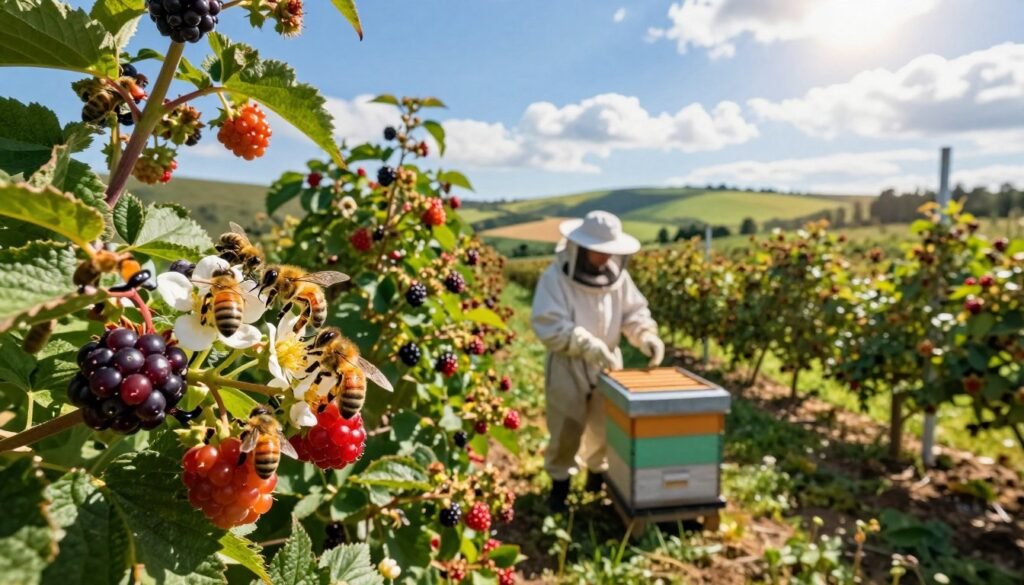
- Professional beekeepers handle installation through extraction, simplifying the rental and maintenance process for growers who have no prior hands-on beekeeping experience.
- Regular site visits ensure strong pollination and season-long support, with most providers scheduling inspections every one to two weeks during active bloom.
- Many providers involve growers with on-site observations so hosts can learn practical beekeeping techniques.
Transparent services and results: Reputable providers focus on colony welfare while boosting crop yield via dependable pollination, sharing inspection notes so growers can see exactly what is happening in the field. Learn more about expanding your program in our beekeeping expansion guide.
Essential Site Requirements for Successful Hive Hosting
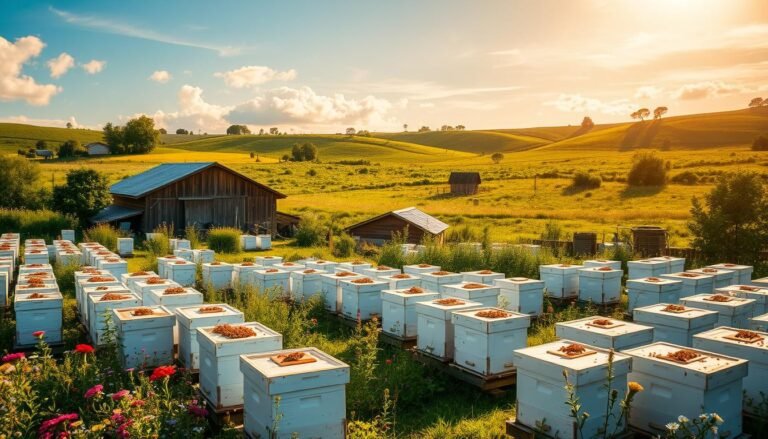
Proper placement and clear flight paths are essential to safe, effective hive hosting. Start by selecting a location at least 20 feet from all property lines, ideally on slightly elevated, well-drained ground that avoids standing water after rain. This distance helps reduce unwanted neighbor encounters and directs bee traffic away from shared areas.
A provider’s professional beekeepers will typically inspect a site and mark the best spot. They ensure bees have a clear flight path and nearby forage without crossing busy walkways, often orienting the hive entrance toward open fields or a hedgerow so departing foragers gain altitude quickly.
Safety and Placement Guidelines
- Setbacks: Keep each hive at least 20 feet from property boundaries to minimize interactions, and check local ordinances, since some municipalities set stricter minimums for residential-adjacent parcels.
- Capacity limit: Rural sites are capped at 20 hives to protect local resources and prevent overcrowding, since too many colonies competing for the same forage can actually reduce per-hive productivity.
- Access: Providers typically require 24/7 access to the property for routine checks and emergency care, since colony issues can arise at any hour and delayed treatment often makes them worse.
- Compliance: Rental agreements typically include all equipment and ensure local regulations are met, sparing the grower from having to research zoning and setback rules independently.
- Community safety: Providers offer guidance to create a honey hive area that is safe for children and pets, including signage and simple barriers where foot traffic is likely.
| Requirement | Why it matters | Typical Provider Action |
|---|---|---|
| 20 ft setback | Reduces neighbor contact | Site survey and marking |
| Max 20 hives (rural) | Prevents resource strain | Limit enforcement in agreements |
| 24/7 access | Ensures timely health care | Key access in contract |
| Equipment & compliance | Meets local rules and safety | Full rental package provided |
For practical examples of site planning and neighbor-relations strategies that reduce complaints and improve long-term hosting outcomes, see uncommon bee farm practices at uncommon bee farm practices and tips on urban beekeeping challenges.
Conclusion
Coordinated colony management gives growers a reliable path to stronger yields and uniform fruit. This approach boosts productivity while delivering consistent quality across harvests, season after season, without requiring the grower to build their own beekeeping operation.
By hosting a honey hive, you support vital bee populations at a time when many wild and managed colonies face real pressure, and gain access to local honey as an added benefit. A dedicated provider team keeps each hive healthy and active through scheduled inspections and clear reporting.
Sustainable practices balance crop goals with environmental care. Growers exploring this option can learn more about practical pollination services or explore beekeeper income models at beekeeping as a side income.
FAQ
What are the benefits of renting hives for berry farming?
Bringing managed honey bee colonies to a crop improves pollination density and fruit set, often increasing yield and berry size. Professional pollination services also time hive placement to bloom, monitor colony health, and supply experienced beekeepers to manage pests and ensure strong foraging during critical windows, reducing the guesswork for growers who lack their own beekeeping background.
When should hives be placed to maximize pollination?
Move colonies onto fields at first bloom or just before peak bloom to ensure bees are active when flowers are receptive. Timing varies by crop and region, so coordinate with a beekeeper to match local bloom calendars and weather forecasts for best results, since arriving even a few days early or late can meaningfully reduce fruit set.
How many colonies do I need per acre?
Recommended stocking rates depend on crop type, orchard density, and surrounding forage. For many berry operations, a common guideline is 2–6 colonies per acre, with denser or later-blooming varieties sometimes needing the higher end of that range. A pollination provider will assess crop needs and local bee activity to recommend an optimal number for the specific field.
What site requirements support successful hive hosting?
Offer a flat, well-drained, shaded area with easy access for trucks and no heavy pesticide spray nearby during bloom. Provide a nearby clean water source or allow placement of waterers, since bees need reliable water for cooling the hive and diluting stored honey. Keep placement away from entry points and public areas to reduce disturbances.
How do you protect bees from pesticides used on the crop?
Integrated pest management and communication between growers and beekeepers are essential. Apply pesticide treatments outside of bee foraging hours, generally in the early evening after foragers have returned, choose bee-safe products when possible, and notify the beekeeper before any spray events so colonies can be temporarily relocated or protected.
Who is responsible for hive maintenance and liability?
Contracts typically state the beekeeper maintains colonies, handles health issues, and manages transportation to and from the field. Growers usually agree to provide a safe site, maintain reasonable access, and avoid harmful sprays during pollination. Liability and insurance details should be clearly outlined in the service agreement, including who bears responsibility if a colony is damaged by equipment, vandalism, or severe weather.
Can pollination services improve fruit quality as well as yield?
Yes. Better pollination often leads to more uniform berry size, improved seed set, and enhanced flavor, since well-fertilized flowers tend to develop more evenly than partially pollinated ones. Consistent bee activity during bloom increases the number of fertilized flowers, which can translate into higher marketable yields and better-quality fruit.
How do you monitor colony health during the rental period?
Professional beekeepers perform regular inspections for signs of disease, pests like Varroa mites, and overall strength. They may supplement feed if nectar is scarce and remove weak colonies to protect pollination effectiveness, replacing them with stronger hives when needed. Regular reporting keeps growers informed and creates a record that can be useful for future planning.
What measures ensure safety for farm workers and visitors?
Place colonies away from high-traffic zones, post clear signage, and schedule hive service outside peak visitor times. Educate staff about bee behavior and emergency procedures for stings, including who is trained in basic first aid for allergic reactions. Beekeepers can also arrange hive orientation to reduce flight paths over work areas, a small adjustment that meaningfully cuts down on incidental encounters.
How do weather conditions affect pollination services?
Cold, wet, or windy weather reduces bee foraging and can limit pollination, since bees generally avoid leaving the hive in temperatures below the mid-50s Fahrenheit or during steady rain. Services take local forecasts into account when scheduling placements. Strong colonies and optimal timing around warmer, calm days can help offset short periods of poor weather.
Are there options for organic or specialty-certified operations?
Yes. Many pollination providers offer organic-compliant colonies and follow protocols to meet certification standards, such as avoiding synthetic miticides and documenting forage sources near the hive site. Discuss certification requirements with your beekeeper to ensure hive management and transportation practices align with your program.
How far in advance should I book pollination services?
Book as early as possible—often months before bloom—especially in regions with high demand, since experienced providers with strong, disease-free colonies are typically reserved well ahead of the season. Early booking secures experienced providers, allows planning for colony numbers, and ensures timing aligns with a crop’s bloom period.