Reviewed by Michael R. · How we review
Selling mated queens locally is a relationship business. Your customers are nearby beekeepers who will requeen, make splits, or rescue a queenless hive with your queens, and they will come back next season if those queens are accepted and perform well. The weak point is the stretch just after the sale: whether a queen succeeds depends as much on how she is introduced as on how well she was raised, and it all happens in someone else’s apiary.
A simple customer follow-up system closes that gap. It helps buyers succeed with introductions, gives you a fair way to handle queen failures, and builds a record of how your queen lines perform. None of it needs special software: a notebook or spreadsheet and a few well-timed messages are enough.
Key Takeaways
- Most problems with a newly sold queen show up in the first one to two weeks, during introduction and the start of laying.
- Record the same basic details for every queen: buyer, date, queen line, mating date, marking color, and the introduction method you recommended.
- Check in at set points: when the queen should be released, when eggs should be visible, and again after the first capped brood.
- Write your queen guarantee down before the season starts, and say plainly what it covers.
- Use follow-up results to compare queen lines and mating batches, and to fill next season’s pre-order list.
Table of Contents
- Why Follow-Up Matters More for Queens Than for Honey
- What to Record for Every Queen You Sell
- A Simple Follow-Up Schedule
- Writing a Clear Queen Guarantee
- Pre-Orders, Waitlists, and Seasonal Reminders
- Turning Follow-Up Data Into Better Queens
- Conclusion
- FAQ
Why Follow-Up Matters More for Queens Than for Honey
A jar of honey is finished when it leaves your table. A queen is a living animal, and her success depends on things you don’t control: whether the colony was truly queenless, whether it had queen cells or laying workers, the weather, and how long she was left in her cage. When an introduction fails, a buyer often can’t tell whether the queen or the introduction was at fault.
Following up early gives you a chance to catch avoidable problems (a queen still caged after a week, a hive that already had a virgin queen running around) before they turn into a lost queen and an unhappy customer. It also gives you honest feedback on your own queens, which is hard to get any other way.
What to Record for Every Queen You Sell
Keep one row per queen. The table below covers the fields most small breeders find useful.
| Field | Why it matters |
|---|---|
| Sale date and buyer contact | Sets the follow-up schedule and lets you reach the buyer |
| Queen line (mother queen) | Lets you compare acceptance, temperament, and performance by line |
| Graft or cell date, and mating yard | Groups queens into batches so weather or drone problems show up |
| Date laying was confirmed | Shows the queen was mated and laying before sale |
| Marked (color) and clipped (yes/no) | Helps the buyer confirm later that the queen in the hive is the one you sold |
| Cage type and introduction method recommended | Helps with troubleshooting if acceptance fails |
| Follow-up dates and outcomes | Released? Eggs seen? Brood pattern? Replaced? |
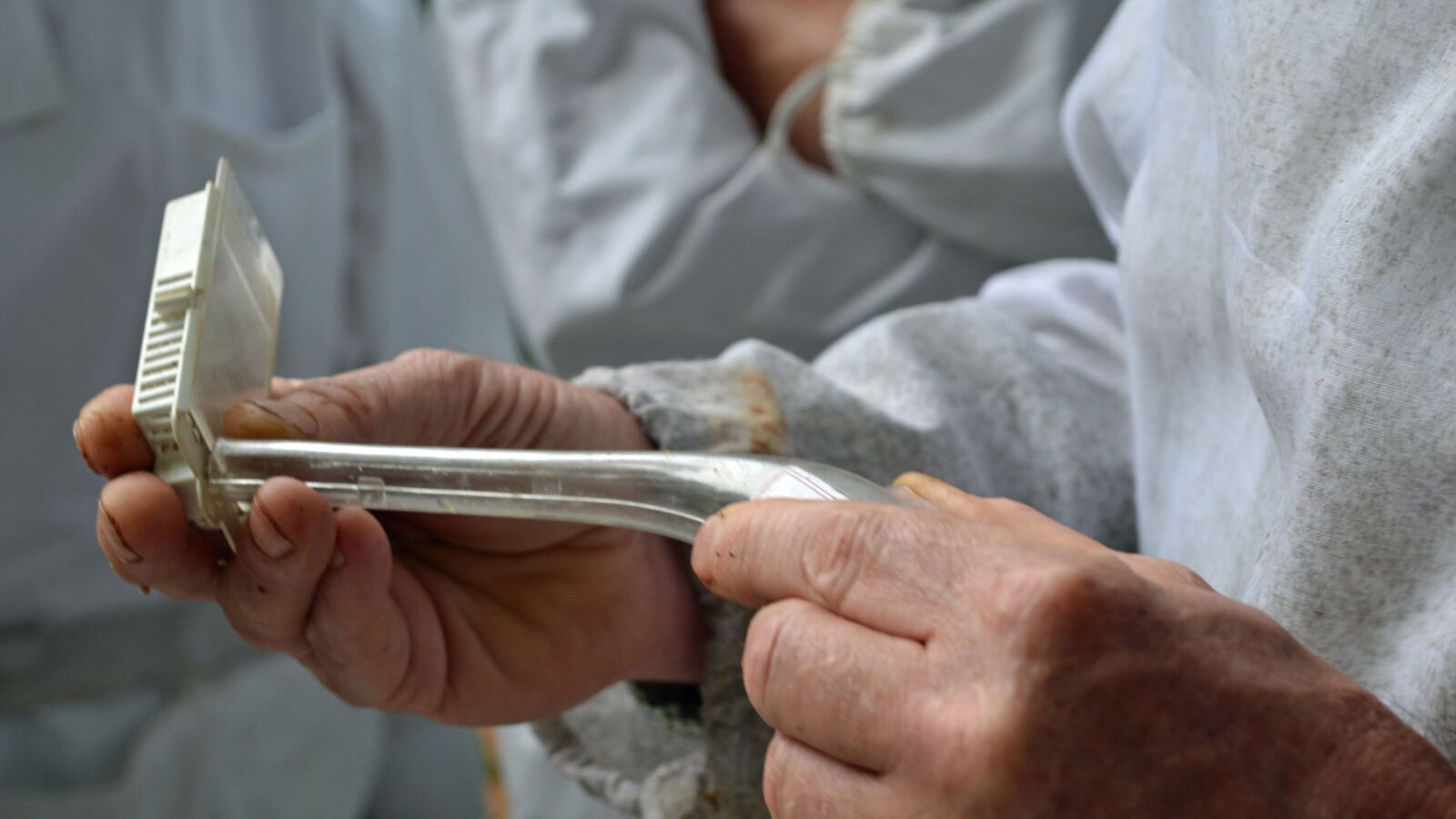
Marking is worth offering. A marked queen is easier for a buyer to find, and it shows the queen present later is the same one and not a daughter from supersedure. Most breeders use the international color code: white for years ending in 1 or 6, yellow for 2 or 7, red for 3 or 8, green for 4 or 9, and blue for 5 or 0 (Betterbee: How to Mark a Queen). Queens raised in 2026 get white. For a year-by-year reference, see our queen marking color chart by year.
If you already keep hive records, the same habits apply here. Our guide to what records every beekeeper should keep covers simple formats that work in the field.
A Simple Follow-Up Schedule
Match your check-ins to the stages of a normal introduction. The University of Guelph’s Honey Bee Research Centre recommends leaving a requeened colony undisturbed for about a week and then checking for eggs, which confirm that the introduction worked (Honey Bee Research Centre: Re-Queening).
| When | What to send or ask |
|---|---|
| At pickup | Written introduction instructions, your contact details, and a note on keeping the cage shaded and out of heat. Encourage prompt introduction. |
| Day 3 to 5 | Has the queen been released from the cage? If not, how are the workers on the cage behaving? Bees calmly feeding her through the screen is a good sign; bees clinging tightly and biting at the screen means she should stay caged longer. |
| Day 7 to 10 | Are eggs present? Buyers don’t need to find the queen; eggs in the cells are the confirmation. |
| About 3 to 4 weeks | How does the capped worker brood look? Any early notes on temperament? |
| End of season or next spring | Did the colony overwinter? Would they order again? This is also a natural time to start next season’s list. |
Short, specific questions get better answers than “How’s the queen?” A text or email template for each stage saves time and makes your records consistent. Always ask customers whether they want follow-up messages before adding them to a list.
Include introduction guidance with every sale. Many local customers are newer beekeepers, and a clear handout prevents most failures. Our guide to queen introduction with a push-in cage is a good reference to share for colonies that have rejected queens before.
Writing a Clear Queen Guarantee
Decide your policy before the season starts, put it in writing, and hand it over at every sale. Breeders’ policies vary, so there is no single right answer, but a good guarantee spells out:
- What is covered. For example, a live, laying queen at pickup. Many breeders do not guarantee acceptance, because introduction is outside their control.
- The reporting window. How soon a buyer must tell you about a problem, and what you’ll need to see (a photo of the frames or the cage, for example).
- The remedy. Replacement queen, partial credit, or refund, and whether replacements depend on availability.
- What voids it. For example, introducing into a colony with queen cells or laying workers, or leaving the queen caged in a hot vehicle.
Troubleshooting a failed introduction with the customer
When a buyer reports a missing or dead queen, work through a few questions before deciding what went wrong:
- Was the colony definitely queenless when the new queen went in? A hidden virgin or an unnoticed old queen is a common cause of rejection.
- Were queen cells present and left in place?
- Had the colony been queenless long enough to develop laying workers?
- How long was the queen caged before introduction, and was she kept cool and shaded?
- Was the hive opened and disturbed during the first week?
Our article on what to do if the queen disappears after introduction is useful to send customers who are working through a failure. Handling these conversations calmly, and replacing a queen when your policy says you will, earns more repeat business than almost anything else.
Pre-Orders, Waitlists, and Seasonal Reminders
Queen availability depends on weather and mating success, so demand and supply rarely line up exactly. A simple waitlist helps:
- Record the buyer, how many queens they want, and their earliest usable date.
- Say clearly whether you take deposits and what happens if a mating round fails.
- Contact buyers in order as mated, laying queens become available, and give them a short window to confirm.
- If you have more queens than buyers ready on a given day, hold them in a bank for a short time rather than rushing sales. See how to bank queens for a short period.
Seasonal reminders can also help your customers. A short note before swarm season, before split season, or before late-season requeening reminds buyers when a new queen will be useful. Keep these messages few and practical.
Turning Follow-Up Data Into Better Queens
After a season of consistent records, your spreadsheet becomes a breeding tool. Sort by queen line and by mating batch, and look for patterns:
- A batch with several failures may point to poor mating weather or a drone shortage in that yard.
- A line that customers repeatedly describe as defensive may not be worth grafting from again.
- Lines with good acceptance, solid brood, and good overwintering reports are candidates for your breeder queens.
- Queens superseded within the first season deserve a closer look, since early supersedure can signal poor mating.
Customer reports are not controlled trials, and one buyer’s bad weather can skew a result. Treat the data as a guide, and give more weight to patterns across many buyers than to single reports.
Conclusion
For a small queen breeder, customer follow-up is simple: record what you sold, check in when the queen should be released, when eggs should appear, and when the first brood is capped, and handle failures by a written policy. It helps customers get queens accepted, protects your reputation when something goes wrong in their apiary, and gives you real-world data on your queen lines. A spreadsheet and a few friendly messages at the right times will do more for local queen sales than any marketing campaign.
FAQ
When should I follow up after selling a queen?
A good schedule is three to five days after the sale to confirm the queen was released from her cage, seven to ten days after the sale to confirm eggs are present, and three to four weeks later to check the capped brood. A final check at the end of the season or the next spring tells you how the queen overwintered.
What records should a small queen breeder keep for each sale?
At minimum, record the buyer and sale date, the queen line, the graft or mating date and mating yard, the date laying was confirmed, whether she was marked and clipped, the introduction method you recommended, and the result of each follow-up.
Should I guarantee that a queen will be accepted?
That is your decision, but many breeders only guarantee a live, laying queen at the time of sale, because acceptance depends on how the buyer introduces her. Whatever you choose, put the policy in writing and give it to every customer at the sale.
Why should I mark queens I sell?
A marked queen is easier for the buyer to find during inspections, and the mark shows that the queen present later is the one you sold rather than a supersedure daughter. Most breeders use the international color code, which is white for queens raised in 2026.
Do I need CRM software for queen sales?
Not for a local operation. A spreadsheet with one row per queen, a simple waitlist, and a few text or email templates for each follow-up stage cover what most small breeders need.