
Reviewed by Thomas B. · Last Updated September 23, 2026 · How we review
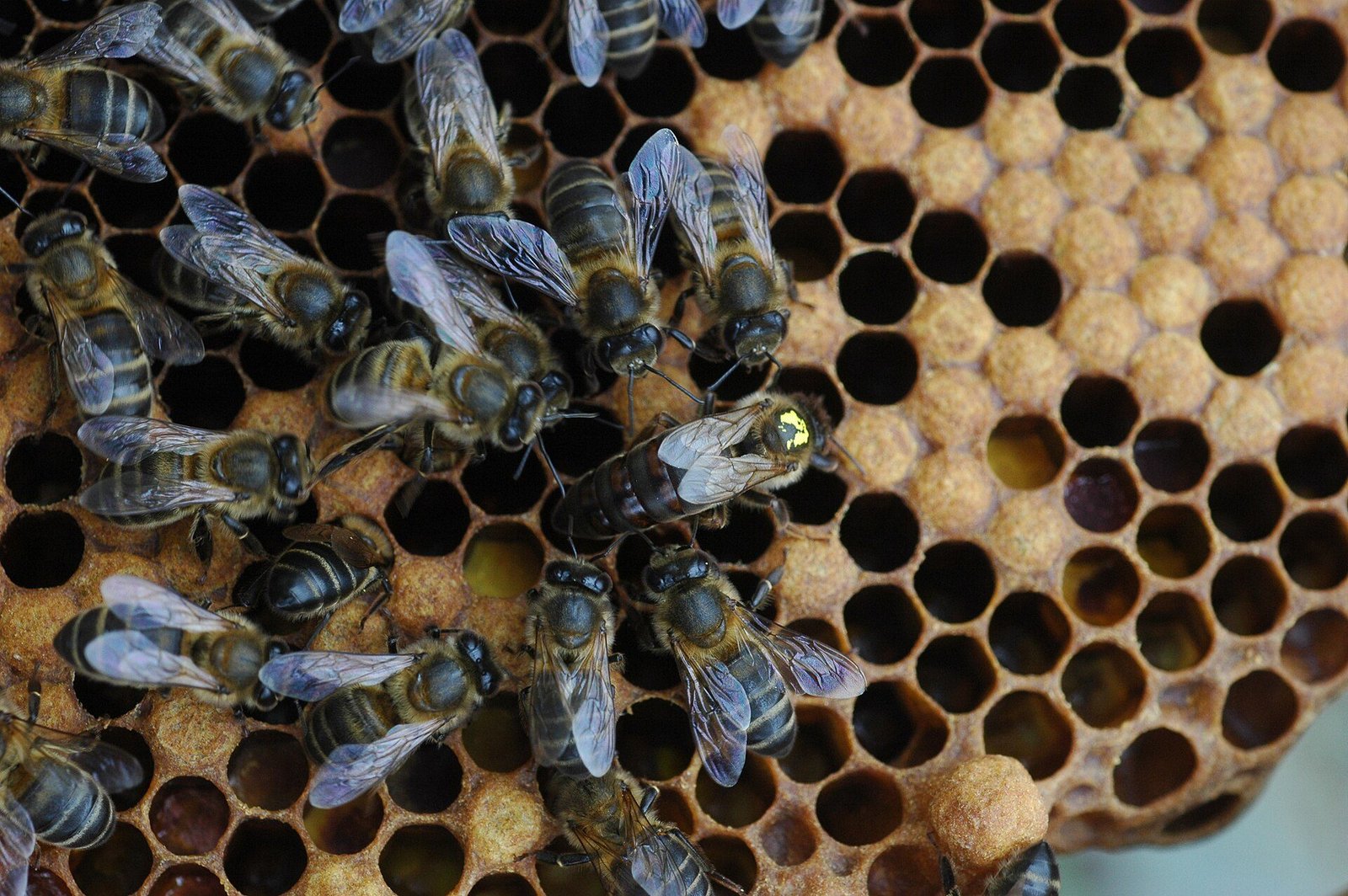
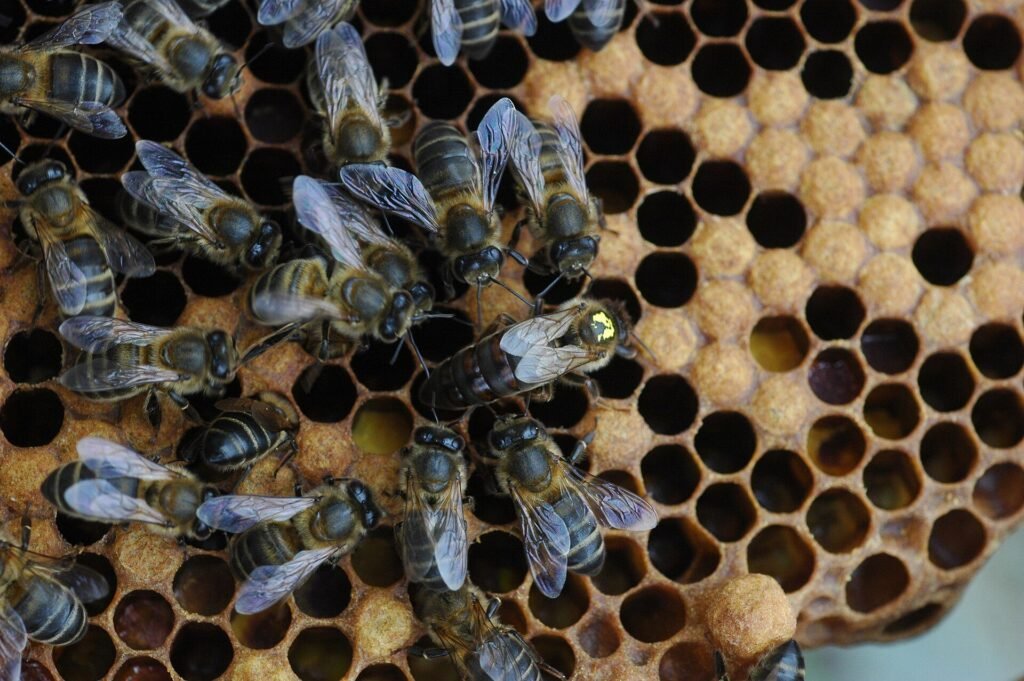
To introduce a queen with a push-in cage, confine her alone on a patch of drawn comb that holds emerging brood, a few empty cells and some nectar. Press a wire-mesh cage over her down to the comb’s midrib and leave her there for about four to seven days. Young bees emerging under the cage accept her at once, she starts laying in the empty cells, and the rest of the colony meets a queen that is already laying before she is ever loose among them. When you see eggs under the cage and calm bees on the mesh, lift the cage off.
What decides success is the comb you choose, how well the cage is seated, and patience on release day. Below are the steps in order, with the measurements two university extension programs use and a day-by-day timeline.
Key Takeaways
- A push-in cage lets the queen lay eggs before she is released. That is its main advantage over a candy-plug cage, and it is why Purdue Extension calls it the safest introduction method.
- Use a dark, fully drawn comb with emerging brood, empty cells and some nectar. Plastic foundation seals best. Never use a foundationless frame.
- The queen goes under the cage alone, with no attendants.
- Check for tunneling under the edges at 3–5 days. Release her once there are eggs and the bees are calm, usually on day 4–7, then leave the hive alone for a week.
Table of Contents
Why a Push-In Cage Works
With a candy-plug cage the queen is shut away on her own. With a push-in cage she is on the comb, with a small colony of her own around her.
- Emerging bees accept her immediately. Workers chewing out of their cells under the cage have never known another queen. David Evans, a virologist and beekeeper who writes The Apiarist, notes that they “will immediately accept the queen and feed her.”
- The colony gets to know her safely. Workers outside can touch and feed her through the mesh, so her scent spreads without anyone being able to reach her.
- A laying queen smells different. In a 2009 study in Behavioral Ecology, Kocher, Richard, Tarpy and Grozinger found that a queen’s mandibular-gland pheromone blend changes with her reproductive state. Mated queens with fully active ovaries had the most distinct profile, and workers were more strongly attracted to extracts from queens with more active ovaries. Once she lays under the cage, she is producing the signal a colony most readily accepts.
“The advantage of a push-in cage is that it allows the queen to begin laying eggs before she is released.”
Harpur, Given, López-Uribe and Underwood — Methods of Introducing Queens, Purdue Extension E-277 (2024)
The cost is more handling and an extra visit. For a routine requeen of a calm colony, a candy cage usually does the job. For breeder or instrumentally inseminated queens, or a colony that has already rejected a queen, the push-in cage is worth it. Our push-in vs standard queen cage comparison covers that choice. This page covers how to do the push-in method well.
Getting or Making the Cage
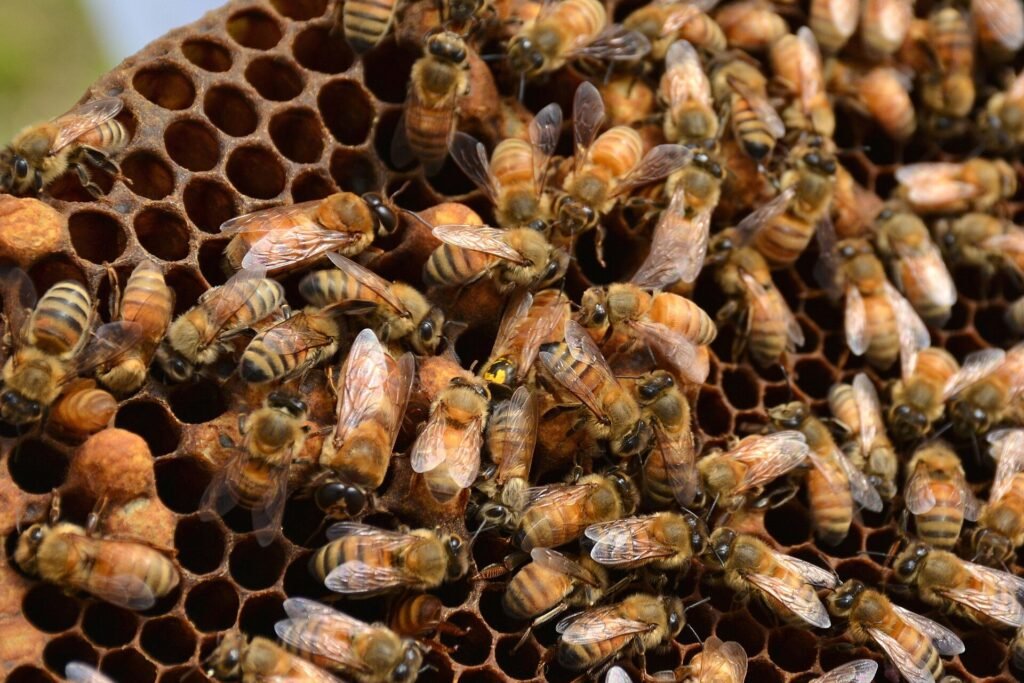
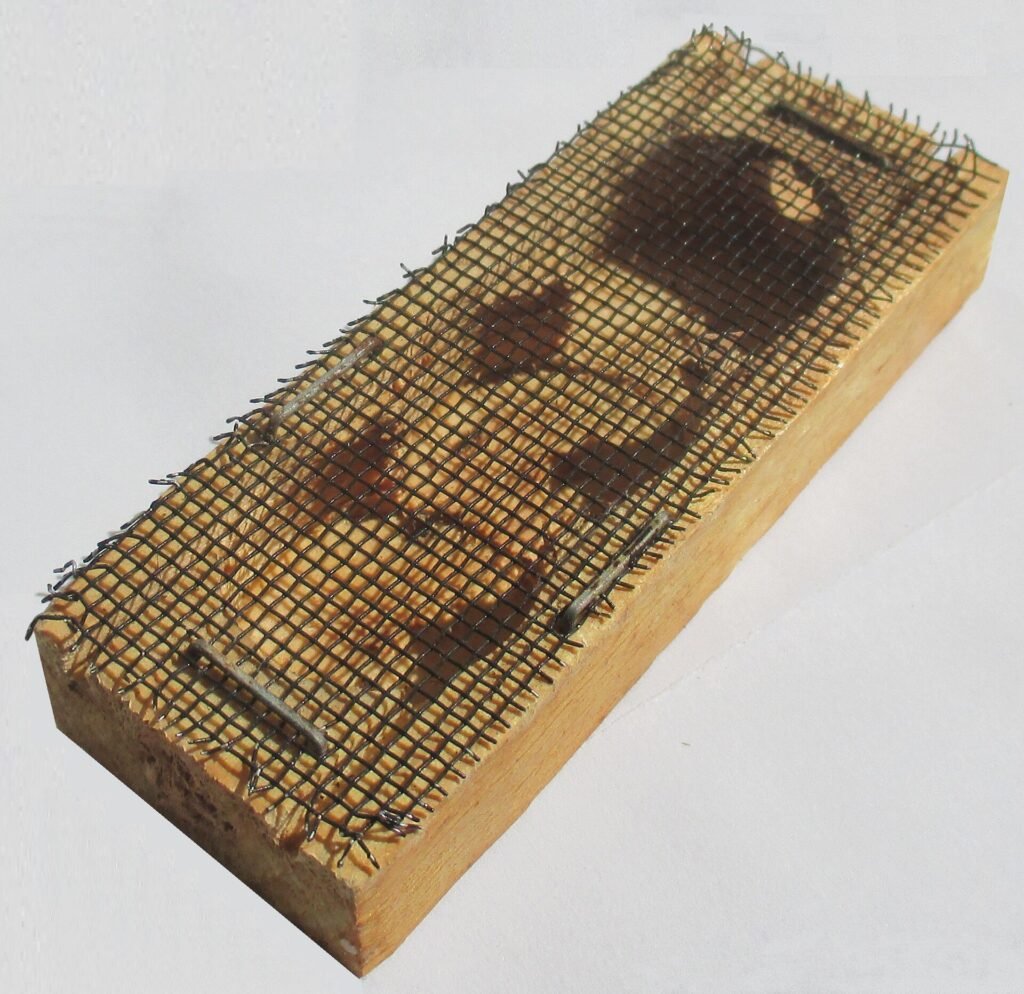
Plastic and wire push-in cages cost a few dollars from bee suppliers, but many beekeepers make their own because a larger cage covers more emerging brood. Published sizes vary:
| Source | Size (approx.) | Material | Notes |
|---|---|---|---|
| Purdue Extension E-277 | 3 × 5 in | 8-mesh hardware cloth | Pushed into the midrib; dark comb recommended |
| Penn State Extension | 4 × 6 × 1.25 in deep | 1/8-in hardware cloth | Corners cable-tied near the top so ties don’t snag comb |
| Lloyd Street Bees (queen producer) | 3.5 × 6.5 × 0.75 in | Hardware cloth | Comb scored to the foundation with a razor knife first |
To make one, cut a rectangle of 8-mesh hardware cloth, cut a square from each corner, fold up the sides into a shallow open box and tie the corners. Keep the cut edges on the open side straight, because they are what seals against the comb. Clean off wax and propolis between uses; see sanitizing queen cages before reuse.
Before You Start
A cage protects the queen during introduction. It cannot make a colony accept her if it was never going to. Check three things first:
- The colony is queenless. Purdue’s guidance is to leave it queenless for about 24 hours before introduction.
- There is no virgin queen and there are no laying workers. Several eggs to a cell, or eggs on the cell walls, point to laying workers. That needs a different fix; see requeening a laying worker hive.
- You have the right comb: a fully drawn brood comb with capped brood starting to emerge. You’ll see ragged, part-chewed cappings with pale young bees working out. If the colony has none, borrow a frame from a healthy colony, shaken free of bees.
Step-by-Step: Installing the Queen
1. Pick the frame and the patch
Shake or brush every bee off the frame. Purdue recommends a comb that is “fairly dark,” because older comb is tougher and holds the cage better. Place the cage so it covers emerging brood, some empty cells and a few cells of nectar or honey. If there is no nectar in that area, Lloyd Street Bees suggests filling about ten cells with honey or syrup.
2. Score the comb
Trace around the cage with a sharp knife, cutting down to the foundation, so the cage seats evenly against the midrib instead of crushing the comb unevenly.
3. Take the queen out of her shipping cage indoors
Do this in a closed room or a car with the windows up. A mated queen can fly, and one that takes off in the apiary seldom returns. Leave the attendants behind: Glenn Apiaries’ instructions say no other adult bees go under the cage with her. Mark her now if she isn’t marked; see the queen marking color chart.
4. Press the cage in
Let her walk onto the patch, lower the cage over her and push it straight in, about a quarter inch per Glenn Apiaries. Penn State Extension says the cage should touch the plastic foundation “at all edges so the bees are not able to undermine the cage and free the queen.” Go slowly so you don’t pin a leg. Some beekeepers add three or four heavy rubber bands around the frame as a backstop.
5. Return the frame to the center of the brood nest
The caged frame goes in the warmest part of the colony. The cage sticks out from the comb face, so space the next frame to clear it. Take a frame out if you need to.
Day-by-Day Timeline
Published release windows range from four days (Glenn Apiaries) to four or five nights (Lloyd Street Bees) to a first check at five to seven days (Penn State). Let the bees’ behavior set release day, not the calendar.
| Day | What to do | What you’re looking for |
|---|---|---|
| Day −1 | Remove the old queen or confirm queenlessness | No virgin queen, no laying workers |
| Day 0 | Cage her over emerging brood, nectar and empty cells | Cage seated to the midrib on every edge |
| Day 3–5 | Quick look at the caged frame only | No tunneling under the edges; eggs under the cage |
| Day 4–7 | Release if there are eggs and the bees are calm | Relaxed bees feeding her, not clinging in a tight knot |
| Day 7–10 | No eggs yet? Re-seat and wait 3–5 more days | Penn State allows release at day 10 if workers are accepting |
| Release + 7 days | Leave the colony undisturbed | — |
| About 2 weeks after release | Full inspection | Eggs and larvae beyond the cage area |
Release Day
Watch the bees on the mesh before touching anything. Accepting bees walk over the cage, some with heads pressed to the wire, feeding her. Hostile bees grip the mesh in a tight clump and may bite the wire. Glenn Apiaries’ rule: if the bees are clinging to the cage, they haven’t accepted her yet.
If she is laying and the bees are calm, destroy any emergency queen cells on the other frames, then ease the cage out and watch her for a minute. If workers grab her legs or wings, put the cage back for two or three days. Otherwise close up. Penn State advises leaving the colony undisturbed for a week, and Glenn Apiaries says to keep disturbance to a minimum for two. Then use our guide on how to check if a new queen was accepted.
Troubleshooting
| What you see | Likely cause | What to do |
|---|---|---|
| Workers tunneled under the edge | Soft comb or uneven seat | Re-seat on tougher, darker comb |
| Bees clinging to and biting the mesh | Colony not ready | Wait 2–3 days; hunt for a virgin queen or queen cells. See stopping balling behavior. |
| No eggs after a week | Shipping stress, or no empty cells under the cage | Make sure there are clean empty cells under the cage; release at day 10 if bees are calm |
| Queen dead under the cage | Chilled, starved, or bees got in | Check for nectar under the cage, central placement and gaps along the edges |
| Queen missing after release | Late rejection or supersedure | Check for a virgin queen or queen cells first; see if the queen disappears after introduction |
“Out of the hundred some queens we have used this method on, we only lost one queen to date.”
Trevor Bawden, Lloyd Street Bees — Mated Queen Introductions Via Push In Cage (2022, updated 2024)
That is one producer’s record, not a controlled trial. When push-in introductions fail, it is usually because the colony wasn’t truly queenless or bees got under the edge.
Northern Plains Timing
In eastern North Dakota, the Red River Valley and western Minnesota, most introductions fall into two windows, and each carries its own risk.
- May, with mail-order queens. Nights can still dip near freezing. A caged queen can’t follow the cluster when it contracts, so she must sit in the middle of the brood nest, never on an edge frame. If a hard cold snap is forecast, wait. See the best weather for queen introduction.
- Late summer, after the clover and alfalfa flow. Colonies turn defensive and robbing starts. This is where the push-in cage outperforms a candy cage, because the queen is protected and laying while the colony is at its most suspicious. Keep the hive open briefly and reduce the entrance. See requeening during a dearth.
In a short season, a failed introduction in August can leave a colony short of young winter bees, which is another reason to use the more forgiving method late in the year.
The Bottom Line
A push-in cage works because the queen is already laying on the colony’s own comb before she has to win over the whole colony. Use dark, drawn comb with emerging brood and nectar, seat the cage to the midrib on every edge, and release her only when you see eggs and calm bees. For the full requeening sequence, see how to introduce a new queen bee.
Frequently Asked Questions
How long do you leave a queen in a push-in cage?
Usually four to seven days. Release her once she has laid eggs under the cage and the bees on the mesh are calm. If she hasn’t started laying, Penn State Extension allows release around day 10 as long as the workers are calm.
Should attendant bees go under the push-in cage with the queen?
No. The queen goes in alone. Newly emerging workers become her attendants, and workers outside feed her through the mesh.
Can you use a push-in cage on foundationless or wax foundation frames?
Avoid foundationless frames, because bees can get under the cage. Wired wax works if the comb is dark and fully drawn, but plastic foundation seals most reliably.
What if there is no emerging brood in the hive?
Borrow a frame of emerging brood from a healthy colony and shake off its bees. A cage over empty comb with nectar still protects the queen, but you lose the young bees that accept her first.
Why are workers biting the push-in cage?
They haven’t accepted her yet. Leave the cage in place, check again in a few days, and look for a virgin queen, queen cells or laying workers. Any of those will keep the colony hostile.
Is a push-in cage better than a candy-plug cage?
It is more reliable but more work, because the queen lays before release. Use it for valuable queens and difficult colonies. A candy-plug cage is usually fine for a routine requeen.
.jpg)

