Reviewed by Elena P. · Last Updated September 23, 2026 · How we review
Yes, two queens can live in one hive in two situations. It happens briefly and naturally during supersedure, when a daughter queen starts laying before her failing mother disappears. It also happens deliberately in a managed two-queen colony, where a queen excluder keeps the two brood nests apart. In any other case, rival queens fight until one is dead. This guide explains what an accidental second queen means. It also covers how the USDA’s two-queen system works, with the timing adjusted for a short Northern Plains season.
Key Takeaways
- A second laying queen usually means mother-daughter supersedure. The BeeMD puts this at up to 20% of colonies in summer, and it usually resolves on its own.
- In a managed two-queen colony the queens never meet. They have separate brood nests divided by a queen excluder, and they share honey supers.
- In USDA trials near Madison, Wisconsin, two-queen colonies averaged 280 lb of honey over six years. Single-queen colonies averaged 168 lb.
- Divide 5 to 7 weeks before the main flow, and reunite about 4 weeks before it ends. In a short northern season, count back from your own flow dates.
In this guide
When Two Queens Share a Hive Naturally
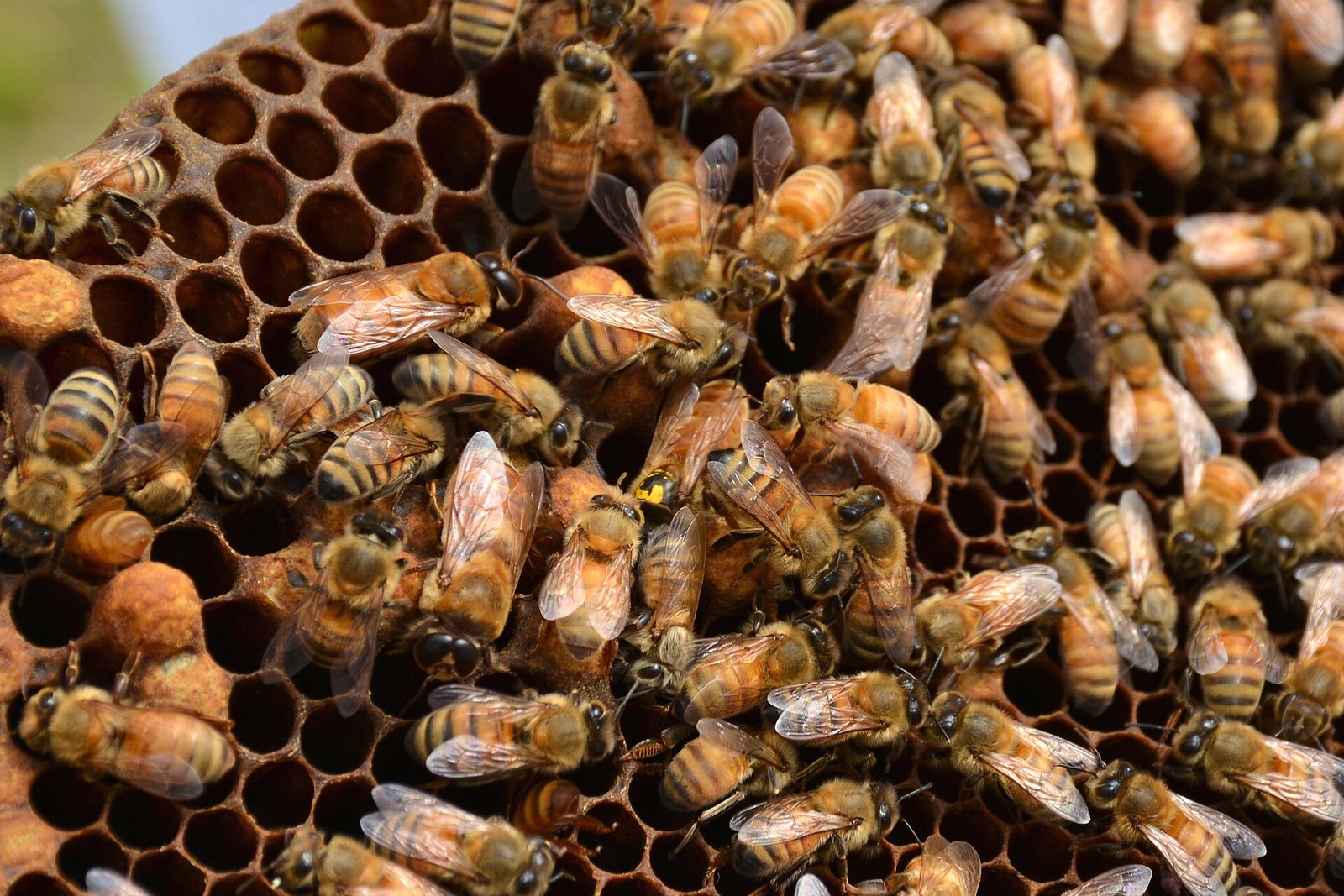
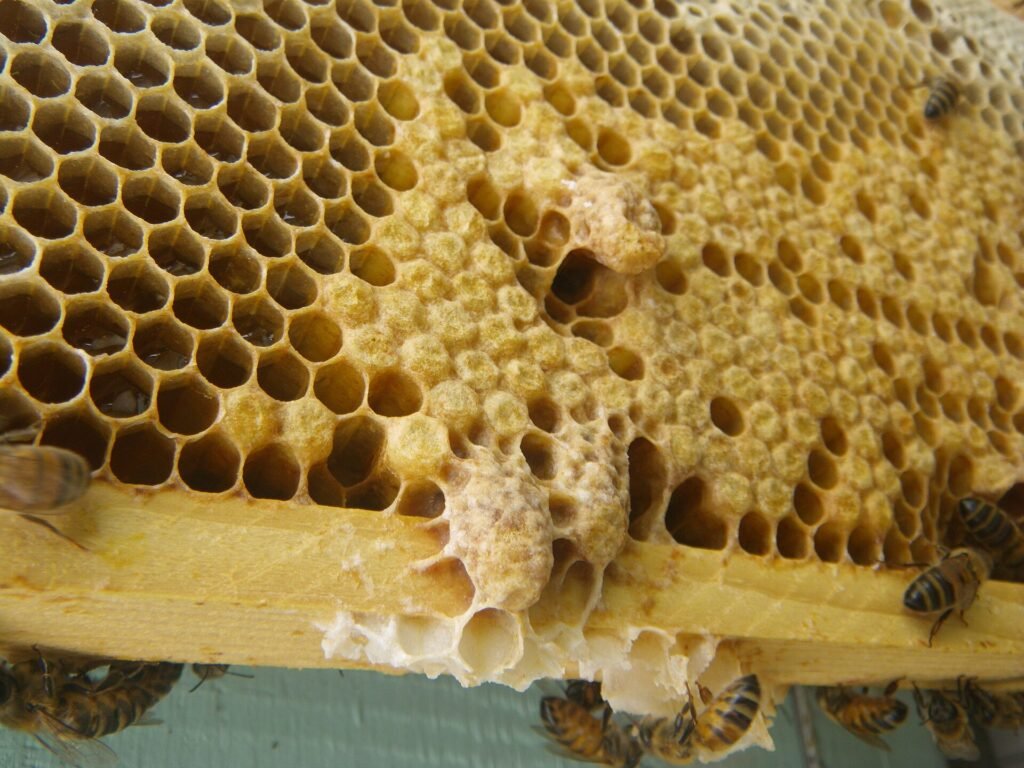
You will most often find two queens during supersedure. The workers raise a replacement while the old queen is still laying. The daughter emerges and mates, and for a while both queens lay on the same combs. They are sometimes on the same frame. Mother and daughter are closely related and the old queen’s pheromone output is falling, which is probably why the workers tolerate the overlap.
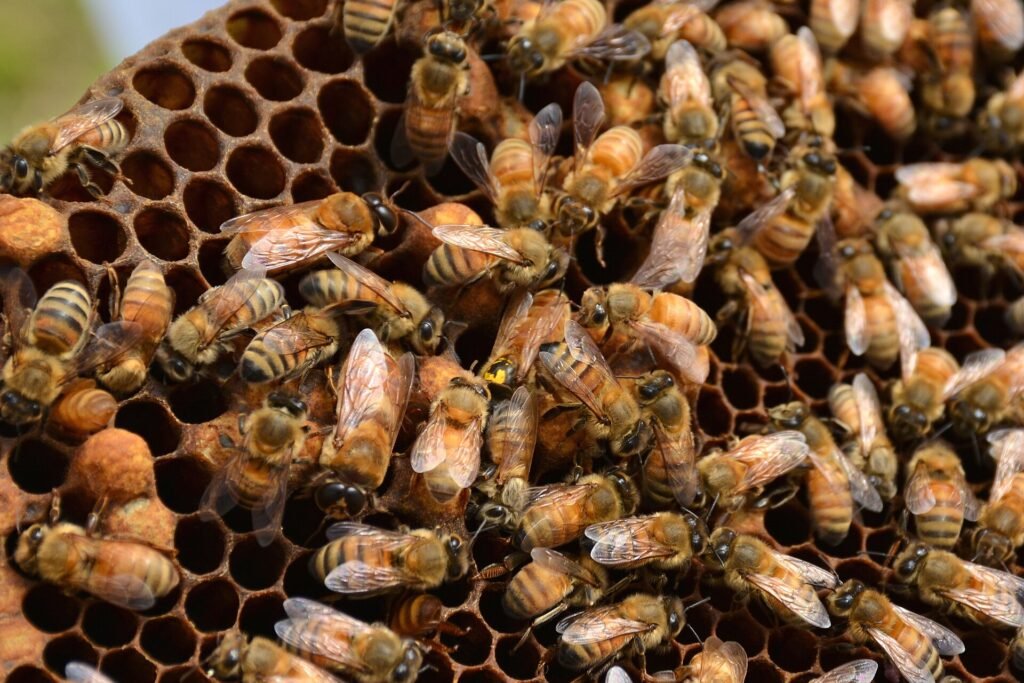
It happens more often than most beekeepers assume. The BeeMD, a diagnostic tool built with USDA and the Pollinator Partnership, says the mother-daughter condition occurs in as much as 20% of colonies in summer. It goes unnoticed because most of us stop searching once we find one queen. The overlap usually lasts a few weeks and occasionally runs into autumn. It ends when the old queen dies or is killed. Our guide to spotting supersedure covers the early signs.
Swarm season is different. Several virgin queens may emerge close together, but they fight until only one remains. To tell which situation you have, check the cells the colony built. Our comparison of swarm cells vs supersedure cells explains the difference.
What to do if you find a second queen
- Leave both alone if both are laying. The colony is partway through a handover and will usually finish it.
- Do not introduce a bought queen. A hidden second queen is a common reason introductions fail. See how to check a colony’s queen status.
- Check the excluder if a queen is laying in a super. Most often the excluder is bent or has a gap.
- Keep the spare if you want one. Move the old queen into a nuc with two or three frames of brood and bees.
How a Managed Two-Queen Colony Works
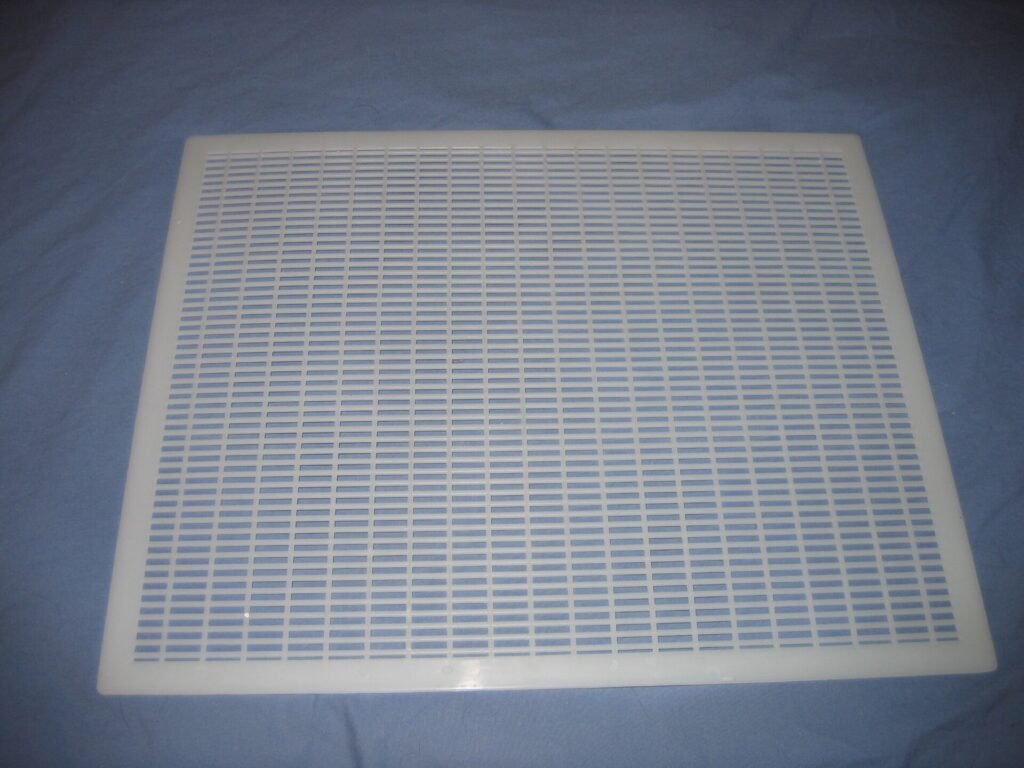
A managed two-queen colony is one hive with two laying queens in separate brood nests. Workers pass through queen excluders into shared honey supers, and the queens cannot. The result is a single very large field force fed by two queens’ brood.
USDA researcher C. L. Farrar showed in the 1930s why this works. The amount of honey produced per bee rises as a colony grows, up to the single-queen maximum of about 60,000 bees. It stays high when a second queen pushes the population further. In a short flow, one big colony therefore outproduces two small colonies with the same total number of bees. Farrar’s public-domain 1958 USDA circular, Two-Queen Colony Management for Production of Honey, reports two-queen colonies of 25 to 30 pounds of bees. It also records daily gains of 20 to 30 lb in flows where single-queen colonies gained 8 to 12 lb. Earlier, E.W. Alexander had tried letting two queens range freely in one hive with no separation, which is far riskier. His story is told in E.W. Alexander’s two-queen method.
What the USDA Research Measured
Many articles simply claim “60 to 75 percent more honey.” The original figures are more useful. Floyd Moeller’s USDA report Two-Queen System of Honey Bee Colony Management (Production Research Report 161, 1976) gives six seasons of average yields near Madison, Wisconsin:
| Year | Two-queen (lb) | Single-queen (lb) | Package (lb) |
|---|---|---|---|
| 1967 | 292 | 237 | 126 |
| 1968 | 266 | 169 | 106 |
| 1971 | 295 | 160 | 127 |
| 1972 | 246 | 82 | not reported |
| 1973 | 317 | 204 | 163 |
| 1974 | 224 | 138 | 75 |
| Average | 280 | 168 | 117 |
The averages hide the most interesting pattern. The gap was smallest in a strong year (1967: 292 vs 237 lb) and largest in a poor year (1972: 246 vs 82 lb). A bigger field force matters most when the flow is weak or short, which is the kind of flow northern beekeepers plan around.
Two field reports point the same way, although neither was a controlled trial. Dave Tegart ran 1,500 colonies in Alberta’s Peace River country, which he called Canada’s northernmost beekeeping area. In Bee World he reported a ten-year two-queen average of 250 lb per hive. Single-queen outfits of similar size nearby averaged 175 lb. In Ohio, James Kerns reported 180 to 240 lb per colony under a USDA SARE grant (FNC05-558). His extra cost was about $35 per hive. For scale, the USDA NASS March 2026 Honey report puts North Dakota’s 2025 average at 67 lb per colony. That figure covers all operations, so it is not a like-for-like comparison. Treat research-yard yields as a ceiling, not a promise.
Setting Up a Two-Queen Colony
These steps follow Farrar’s vertical method. Moeller’s report uses the same arrangement.
- Start with a strong overwintered colony and a mated laying queen ready. Farrar warns that raising a queen from cells in the upper unit wastes brood-rearing time.
- Reverse the brood chambers 2 to 3 weeks before dividing. This brings the brood nest to the bottom and gets the bees using the lower entrance.
- Divide the colony. The bottom box keeps the old queen, about half the brood (mostly eggs and larvae), roughly 40% of the bees, and some stores. Add a queen excluder and then two supers of drawn comb.
- Put the upper brood nest above a temporary screened division. Farrar used an inner cover with its hole screened. A double-screen board also works (see the Snelgrove board method). The upper box gets three or more frames of sealed and emerging brood, honey and pollen, and about 60% of the bees. Give it its own entrance, such as a 1-inch auger hole.
- Introduce the new queen to the upper unit by any standard method. Our guide on introducing a new queen bee walks through it.
- Replace the division with a queen excluder 10 to 14 days later, once the upper queen’s brood nest is expanding. Make sure each brood nest keeps its own honey and pollen.
“It is better to delay 1 to 2 weeks in setting up the second brood nest until conditions are favorable than to make small divisions or to make them when pollen is not available.”
Timing It to a Short Northern Season
An egg takes about six weeks to become a forager: 21 days to develop into an adult worker, then roughly three weeks of work inside the hive. That is why Farrar divided colonies 5 to 7 weeks before the main flow, and why Moeller wanted two queens laying for about 2 months beforehand.
| When | Step | Source |
|---|---|---|
| 2 to 3 weeks before dividing | Reverse the brood chambers | Farrar 1958 |
| 5 to 7 weeks before the flow | Divide and introduce the second queen | Farrar 1958 (Moeller: about 8 weeks) |
| 10 to 14 days after dividing | Swap the division for an excluder | Farrar 1958; Moeller 1976 |
| During the flow | Rework the hive every 6 to 8 days | Farrar 1958 |
| About 4 weeks before the flow ends | Reunite to a single queen | Farrar 1958; Moeller 1976 |
In the Red River Valley and across eastern North Dakota and western Minnesota, the main flow comes in midsummer from sweet clover, alfalfa, canola and sunflower, and it can stop abruptly. If your flow usually starts in early July, counting back puts the division in late May or early June. At that point many overwintered colonies here are only just finishing spring buildup. This is when Farrar’s advice to wait a week or two rather than make a weak division matters most.

Tegart’s Peace River operation shows that a compressed schedule can still pay off. His flow could be over by mid-August, yet he installed second queens on June 5 to 15 and began harvesting around July 15 to 20. He found this beat installing them any time between April 1 and June 1, and he openly said he did not know why. The lesson is not to force early divisions in a short season. To find your own dates, use a few seasons of notes or hive-scale weight data, along with field honey flow indicators.
Managing the Flow and Reuniting
- Keep the middle supers no more than half full. Farrar warns that when they fill, the lower nest becomes honey-bound and the hive runs as two colonies. Move part-filled supers to the top and put empty drawn comb in the middle.
- Add supers generously and clip both queens. A swarm from a colony this size is a huge loss. Weigh the options in clipping queen wings: pros and cons.
- Check both brood nests when you find queen cells. Farrar observed that when one queen fails, cells are often built in the other nest.
- Monitor mites. Double the brood gives varroa double the cells to breed in. Do an alcohol wash before you divide and again after you reunite.
- Plan for the height. Farrar noted that humid regions can need eight to eleven boxes per colony. Work these hives with two people.
“Colonies should be united back to single-queen status approximately 4 weeks before the expected end of the flow.”
To reunite, remove the excluder between the two brood nests. Farrar says you rarely need to find the queens. The upper queen usually survives, and if the lower one wins she is probably the better of the two. To keep the spare, move one queen into a nuc first. For the rest of the flow the colony has two colonies’ worth of bees and only one queen’s brood to feed. Farrar and Moeller both found that reunited colonies go into autumn with about twice the pollen reserves of single-queen colonies. For winter, Farrar advised leaving 90 lb or more of honey and reaching a gross hive weight of at least 175 lb in standard equipment.
Layouts Compared and Who Should Try It
| Layout | Separation | Trade-off |
|---|---|---|
| Vertical (Farrar, Moeller) | Excluder above the lower nest, shared supers, upper nest on top | Backed by USDA data, but the stack is very tall and heavy |
| Horizontal | Side-by-side brood boxes bridged by a flat excluder | No tall stack, but it needs custom covers and more space |
| Free-ranging (Alexander) | None | High risk of losing a queen |
| Double nuc | Solid divider, separate entrances | For overwintering spare queens, not for honey |
For horizontal setups, Bill Hesbach’s guide on Honey Bee Suite recommends a flat excluder with no raised rim. The rim leaves a bee space along the box edges that queens can cross. Our comparison of metal vs plastic queen excluders covers durability.
Be honest with yourself about the workload. Ray Nabors wrote in the American Bee Journal that most beekeepers who try double-queen systems abandon them because single colonies are easier to manage. The system suits you if you have strong overwintered colonies, drawn comb, known flow dates and a helper. Farrar also advised keeping nucs with laying queens equal to 10 to 20% of your producing colonies. It is a poor fit in your first seasons or with this spring’s packages. A gentler option is two side-by-side colonies balanced with frames of brood, or a double nuc to keep a spare queen through winter.
Frequently Asked Questions
How long can two queens live in the same hive?
In natural supersedure the overlap usually lasts a few weeks, and occasionally into autumn. In a managed system both queens can lay through the whole build-up and into the flow, often two months or more, because an excluder keeps them apart.
Will two queens fight if they meet?
Unrelated queens usually fight, and so do virgins in swarm season, until one is dead. A failing mother and her laying daughter are the main exception. Do not rely on that tolerance in a managed hive.
Should I remove one of the queens if I find two?
Usually not. If both are laying and the colony is calm, it is most likely supersedure and will resolve itself. Only step in if you want the older queen for a nuc.
Do two-queen colonies swarm less?
Moeller found that they swarmed less than single-queen colonies, partly because dividing at the start of swarm season relieves crowding. Clipping both queens is still wise.
Can a beginner run a two-queen hive?
It is not a good first-year project. It needs strong overwintered colonies, spare queens, drawn comb and weekly manipulation during the flow.
Can you overwinter a two-queen hive in a cold climate?
The standard practice is to reunite to one queen before winter. Farrar did describe wintering the two halves separated by a screen, but in a hard northern winter one strong colony with 90 lb or more of honey is the safer choice.
Sources and Review
Primary sources: C. L. Farrar, Two-Queen Colony Management for Production of Honey (USDA ARS-33-48, 1958); F. E. Moeller, Two-Queen System of Honey Bee Colony Management (USDA Production Research Report 161, 1976); D. Tegart, Bee World vol. 65; USDA NASS Honey (March 13, 2026); The BeeMD; USDA SARE project FNC05-558.
Written by Thomas B., who keeps about 75 colonies in western Minnesota near the North Dakota border and covers queen management and honey production. Reviewed for biological accuracy by Elena P., the site’s bee biology and fact-checking editor. The “Last Updated” date at the top of this page marks that review. Flow dates and yields depend on your local forage and weather, so check these timings against your own records.