Table of Contents
- Who Was E.W. Alexander?
- The Core Idea: Two Free-Ranging Queens, One Hive
- Brood Box Reversal Explained
- Alexander’s Other Legacy: Introducing Mailed Queens to Nuclei
- Why the Two-Queen Approach Worked for Him
- Is This Still Relevant to Modern Beekeepers?
- Common Mistakes
- Alexander’s Broader Apiary Management Philosophy
- Colony Strength Over Colony Count
- How Modern Beekeepers Can Safely Try Reversal
- Comparing Alexander’s System to Modern Divided Two-Queen Setups
- Risks of the Free-Ranging Two-Queen Approach
- Historical Context: Beekeeping Practice in Alexander’s Era
- Alexander’s Influence on Later Queen-Introduction Practice
- When Reversal Should Be Skipped
- Combining Reversal with Broader Swarm Prevention
- Legacy and Modern Recognition
- Equipment Needed to Try a Modern Divided Two-Queen System
Who Was E.W. Alexander?
E.W. Alexander, of Delanson in Schenectady County, New York, was among the most successful and inventive commercial beekeepers of his era, at one point running an operation of more than 800 hives built around unconventional colony-management ideas that ran against the grain of standard practice at the time. As with other historically significant hive-management figures covered in our Langstroth history article, his two most lasting, well-documented contributions were a genuine two-queen colony-management system and an early, strong advocacy for introducing mailed queens directly to small nuclei rather than to large established colonies.
Alexander laid out the two-queen system himself in “A Plurality of Queens Without Perforated Zinc,” published in Gleanings in Bee Culture, vol. 35, no. 23 (December 1, 1907), pp. 1136-1138. Editor A.I. Root prefaced the piece with an unusually candid editorial note, acknowledging that some of Alexander’s claims were startling enough that, from a less established correspondent, he might have set the submission aside rather than publish it – a real, findable measure of just how far outside standard practice the idea was considered at the time, even by the era’s leading bee journal.
The Core Idea: Two Free-Ranging Queens, One Hive
Rather than the single-queen structure nearly every modern hive assumes, Alexander ran colonies with two or more queens laying simultaneously and without a separating excluder between them, allowing both queens to move and lay relatively freely within the same overall hive system. The goal was straightforward: two laying queens can produce more brood, and therefore more field-force bees, than a single queen ever could, translating directly into a larger foraging population during the honey flow.
Brood Box Reversal Explained
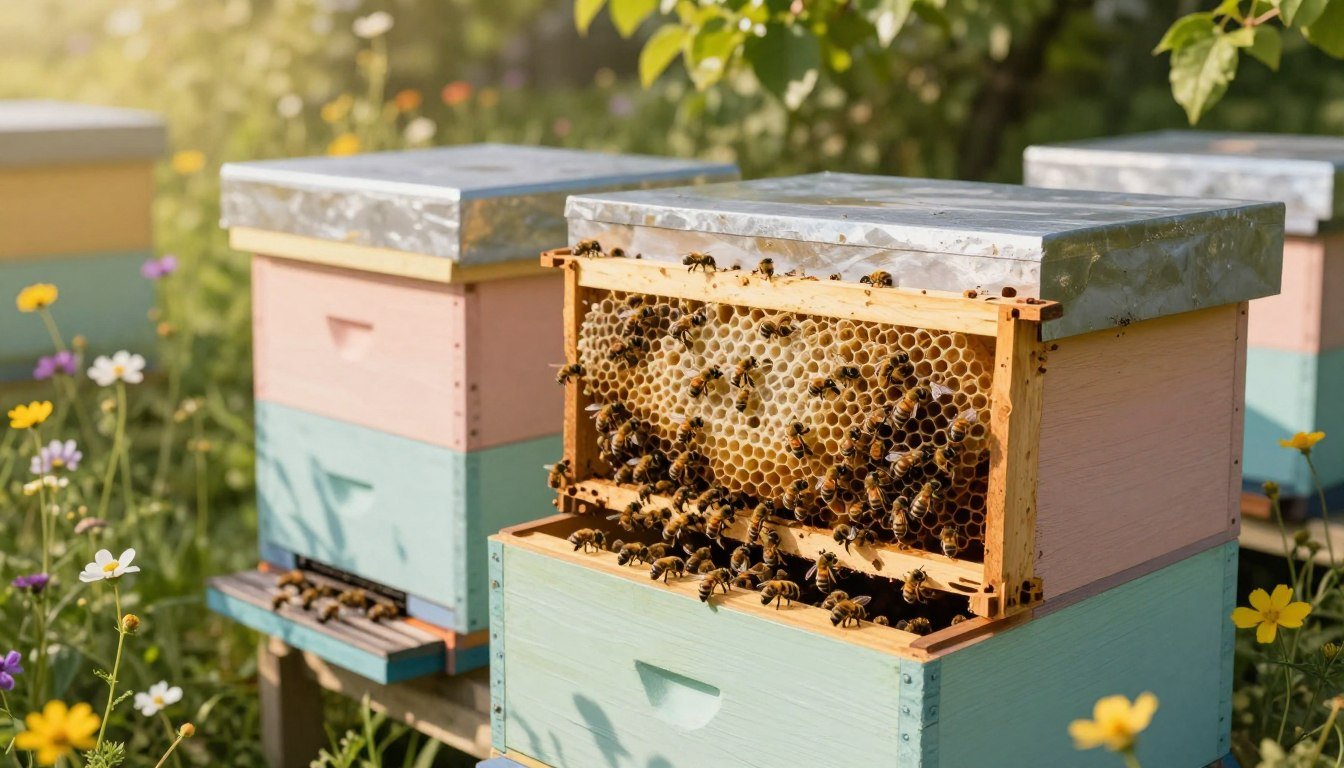
Alexander was also a strong, vocal promoter of brood box reversal: physically swapping the positions of the brood boxes in spring so the box that had been on top, typically containing the bulk of the expanding brood nest, moves to the bottom, while the more depleted lower box moves to the top. Because a colony’s cluster and brood nest naturally moves upward through the winter and into spring, reversing the boxes puts open, empty comb back above the brood nest exactly when the queen needs room to keep expanding it, reducing the swarm-triggering effect of a brood nest that feels boxed in against its own ceiling.
Alexander’s Other Legacy: Introducing Mailed Queens to Nuclei
Before Alexander’s advocacy, the common practice was introducing a newly received, mailed queen directly into a large, established colony, a process with meaningfully higher rejection risk given the size and existing social structure of the receiving colony. Alexander was among the first to strongly argue for introducing a new mailed queen to a small nucleus colony instead, where the smaller, more easily reoriented population made acceptance considerably more reliable, a principle that underlies much of modern queen-introduction practice today.
Why the Two-Queen Approach Worked for Him
Alexander’s two-queen system depended heavily on close, frequent, hands-on management rather than a simple one-time setup, since two queens sharing a hive system without an excluder require regular monitoring to prevent one queen from being balled or superseded by workers loyal to the other. His commercial-scale operation, with the labor to inspect frequently and intervene quickly, was well suited to sustaining a management style that a hobbyist checking a single hive once every week or two would likely find far harder to keep stable.
Is This Still Relevant to Modern Beekeepers?
Modern two-queen systems, still used by some commercial operations chasing maximum honey yield ahead of a major flow, generally use a queen excluder or divider board to physically separate the two queens’ brood nests rather than allowing the fully free-ranging arrangement Alexander favored, reflecting a century of accumulated experience with just how failure-prone the unseparated version tends to be outside constant supervision. Brood box reversal, by contrast, remains genuinely mainstream spring-management advice today, taught in most modern beekeeping courses essentially unchanged from Alexander’s original reasoning about upward-moving winter clusters and swarm prevention.
Alexander’s Broader Apiary Management Philosophy
Beyond the two-queen system specifically, Alexander was known for a broader philosophy of maximizing colony strength through close, frequent intervention rather than a hands-off approach, running his operation on the belief that a smaller number of genuinely powerful colonies would consistently outproduce a larger number of average ones. This philosophy shaped virtually every specific technique he’s remembered for, from brood reversal to nucleus-based queen introduction, all oriented toward the same underlying goal of building and sustaining maximum field-force population ahead of the honey flow.
Colony Strength Over Colony Count
Alexander was explicit that he valued fewer, stronger colonies over a larger count of mediocre ones, a philosophy directly connected to his two-queen experiments: a single hive housing the combined brood output of two queens could, in theory, reach a field-force size no ordinary single-queen colony could match. This strength-first mindset is why his techniques leaned so heavily on active, frequent management rather than a more passive, low-intervention style, since sustaining an artificially boosted colony population takes real ongoing attention.
How Modern Beekeepers Can Safely Try Reversal
Beekeeper Ray Hewitt of Honey Top Bees walks through exactly this judgment call – checking real cluster position before reversing rather than reversing on a fixed calendar date – which lines up directly with the guidance below.
A modern beekeeper wanting to try brood box reversal should open the hive on a mild, calm day in early spring and physically check where the cluster and brood nest actually sit before reversing anything, since reversing based on the calendar rather than the colony’s real position can leave brood isolated in the wrong box. If the brood nest has genuinely moved into the upper box with the lower box mostly empty, swap the two boxes so the emptier one sits on the bottom and the brood-filled one moves up, giving the queen open comb to expand into as she continues laying upward.
Comparing Alexander’s System to Modern Divided Two-Queen Setups
Modern two-queen systems generally place a queen excluder or a solid divider board between the two queens’ brood chambers, letting both queens lay freely within their own separated space while sharing a single stack of honey supers above. This divided approach captures much of the same field-force benefit Alexander was chasing while removing the constant risk of one queen balling or superseding the other, at the cost of somewhat more complex equipment and setup than Alexander’s simpler, fully open arrangement required.
Risks of the Free-Ranging Two-Queen Approach
The central risk of Alexander’s fully open two-queen arrangement is that worker bees don’t reliably tolerate two unrelated queens sharing the same space indefinitely, and without a physical barrier, one queen is often eventually balled or superseded as the colony’s workers gradually settle on a single queen to support. A beekeeper attempting this approach today should expect to lose one queen in many attempts and should treat the technique as an active experiment requiring frequent checks, not a stable long-term setup left unsupervised for weeks. Winter losses among two-queen colonies attempted without adequate management experience were common enough historically that most beekeepers who read Alexander’s original accounts came away trying brood reversal first, treating the full two-queen system as a later, more advanced step rather than a starting point.
Historical Context: Beekeeping Practice in Alexander’s Era
Alexander operated during a period when Langstroth’s movable-frame hive had already standardized much of beekeeping equipment, but management technique was still being actively worked out through trial and error by individual commercial operators rather than taught through any formal curriculum. This environment of hands-on experimentation is part of why a commercial beekeeper like Alexander could develop and publicize genuinely unconventional techniques like the free-ranging two-queen system, since there was no established orthodoxy yet discouraging the attempt.
Alexander’s Influence on Later Queen-Introduction Practice
The core insight behind Alexander’s nucleus-introduction advocacy, that a smaller, less socially entrenched colony accepts a new queen more reliably than a large established one, remains foundational to queen-rearing and requeening practice today, echoed in our modern guidance for introducing queens to nucs versus full colonies. While the specific mailed-queen context has changed with modern shipping and cage design, the underlying acceptance-rate logic Alexander was pointing at a century ago still holds.
When Reversal Should Be Skipped
Reversal isn’t universally beneficial and should be skipped on a colony that’s still weak or slow to build up in early spring, since forcing an already-struggling colony to reorganize its brood nest can set it back further rather than helping. It should likewise be skipped in regions or seasons where a hard, late cold snap remains a real risk, since a freshly reversed brood nest can be more vulnerable to chilling than one left in its existing, already-insulated arrangement.
Combining Reversal with Broader Swarm Prevention
Brood box reversal works best as one part of a broader spring swarm-prevention routine rather than a standalone fix, ideally combined with adequate supering timed to the local nectar flow and, where a colony is already strong, more direct swarm-control techniques like checkerboarding. A colony reversed in early spring but then left without enough super space as the flow builds can still swarm despite the reversal, since crowding can return from the top of the hive just as easily as from a poorly positioned brood nest.
Legacy and Modern Recognition
Alexander is remembered today less for the free-ranging two-queen system itself, which few modern beekeepers replicate in its original unseparated form, and more for the two ideas that proved durable: brood box reversal as standard spring management, and the principle that small nuclei accept new queens more reliably than large colonies. Both ideas are taught in modern beekeeping courses and mentorship programs largely without direct attribution, a common fate for genuinely foundational techniques that became so standard they stopped being associated with any one originator.
Equipment Needed to Try a Modern Divided Two-Queen System
A modern beekeeper wanting to try the safer, divided version of a two-queen system needs a solid divider board or a queen excluder to separate the two brood chambers, two mated queens, and enough honey super capacity above to handle the combined output of both brood nests feeding into a shared upper story. The setup takes more equipment and more careful spring timing than a standard single-queen colony, which is part of why it remains mostly a commercial-scale technique rather than a common hobbyist practice.
Common Mistakes
Attempting a fully free-ranging two-queen setup without the time for frequent, close inspection risks losing one queen to balling or supersedure within weeks, undoing the entire point of running two queens in the first place. Reversing brood boxes on a schedule rather than based on the colony’s actual cluster position can do more harm than good, since reversing before the cluster has genuinely moved up leaves brood isolated below in a box that’s now on top. Treating brood box reversal as a one-time spring task rather than a per-colony judgment call, made by actually opening the hive and looking, ignores how much timing varies colony to colony even within the same yard.
Sources
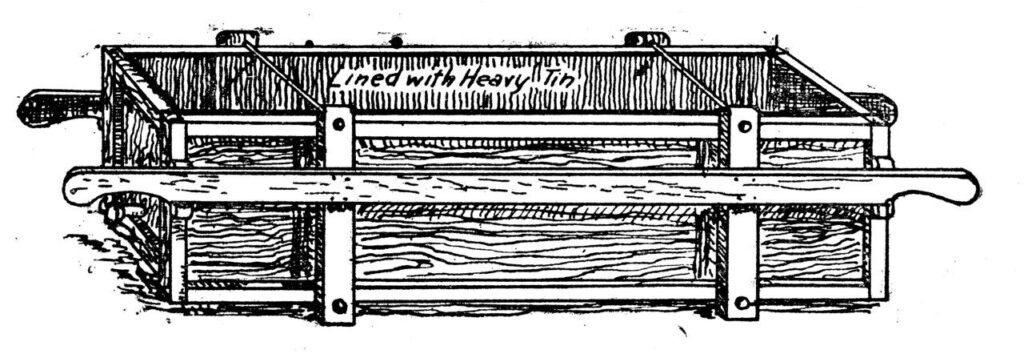
Biographical and technique details reflect historical beekeeping records documenting E.W. Alexander’s commercial apiary practices, primarily his own 1907 article “A Plurality of Queens Without Perforated Zinc” in Gleanings in Bee Culture (vol. 35, no. 23), and the equipment diagram published in Isaac Hopkins’ 1907 Bee-Culture textbook. For further verification on modern swarm-prevention practice, see University of Florida IFAS Extension’s Swarm Control for Managed Beehives guide.
FAQ
Who was E.W. Alexander in beekeeping history?
E.W. Alexander was a highly successful commercial beekeeper known for running colonies with two free-ranging queens and for strongly advocating brood box reversal and introducing mailed queens to small nuclei rather than large colonies.
Is Alexander’s original two-queen system still used today?
Not in its original free-ranging form. Modern two-queen systems typically use an excluder or divider between the two queens’ brood nests, since the fully unseparated version Alexander used requires more constant hands-on management than most beekeepers can sustain.
What is brood box reversal and why does it matter?
Brood box reversal is swapping the positions of a colony’s brood boxes in spring so open comb ends up above the brood nest, giving the queen room to expand upward and reducing the crowded feeling that can trigger swarming.
Why did Alexander recommend introducing queens to nuclei instead of full colonies?
A small nucleus colony’s smaller, more easily reoriented population makes a newly introduced mailed queen considerably more likely to be accepted than introducing her directly into a large, established colony.