Reviewed by Thomas B. · Last Updated September 24, 2026 · How we review
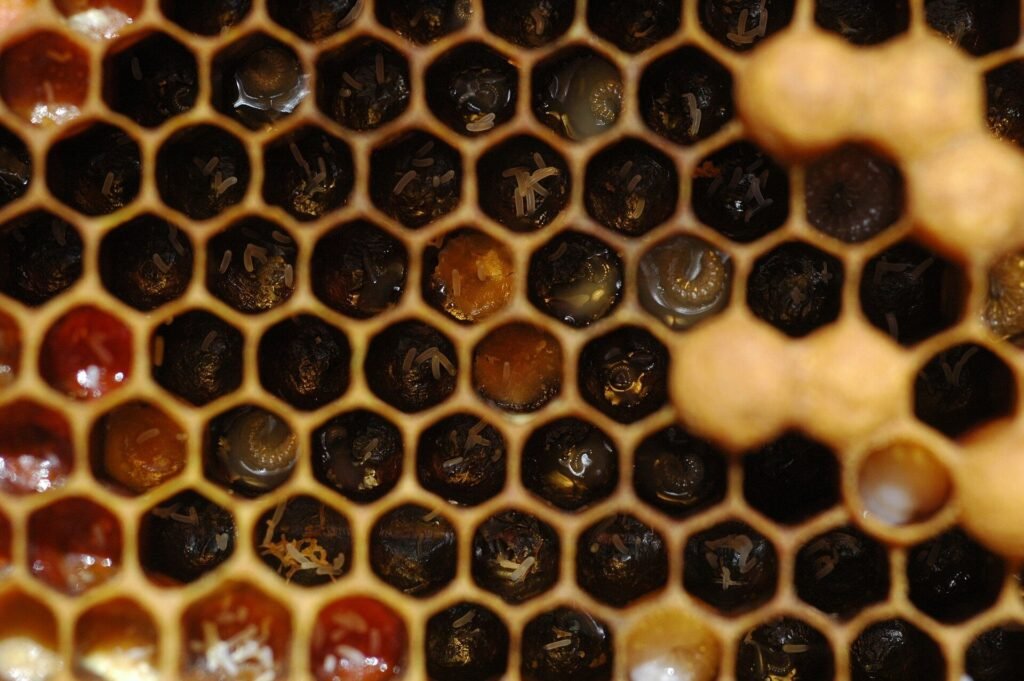
The signs of laying workers are several eggs in one cell, eggs stuck to the cell walls instead of centered at the base, raised drone cappings scattered through worker comb, undersized drones, no worker brood of any age, and no queen. They usually appear three to four weeks after a colony loses its queen and fails to raise a new one. No single sign is proof. A newly mated queen can put two eggs in some cells, and a drone-laying queen also fills worker cells with drones. So confirm the diagnosis with a frame of young brood from another colony before you decide what to do.
This article is about diagnosis: how to recognize laying workers, how to rule out look-alikes, and how to confirm it. The fix, which needs a different approach from ordinary requeening, is covered in our guide on how to requeen a laying worker hive.
Written by Michael R., who manages about 60 colonies in North Dakota’s Red River Valley and covers queen failure and requeening. Reviewed by Thomas B. (western Minnesota) under this site’s second-review rule for colony-health articles.
Key Takeaways
- The clearest sign is many cells with several eggs each, laid on the cell walls or off-center. The BeeMD diagnostic key describes two to a dozen or more eggs per cell.
- Laying workers lay only unfertilized eggs, so every larva they produce becomes a drone. Look for domed cappings in worker comb and small-bodied drones.
- A colony with laying workers has no worker brood at all: no worker eggs, larvae or flat worker cappings.
- Rule out a newly mated queen, which lays fewer double eggs and centers them, and a drone-laying queen, which lays one centered egg per cell.
- To confirm, give the colony a frame of eggs and young larvae. Colonies without established laying workers usually start emergency queen cells on it within a few days.
On this page
How a Colony Ends Up With Laying Workers
A queenright colony suppresses egg-laying by workers in two ways. Queen and brood pheromones keep most workers’ ovaries inactive, and nestmates remove most of the few eggs workers do lay, a behavior called worker policing. When the queen is lost, the colony normally raises a replacement from her last eggs or young larvae. Laying workers take over only when that fails, for example when the virgin queen is lost on her mating flight or the colony had no young larvae left to use. The BeeMD describes such a colony as “hopelessly queenless.”
| Time after queen loss | What is happening | What you see on the frames |
|---|---|---|
| Days 1 to 3 | Last queen-laid eggs hatch | No new eggs; emergency queen cells may be started |
| About day 9 | Last queen-laid worker larvae are capped | No open worker larvae |
| About day 21 | Last worker brood emerges | Empty brood nest, often filling with nectar and pollen |
| About 3 to 4 weeks onward | Worker ovaries activate and laying starts | Multiple eggs per cell, then scattered drone brood |
The timing comes from research. In a study that tracked colonies after queen removal, worker egg-laying and ovary development rose together over four weeks, while nestmates’ removal of worker eggs first increased and then leveled off (Miller and Ratnieks, 2001, Insectes Sociaux). A later study of queenless colonies notes that workers need three to four weeks to lay viable eggs (Smith, 2018, Evolution). That study also found that most queenless colonies raised a new laying queen rather than becoming hopelessly queenless. Laying workers are what happens when requeening fails. For how that window plays out week by week, see how long a hive can stay queenless.
The Frame Signs, Strongest First
“Eggs improperly positioned on sides or not centered in back of the cell and cells with multiple eggs (two to a dozen or more).”
| Sign | What you see | How conclusive |
|---|---|---|
| Many cells with several eggs | Two, three or many more eggs in one cell, across many cells and frames | Strong, especially with no queen |
| Eggs on cell walls | Eggs stuck to the sides or laid off-center, not standing at the base | Strong |
| No worker brood of any age | No single centered eggs, no worker larvae, no flat worker cappings | Strong in combination |
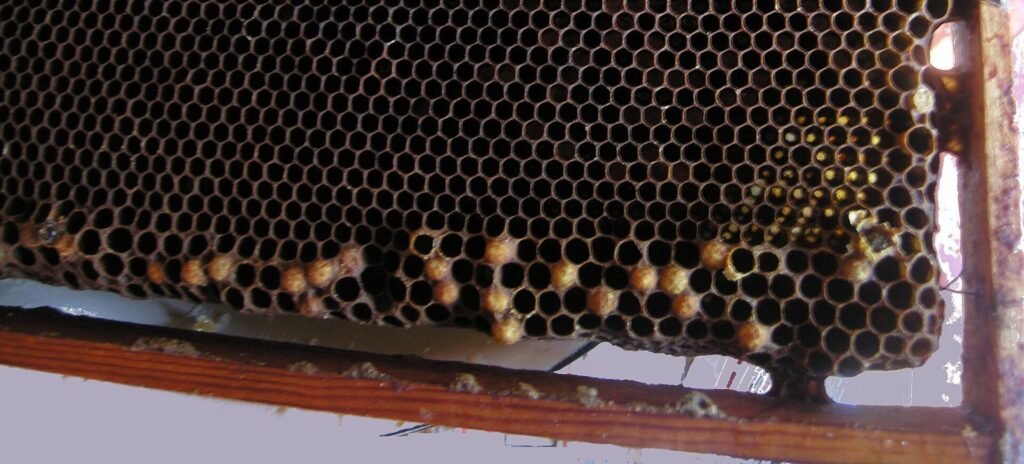
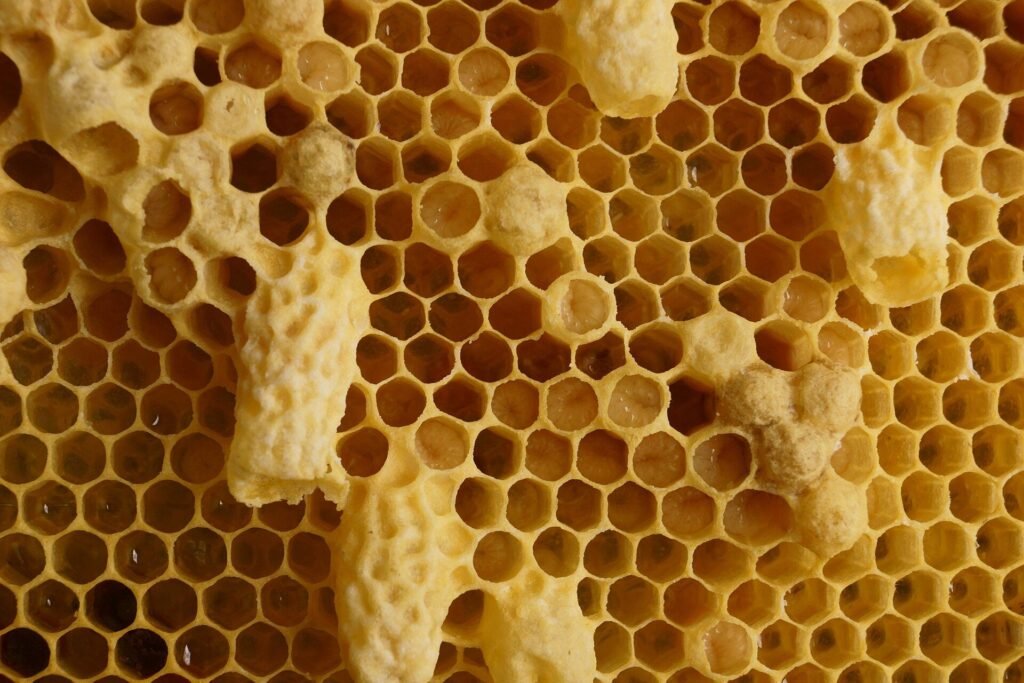
| Drone brood in worker comb | Raised, bullet-shaped cappings scattered in worker-sized cells | Moderate; a drone-laying queen does this too |
| Small-bodied drones | Undersized drones emerging from worker cells | Moderate |
| Queen cells over drone larvae | Queen cells, often few and irregular, containing drone larvae that will never become queens | Supporting |
Why the eggs end up on the walls: a worker’s abdomen is shorter than a queen’s, so she often can’t reach the base of a worker cell. Laying-worker eggs are often easiest to spot first in drone comb and in cells partly filled with pollen, where the cell floor is closer to the rim.
The last sign in the table tells you the colony is trying to requeen with what it has. Workers sometimes build queen cells around drone larvae from laying-worker eggs. Those cells can never produce a queen. Our article on whether laying workers can raise a new queen explains why.
Signs When You Open the Hive
Outside signs are useful prompts to check the frames, but they don’t prove anything on their own. The BeeMD lists a colony that is noisy when opened, the “queenless roar,” as a symptom of a queenless colony. See our description of the queenless roar. Other clues are a colony that is more defensive or restless than usual, a growing number of drones late in the season, and a brood nest that is filling with nectar and pollen because nothing is being reared there. Any of these is a reason to look closely at the frames.
Laying Workers vs Look-Alikes
| Condition | Eggs | Brood | Queen |
|---|---|---|---|
| Laying workers | Several per cell, on walls, across many cells | Drone brood only, scattered in worker comb | None |
| Newly mated queen | A few cells with two eggs; eggs centered at the base | Normal worker brood follows within days | Present, often unmarked |
| Drone-laying queen | One egg per cell, centered | Mostly drone brood in worker cells | Present |
| Failing queen | One egg per cell, sparse | Scattered worker brood with some drone cappings | Present |
The BeeMD notes that a newly mated queen may lay more than one egg in some cells at first. Those cells are fewer and hold fewer eggs than with laying workers. If you see double eggs, wait a week and look again. A new queen’s pattern settles quickly into one centered egg per cell and worker brood. See how soon a new queen should start laying. For queen-side problems, see drone-laying queen: what to do and our guide to finding a failing queen on frames.
How to Confirm It
Step 1: Check every brood frame
Look at both sides of each frame in good light. Note how many cells have multiple eggs and where the eggs sit. A handful of double eggs next to normal worker brood points to a new queen. Double eggs scattered everywhere and no worker brood point to laying workers.
Step 2: Look for a queen, but don’t rely on not finding one
Laying workers look exactly like other workers, and a young, unmarked queen is easy to miss. Not finding a queen is weak evidence. Finding one changes the diagnosis to a queen problem.
Step 3: Add a test frame
From a healthy queenright colony, take a frame with eggs and larvae no older than about three days. Shake off the bees and put it in the center of the suspect colony. Check it after 3 to 5 days.
- Emergency queen cells started on the test frame: the colony knows it is queenless and has not fully switched to laying workers. It can still accept a queen or raise one.
- No queen cells: either laying workers are established, or there is a queen (possibly a virgin) that you missed. Check again for eggs and brood.
This is a widely used field test rather than a formally validated one, and results can be ambiguous. A second test frame a week later usually settles it. The frame also helps the colony, because young brood suppresses worker ovaries.
What to Do Next
Once it is confirmed, don’t just drop a caged queen in. Laying worker colonies usually reject a queen introduced on her own. The BeeMD describes requeening them as very difficult and notes that shaking the bees out does not work, because the bees fly back to their old hive location. The approaches that do work are covered in how to requeen a laying worker hive. They start with frames of young brood and then a queen, or a queenright nuc united over newspaper. A small colony, or any colony after about mid-August in the Red River Valley, is usually better combined. See how to unite a queenless hive with another colony.
How to Catch It Earlier
- Inspect every 7 to 10 days in the active season. The three-to-four-week gap before laying workers appear is enough time to fix queenlessness if you notice it.
- Check for eggs after any queen change. After a split, a swarm or a supersedure, look for eggs from the new queen at the expected time. See the mating flight timeline for virgin queens.
- Keep a frame of young brood available. If you find no eggs and no queen, giving a frame of young brood straight away keeps the colony’s options open.
- Know the queenless signs. See signs your hive is queenless for the stage before laying workers.
Frequently Asked Questions
How soon after losing the queen do laying workers appear?
Usually three to four weeks after queen loss, and only if the colony has failed to raise a new queen. By then the last queen-laid brood has emerged.
Do multiple eggs in a cell always mean laying workers?
No. A newly mated queen may lay two eggs in some cells for a short time. With laying workers, the multiple eggs are widespread, often on the cell walls, and no worker brood is present.
How can I tell laying workers from a drone-laying queen?
Both produce drone brood in worker cells. A drone-laying queen lays one egg per cell, centered at the base. Laying workers lay several eggs per cell, often on the walls.
Can you see which bees are the laying workers?
No. They look like any other worker, and there are usually many of them, so they can’t be found and removed.
Why are there queen cells in a laying worker hive?
Workers sometimes build queen cells around drone larvae from laying-worker eggs. These can never produce a queen, so they are a sign of the problem rather than a solution.
Can a laying worker colony be saved?
Often, if it is still strong. Frames of young brood followed by a queen, or a united queenright nuc, have the best record. Weak colonies, or colonies found late in the season, are better combined.