Last Updated September 16, 2026
Apidea mating nucs are compact 11×11×11 cm polystyrene mini-hives that let a queen breeder mate dozens of virgin queens at once on a fraction of the bees a full-size nuc would need — each unit holds three mini frames, starts with roughly 100 grams of nurse bees, and typically produces a mated, laying queen in 10 to 14 days.
Key Takeaways
- An Apidea is an 11×11×11 cm cube of roughly 2 cm-thick brown polystyrene weighing about 1 kg empty, holding 3 mini frames — not a generic “plastic” box, but a specific insulated design.
- Start each unit with about 100 grams of nurse bees (roughly a tablespoon) plus a virgin queen or ripe queen cell; mating typically completes in 10 to 14 days with good weather.
- Retail price runs roughly €30–£36 per unit depending on retailer and region, before frames, feeders, and replacement parts.
- The design was invented by Milan Lusser in Switzerland in 1978–79, patented in 1982/1986, and won gold at Apimondia Lausanne in 1995 — it’s been refined, not reinvented, for nearly five decades.
- Best fit: queen breeders and serious hobbyists mating multiple queens per season; a beekeeper rearing just one or two queens is usually better served by a standard nuc split.
Table of Contents
- What Apidea Mating Nucs Are
- Design: Plastic, Compact, Multi-Comb
- Apidea vs. a Standard-Size Nuc for Mating
- Setting Up an Apidea for a Mating Flight
- Stocking the Mini Nuc
- The Mating Process
- Removing and Introducing the Mated Queen
- Cleaning and Reusing Between Batches
- Who Should Use Apidea Nucs
- Weather Considerations for Mating Success
- Ongoing Feeding During the Mating Period
- Protecting Mini Nucs From Predators and Robbing
- Running a Full Season of Mini Nuc Mating
- Introducing a Queen Cell vs. an Emerged Virgin
- Drone Density and Genetic Control
- Cost of Getting Started
- Preventing Absconding From the Mini Nuc
- Tracking Individual Units
- Seasonal Timing for Your Region
- Common Mistakes
What Apidea Mating Nucs Are
Apidea mating nucs are small, plastic, multi-frame nucleus boxes purpose-built to host a virgin queen and a minimal population of worker bees just long enough for the queen to complete her mating flights and begin laying, before being removed and introduced to a full-size colony. They’re one of the most widely used commercial mini-nuc designs internationally, allowing queen breeders to mate large numbers of queens simultaneously using far less bee population and equipment than standard-size nucs would require — a natural extension of the fundamentals covered in our queen rearing basics guide.
Design: Brown Polystyrene, Compact, Multi-Comb
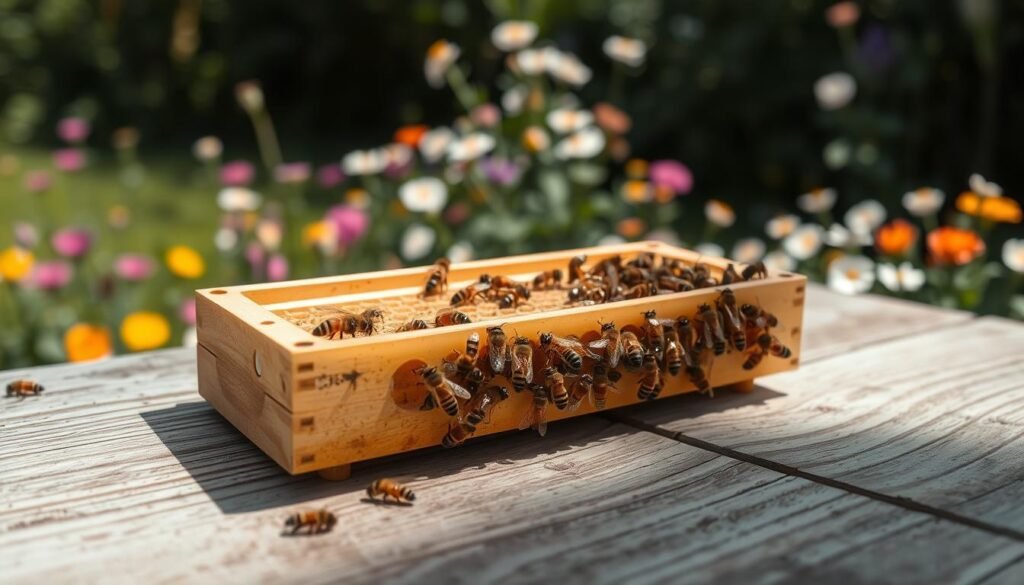
Each Apidea is an 11×11×11 cm cube of roughly 2 cm-thick brown polystyrene, weighing about 1 kg empty, with a removable front feeder (built-in queen excluder), a multi-position sliding entrance, ventilation grids at front and bottom, and a removable sliding floor for cleanout. Inside are 3 small plastic mini-frames sized to hold foundation wax. The polystyrene construction is lightweight, easy to clean between batches, and — unlike wood — doesn’t absorb moisture or harbor pests as readily, a real practical advantage for equipment cycled through dozens or hundreds of uses across a breeding season.
Apidea vs. a Standard-Size Nuc for Mating
| Factor | Apidea Mini Nuc | Standard-Size Nuc |
|---|---|---|
| Bee population needed | Small — a cup or two of bees | Full frame(s) of bees |
| Cost per unit | Lower | Higher |
| Scalability for many queens | High — mate dozens simultaneously with limited resources | Lower — resource-intensive per queen |
| Post-mating colony use | Not usable as a standalone colony | Can become a production colony |
The core tradeoff is resource efficiency versus flexibility: a mini nuc like Apidea lets a breeder mate far more queens from the same total bee population than dedicating full standard nucs to each queen would allow, but the tiny population can only ever serve mating purposes — it’s not a viable path to a production colony the way a standard nuc split can become.
Setting Up an Apidea for a Mating Flight
Assemble the box with its small comb sections in place, fill the built-in feeder with syrup, and confirm all ventilation screens are clear and functional before stocking bees — a poorly ventilated or leaking mini nuc in warm weather can overheat or starve its small population quickly, since there’s very little buffer capacity compared to a full-size colony’s larger reserves and better internal climate regulation.
Stocking the Mini Nuc
Stock each Apidea with about 100 grams of nurse bees (roughly a tablespoon, typically shaken from a donor colony) along with a virgin queen or a ripe queen cell about to emerge, following the manufacturer’s specific recommended bee quantity for the unit — overstocking wastes bees relative to what the tiny cavity can comfortably house, while understocking risks an inadequate workforce to properly care for and defend the small colony during the mating period.
The Mating Process
Once stocked, place the Apidea in a location with good orientation cues (varied by distance and landmark from other units, to reduce drift between neighboring mini nucs) and reasonable weather protection, then leave it undisturbed through the queen’s orientation and mating flights, which typically take place over the following one to two weeks depending on weather and local drone availability. Confirm mating success by checking for the start of egg-laying rather than assuming success just because the queen survived — a queen that returns from flights but fails to mate properly won’t begin normal laying — see our guide on why a new queen isn’t laying yet for troubleshooting a queen that seems delayed.
Removing and Introducing the Mated Queen
Once laying is confirmed, carefully remove the mated queen from the Apidea and introduce her to her intended full-size colony using standard slow-release introduction methods — the same caged, gradual introduction process used for any purchased or reared queen, since there’s nothing about mini-nuc mating that changes standard introduction practice for the receiving colony.
Cleaning and Reusing Between Batches
Thoroughly clean each Apidea unit between mating cycles, removing old comb, wax debris, and any dead bees, since a breeding operation running many units through repeated cycles across a season depends on consistent, hygienic reuse to avoid disease transmission between batches. The plastic construction’s easy-clean advantage over wood is a real practical benefit here, particularly for a high-volume queen breeding operation cycling units frequently.
Who Should Use Apidea Nucs
Queen breeders and serious hobbyists producing multiple queens per season, who want to mate many queens efficiently without dedicating a full standard nuc’s worth of bees and equipment to each one, are the clearest fit for Apidea-style mini nucs. A beekeeper raising just one or two queens occasionally may find a standard small nuc split simpler and more flexible, since it doesn’t require the specialized mini-nuc equipment and can double as a usable colony if the queen-rearing attempt doesn’t pan out as planned.
Weather Considerations for Mating Success
Mating flights depend on warm, calm, sunny conditions with adequate drone availability in the area — a stretch of poor weather during a queen’s mating window can delay or entirely prevent successful mating, regardless of how well the mini nuc itself was set up. If weather is genuinely poor for an extended period after a queen’s expected mating window, check for signs of a drone-laying or failed queen sooner rather than waiting the full expected timeline, since a queen held too long without mating opportunity is less likely to mate successfully even once weather improves.
Ongoing Feeding During the Mating Period
Check and refill the built-in feeder regularly throughout the mating period, since a mini nuc’s tiny bee population has very little stored reserve capacity compared to a full-size colony — running out of syrup, even briefly, poses a real starvation risk to a population this small in a way it simply wouldn’t for a larger colony with substantial honey stores to fall back on.
Protecting Mini Nucs From Predators and Robbing
A mini nuc’s small population defends itself far less effectively than a full colony against robbing bees or predators like ants and wasps, making placement and protection genuinely important — position units away from established colonies where robbing pressure is highest, and consider ant-proofing measures (stands with water moats or sticky barriers) given how vulnerable a tiny population is to an ant invasion compared to a full-strength colony that can usually defend itself.
Running a Full Season of Mini Nuc Mating
A serious queen-rearing operation typically runs many Apidea units in continuous rotation through a season — stocking, mating, harvesting, cleaning, and restocking each unit multiple times — rather than using each unit for just one mating cycle, since the equipment’s reusability is central to the system’s cost-efficiency. Plan your season’s queen production targets around a realistic per-unit cycle time and your available donor-colony bee population for restocking each round.
Introducing a Queen Cell vs. an Emerged Virgin
You can stock an Apidea with either a ripe, about-to-emerge queen cell or an already-emerged virgin queen, and each approach has tradeoffs — introducing a cell lets the queen emerge naturally within the mini nuc’s own environment, generally considered gentler than introducing an already-emerged virgin who has to be accepted by unfamiliar workers, though a queen cell introduction takes slightly longer before the queen is ready to begin orientation flights. Many experienced breeders prefer cell introduction specifically for this gentler acceptance dynamic, reserving virgin introduction for situations where cell availability doesn’t align with a specific mini nuc’s stocking schedule.
Drone Density and Genetic Control
Mating quality depends heavily on the local drone population your virgin queens will actually encounter — a serious breeding operation aiming for specific genetic outcomes often establishes dedicated drone-source colonies near the mating yard, seeded with desired genetics, rather than leaving mating entirely to whatever drones happen to be present in the wider area. This level of control matters most for breeders specifically selecting for traits like mite resistance or gentleness; a hobbyist mating a queen or two for personal use can reasonably rely on natural local drone populations without this added setup.
Cost of Getting Started
A single Apidea unit runs roughly €30 from European suppliers (about £36 from UK suppliers) before frames, feeders, and shipping — inexpensive per unit, but a serious mating operation typically involves purchasing many units at once to run a meaningful number of queens simultaneously, so total startup cost scales with your intended production volume rather than being a small, one-time purchase. Compare the per-queen cost across your intended scale against alternative approaches (standard nuc splits, or simply purchasing mated queens outright) to confirm the mini-nuc investment genuinely pays off for your specific production goals before committing to a larger equipment purchase.
Preventing Absconding From the Mini Nuc
A newly stocked mini nuc’s small, disoriented population is genuinely more prone to absconding (the whole population leaving) than a full colony, particularly in the first day or two after stocking before bees have properly oriented to their new location. Some breeders confine the entrance briefly after initial stocking, or use a screen/cage over the entrance for the first day, giving bees time to settle and orient before being able to fly freely — check your specific unit’s manufacturer guidance on this practice, since confinement duration and method details vary.
Tracking Individual Units
Label or number each Apidea unit and keep simple records of stocking date, source colony genetics, and mating/introduction outcomes, since a breeding operation running many units through repeated cycles quickly becomes impossible to track reliably from memory alone. This record-keeping also lets you identify which specific genetic lines or stocking practices are producing the best mating success rates over time, refining your process based on real data rather than guesswork.
Seasonal Timing for Your Region
Time your mating nuc program to your region’s reliable warm-weather window with adequate drone availability, generally mid-spring through summer in most U.S. climates, rather than pushing mating attempts into marginal early-spring or fall conditions where success rates drop meaningfully due to weather and reduced drone populations.
Common Mistakes
Overstocking or understocking the mini nuc relative to the manufacturer’s recommended bee quantity is a common setup mistake that undermines the tiny colony’s ability to properly support the mating queen. Placing multiple units too close together without adequate orientation cues increases drift between neighboring nucs, confusing returning queens and workers. Assuming mating success without confirming actual egg-laying wastes time on a queen that may not have mated successfully, delaying your realization that a replacement or retry is needed.
Where the Apidea Design Came From
The Apidea isn’t a generic import — it’s a specific, patented Swiss design with a traceable history. Beekeeper Milan Lusser built the first models in his Swiss workshop in 1978–79, filed the patent specification in spring 1982, and received the grant four years later in 1986. The design won a gold medal at Apimondia (the world beekeeping congress) in Lausanne in 1995, and ownership passed to Karin Kunder and Silvio Hitz in 2004, who continue to manufacture it as Apidea AG in Freienbach, Switzerland. That’s part of why the design shows up so consistently across queen-rearing operations worldwide — it’s had over four decades of real-world refinement, not just marketing.
Sources
Design and operational guidance reflect publicly available manufacturer information for the Apidea mini mating nuc system, alongside general queen-rearing extension guidance on mating nuc management. For current, authoritative detail, see University of Florida IFAS Extension’s Swarm Control for Managed Beehives guide.
FAQ
Can an Apidea mini nuc become a production colony?
No — its tiny population and cavity size are designed specifically for the mating period only; the mated queen is removed and introduced to a full-size colony rather than the mini nuc itself being grown into one.
How do I know if mating was successful?
Check for the start of egg-laying rather than assuming success just because the queen survived her mating flights — a queen that returns safely but fails to mate properly won’t begin normal laying.
Why use a mini nuc instead of a standard nuc for mating?
Resource efficiency — a mini nuc lets you mate far more queens from the same total bee population than dedicating full standard nucs to each individual queen would require.
How many mini nucs should I place near each other?
Space and orient them with distinct visual landmarks to reduce drift — placing too many units too close together without adequate orientation cues confuses returning queens and workers between neighboring nucs.
Should I introduce a queen cell or an emerged virgin into an Apidea?
A queen cell about to emerge is generally considered gentler and better accepted since the queen emerges naturally within the mini nuc’s own environment, though it takes slightly longer than introducing an already-emerged virgin.
Is a mini nuc population at risk of absconding?
Yes, particularly in the first day or two after stocking before bees have oriented to the new location — some breeders briefly confine the entrance after stocking to reduce this risk, per their specific unit’s manufacturer guidance.