Reviewed by Michael R. · Last Updated October 1, 2026 · How we review
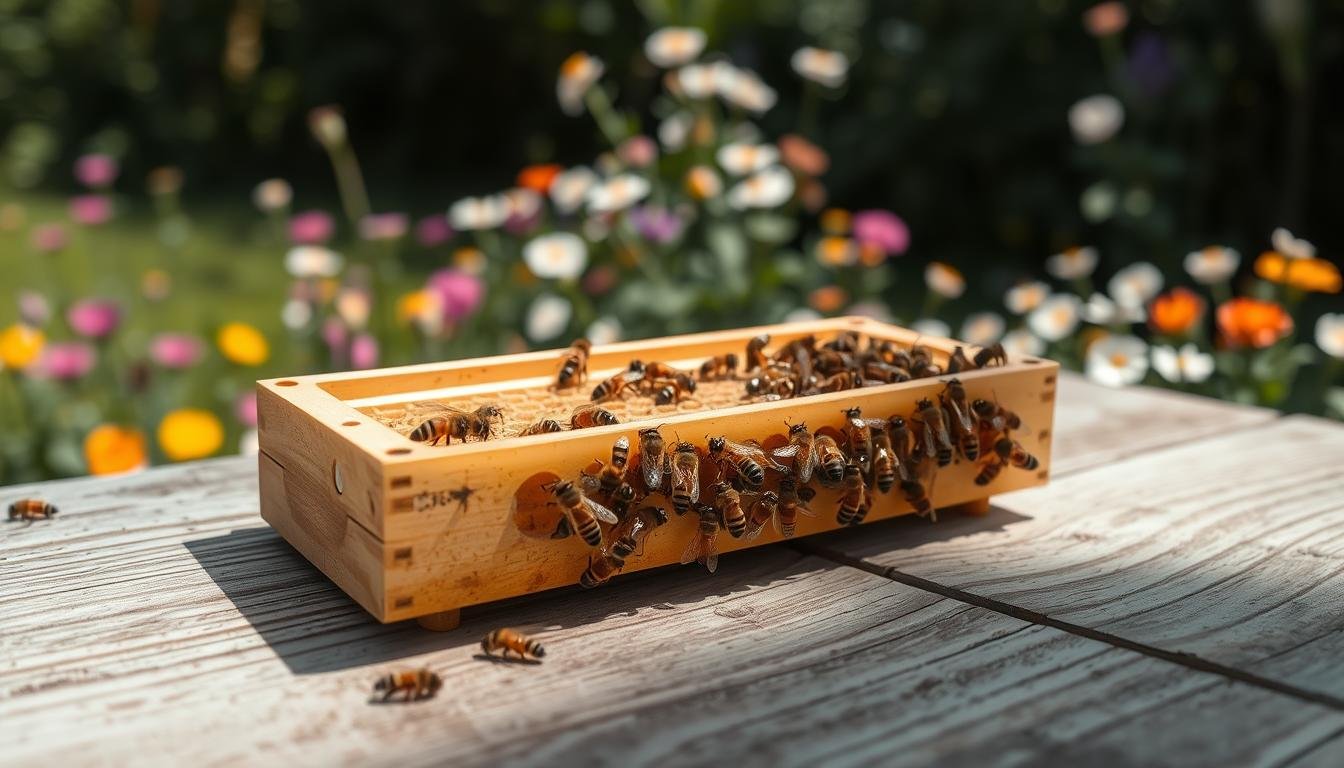
A Kieler mating nuc is a small German mating box, normally moulded from high-density polystyrene, that holds a few hundred grams of bees and a queen cell or virgin queen on four small top-bar frames until she has mated and started laying, usually about 10 to 15 days after the unit goes out.
Key Takeaways
- Material: the standard Kieler box is high-density polystyrene (EPS). Wooden versions and wooden add-on parts exist, but they are the exception, not the defining feature.
- Size: about 27.4 × 22 × 17.3 cm outside, with a brood space of roughly 16 × 13 × 11 cm, four top-bar frames and a removable feeder (up to six frames without it).
- Stocking: suppliers recommend 100–150 g of young nurse bees, roughly 1,000–1,500 workers, plus a ripe queen cell or a virgin queen.
- Timing: keep the stocked box closed in a cool, dark place for 24–48 hours, then open it in the mating yard; expect a laying queen in about two weeks.
- Known weak points: bees chew the polystyrene around the entrance, the feeder takes space from the brood area, and a queen can end up in the feeder if bees build comb there.
Table of Contents
- What a Kieler Mating Nuc Is
- Kieler Specifications at a Glance
- Polystyrene or Wood: Correcting a Common Mix-Up
- Kieler vs Apidea and Mini Plus
- How to Stock a Kieler Nuc Step by Step
- From Mating Yard to Laying Queen
- Common Problems and How to Avoid Them
- Can You Overwinter a Kieler?
- Cleaning and Reusing the Boxes
- FAQ
What a Kieler Mating Nuc Is
Queen rearing produces more virgin queens than a beekeeper has full colonies to spare. A mating nuc solves that: instead of tying up a full hive for each queen, you give her a tiny colony just large enough to keep her warm, feed her and accept her back after her mating flights. “Kieler” simply means “from Kiel” in German, and the box is one of the long-established German mating-box designs sold across Europe.
The unit is a single moulded body with a lid, a floor that can be opened for stocking, a feeder compartment and a rotating entrance disc. Bees build comb down from small wooden top bars (or onto the small plastic frames some suppliers ship), so the queen has somewhere to lay once she returns mated. If you are new to raising queens, start with our queen rearing basics before buying a set of boxes.
Kieler Specifications at a Glance
The figures below come from a current European supplier listing for the polystyrene Kieler and from beekeepers who use them. Exact frame styles vary a little between makers.
| Feature | Kieler mating nuc (polystyrene) |
|---|---|
| Body material | High-density expanded polystyrene (EPS) |
| External size | About 27.4 × 22 × 17.3 cm |
| Brood space | About 16 × 13 × 11 cm |
| Frames | 4 top-bar frames with the feeder fitted; up to 6 without it |
| Feeder | Removable compartment inside the box |
| Entrance | Rotating disc: open, closed, ventilation (some discs add a queen-excluder slot) |
| Bees needed | 100–150 g of young nurse bees (roughly 1,000–1,500) |
| Typical price | Around €16 per box from EU suppliers at the time of writing, less in bulk |
Polystyrene or Wood: Correcting a Common Mix-Up
An earlier version of this page described the Kieler as a wooden mating box and treated wood as its main difference from the Apidea. That was wrong. The Kieler people buy today is polystyrene, just like the Apidea and the Mini Plus. Some German suppliers do sell wooden Kieler-pattern boxes and wooden parts that fit the polystyrene body, so both exist, but you should assume “Kieler” means polystyrene unless a listing says otherwise.
The material matters more than it looks. Polystyrene holds heat well, which helps a few hundred bees keep brood warm on cool nights, and it is light enough to carry a dozen boxes to a mating yard. Its downsides are durability: bees can chew it, careless hive-tool work gouges it, and it cannot be scorched clean the way wood can. Wooden boxes last longer and tolerate a blowtorch, but they are heavier and cool down faster. For a closer look at the same trade-off in full-size boxes, see our guide to polystyrene nuc boxes.
Kieler vs Apidea and Mini Plus
All three are polystyrene mating units; the real differences are size, frame system and how easily you can see inside.
| Kieler | Apidea | Mini Plus | |
|---|---|---|---|
| Frames | 4 small top-bar frames (up to 6) | 3 small frames | Larger frames, stackable boxes |
| Looking inside | Remove lid and lift frames | Clear plastic crown board with flaps for adding a cell or feed | Lift boxes and frames |
| Best for | Budget mating yards, beekeepers who want a little more comb space | Quick checks without disturbing bees | Queens you may want to overwinter or build up |
Scottish beekeeper and virologist David Evans of The Apiarist chose Kielers for a practical reason, writing that he “needed a dozen one season” and could not afford Apideas. Read our full Apidea guide and Mini Plus guide if you are choosing between systems.
How to Stock a Kieler Nuc Step by Step
- Prepare the frames. Fit a strip of foundation or a starter strip to each top bar so the bees build straight comb.
- Fill the feeder. Most beekeepers use fondant or queen candy rather than thin syrup, so the small colony has food without drowning risk.
- Collect young bees. Shake nurse bees from brood frames of a strong donor colony into a bucket or ventilated box and mist them lightly with water. Young bees stay; older foragers tend to drift home.
- Measure 100–150 g. Scoop that weight (a cup is a rough guide) through the opened floor or lid.
- Add the queen. Press a ripe queen cell gently into the comb or top bars, or run in a virgin queen.
- Close and cool. Shut the entrance and keep the box in a cool, dark place for 24–48 hours so the bees settle around the queen instead of flying off.
Your queen source decides the timing. Graft-free systems such as the Miller method or a Cloake board set-up give you ripe cells on a predictable day, so stock the Kielers the day before those cells emerge.
From Mating Yard to Laying Queen
After the settling period, move the boxes to the mating yard, set them on stands in shade or morning sun and open the entrances, ideally in the evening. Space the boxes out and face entrances in different directions so returning queens pick the right one. A virgin queen usually makes her mating flights within the first week or so after emergence; our mating flight timeline covers the day-by-day window.
Check for eggs about 10–15 days after placing the box. Once you see a solid patch of eggs and young larvae, the queen is mated and ready to use. Cage her for introduction, then either add a new queen cell to the same bees the next day or shake them back into a full colony.
Common Problems and How to Avoid Them
“Bees have a tendency to nibble away at the polystyrene around the entrance.”
— David Evans, The Apiarist, “Mini-nucs: tips and tricks”
- Chewed entrances: check the entrance disc area each season and replace damaged discs before robbers can get in.
- Queen in the feeder: the same source notes that a queen “can sometimes end up in the feeder, particularly if the bees build comb there.” Keep the feeder topped with candy, not empty space, and scrape out any comb built inside it.
- Absconding: usually caused by too few bees, heat, or a box opened too soon. Use the full 100–150 g and respect the 24–48 hour closed period.
- Robbing: tiny colonies cannot defend a wide entrance. Keep the disc on its smallest opening, especially during a nectar dearth.
- Crowding: the feeder takes brood space; if a laying queen stays in the box for weeks, move her on before the colony swarms or runs out of room.
Can You Overwinter a Kieler?
It is possible but hard. Beekeepers who try it usually stack two boxes to give the cluster more comb and stores, and even then losses are high. The Apiarist reports “quite a high attrition rate” when overwintering them. If you want reserve queens through winter, a larger unit such as a Mini Plus or a full nuc box is the safer choice.
Cleaning and Reusing the Boxes
At the end of the season, remove the frames, scrape off wax and propolis with a plastic scraper rather than a sharp hive tool, and wash the body in warm water with washing soda. Never flame polystyrene. Dry the boxes fully and store them where wax moths and mice cannot reach them. Old, dark comb should go rather than be reused in the next season’s mating units.
FAQ
Are Kieler mating nucs made of wood or polystyrene?
Standard Kieler boxes are high-density polystyrene. Wooden versions and wooden parts exist, but they are less common.
How many bees do you put in a Kieler?
About 100–150 g of young nurse bees, which is roughly 1,000–1,500 workers.
How long should a Kieler stay closed after stocking?
Keep it closed in a cool, dark place for 24–48 hours before opening it in the mating yard.
How soon will the queen be laying?
Usually within about 10–15 days of placing the box, depending on weather and drone availability.
Is a Kieler better than an Apidea?
Neither is better outright. Kielers are cheaper and give more comb space; Apideas are easier to check through their clear crown board.
Can I use Kieler frames in other mating boxes?
Generally not. The top bars and frames are sized for the Kieler body, so buy spares made for the same system.
Sources
- David Evans, “Mini-nucs: tips and tricks”, The Apiarist, 5 August 2022.
- Supplier specifications for the polystyrene Kieler mating nuc, La Tienda del Apicultor (dimensions, frames, stocking weight and closing time).