Last Updated September 16, 2026
The notching method is a graft-free queen-rearing technique — developed and popularized by Michigan beekeeper Mel Disselkoen as part of his OTS (On-The-Spot) system — where a beekeeper cuts away the bottom third of a brood cell wall around a larva under 36 hours old, prompting the colony to build it out into a queen cell without any grafting tools or steady hand required.
Key Takeaways
- The notching method was developed and popularized by Michigan beekeeper Mel Disselkoen as part of his OTS (On-The-Spot) queen-rearing system, detailed in his book OTS Queen Rearing: A Survival Guide for Beekeepers Worldwide.
- Target larvae under 36 hours old — younger than that threshold, bees are far more likely to accept and properly feed the resulting queen.
- The notch must cut through the bottom third of the cell wall down to the foundation; a shallower notch just gets repaired back into ordinary worker brood instead of triggering a queen cell.
- The underlying principle traces to 19th-century apiarist Dr. C.C. Miller’s observation that bees preferentially choose larvae “two days old, or younger” when building emergency queen cells.
- Best fit: beekeepers who want to raise multiple queens without grafting equipment or the fine motor skill grafting demands.
Table of Contents
- What the Notching Method Is
- Why Notching Triggers Queen Cell Building
- Notching vs. Grafting and Other Graft-Free Methods
- Tools: A Notching Tool or Simple Improvised Alternative
- Step-by-Step Notching
- Larval Age Still Matters
- Colony Preparation
- Harvesting the Resulting Queen Cells
- Who Should Use This Method
- Cell Quality Considerations With Notching
- How Many Larvae to Notch at Once
- Best Time of Season to Notch
- Combining Notching With Other Queen-Rearing Methods
- Selecting Which Colony to Notch From
- Building Skill With Practice
- Scaling Notching for Larger Queen Production
- What Happens to the Notched Frame Afterward
- Why This Is a Good First Queen-Rearing Technique
- Keeping Simple Records
- Common Mistakes
What the Notching Method Is
The notching method produces emergency queen cells by cutting a small notch into the wax cell wall just below a selected young larva on a frame of comb, physically opening the cell so nurse bees can access and begin feeding the larva royal jelly as if the colony had suddenly become queenless. It requires no grafting, no specialized cell cups, and no fine-motor larva transfer — the larva stays in its original cell the entire time, making it one of the simplest graft-free queen-rearing techniques available.
Why Notching Triggers Queen Cell Building
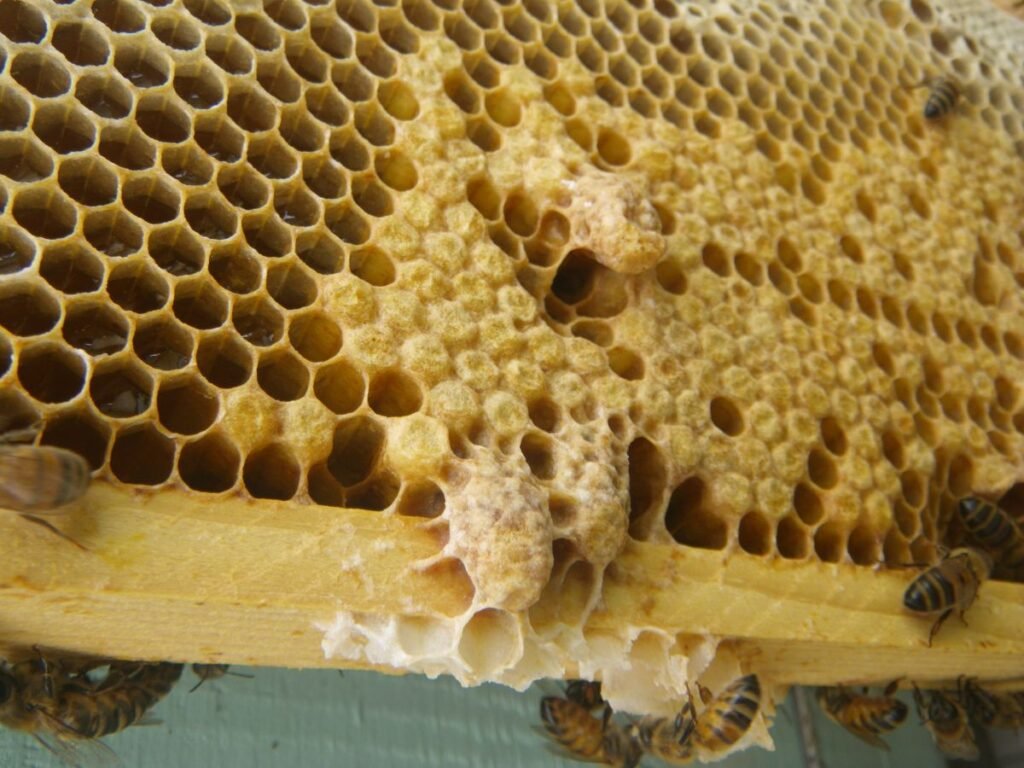
Nurse bees build emergency queen cells around any young larva they can access and feed generously with royal jelly once a colony perceives itself as queenless — normally, this response is limited by cell orientation and comb structure, since standard worker cells face the wrong direction and are too enclosed for bees to easily build an emergency cell around. Notching opens the cell wall enough for bees to access the larva from the side and below, similar to the exposure a genuinely broken or damaged cell would create, without needing to remove or transfer the larva at all.
Notching vs. Grafting and Other Graft-Free Methods
Compared to grafting, notching requires no fine-motor skill or specialized tools and eliminates any risk of damaging a larva during transfer, since the larva is never moved. Compared to other graft-free methods like the Alley or Miller methods, which involve cutting and manipulating entire comb strips, notching works on standard drawn comb already in a frame, without needing dedicated comb preparation ahead of time — arguably the lowest-barrier-to-entry queen-rearing method of any covered on this site.
Tools: A Notching Tool or Simple Improvised Alternative
A dedicated notching tool — a small, curved cutting implement sized to make a clean, precise cut into a cell wall without damaging the larva inside — makes the process faster and more consistent, though a small, sharp, clean blade can serve as a reasonable improvised alternative for a beekeeper trying the technique before investing in dedicated equipment. Whatever tool you use, the cut needs to be precise enough to open the cell wall without directly touching or damaging the larva itself.
Step-by-Step Notching
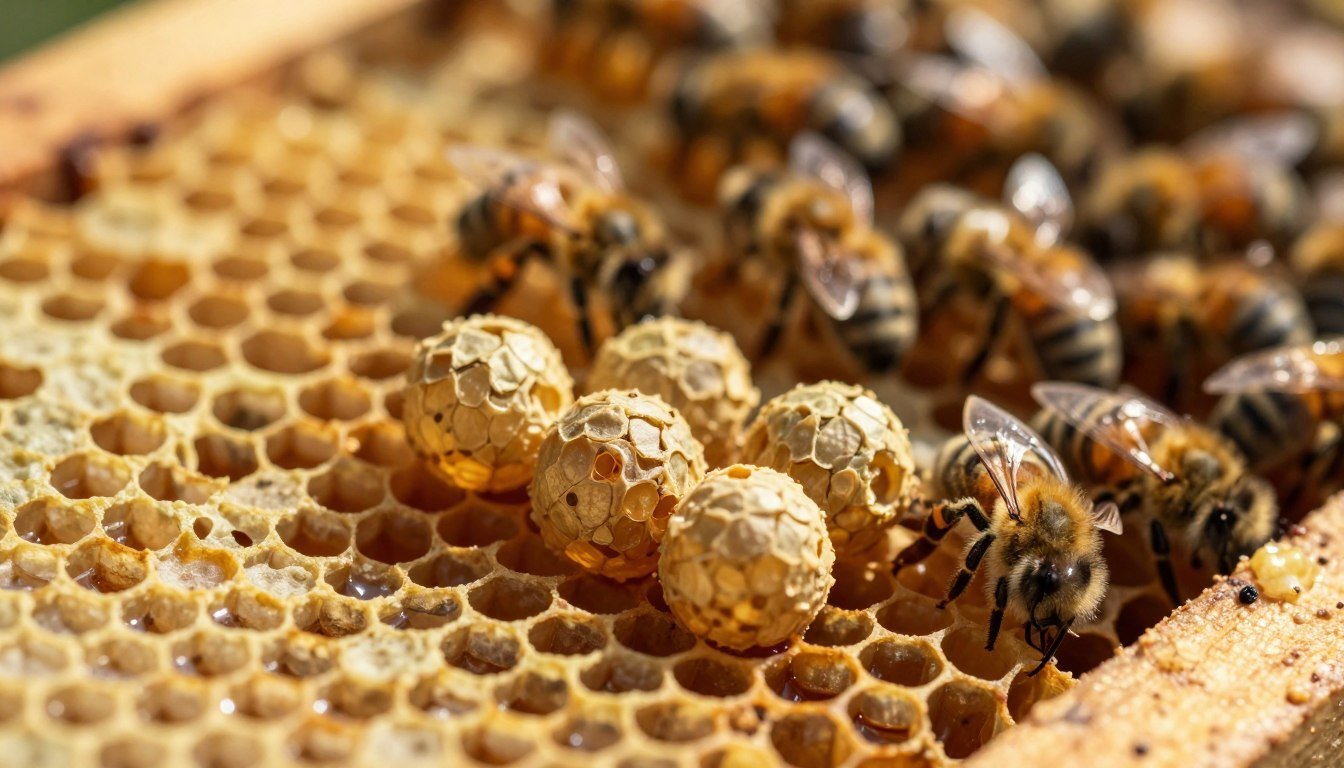
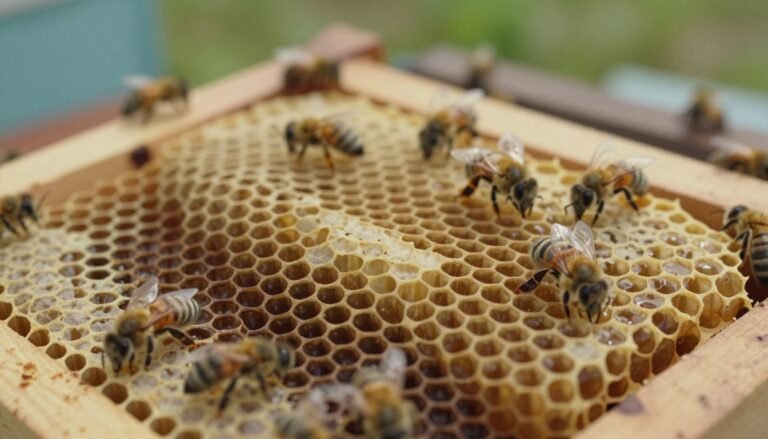
Select a frame with young larvae of appropriate age (covered in more detail below) in worker cells, then use your notching tool to cut a small notch into the wax just below and to the side of each selected larva’s cell, opening access without disturbing the larva directly. Notch multiple larvae across the frame if you want several queen cells from one attempt, spacing them out reasonably to give the colony room to build each cell without them crowding into each other as they develop.
Larval Age Still Matters
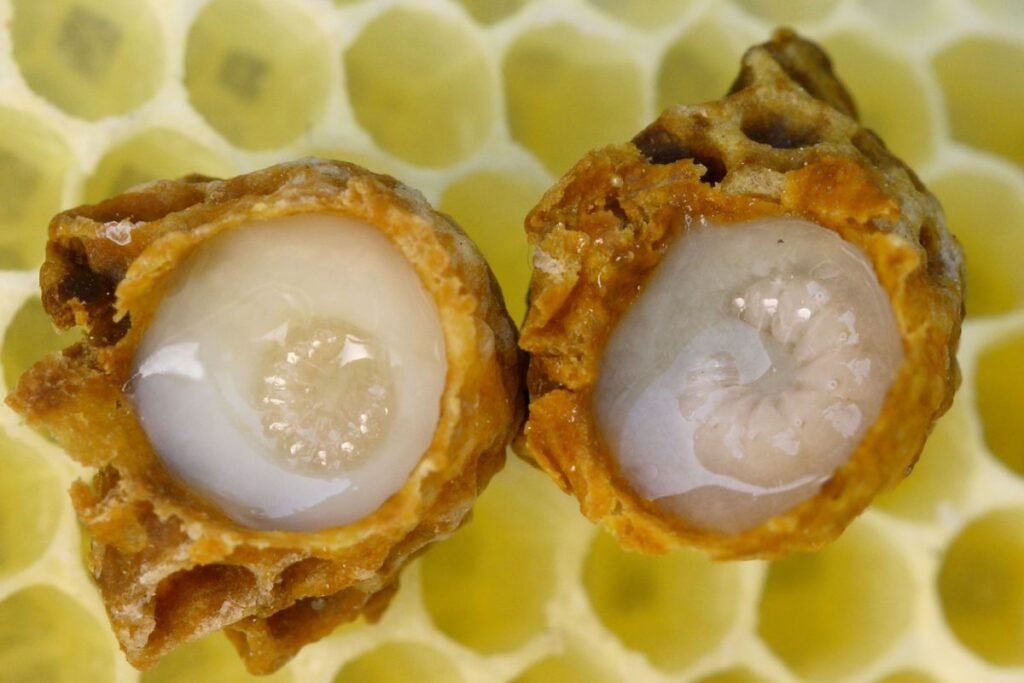
As with grafting, larval age is the single most consequential factor in success — select larvae under 24 hours old, or as close to newly hatched as you can reliably identify, since older larvae have already received proportionally less royal jelly relative to their needs and convert into viable queens at a measurably lower rate regardless of technique. Practice identifying correctly-aged larvae under good lighting before worrying about notching technique itself, since this selection step matters more than any tool or cutting precision.
Colony Preparation
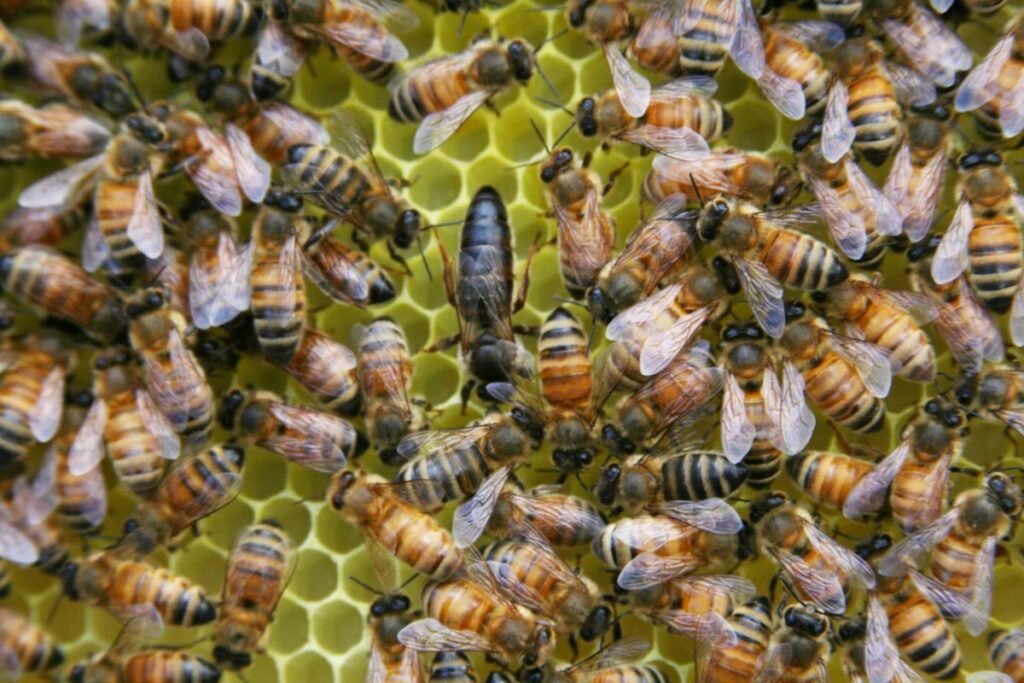
Notching works on a queenless or otherwise primed colony, the same fundamental cell-builder preparation any emergency-queen-cell method requires — remove the queen or confine her below a queen excluder so the notched frame’s colony genuinely perceives queenlessness and responds by building cells, and ensure the colony has abundant young nurse bees and adequate stored pollen and nectar to properly provision the resulting cells. A poorly prepared cell-builder colony undermines notching’s success just as it would any other queen-rearing method.
Harvesting the Resulting Queen Cells
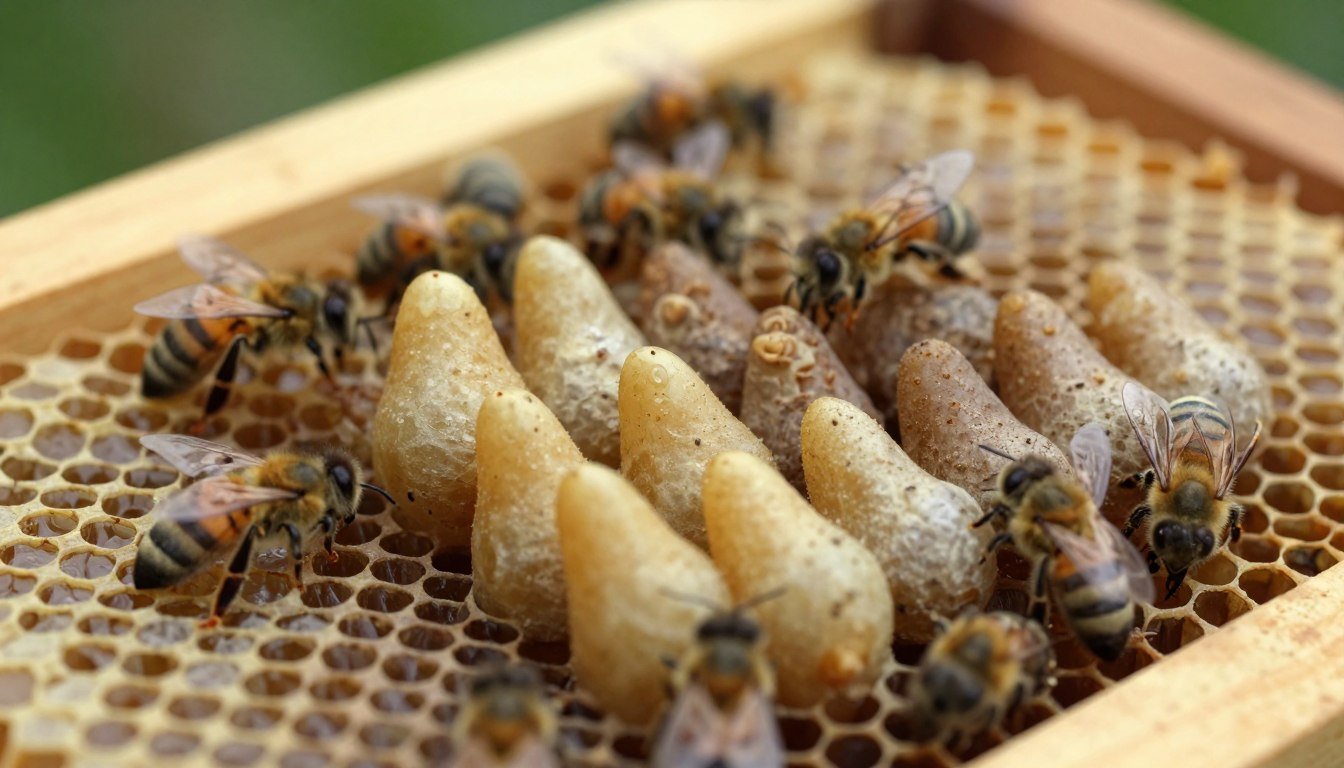
Once cells are capped and nearing emergence, carefully cut them from the comb (leaving adequate wax margin around each cell to avoid damaging the developing queen) for distribution to queenless nucs or nuclei, or leave them in place if you’re using the notched frame directly as part of a larger colony management plan like a walk-away split. Handle capped cells gently and keep them warm during any transport, since developing queens are sensitive to chilling and rough handling in the final days before emergence.
Who Should Use This Method
Beekeepers wanting the simplest possible entry point into deliberate queen rearing, without investing in grafting tools or specialized comb-cutting techniques, are the clearest fit for notching. It’s also a reasonable technique for anyone who’s tried grafting and found the fine-motor precision genuinely difficult, since notching sidesteps that skill requirement entirely while still producing genuine emergency queen cells from selected, known-age larvae rather than leaving cell-building entirely to chance.
Cell Quality Considerations With Notching
Some queen breeders debate whether notched emergency cells produce queens of comparable quality to grafted cells raised in a well-prepared cell-builder colony, since emergency cell response can sometimes be less controlled than a deliberately organized grafting session — in practice, a properly primed, well-fed cell-builder colony notching correctly-aged larvae generally produces solid results, and the quality difference some report likely has more to do with cell-builder colony strength and provisioning than with notching as a technique itself. Give the same attention to colony strength and feeding that you would for any queen-rearing method, regardless of whether you’re notching or grafting.
How Many Larvae to Notch at Once
Notch more larvae than the number of finished queens you actually need, since not every notched larva successfully converts into a well-developed queen cell — some will be ignored, poorly provisioned, or abandoned partway through development for reasons that aren’t always obvious. A reasonable practice is notching roughly 50% more larvae than your target queen count, giving yourself a buffer against the normal attrition rate any queen-rearing method experiences.
Best Time of Season to Notch
Notch during a period of strong colony buildup and adequate forage availability, generally spring in most U.S. climates, since a colony with abundant young nurse bees and reliable incoming pollen and nectar can properly provision the resulting queen cells far better than one under nutritional or population stress. Avoid notching during a genuine dearth or when colony population is declining, since a stressed colony’s emergency response may be weaker or less reliable regardless of technique.
Combining Notching With Other Queen-Rearing Methods
Notching can be used alongside other techniques within the same operation — some beekeepers notch a frame as a reliable backup alongside a grafting session, hedging against the chance a grafting attempt underperforms in a given round. Because notching requires minimal specialized equipment, it’s a low-cost way to add redundancy to a season’s queen production plan without significant additional investment.
Selecting Which Colony to Notch From
Notch larvae from your strongest, most desirable colony’s frames rather than an arbitrary donor, since the resulting queens carry that colony’s genetics — the same selection logic that applies to grafting or any other queen-rearing method. Choose a source colony based on the traits you actually value (temperament, honey production, mite resistance, low swarming tendency) rather than convenience alone, since the whole point of deliberate queen rearing is exercising this genetic selection rather than leaving it to chance.
Building Skill With Practice
Like grafting, notching technique improves with repetition — expect your first several attempts to have a lower success rate than later ones as you develop a feel for the correct notch depth and placement without damaging the larva. Track your results across multiple sessions rather than judging the method based on a single first attempt, since a genuinely fair evaluation needs more than one data point to separate technique issues from normal queen-rearing variability.
Scaling Notching for Larger Queen Production
Notching scales reasonably well for a small to mid-size queen-rearing effort, but a commercial operation producing hundreds of queens per season generally still relies on grafting or organized comb-cutting methods for the higher throughput a dedicated cell-builder system provides. Notching remains a genuinely useful technique at that scale too — as a supplementary or backup method — but it’s less commonly the primary production method for the largest operations, simply due to the per-larva individual attention it requires compared to a streamlined grafting workflow.
What Happens to the Notched Frame Afterward
Once queen cells are harvested (or left to emerge in place), the notched frame itself returns to normal use within the colony — bees repair and continue using the comb, and any cells that weren’t selected or didn’t develop simply get cleaned out and reused for normal brood rearing or storage. There’s no lasting downside to the comb from the notching process itself, making it a low-risk technique to try without concern about damaging otherwise-useful equipment.
Why This Is a Good First Queen-Rearing Technique
For a beekeeper who has never deliberately reared a queen before, notching offers a genuinely gentle introduction — the core skill (identifying correctly-aged larvae and preparing a queenless cell-builder colony) transfers directly to every other queen-rearing method covered on this site, while the actual notching cut itself is far more forgiving to learn than grafting’s fine-motor larva transfer. Starting here before progressing to grafting or comb-cutting methods, if you want to expand your queen-rearing toolkit later, builds foundational skill without the early frustration a harder technique might cause.
Keeping Simple Records
Note which frame and colony you notched, the date, and later the outcome (how many cells developed and were successfully harvested) so you can track your own success rate and refine timing or technique across future attempts, rather than relying on memory alone once you’ve run several sessions across a season.
Common Mistakes
Selecting larvae that are too old, prioritizing ease of seeing a larger larva over the correct younger age, undermines conversion success just as it would with grafting — this remains the most consequential mistake regardless of technique. Cutting too deep or aggressively into the cell wall risks directly damaging the larva, defeating the entire point of a method meant to avoid handling risk. Notching on a colony that isn’t genuinely queenless or properly primed produces poor or no cell-building response, since the underlying colony-state trigger matters as much as the physical notch itself.
Origin: Mel Disselkoen’s OTS Method
Notching isn’t a folk technique with no clear source — it’s the core mechanic of the OTS (On-The-Spot) queen-rearing system developed by Michigan beekeeper Mel Disselkoen, founder of International Mating Nuc, Inc. Disselkoen documented the method in his book OTS Queen Rearing: A Survival Guide for Beekeepers Worldwide, built around the insight that a colony’s own emergency queen-rearing response — triggered naturally by queen loss — can be deliberately provoked on a chosen frame by notching the cell wall below a young larva. The approach also has a documented historical root: 19th-century apiarist Dr. C.C. Miller observed that bees preferentially select larvae “two days old, or younger” when building replacement queen cells, which is exactly the age window notching targets.
Sources
Technique mechanism and comparative guidance reflect general queen-rearing extension guidance and established beekeeping practice for emergency queen cell production methods, alongside our broader queen rearing basics guide. See University of Florida IFAS Extension’s Swarm Control for Managed Beehives guide for additional authoritative detail.
FAQ
Does notching damage the larva?
Done correctly, no — the notch opens the cell wall for nurse bee access without directly touching or moving the larva itself, unlike grafting which requires physically lifting and transferring it.
Do I need a special tool for notching?
A dedicated notching tool makes the process faster and more consistent, but a small, sharp, clean blade can serve as a reasonable improvised alternative for trying the technique before investing in dedicated equipment.
Is notching easier than grafting?
Yes — it requires no fine-motor larva transfer skill and works directly on comb already in the frame, making it arguably the lowest-barrier-to-entry queen-rearing method compared to grafting or comb-cutting methods like Alley or Miller.
Does the colony need to be queenless for notching to work?
Yes — the colony needs to perceive itself as queenless (or be otherwise primed as a cell-builder) for nurse bees to respond to the notched larvae by building emergency queen cells around them.
Can notching be used at commercial scale?
It works reasonably well for small to mid-size queen production, but the largest commercial operations generally still rely on grafting or organized comb-cutting methods for higher throughput, using notching more as a supplementary or backup technique.
Is notching a good first queen-rearing technique to learn?
Yes — the core skills of identifying correctly-aged larvae and preparing a queenless cell-builder colony transfer directly to grafting and other methods, while the notching cut itself is far more forgiving to learn than grafting’s fine-motor larva transfer.