Reviewed by Thomas B. · Last Updated September 24, 2026 · How we review
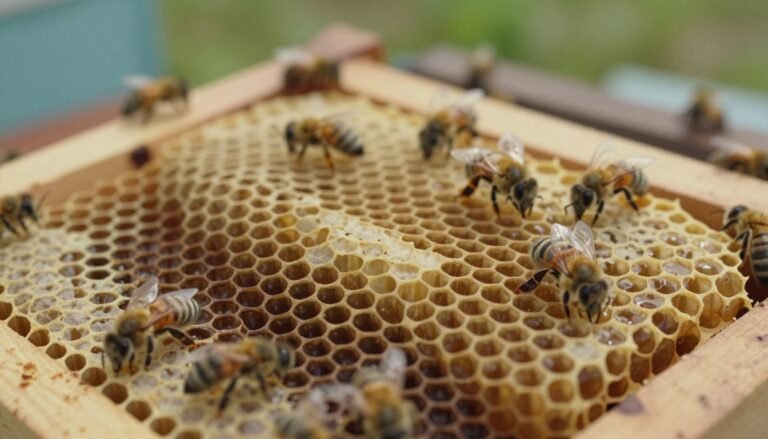
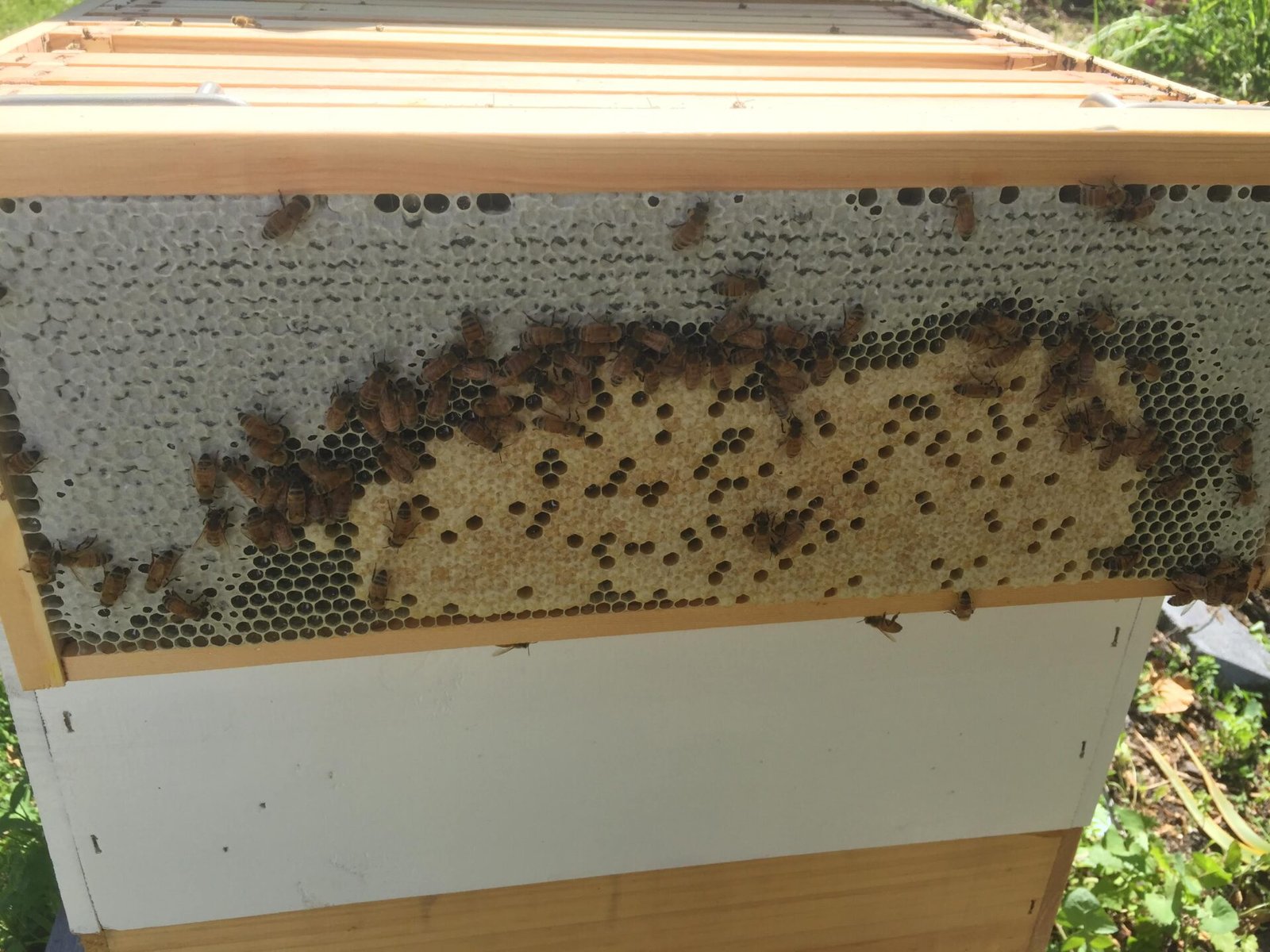
A failing queen shows up on the frames as less brood than the season and colony size call for, eggs that are sparse or missing in the center of the brood nest, open and capped brood of mixed ages scattered across the comb, and, most tellingly, domed drone cappings scattered through worker comb. A spotty pattern on its own does not prove the queen is failing. In a University of Minnesota-led queen-swap experiment, poor brood patterns stayed with the colony rather than following the queen. Before you replace her, read several frames, rule out the common look-alikes, and run a simple frame test.
This guide is a frame-by-frame method for making that call. It covers how to read a brood frame as a three-week record of the queen’s laying, how to score a patch of capped brood the way researchers do, and which problems produce the same pattern without the queen being at fault. For the general warning signs, including the ones you notice outside the hive, see signs of a failing queen.
Written by Michael R., who manages about 60 colonies in North Dakota’s Red River Valley and covers queen failure and requeening. Reviewed by Thomas B. (western Minnesota) under this site’s second-review rule for colony-health articles.
Key Takeaways
- A brood frame records about three weeks of laying. Eggs show roughly the last 3 days, open larvae the last week, and capped worker brood the one to three weeks before that.
- The strongest frame sign of a failing queen is drone brood in worker cells: raised, bullet-shaped cappings scattered among flat worker cappings.
- Score capped brood by counting empty cells in a 100-cell patch. In the University of Minnesota study, less than 80% sealed counted as a poor pattern.
- Backfilling, brood disease, varroa, pollen shortage and chilled brood can all mimic a failing queen. Rule them out before requeening.
- Confirm with a frame test. Put empty drawn worker comb in the center of the brood nest and check it after 3 to 4 days for one egg per cell.
On this page
Reading a Frame as a Three-Week Record
Worker brood takes about 21 days from egg to emergence: roughly 3 days as an egg, about 6 days as an open larva, and around 12 days sealed. Because each stage lasts a known time, a single frame shows you what the queen was doing on different days over the past three weeks.
| What you see | Approximate age | What it tells you about the queen |
|---|---|---|
| Eggs (standing upright, then leaning, then lying flat) | 0 to 3 days | She was laying within the last 3 days |
| Small open larvae in milky jelly | Days 4 to about 6 | Laying in the last week |
| Large curled open larvae | Days 7 to 9 | Laying 7 to 9 days ago |
| Flat, tan worker cappings | Days 9 to 21 | Laying one to three weeks ago |
| Raised, domed cappings in worker-sized cells | Drone brood in worker comb | Unfertilized eggs where fertilized ones belonged |
Comparing these age bands tells you whether the problem is recent or ongoing. A frame with a solid band of capped brood but few eggs and young larvae means something changed in the last week or so. The queen may be lost or failing, or a dearth may have slowed her. A frame where every age band is thin and scattered points to a longer-running problem. For the laying timelines of new queens, see how soon a new queen should start laying.
Step-by-Step Frame Inspection
Step 1: Pick the right day
Inspect on a warm, calm day in the active season, when the colony should be expanding. In the Red River Valley that means late April to August. A small brood nest in early April or late September is normal and says little about the queen.
Step 2: Start in the center of the brood nest
Go straight to the middle frames. They are the queen’s main laying area and the best test of her output. Edge frames are often patchy in a healthy colony.
Step 3: Look for eggs
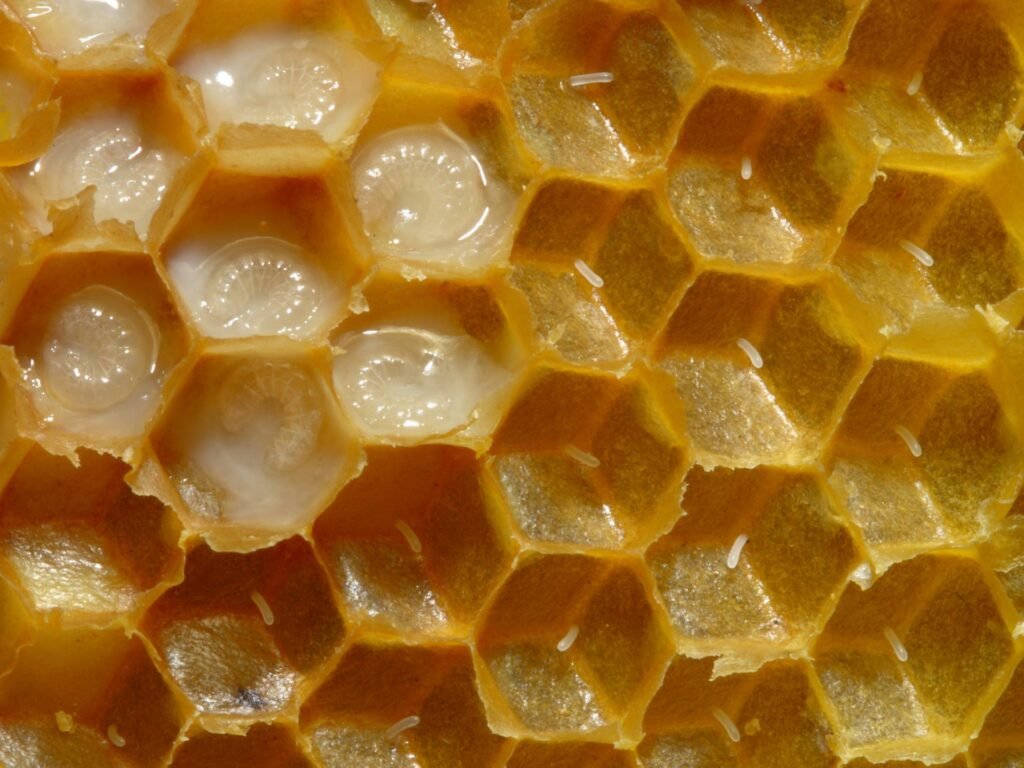
Hold the frame with the sun behind you and look down into the cells. You want one egg per cell, standing at the base in the center. Several eggs per cell, or eggs on cell walls, point away from the queen and toward laying workers.
Step 4: Score a patch of capped brood
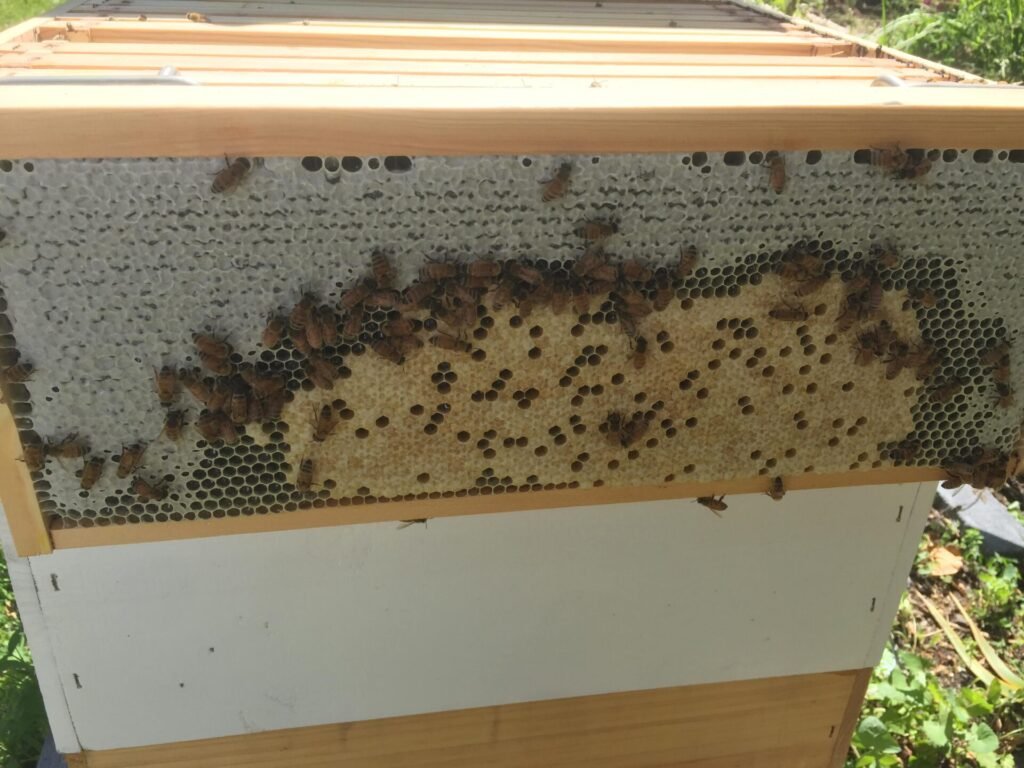
Pick a patch of capped worker brood about 10 cells by 10 cells in the middle of a central frame and count the empty or uncapped cells in it. Lee and colleagues used this 100-cell method in their study of commercial colonies. They classed a pattern as poor when fewer than 80% of the cells were sealed. Good-brood colonies in 2017 averaged about 93% sealed and poor-brood colonies about 72% (Lee et al., 2019, Insects). Score two or three frames and write the numbers down so you can compare them at the next visit.
Step 5: Check the cappings for drone brood
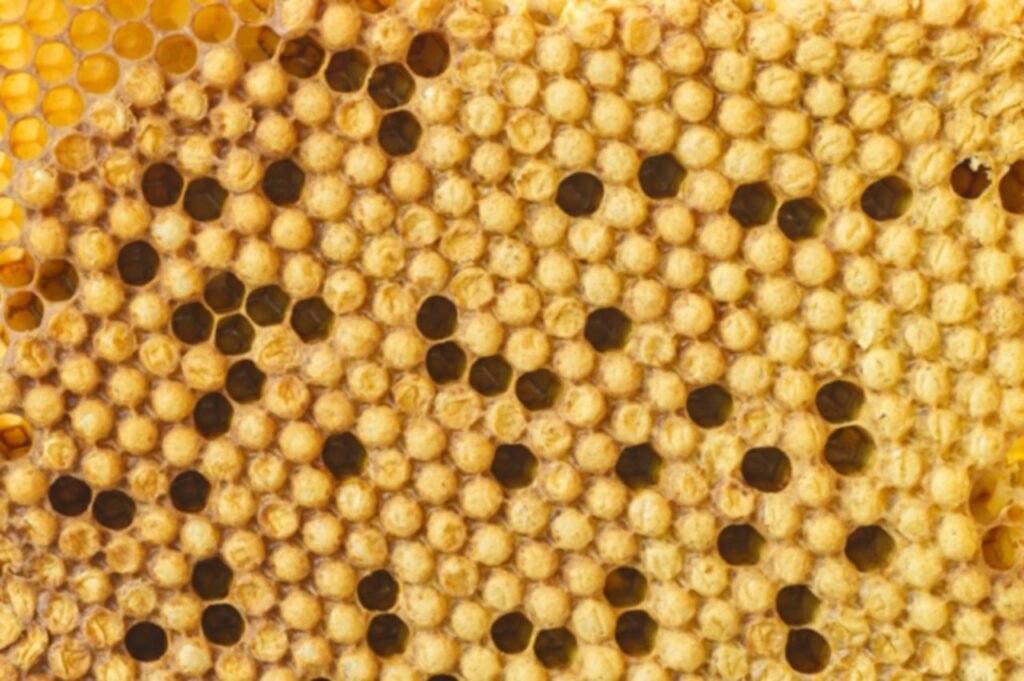
Drone cappings are raised and dome-shaped. Worker cappings are nearly flat. Drones in drone comb at the frame edges are normal. Raised cappings scattered through worker-sized cells in the middle of the brood nest are not normal.
Step 6: Compare with other colonies
Count frames of brood against frames of bees, and compare with other colonies in the same yard that started at a similar strength. If every hive is small, look at weather and forage first. If one hive lags well behind its neighbors, look harder at the queen.
Step 7: Look for supersedure cells and at the queen herself
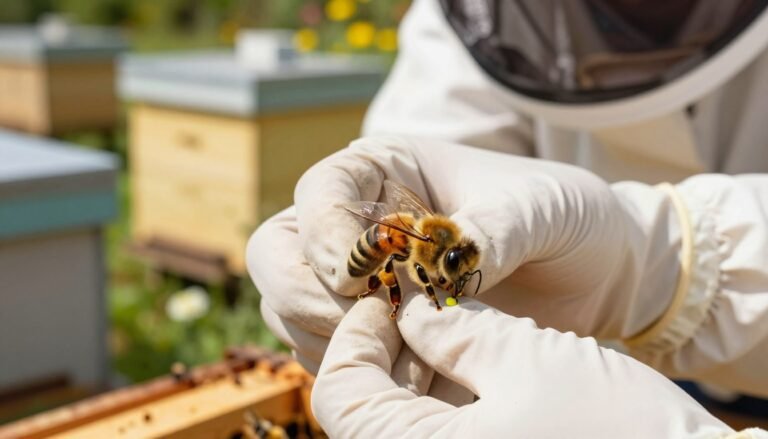
One to three queen cells on the face of a frame often mean the bees have judged the queen failing and are replacing her. See swarm cells vs supersedure cells. If you find the queen, look for damaged legs or wings and a thin, short abdomen. Check whether her mark matches the year you expect. An unmarked queen where you had a marked one means the colony has already replaced her. See the queen marking color chart.
Frame Signs of a Failing Queen
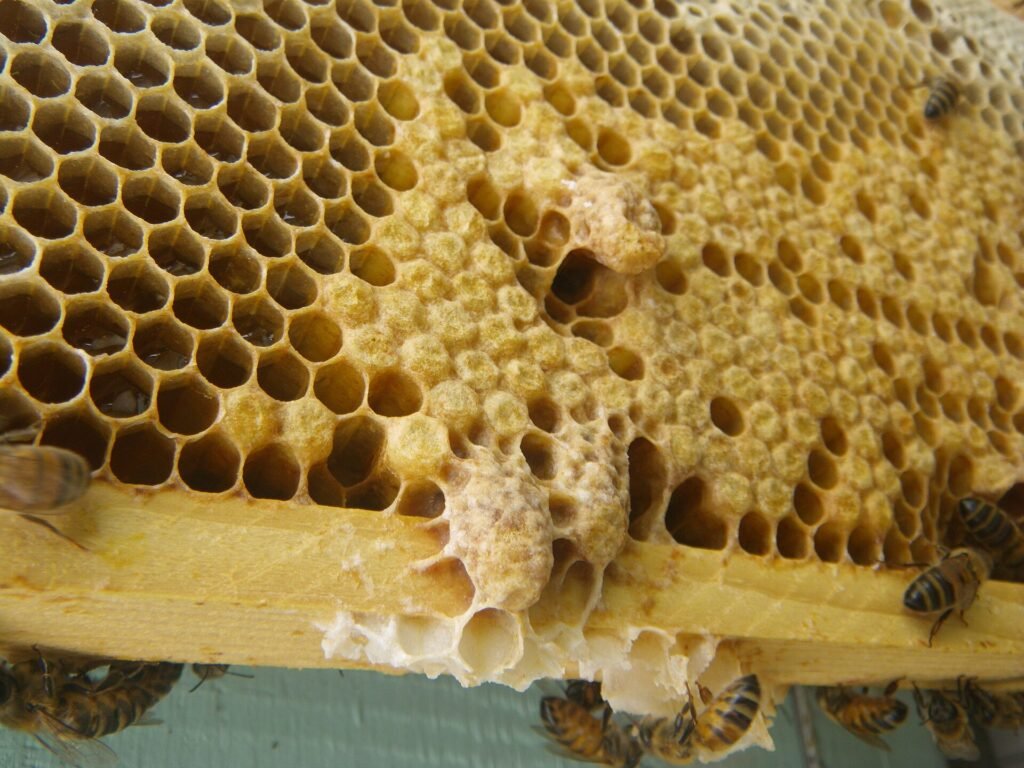
The BeeMD, the honey bee diagnostic key hosted by idtools.org, lists the symptoms of an improperly mated queen. They include a spotty brood pattern with inconsistent brood ages, drone rearing in worker cells, weak colony development, and colonies that keep drones into the fall. On the frame, these signs rank roughly as follows:
| Frame sign | How strong a signal | Why |
|---|---|---|
| Drone cappings scattered in worker comb, single eggs per cell | Strong | The queen is laying unfertilized eggs in worker cells, usually because her sperm supply is failing |
| Supersedure cells on the frame faces | Strong | The workers themselves are replacing her |
| Few or no eggs in the center of the nest during the active season | Moderate | Could also be a dearth, a recent swarm or a lost queen |
| Fewer than 80% of cells sealed in a 100-cell patch, repeated across visits | Moderate | Many non-queen causes produce the same pattern |
| One patchy frame | Weak | Normal variation, new comb or edge-of-nest effects |
Look-Alikes That Are Not the Queen
This is where most misdiagnoses happen. Lee and colleagues exchanged queens between paired colonies with good and poor brood patterns in commercial operations. Twenty-one days later, queens moved from poor-brood colonies into good-brood colonies had improved patterns, averaging about 12 more sealed cells per 100. Queens moved the other way had worse patterns, averaging about 8 fewer. The queens from poor-brood colonies did not differ significantly in sperm count or sperm viability.
“Brood pattern alone was an insufficient proxy of queen quality.”
So before blaming the queen, check these:
- Backfilling in a nectar flow. Look for nectar or honey in cells in the brood area. The fix is space, not a new queen.
- Brood disease. Look for sunken, perforated or greasy cappings, and larvae that are discolored or melted. Spotty brood from foulbrood or sacbrood needs a disease diagnosis, not requeening. See queenless brood pattern vs diseased brood.
- Varroa and viruses. High mite loads kill developing brood and cause uncapped, chewed-down cells. Do a mite wash before you judge the queen.
- Pollen shortage. Without pollen, nurse bees eat eggs and young larvae, and the brood nest thins out even with a good queen. Check for stored pollen next to the brood.
- Chilled brood after a cold snap. Dead brood at the edges of the nest after a cold night in a small colony is common in our springs.
- New comb and wires. Queens often skip freshly drawn cells and rows along foundation wires for a while.
For what a normal pattern looks like, see what a healthy brood pattern looks like.
Confirming With a Frame Test
The simplest check of the queen’s laying is to give her perfect conditions and see what she does with them.
- Take a frame of clean, empty, drawn worker comb (not foundation) that has held brood before.
- Place it in the center of the brood nest, between two frames of brood.
- Check it after 3 to 4 days.
A good queen will usually have laid a large, even patch of single eggs and young larvae across it. A queen that lays only a sparse scatter, or fills the cells with drone eggs, has a real problem. If the frame stays empty and you find no eggs anywhere, the colony may be queenless. Check for queen cells and see signs your hive is queenless.
If you have another colony, a second test is to give the doubtful hive a frame of eggs and young larvae. If the workers start emergency queen cells on it within a few days, they are telling you they have no working queen.
Failing Queen, Drone Layer or Laying Workers?
These three problems are easy to confuse, and each has a different fix:
- Failing queen: some worker brood is still being produced, but less of it and more scattered. Some drone cappings may appear in worker comb.
- Drone-laying queen: single, well-placed eggs, but almost all the capped brood is drone brood in worker cells. See drone-laying queen: what to do.
- Laying workers: several eggs per cell, eggs on cell walls, drone brood only and no queen. See signs of laying workers.
What to Do Once You Are Sure
If the frame test and the look-alike checks both point to the queen, replace her while the colony still has enough young bees to accept and support a new one. If you can’t find the old queen, use a method that doesn’t depend on finding her. See how to requeen without finding the old queen. For the introduction itself, compare a push-in cage with other direct and slow-release methods.
Timing matters in the north. A replacement queen introduced in June or July has time to build a winter population. By late August in the Red River Valley, a small colony with a failing queen is often better combined with a strong one. See how to unite a queenless hive with another colony.
Frequently Asked Questions
What does a failing queen’s brood look like on the frame?
Less brood than expected, with eggs, larvae and capped brood scattered in mixed ages, and often raised drone cappings mixed into flat worker brood. One patchy frame isn’t enough to diagnose it. Look for the pattern across the central frames and over two or three visits.
Does a spotty brood pattern always mean a bad queen?
No. In a queen-swap study, poor brood patterns followed the colony rather than the queen. Backfilling, disease, varroa, pollen shortage and chilled brood can all cause spotty brood.
How long should I watch a queen before replacing her?
Score the brood on two or three inspections about a week apart and run a frame test. A queen showing drone brood in worker cells, or a colony building supersedure cells, needs faster action.
Why is there drone brood in worker cells?
With single, well-placed eggs, it usually means the queen is running out of stored sperm or was poorly mated. With several eggs per cell and no queen, it means laying workers.
Can I tell a failing queen by looking at her?
Sometimes. Injured legs, damaged wings or a thin abdomen are clues, but many failing queens look normal. Her brood is the better evidence.
Will the bees replace a failing queen on their own?
Often, through supersedure, if they have young larvae and the season allows mating. In the north, late-season supersedure is risky because the new queen needs good mating weather. See the mating flight timeline for virgin queens.
How many frames should I check?
Check all the brood frames, but base the decision on the three or four central frames of the brood nest, where a good queen should lay most heavily.