
Reviewed by Thomas B. · Last Updated September 23, 2026 · How we review
Slow release — leaving the new queen in a candy-plugged cage so the workers free her over two to four days — is the safer default for most beekeepers, but direct release is not the gamble it is often made out to be. Controlled research shows a mated queen released directly with heavy smoke into a colony that has been queenless for at least two days is accepted at very high rates. The real question is not which method is “better” but which conditions you are working with: how long the colony has been queenless, whether the queen is mated and mature, and whether you can guarantee there are no queen cells or laying workers in the box.
Key Takeaways
- Slow release (candy plug, marshmallow or push-in cage) forgives mistakes: it works even when the colony has only been queenless for about 24 hours.
- Direct release depends heavily on timing. In a University of Sussex study, direct introduction with smoke reached near-100% acceptance once hives had been queenless for two days or more, but performed far worse when colonies had been queenless for a shorter time.
- Queen maturity matters as much as method: an Australian government trial found only 21% of 7-day-old queens survived introduction, against 90% of 28-day-old queens.
- Neither method works in a laying-worker colony or a hive with hidden queen cells — fix those problems first.
- On the northern plains, cold spring nights and the late-summer dearth both tilt the odds toward slow release.
Table of Contents
Direct vs Slow Release at a Glance
Both methods have the same goal — get the workers to treat a stranger’s scent as their own queen’s — but they get there differently. Slow release buys time with a physical barrier. Direct release relies on the colony being so strongly queenless, and so distracted by smoke, that it accepts her immediately.
| Factor | Slow release (caged) | Direct release |
|---|---|---|
| How the queen gets out | Workers chew through candy or a marshmallow plug, or the beekeeper removes a push-in cage later | Beekeeper lets her walk onto the comb or runs her in at the entrance |
| Time until queen is free | About 2–4 days for a candy plug; longer for push-in cages | Immediate |
| Minimum queenless period | About 24 hours is the usual extension guidance | At least 2 days in the key study; longer is safer |
| Hive visits required | Install, then a check a few days later | Dequeen, then return 2+ days later to cull queen cells and release |
| Tolerance for mistakes | High — if the bees are hostile, she is still protected | Low — a wrong call usually means a dead queen |
| Best suited to | Beginners, valuable queens, packages, defensive colonies, dearth periods | Experienced beekeepers, calm queenless colonies, mature mated queens, strong nectar flows |
What the Research Actually Shows
Most queen introduction advice online is experience-based, which is not a bad thing — but it means you will see acceptance percentages quoted with no study behind them. Two pieces of controlled research are worth knowing, because they explain why introductions succeed or fail.
Direct introduction with smoke (University of Sussex, 2008)
Researchers at the University of Sussex Laboratory of Apiculture and Social Insects compared direct introduction using smoke with introduction through artificial queen cells, in hives that had been queenless for different lengths of time. The paper, Pérez-Sato, Kärcher, Hughes and Ratnieks (2008), Journal of Apicultural Research 47(4), found that in small hives receiving young virgin queens, direct introduction gave 31% to 100% acceptance depending on how long the colony had been queenless (one to six days), against 8% to 92% for queen-cell introduction. In a second experiment, mated queens were accepted more readily than virgins, and the chance of a queen being balled fell the longer the colony had been queenless. In the final trial, using hives of ten medium Langstroth frames that had been queenless for two days, every mated queen was accepted.
The practical lesson is that direct release is not inherently reckless. It fails when it is done in a colony that does not yet “know” it is queenless — which is exactly how most beekeepers try it: pull the old queen, drop the new one in, close the box.
Queen age at introduction (NSW Agriculture, 2003)
A three-year trial by John Rhodes and Doug Somerville of NSW Agriculture, published by Australia’s Rural Industries Research and Development Corporation (report 03/049), introduced sister queens of known ages into commercial honey colonies using mailing cages and Miller cages. Introduction success rose steeply with age: 21% at 7 days old, 59% at 14 days, 82% at 21 days, and 90% at 28 days. Other factors they examined, including transport stress and colony disease status, showed no measurable effect on survival.
“Social cohesion breaks down in colonies which attempt to rear queen cells or remain queenless.”
John Rhodes and Doug Somerville, NSW Agriculture — Introduction and early performance of queen bees, RIRDC Publication 03/049 (2003)
Put the two studies together and a clear picture emerges: the colony’s readiness and the queen’s maturity decide most outcomes. Method is the tool you use to compensate when one of those is uncertain. That is why slow release remains the sensible default — most beekeepers cannot verify either variable with confidence.
How Slow Release Works
In slow release, the queen stays behind mesh or plastic while her pheromones circulate through the colony. Workers can touch, feed and inspect her through the cage but cannot attack her. By the time they chew through the plug, most colonies have stopped treating her as a stranger.
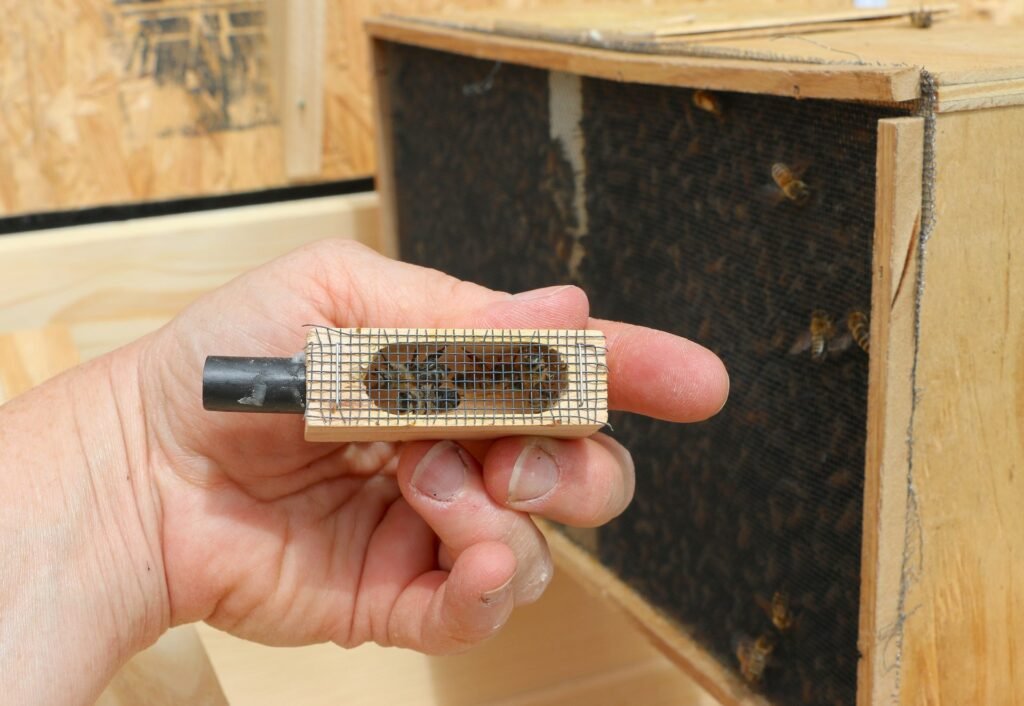
- Candy-plug cage: The standard mailing or JZ-BZ cage with a candy tube. Purdue and Penn State extension guidance says workers release the queen “over the course of 2-4 days.” Our explainer on how a queen cage candy plug works covers orientation and what to do if the candy hardens.
- Marshmallow plug: A mini marshmallow pushed into the cage exit is a common substitute when the candy is missing or rock-hard. It does the same job as candy: the workers eat through it and the queen walks out.
- Push-in cage: A wire or plastic frame pressed into comb over emerging brood and a little honey. The queen can start laying inside it, and newly emerged bees meet her first. It is the slowest and most forgiving option — see the push-in cage step-by-step guide.
The caged queen must sit in the warm center of the brood nest, not on the edge. A queen caged away from the cluster on a cold night can chill, and a cage wedged against comb can be walled off with wax.
The main downsides are time and the colony’s temper. A candy plug delays egg laying by several days, and if workers are clearly hostile — biting the mesh, clinging to the cage in a tight knot — you may need to extend the wait rather than trust the calendar. Our guide to stopping balling behavior around a new queen covers what that looks like.
How Direct Release Works
Direct release means the queen walks onto the comb or into the entrance without any barrier. There are several versions; the one with the best research support is the smoke method.
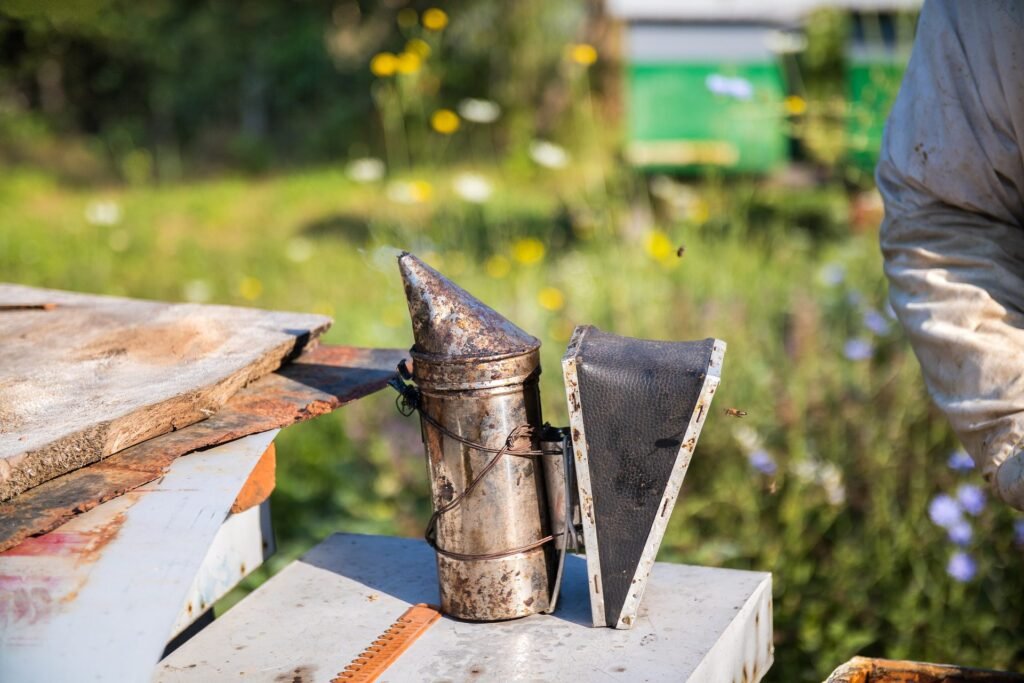
The smoke method
- Remove the old queen (or confirm she is gone) and leave the colony queenless for at least two days. Three to five days is a safer margin.
- Before introduction, go through every frame and destroy all queen cells. A colony that has been queenless for several days will almost always have started emergency cells.
- Smoke the colony heavily — far more than a normal inspection — so the bees are thoroughly disrupted and gorging.
- Release the queen between frames onto the top bars, or run her in at the entrance. Purdue’s guidance describes running her in at the entrance “followed by a few puffs of cool, dense smoke.”
- Smoke again, close the hive, and leave it alone for about a week.
Other direct methods
Beekeepers also direct-release by misting the queen and bees with 1:1 sugar syrup, by letting a queen walk onto a frame of emerging brood, or by combining her in on a nucleus frame with her own bees. These methods have less formal evidence behind them. The nucleus-frame approach is effectively a combine rather than a queen introduction and is often the most reliable way to requeen a difficult colony.
What all direct methods share is that there is no second chance. If the colony still has a virgin queen hiding on a frame, a queen cell you missed, or laying workers, the new queen is usually killed within hours.
Which Method to Use: A Scenario Guide
Use this as a starting point for real situations rather than a rule. Local conditions and your own colonies’ temperament always override a table.
| Situation | Recommended approach | Why |
|---|---|---|
| Installing a package | Slow release, but don’t drag it out | Package bees come from several colonies; the candy plug gives them a few days with her. Waiting 7–10 days costs brood-rearing time. See how long to keep a package queen caged. |
| Replacing a failing queen the same day | Slow release | The colony has not yet registered queenlessness; direct release at this stage is where most failures occur. |
| Colony queenless 2–5 days, cells culled, calm bees | Direct release with smoke is reasonable | This is the condition under which research recorded near-complete acceptance. |
| Defensive or hot colony | Slow release (push-in cage) or requeen via a nuc | Hostile workers are less forgiving; see requeening an aggressive colony. |
| Nectar dearth or heavy robbing pressure | Slow release | Defensiveness rises when forage stops. |
| Expensive breeder or instrumentally inseminated queen | Push-in cage or nuc first | The cost of failure outweighs the time saved. |
| Laying-worker colony | Neither — fix the colony first | Laying workers reject introduced queens; see requeening a laying worker hive. |
If the queen arrived young — for example a freshly mated queen caught early from a mating nuc — the Rhodes and Somerville data suggest caged, patient introduction is especially worthwhile, whichever colony she is going into.
Timing the Queenless Period
This is where the two methods differ most, and where conflicting advice comes from. Extension guidance such as Purdue’s Methods of Introducing Queens (E-277, 2024) tells beekeepers to leave the colony queenless “for about 24 hours” before introducing a caged queen. That is sound for caged release, because the cage keeps protecting her while acceptance develops.
For direct release, 24 hours is not enough. The Sussex research found that the shortest queenless periods produced the weakest acceptance, and that it took about two days to reach high acceptance with mated queens. The trade-off is queen cells: the longer the wait, the more emergency cells you will need to find and destroy. A colony left queenless for a week or more also starts drifting toward laying workers, especially if it has no open brood.
| Time queenless | Caged (slow) release | Direct release |
|---|---|---|
| Same day | Workable, with extra time before release | Poor odds; avoid |
| About 24 hours | Standard extension recommendation | Still too early |
| 2–5 days | Works; cull queen cells first | Best window; cull every queen cell |
| 2+ weeks, no open brood | Check for laying workers first | Not recommended |
Northern Plains Considerations
In eastern North Dakota, the Red River Valley and western Minnesota, the season is short and the weather swings hard, which affects both methods.
- Spring packages and cold nights: Packages and early mail-order queens typically arrive in April or May, when night temperatures can still drop near freezing. A caged queen must hang in the middle of the cluster; a cage on an outer frame can be abandoned when the cluster contracts. Our guide to the best weather for queen introduction covers timing around cold snaps.
- Summer requeening: A strong nectar flow is the most forgiving time to introduce a queen by either method, because foragers are busy and colonies are less defensive.
- Late-summer dearth: Once the main flow ends, colonies become more defensive and robbing picks up. Slow release is the safer call here, and the hive should be opened as little as possible. See requeening during a dearth.
- Little room to recover: A failed introduction in late summer can leave a colony without enough young bees reared for winter. On the northern plains, where the brood-rearing window closes early, that argues for the method least likely to fail rather than the fastest one.
Checking Acceptance and Handling Failure
Resist opening the hive to peek. For caged release, confirm a few days after installation that she is out of the cage, then leave the colony alone. Purdue recommends checking “5-7 days after the queen’s release” for eggs and young larvae. For direct release, wait about a week before the first check.
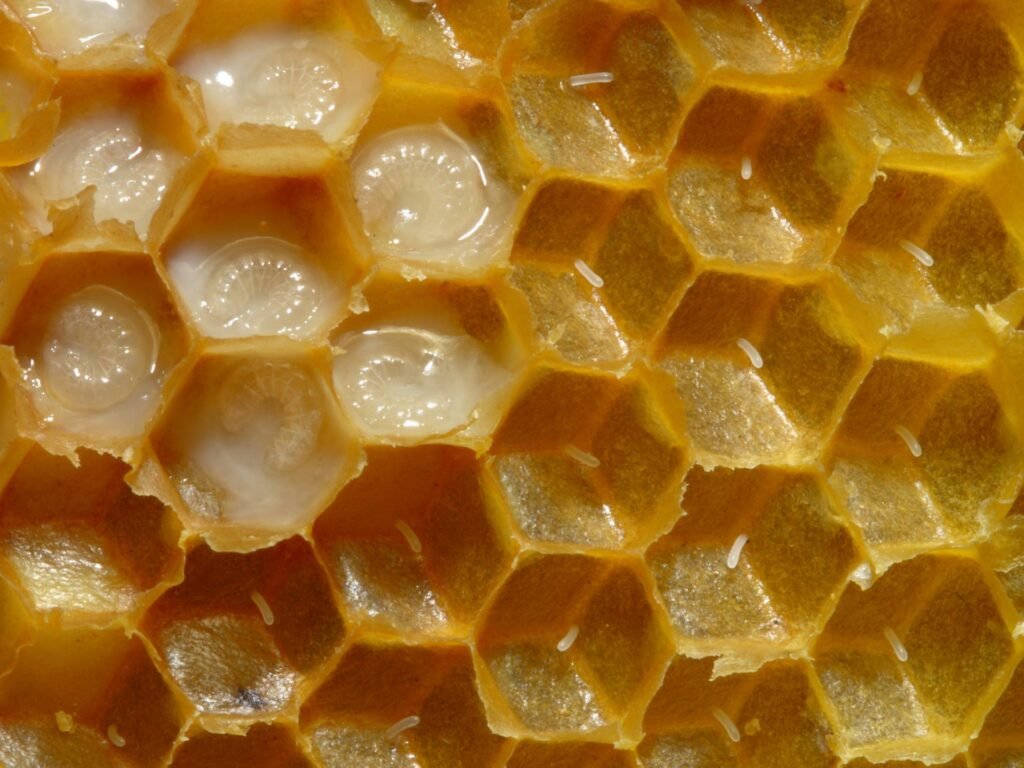
- Signs of acceptance: Eggs centered in cells, one per cell, and calm bees on the frames. Our guide to checking whether a new queen was accepted covers this in detail.
- Signs of trouble: New emergency queen cells, a tight ball of bees on a frame, or no eggs after a week in the right season.
- If she is gone: Check for a virgin queen or queen cells before buying another queen, and use a caged or push-in introduction the second time.
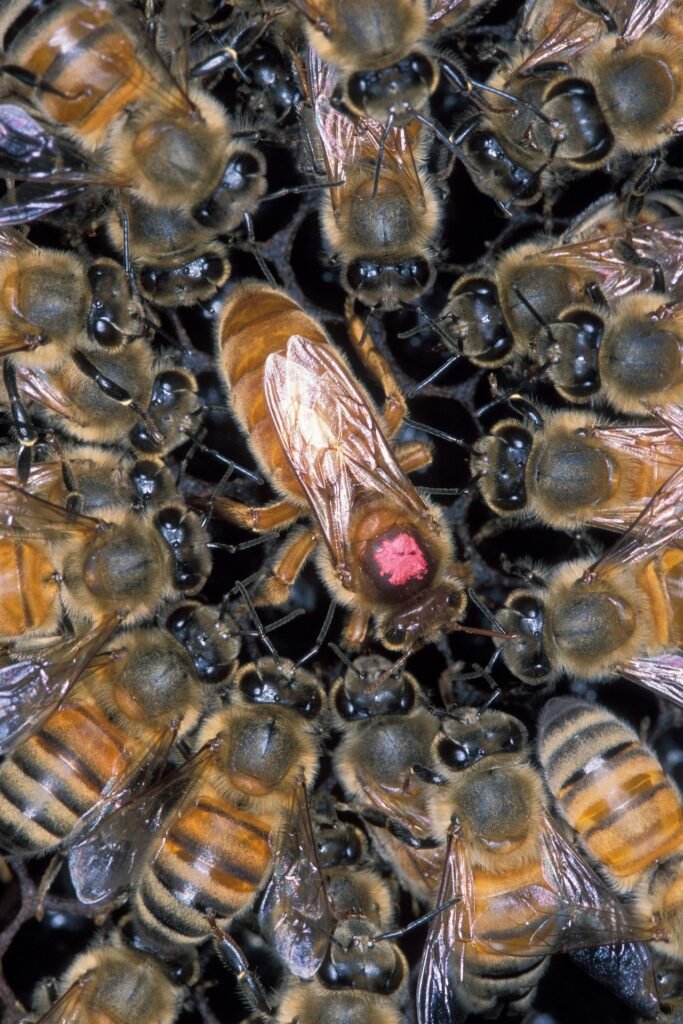
Marking the queen before introduction makes every later check faster. The standard year colors are in our queen marking color chart. For the full requeening sequence, from finding the old queen to confirming the new one is laying, see how to introduce a new queen bee.
The Bottom Line
Slow release is the right default because it protects the queen when you cannot be sure the colony is ready. Direct release is a legitimate, well-supported technique for experienced beekeepers who can guarantee a colony that has been queenless for at least two days, with every queen cell culled, and a mature mated queen. If you cannot check all three boxes, cage her.
Frequently Asked Questions
Can you release a queen bee directly into a hive?
Yes, but only under the right conditions. The best-supported direct method uses heavy smoke on a colony that has been queenless for at least two days, with all queen cells destroyed first. Releasing a new queen straight into a colony that lost its queen that morning usually fails.
How long should a hive be queenless before introducing a new queen?
For caged (slow) release, about 24 hours is the standard extension recommendation. For direct release, research from the University of Sussex found acceptance became very high once colonies had been queenless for two days or more.
How long does it take bees to release a queen from a candy cage?
Typically two to four days, depending on how hard the candy is and how strong the colony is. If the candy is still intact after about four days and the bees are calm, you can remove the plug and let her walk out.
Should I remove the cork from the candy end of the cage?
Yes, remove the cork or cap covering the candy end, but leave the candy itself in place. Removing the candy or poking through it turns a slow release into a near-direct release.
Is direct release OK for a package queen?
Some experienced beekeepers do it, but package bees are drawn from several colonies and have had only a few days with the queen in transit. A candy-plug release over two to three days is the more reliable choice for most package installs.
What happens if a queen is released too early?
If workers still treat her as a stranger, they may ball her — surround her in a tight cluster until she overheats or is stung. Signs include bees clinging tightly to the cage mesh and a hard ball of bees on a frame after release.


.jpg)
