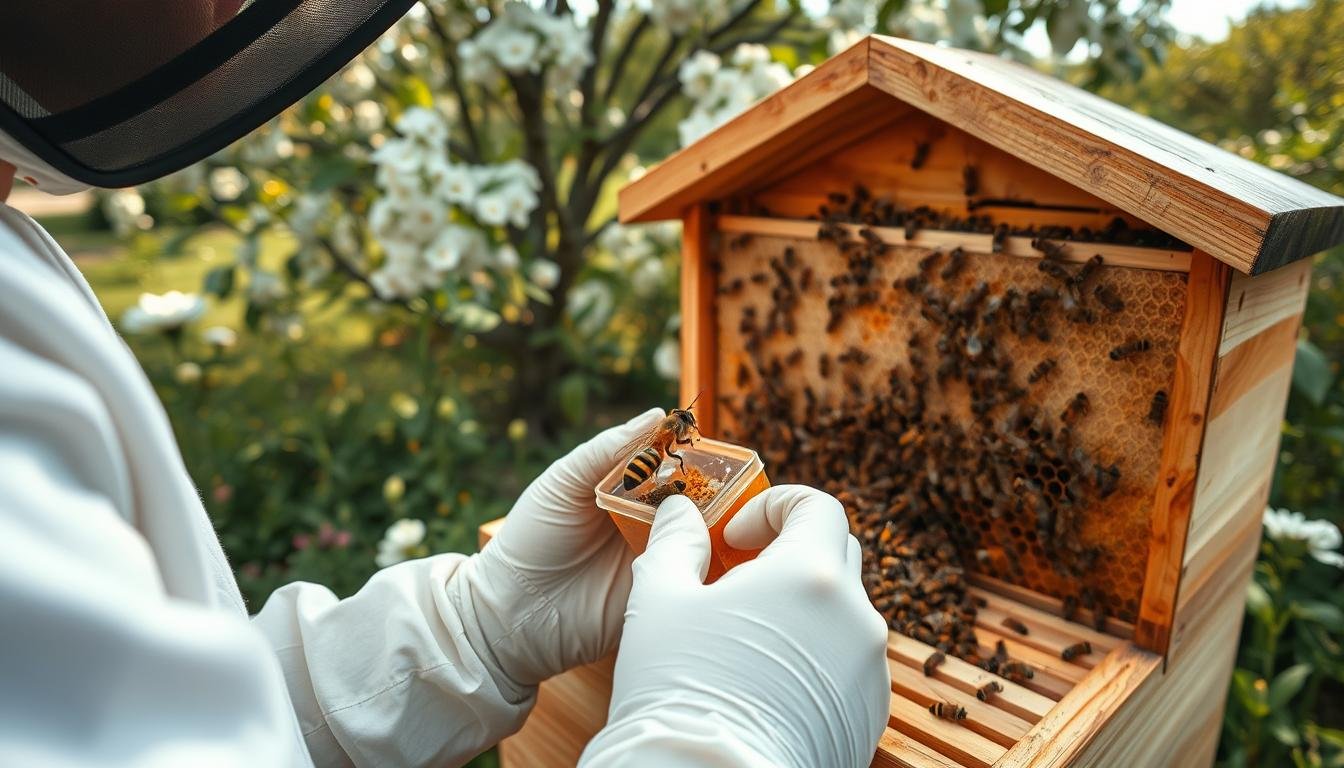
Replacing a queen can reset colony vigor and calm genetics for safer beekeeping. This short guide explains why beekeepers schedule a new queen every one to two years and what results to expect when the process is planned.
Timing and method matter. Indirect introduction with a caged queen and a candy plug often leads to faster acceptance than direct release. September swaps can produce long-lived winter bees, though low nectar flow may reduce acceptance rates.
Practical steps are straightforward: remove the old queen, introduce the replacement in a cage, and check for eggs within a week to confirm laying has resumed. Aggressive or failing queens are common reasons to consider requeening.
For a detailed procedure and product tips, see this guide on requeening practices at requeening techniques.
Key Takeaways
- Plan the process: timing and method affect acceptance.
- Use indirect introduction with a caged queen and candy plug.
- Expect eggs within about one week if the queen is accepted.
- September requeening can boost winter survival and spring buildup.
- Replace aggressive or failing queens to protect people and production.
Why Requeening Matters: Genetics, Temperament, and Productivity
The queen’s genetics are the main lever a beekeeper has for calming an aggressive colony. Hot colonies often trace to defensive bloodlines. Replacing the queen with calmer stock is the most reliable way to reduce aggression and sting risk.
Behavioral change is not instant. Worker bees raised after introduction reflect the new genetics. In roughly 21 days, emerging workers begin to soften colony responses.
Spotting an aging or failing queen
Watch for scattered eggs, fewer larvae, and patchy brood. These signs often mean an old queen is laying less and colony growth will slow.
Routine replacement every one to two years keeps colonies vigorous and eases management for the beekeeper. Thoughtful, indirect introduction improves acceptance because pheromones guide worker response.
- Genetics drive demeanor; choose calm stock for temperament fixes.
- About three weeks after introduction, new workers show the new line’s traits.
- Patchy brood, sparse eggs, and declining capped brood indicate replacement is needed.
| Issue | Signs | Expected result after new queen |
|---|---|---|
| Aggressive genetics | Frequent stinging, defensive clustering | Calmer behavior within ~21 days |
| Old queen | Scattered eggs, fewer larvae, patchy brood | Improved brood pattern and productivity |
| Low productivity | Reduced honey stores, slow spring buildup | Steadier production with selective stock |
Using multiple hives lets a beekeeper spread better genetics across colonies. For further management and expansion tips, see beekeeping expansion strategies.
Best Time to Requeen in the United States
Timing affects both immediate acceptance and long-term colony strength. Choose a window that matches your regional nectar flow and weather, and plan for extra checks when forage is scarce.
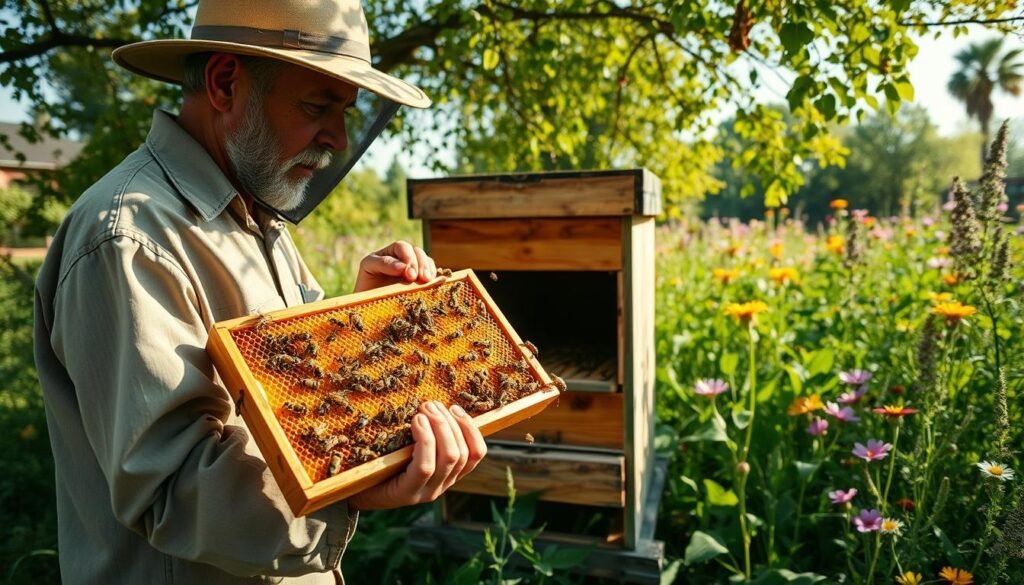
Requeening in September: winter bees, spring buildup, and long-term gains
September swaps create winter bees that live longer through cold months. Those longer-lived workers are ready as spring nurse bees and speed colony buildup.
That extra longevity means the colony often enters spring with more brood care capacity and better honey production potential.
Nectar flow and queen acceptance: why timing affects success
Bees accept queens more readily during strong nectar flow. In many regions, September has lower flow and acceptance can fall.
The tradeoff: requeening in warm months often gives higher short-term acceptance, while September favors winter readiness and long-term gains.
- Plan staged introductions and delay final release a day or two during dearths.
- Monitor acceptance checks over several days and keep notes by hive.
- Align your step-by-step plan with forecasts, forage, and beekeeper logs for best results.
“A deliberate schedule that balances acceptance and winter prep protects your investment in a quality queen.”
10. how to requeen a hive successfully: A Practical, Step-by-Step Guide
Secure a reliable mated queen and stage your work area before opening the box. Proper preparation lowers stress and improves acceptance.
Acquire and prepare
Source a healthy mated queen from a trusted breeder or a strong donor colony. Transport her gently so pheromones and temperature stay stable.
Protective setup
Suit up, light the smoker, and lay out tools. Use smoke sparingly and move calmly to limit agitation among the bees.
Remove the old queen
Find and remove the old queen before placing the new queen cage. One clear pheromonal signal helps workers accept the replacement.
Placing the new queen cage
Install the queen cage between brood frames so emerging bees learn her scent. Keep frame spacing even to avoid crushing and reduce clustering pressure.
Candy plug and controlled release
For shipped queens in a box, remove the cork and pierce a small pinhole through the candy plug. This paces the candy release and usually frees her in about two days.
Close up and wait
Close the hive and leave it undisturbed for several days. Return for acceptance checks: calm behavior, eggs in cells, and a tightening brood pattern.
| Step | Action | Why it matters | Check within |
|---|---|---|---|
| Acquire | Get mated queen in shipping box | Ensures fertility and pheromone strength | Before install |
| Prepare | Suit up, light smoker, stage frames | Reduces disturbance and stress | Immediate |
| Install | Place queen cage between brood frames | Young bees imprint and accept new queen | 2–7 days |
| Release | Use pinhole in candy plug; wait | Controlled release lowers balling risk | ~48 hours |
Keep notes on dates, box layout, and any queen cells. For procedure detail and seasonal timing, see this step-by-step resource at requeening guide and seasonal tips at seasonal beekeeping tasks.
Choosing Your Method: Direct vs Indirect Introduction
Selecting the correct introduction approach protects the new queen and improves acceptance rates. This choice affects survival, behavior, and the beekeeper’s workload.
Why direct release often fails and risks queen loss
Direct release exposes the unfamiliar queen to immediate scrutiny. Workers may ball and kill her because her scent is new.
Balling is common when pheromones clash and the colony reacts defensively.
Indirect introduction with a queen cage for safer acceptance
Using a queen cage stages the exposure and gives workers time to match scents. A candy plug or small channel paces the release over roughly two days.
This method reduces rejection and raises acceptance.
Purchased queen boxes vs homemade cages: handling and placement tips
Inspect the shipping box for the cork and verify the candy plug before opening. Pierce a starter hole with a pin; avoid widening it.
Secure a cage between brood frames so workers can tend the new queen. Leave enough space so bees do not crush or overheat her.
| Method | Key action | When to use |
|---|---|---|
| Direct release | Place queen free in colony | Only in calm, queenless, trusting colonies |
| Purchased box | Check cork, pierce candy plug, install cage | Best for ordered queens and consistent results |
| Homemade cage | Secure between brood frames, allow feeding | Useful for on-site rearing and low cost |
When nectar flow is strong, acceptance often improves, but conservative, indirect steps still protect valuable queens. Use a written checklist and repeat the same process across hives for reliable outcomes.
Optimizing Acceptance: Brood, Frames, and Worker Bee Behavior
Young workers that emerge near a caged queen quickly learn her scent and reduce rejection risk. Place the queen cage between frames that contain open brood so nurse bees and newly hatched workers imprint on the queen’s pheromone.
Keep handling calm and slow. Maintain even frame spacing so the cage sits without compressing bees. Good spacing reduces overheating and lets attendants feed the queen through the screen.
Watch worker bees for early signs of blending. Calm movement and gentle fanning mean pheromonal mixing is underway. Intense balling or frantic clustering means you should slow the release or add more open brood.

- Use frames with open brood next to the queen cage to help emerging workers adopt the queen’s scent.
- Limit smoke and disturbance so bees accept the new queen without stress.
- After release, check for single, centered eggs in cells within a few days.
| Frame choice | Worker behavior | Recommended action |
|---|---|---|
| Open brood frames adjacent | Calm fanning, attendants feeding | Leave undisturbed; expect eggs soon |
| Old drawn comb only | Slow interest, less tending | Add open brood or delay release |
| Compressed frames | Clustering, heat stress | Increase spacing; reposition cage |
Keep a short inspection plan and log dates. For further reading on tools and reference books, see this beekeeping resources.
Troubleshooting Special Cases: Laying Workers and Aggressive Hives
When a colony lacks queen and brood pheromones for weeks, worker ovaries can activate and change the hive’s fate.
Identifying laying workers
Look for multiple eggs per cell, eggs on side walls, and drone brood in worker-sized cells. These signs mean worker bees are laying unfertilized eggs that become drones.
Stabilize with brood pheromone
Step one: add a frame of open brood from a queenright colony. That restores brood pheromone and calms behavior.
Build and combine
Step two: establish a small nuc with the new queen and confirm she is laying larvae. Once stable, unite the nuc and the failing colony using the newspaper method. This slow merge lets scents blend and protects the queen.
Why the shake-out method usually fails
The shake-out way often fails because many laying workers can fly back. Newly introduced queens are at high risk of being killed, making the approach inefficient.
| Problem | Quick fix | When to choose |
|---|---|---|
| Laying workers | Add open brood + nuc combine | Queen absent > ~4 weeks |
| Aggressive colony | Split into nucs, keep distance | Frequent stinging or public risk |
| Save equipment | Place colony above strong queenright hive | Preserve comb, let laying workers die out |
Extra precautions for hot colonies
Wear full PPE, smoke thoroughly, and work downwind from people and animals. Consider splits and moving aggressive colonies away from high-traffic areas.
“Restore brood pheromone first, then introduce a proven queen in a nuc before combining.”
For broader management and staging, see this swarming preparation guide.
Conclusion
End with practical reminders about staging, patience, and safe handling that preserve bees and equipment.
Introduce the new queen in a cage and give the colony time for pheromone blending. Expect signs of acceptance within a few days — calm behavior and eggs are the clearest proof.
Plan timing around nectar flow, or choose September if winter strength is the goal. Use open brood to help difficult cases and combine runs with a nuc when laying workers are present.
Work safely with full PPE, consider splits or relocation for hot colonies, and keep clear records of dates, checks, and outcomes. For a concise requeening guide, see requeening a hive.
Checklist: stage tools, install the queen cage, wait, verify acceptance, and log results. Consistent technique and patience yield resilient colonies over time.
FAQ
Why replace an old queen?
Replacing an aging or failing queen restores steady brood production, improves colony temperament, and boosts honey stores. Signs such as spotty brood patterns, dead brood patches, and reduced foraging indicate it’s time for a new, mated queen from a reliable source.
When is the best time in the United States to introduce a new queen?
Early fall, especially September in many regions, helps colonies build strong winter bees and improves spring buildup. Avoid introducing during cold snaps or heavy nectar dearths; pick a mild, stable period with adequate brood and foragers present.
Should I remove the old queen before introducing the new one?
Yes. Locate and remove the old queen so the colony does not raise rejection behavior. Removing her first reduces fighting and allows workers to focus on accepting the new, mated queen placed in a cage between brood frames.
Direct release or queen cage — which method works best?
Indirect introduction using a queen cage is safer. A caged queen gives workers time to acclimate via pheromones and reduces the risk of her being killed. Direct release often fails in colonies that sense a rival queen.
How do I place the caged queen for best acceptance?
Place the cage between brood frames near emerging brood and nurse bees. Keep spacing natural so workers can move freely. Orientation matters: position the candy end toward the outside so workers can access it gradually while touching the queen through the mesh.
What is the correct candy plug technique?
Use a solid candy plug or fondant with a small pinhole to slow release. This gives workers a few days to chew through and accept the queen. Too fast a release raises rejection risk; too slow can starve the queen in small, low-activity colonies.
How long should I wait before checking for acceptance?
Wait at least five to seven days before inspecting. Look for calm behavior, absence of queen aggression, and the first tiny eggs or a steady laying pattern within 10–14 days. Open the cage only if necessary and avoid repeated disturbances.
What frames or brood help improve acceptance?
Fresh open brood frames encourage emerging workers to bond with the new queen’s pheromones. Adding frames of open brood from a queenright hive stabilizes pheromone balance and helps nurse bees accept the introduced queen.
How do I handle a laying-worker situation?
Identify laying workers by multiple eggs per cell and drone brood in worker cells. Stabilize the colony by adding frames of open brood from a strong, queenright hive or build a nuc with a new mated queen and combine using the newspaper method. Laying-worker colonies rarely accept a new queen without intervention.
What if the colony is aggressive or “hot”?
Use extra precautions: wear full protective gear, work during calm midday hours, consider making a split to move bees away from the original location, or requeen from a queen known for gentle genetics. Distance and deliberate, slow handling reduce stinging and queen risk.
How should I transport and handle a purchased mated queen?
Keep her in the supplier’s cage in a cool, shaded place and avoid shaking. Introduce within a few days; longer storage raises mortality. Handle the cage gently, maintain queen orientation, and ensure the candy plug remains intact until placed between brood frames.
When is combining a failing colony with a strong hive appropriate?
Merge when the failing colony shows poor brood, low stores, or if requeening attempts fail. Use the newspaper method or a frame transfer to prevent queen aggression. Ensure the strong recipient hive has a healthy queen and enough resources to absorb the extra bees.
What signs indicate a new queen is accepted and laying well?
Acceptance shows as calm worker behavior around the cage, lack of queen killing, and the presence of small, evenly spaced eggs within one to two weeks. By two to three weeks you should see a consistent brood pattern and increased foraging activity.
Can I use purchased queen boxes instead of homemade cages?
Yes. Commercial queen boxes and candy plugs are designed for safe transport and introduction. They often have reliable candy consistency and secure mesh. Choose high-quality products and follow supplier instructions for best results.
What if the new queen disappears after release?
Loss may occur from predation, robbery, or worker aggression. Check for dead queen pieces, signs of queenless behavior, or nearby robbing. If lost, assess colony strength and consider reintroducing another mated queen using a cage and supportive brood frames.
How does nectar flow affect acceptance?
Strong nectar flow improves acceptance because foragers are busy and brood production is high, creating balanced pheromone dynamics. During dearths, workers focus on survival and may reject a new queen, so time introductions around forage availability.
Is making a nuc with the new queen a good strategy?
Building a nuc isolates the new queen with a small group of workers and brood, allowing secure laying and bond formation. After she’s established, you can combine the nuc back into the main stock using the newspaper or screen methods for safer integration.
What precautions should be taken for winter requeening?
Requeening too late can disturb winter bees and reduce stores. Aim for early fall so the colony raises winter bees under the new queen. Ensure ample honey, reduce inspections, and avoid introducing a queen during cold weather or just before heavy cluster formation.