Reviewed by Michael R. · How we review
Protect your hive and keep the queen central when storms arrive. Winter wind speeds pull heat from the cluster and force bees to burn stores faster. That can break the cluster and harm brood.
This guide shows practical steps that combine apiary siting, entrance facing, and windbreaks. Simple measures like east-south orientation, permeable burlap screens, and raised, well-drained stands cut convective loss and reduce frost pockets.
Secure hardware with straps, bricks, or T-post systems so a strong gust does not topple a hive. Seal gaps without blocking ventilation so the colony retains warmth yet breathes.
Watch your site after storms and check reducers, windscreens, and seals over time. These layered protections lower energy waste, keep the queen safe, and help colonies survive harsh weather with better spring build-up.
Key Takeaways
- Orient hives east-south for morning sun and avoid north exposure.
- Use natural windbreaks and permeable screens to cut wind speed roughly in half.
- Elevate hives with good drainage to reduce frost pockets.
- Secure tops and check seals regularly after storms.
- Balance ventilation and draft protection to preserve stores and cluster integrity.
Table of Contents
- Why wind matters for honey bee colonies and how it changes your how-to approach
- Choose and orient your apiary for calmer air and winter protection
- Windbreak strategies: using landscape and DIY barriers to shield hives
- Hive stability and design tweaks for gusts, storms, and high-wind areas
- How to manage colonies in windy conditions during winter
- Seasonal and weekly routines for windy weather: from spring to storms
- Conclusion
- FAQ
Why wind matters for honey bee colonies and how it changes your how-to approach
Wind reshapes the internal climate of a hive, often more than the thermometer shows. Moving air strips heat faster than still air, creating a wind-chill that forces a colony to burn stores more rapidly.
Biologically, that extra energy demand stresses bees and the queen. If gusts break the winter cluster, peripheral bees chill and mortality rises. Foraging drops during gusty weather, shrinking incoming nectar and pollen and widening feed gaps.
Operational risks are real: constant winds can lift covers, shift boxes, and invite water, which leads to brood damage. Regularly check fastenings and seals for early signs of damage and heat loss.
“Treat wind as a predictable variable, and plan mitigations into routine apiary checks.”
- Prioritize draft control at entrances and seams.
- Add mechanical security against uplift rather than making the hive airtight.
- Balance ventilation and draft moderation so moisture is controlled without chilling the cluster.
With steady monitoring and simple fixes, beekeeping in blustery weather becomes a controllable part of seasonal practice rather than an unexpected threat.
Choose and orient your apiary for calmer air and winter protection
Pick a site that gives morning sun and blocks the coldest gusts before they reach the hive. Positioning affects thermoregulation for the colony and queen and reduces stress during severe weather conditions.
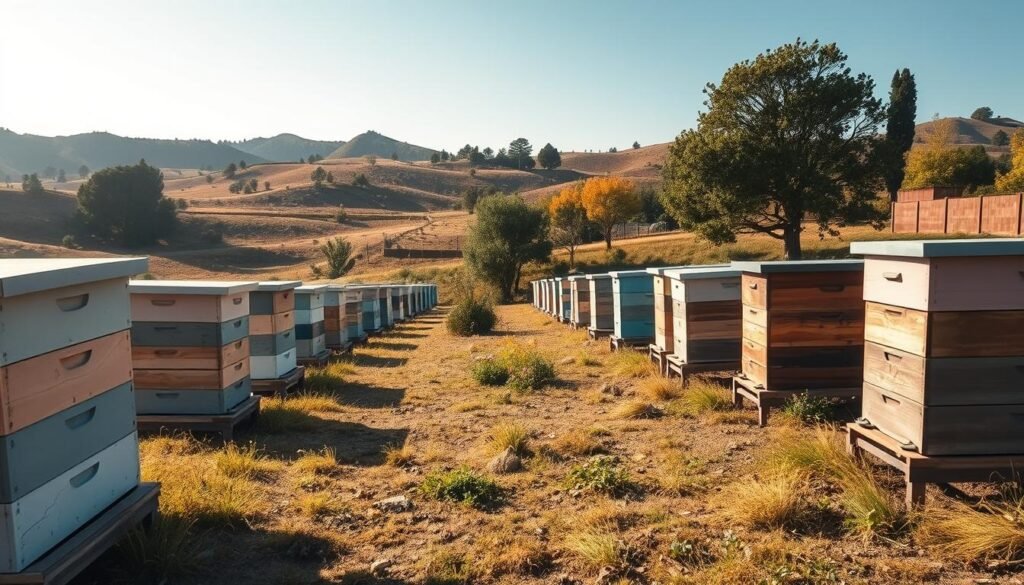
The east-south advantage for entrances and morning sun
Entrances should face between east and south so morning sun warms the hive earlier. That early heat helps the queen and workers start thermoregulation faster and preserves stores.
Avoiding direct north wind exposure and wind tunnels between structures
Avoid due-north exposure and linear gaps between buildings or ridgelines. Wind tunnels accelerate gusts and force bees to work harder to maintain the cluster.
Sunny, elevated sites with good drainage to reduce cold-air pooling
Slightly raised, sunny locations let cold, dense air drain downhill and cut moisture build-up beneath equipment. Good drainage reduces condensation and rot risks.
- Rotate an entrance 30–45 degrees off the prevailing wind for modest draft reduction.
- Test the site on a blustery day; mark sheltered pockets where flight paths are easier.
- Keep service access for inspections while using terrain for long-term protection.
| Placement | Risk | Benefit | Quick Action |
|---|---|---|---|
| East-south entrance | Minimal morning chill | Faster thermoregulation for queen | Face hive 30°–45° from prevailing wind |
| Raised sunny site | Less moisture under hive | Reduced condensation and brood loss | Place on a 6–12″ stand with drainage |
| Sheltered pocket | Avoids wind tunnels | Easier flight paths for honey bee foragers | Visit on windy days and mark spots |
| Service access | Too tight access hinders work | Simplifies inspections and lifting | Leave 3–4 ft clearance around hives |
For further site tips and windbreak ideas, see wind protection and site positioning. Better siting reduces winter interventions and supports queen stability and colony continuity.
Windbreak strategies: using landscape and DIY barriers to shield hives
Well-planned shelter belts and simple screens can cut gust impact and keep hive interiors steadier. Layered vegetation slows airflow while letting moisture escape, so the cluster stays warm without trapped damp.
Natural windbreaks with evergreens and layered plants
Evergreens like juniper or arborvitae form year-round protection when planted on the windward side. Back them with dense shrubs to make a breathable belt that reduces wind speed without creating harsh turbulence on the lee side.
Temporary windscreens and placement rules
Use permeable materials such as burlap, snow fencing, or mesh netting to cut winds by roughly half while keeping vents active. Place screens about 2–4 feet from the hive and near hive height, usually on the west side where prevailing gusts arrive.
- Keep flight paths clear so bees and the queen can approach and leave the hive safely.
- Build modular screens on T-posts so you can move protection as seasonal wind patterns change.
- Use deciduous trees as part of a shelterbelt—leafless branches still break flow and help reduce gust force.
“Stable airflow reduces drafts across the cluster and helps maintain brood temperature.”
For further advice on placement and site planning, review proper apiary siting at proper apiary siting. Good protection strategies support colony health and lessen winter stress.
Hive stability and design tweaks for gusts, storms, and high-wind areas
Robust stands and reliable fastenings are the backbone of storm-ready hives. A steady base reduces racking and keeps the queen’s cluster centered during sudden gusts. Small hardware choices pay off when winds rise.
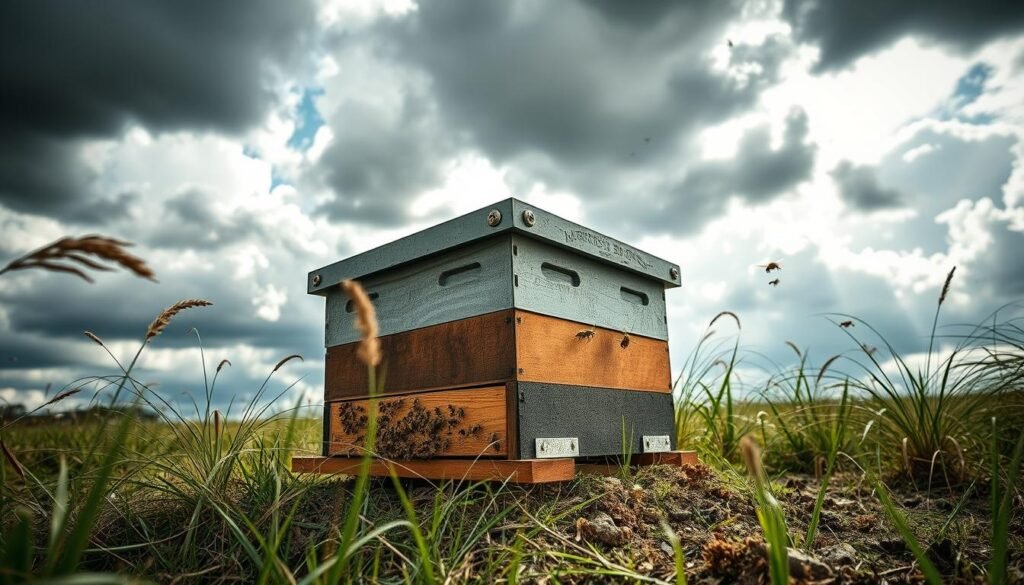
Stands, spacing, straps, and weights
Choose heavy, embedded stands with cross members or T-post rail systems. These resist tilt and give each hive a level platform in strong air.
Run at least two ratchet straps—one lateral and one longitudinal—anchored to the stand or a ground anchor. Strap through concrete-block stands or loop around embedded posts for extra security.
Add bricks or stones to the cover as anti-uplift mass, and leave safe space between hives for handling and strap access.
Secure frames and enhanced roof fastening
Fit frames snugly with spacers or reinforced end bars to stop shifting and reduce comb damage. Install extra roof latches or screws on migratory covers. Check telescoping tops after storms and re-tension fastenings.
Wind-resistant insulation and wraps
Use weatherproof insulation panels and aerodynamic rooflines that cut convective loss. Wraps should block gusts while letting moisture escape through planned vents.
Ventilation screens and adjustable vents
Balance airflow with fine mesh screens and adjustable vents. Let fresh air enter without forming a direct draft across the cluster. Monitor condensation and adjust vents as needed.
“After every storm, re-tension straps, reseat covers, and verify stand integrity to protect the queen’s core position.”
For a practical checklist and local siting advice, read the site wind assessment.
How to manage colonies in windy conditions during winter
Treat the entrance as the first line of winter protection: reduce, shield, and monitor. Small openings make a surprising difference in heat loss and defense. Reduce the entrance to a few inches with a reducer, cork, or foam block so bees can guard while air exchange continues.
Entrance reducers and managing entrances to limit drafts
Shrink openings to limit cold air and predators, yet leave room for gas exchange. Face the entrance east–south for morning sun and place the hive on a raised stand for dryer floors and less cold pooling.
Seal cracks and gaps without blocking vital ventilation
Walk seams and corners. Use beeswax, wood strips, or hive-safe caulk to close wind tunnels. Avoid airtight seals; the colony needs breath and a moisture escape path.
Control moisture: airflow, condensation, and hive positioning
Balance ventilation and insulation. Pair entrance reductions with top vents or a quilt box to let moisture escape above the cluster. Add permeable windscreens or nearby shrubs 2–4 feet away to slow gusts without trapping stale air.
- Inspect after snow, ice, or high winds: re-seat covers and clear entrances.
- Use wraps sparingly and keep a moisture route above the queen.
- Feed fondant or dry sugar if cold weather limits flights.
beehive ventilation guide is a useful reference for adjusting vents and quilts through winter.
Seasonal and weekly routines for windy weather: from spring to storms
Set a weekly rhythm for checks that keeps your apiary resilient across the season. Regular, short inspections catch loose screens, shifted stands, and misaligned entrances before those faults cause damage.
Monitor and adjust: recheck windscreens, entrances, supers, and stands after storms
Establish visual checks during windy weeks. Verify windscreens, entrance reducers, straps, and stand stability.
After storms, re-tension straps, re-seat lids, clear snow or debris from entrances, and confirm supers sit square. These small fixes prevent larger repairs.
Food stores, nectar flow gaps, and emergency feeding during windy weeks
Track weight changes or quick internal checks to spot nectar shortfalls. Windy spells can halt foraging and create intake gaps that stress the queen and workers.
Be ready with emergency feed—fondant or dry sugar—when flows pause. Resume normal feeding as nectar flow returns.
- Time spring repairs on calm days: adjust windbreaks and widen entrances as traffic grows.
- Keep clear space between hives for safe handling of supers and frames.
- Before summer storms, pre-check fasteners, add weights, and confirm layout still blocks prevailing gusts.
- Log wind directions and weak spots each year and compare notes with local beekeepers.
For seasonal prep and a practical checklist, see prepare your hives for a productive.
Conclusion
A balanced approach—site selection, breathable windbreaks, and secure hardware—keeps hives steady against gusts. Place each hive for morning sun and shelter, then add layered elements that cut wind and preserve heat.
Start with east–south orientation and natural barriers, add permeable screens and straps, and reduce entrances while keeping vents open. In winter focus on limiting convective loss and drafts so colonies use less stored food and the cluster stays intact.
Keep a steady maintenance rhythm: inspect after storms, reseat fastenings, and make small upgrades over time. Those modest investments give protection that stabilizes the queen and colony, conserves stores, and helps colonies thrive despite challenging weather conditions.
FAQ
Why does wind matter for honey bee colonies and how should it change my approach?
Wind increases heat loss, blows pollen and nectar away, and stresses foragers. It also raises the risk of toppling and moisture buildup. Position hives with a sheltered entrance, add windbreaks, and adjust ventilation and insulation based on season to reduce stress and conserve stores.
What is the best orientation and location for an apiary to get calmer air and winter protection?
Face entrances east or southeast so morning sun warms bees and dries dew. Avoid siting hives in narrow corridors where wind funnels between buildings or fences. Choose elevated, well-drained sites that reduce cold-air pooling and provide steady, filtered airflow.
How can natural landscape features help as windbreaks?
Use evergreen trees, dense shrubs, and layered plantings to block strong gusts year-round. Plant windbreaks at a distance equal to two to five times the barrier height for the best turbulent reduction, allowing filtered air that lowers direct wind stress on colonies.
When should I use temporary windscreens and what materials work best?
Install burlap, permeable fencing, or shade cloth for seasonal protection in spring and fall or during storms. Permeable materials reduce wind speed without creating turbulent eddies. Place screens upwind but far enough from entrances to preserve normal flight paths.
Which hive stability measures prevent toppling in gusty locations?
Use solid stands, anchored posts, and non-slip pads. Strap boxes together with cam straps and add weight using bricks or purpose-made hive weights. Space hives to avoid domino toppling and check supports after storms for any loosening.
How do I secure frames and roofs against damage from heavy winds?
Use frame clips or top bars to limit frame movement. Fasten roofs with clips, screws, or commercial roof latches. Inspect joints, replace worn nails with screws, and maintain tight-fitting inner covers to prevent boxes shifting during gusts.
What insulation and wraps protect colonies without trapping moisture?
Choose breathable insulation such as corrugated foam or insulated inner covers that shed wind while allowing vapor escape. Wraps should be snug but not airtight; include controlled vents or top entrances to permit moisture release and avoid condensation on combs.
How can ventilation screens and adjustable vents help in windy climates?
Screens and adjustable vents let you control airflow to limit drafts at the cluster while removing moisture. Small top vents help exhaust humid air; entrance reducers reduce cold gusts. Modify vent openings with temperature changes and always monitor for excessive drafts.