This hub is a single, organized gateway to find any beekeepers association in the country. Use it to move from national guidance to local action quickly.
Inside you’ll find a region-by-region directory, featured state profiles, and links to local clubs and honey producer groups. Expect direct contact points, meeting listings, and forums that support day-to-day care.
All 50 states maintain at least one primary state beekeepers association, from California’s main group to Illinois and New York networks. National bodies such as the American Beekeeping Federation, American Honey Producers Association, and the National Honey Board provide unified advocacy and training.
Search this guide to find a meeting near you, contact a board member, or sign up for a workshop through a nearby beekeepers association website. The hub highlights veteran programs like Hives for Heroes and research groups that back best practices.
Key Takeaways
- A single directory links national bodies, state groups, and local clubs.
- Each state has at least one primary beekeepers association to join.
- The hub lists meetings, training, and honey producer contacts.
- National organizations offer standards, advocacy, and education.
- Specialized networks include veteran programs and research groups.
Why this Resource Hub matters for beekeepers in the United States
Finding the right local club or state office is faster when a central hub links contacts and calendars.
A consolidated directory saves time by pointing users to a state beekeepers association page that lists local clubs, meeting dates, and training. County Extension pages and magazine directories cut searching for essential contacts.
New keepers reap immediate benefits. A verified hub reveals swarm lists, beginner classes, and hands-on workshops in one place. That reduces friction and speeds onboarding.
“A clear directory connects local mentors with learners and helps communities mount coordinated responses to pests and weather.”
Commercial operators gain too: coordinated messages from national federations warn about regulation, forage shifts, and disease alerts. Publications and forums supply research summaries, Q&A threads, and vendor listings.
| Level | Role | Typical offerings |
|---|---|---|
| State | State beekeepers association | Certification, statewide policy, training templates |
| County/Local | Local clubs | Mentorship, hands-on workshops, swarm lists |
| National | Federations & coalitions | Advocacy, research programs, broad alerts |
For a curated reading list and links to key directories, see our beekeeping resources page.
37. U.S. beekeeping associations and resources at a glance
Start with a compact plan: find your state directory first, then drill down to city or county groups for hands-on meetings and training.
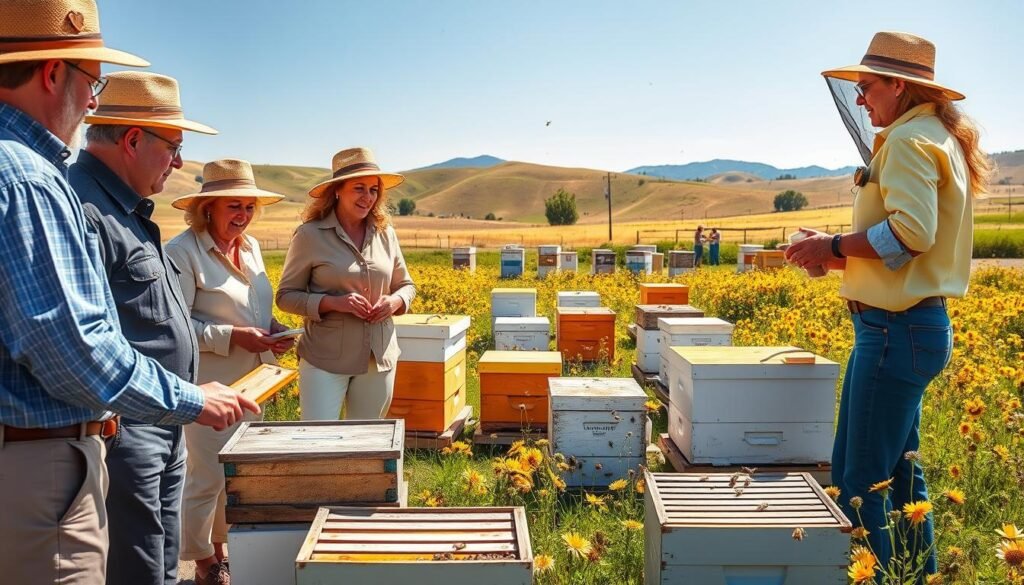
State beekeepers association directory highlights
Most states keep a central site that lists officers, meeting schedules, affiliate clubs, and beginner class dates. Examples include Illinois (ilsba.com) and Pennsylvania (pastatebeekeepers.org).
The Ohio model is easy to follow: ohio state offers statewide education and clear links to local chapters. Use that layout as a template when you browse other state sites.
Local clubs and apicultural society links you can use today
After the state page, search for nearby clubs for mentorship and swarm lists. Representative names show coverage across regions:
- California: Los Angeles County Beekeepers Association, Santa Clara Valley, Delta Bee Club
- Oregon: Portland Urban Beekeepers, Portland Metro Beekeepers Association
- Southeast: Apalachee Beekeepers Association, Orange Blossom, Treasure Coast
- Texas & Midwest: Houston Beekeepers Association, Trinity Valley, Ann Arbor Backyard Beekeepers (A2B2)
“Bookmark both state pages and local club sites to stay current with meeting changes and seasonal classes.”
Quick tips: cross-check publication directories like American Bee Journal and Bee Culture to find groups not listed on state pages. Also consider regional apicultural societies (EAS/WAS/HAS) for conference-level training.
For courses and continuing education, see our courses and training page.
State associations directory by region with quick links
Scan by region to find your nearest state beekeepers page, then click through to county clubs for calendars and mentors.
East and Southeast
Connect with Connecticut Beekeepers Association, Delaware Beekeepers Association, and Florida State Beekeepers Association via the UF/IFAS directory.
Also note Georgia, Maryland (mdbeekeepers.org), New Jersey beekeepers groups, North Carolina, South Carolina, Virginia, and West Virginia for local chapter listings.
Midwest and Great Lakes
Illinois (ilsba.com) and Indiana maintain active state pages. Michigan (michiganbees.org) uses district clubs. Ohio and Wisconsin post outreach and training schedules.
West and Pacific
California State Beekeepers Association leads a wide network. Oregon’s affiliate list (orsba.org/Affiliate-Associations) and Washington (wasba.org) link to small city clubs.
Island beekeepers should check Hawaii Beekeepers’ Association and Big Island Beekeepers Association for Hilo-area meetings.
Central, Mountain, and Plains
Colorado, Idaho Honey Industry Association, Kansas regional clubs, Montana programs, Nebraska, the Dakotas, Utah, and Wyoming each host state pages that point to local clubs, swarm lists, and mentors.
“Use the state page first, then drill into county clubs to find in-person workshops and seasonal updates.”
| Region | Representative state pages | What to expect |
|---|---|---|
| East & Southeast | CT, DE, FL (UF/IFAS), GA, MD, NJ | State leadership, chapter lists, beginner classes |
| Midwest & Great Lakes | IL, IN, MI (michiganbees.org), OH, WI | District clubs, training, extension outreach |
| West & Pacific | CA, HI, OR (orsba.org), WA (wasba.org) | Affiliate networks, island beekeepers groups, urban guilds |
| Central/Mountain/Plains | CO, ID, KS, MT, NE, ND, SD, UT, WY | Front-range chapters, large-area coordination, swarm lists |
Tip: state pages often link to social feeds for fast meeting updates and to regional apicultural society calendars for multi-state workshops.
Featured states with active local clubs and honey producers associations
This roundup highlights states with strong chapter networks and producer groups that host workshops, swarm lists, and market connections. Start at the state page, then contact a local officer to join mailings and sign up for the next meeting.

California
California State Beekeepers Association links to high-activity guilds: Los Angeles County (La Crescenta, 1st Monday), Santa Clara Valley (San Jose, 1st Monday), Sonoma County (Rohnert Park, 2nd Monday), Central Valley (Reedley), and Delta Bee Club.
Oregon
ORSBA and its affiliates make entry easy. Portland Urban, Portland Metro, Klamath Basin (Klamath Falls), Willamette Valley (Salem), and Lane County (Eugene) offer regular trainings and mentorship.
Florida
Use the UF/IFAS statewide listing for current county contacts. Active groups include Apalachee, Orange Blossom (Orlando), Treasure Coast (Fort Pierce), and St. Johns County for fast local access.
Texas
Statewide pages point to regional hubs: Central Texas (Brenham), East Texas, Houston (houstonbeekeepers.org), and Trinity Valley (Dallas). Many host beginner classes, field days, and mentor programs.
New York
The Empire State Honey Producers Association links producers with regional clubs across Western, Central, Eastern, and Southern zones, including Rochester, Capital Area, and Long Island groups.
Michigan
Michigan Beekeepers Association coordinates district clubs such as A2B2, COMB, SEMBA, Kalamazoo, and Oakland to help find meetings by county or metro area.
Pennsylvania
PSBA lists affiliates like Philadelphia Beekeepers Guild, Bucks County, Lancaster County, and York County—useful for mentorship, swarm lists, and seasonal courses.
Spotlight: Southeast
georgia beekeepers can join Metro Atlanta (meets at the Atlanta Botanical Garden), Northeast Georgia (Clarkesville), Tara Beekeepers (Clayton County), or Coastal Empire (Savannah). These clubs run hands-on sessions and field days.
“Begin with the statewide page, then email a local officer to get on the newsletter and register for the next workshop.”
| State | Representative groups | Why join |
|---|---|---|
| California | CSBA; LA County; Santa Clara; Sonoma; Central Valley | Frequent meetings, urban guilds, producer links |
| Oregon | ORSBA; Portland Urban; Willamette; Lane County | Strong affiliate network, mentorship paths |
| Florida | UF/IFAS listings; Apalachee; Orange Blossom; Treasure Coast | County contacts, seasonal workshops |
| Texas | Central Texas; East Texas; Houston; Trinity Valley | Field days, beginner classes, vendor fairs |
For state selection tips see the best states for beekeeping guide. For benefits of joining groups, read this beekeeping benefits guide.
National and regional organizations supporting beekeepers
National bodies knit local groups into a coordinated network for policy, training, and emergency alerts.
National leadership coordinates advocacy, industry standards, and programs that help every beekeepers association, from volunteer clubs to commercial operators.
Science, education, and health
Bee Informed Partnership, the Honey Bee Health Coalition, and AAPA translate research into field-ready protocols. State clubs use their toolkits for workshop curricula and biosecurity checklists.
Regional apicultural societies
The Eastern, Western, and Heartland apicultural society conferences offer multi-state training, certification, and networking that complement local meetings.
Publications and directories
Subscribe to American Bee Journal or Bee Culture for management updates. Use Beesource forums for peer Q&A and practical tips.
Veteran-focused connections
Hives for Heroes links veterans and first responders to mentors and partner groups. Jersey beekeepers and island beekeepers can tap national programs for remote education while relying on local clubs for hands-on support.
“Sign up for national newsletters to receive alerts on disease, forage initiatives, and grant opportunities.”
| Role | Representative groups | Benefit |
|---|---|---|
| Policy & industry | American Beekeeping Federation; National Honey Board | Unified advocacy; market support for honey producers |
| Science & training | Bee Informed; Honey Bee Health Coalition | Best-practice toolkits; sampling protocols |
| Regional networking | Eastern, Western, Heartland apicultural society | Multi-state conferences; certification paths |
How to use this hub to find, join, and engage with a beekeeping association
Begin by locating your state page, then narrow choices by distance, meeting cadence, and mentor availability.
Find your state beekeepers association and nearest local club
Start at the state beekeepers page to confirm officers, meeting dates, and chapter lists. Ohio State shows a clear model with links to local chapters you can contact directly.
Compare benefits: mentorship, education, swarm lists, advocacy, and group resources
Look for clubs that run mentorship matches, beginner courses, equipment libraries, and swarm capture lists. Metro Atlanta and Houston publish calendars and volunteer needs that new members can join right away.
Get involved: meetings, workshops, and volunteer opportunities across your region
Prioritize groups that offer seasonal field days and hands-on workshops. UF/IFAS Florida consolidates county links to help you choose the nearest active club.
- Join a club mailing list for agendas and alerts.
- Volunteer early to build connections fast.
- Track workshop credits for statewide certification paths.
“Select a state page first, then pick the closest chapter and join their list to stay informed.”
| Step | What to check | Example |
|---|---|---|
| Find | Officers, calendar, chapter list | Ohio State model |
| Compare | Mentorship, courses, swarm lists | Metro Atlanta, Houston |
| Join | Mailing list, volunteer roles, workshops | UF/IFAS Florida links |
Essential contacts for quick-start access to associations and clubs
A short list of portals and directories will connect you to nearby chapters fast. Use these links to reach officers, confirm meeting dates, and ask about mentorship.
Start here: use the American Beekeeping Federation organizations page to jump to state beekeepers sites that post local contacts. For Florida, rely on the UF/IFAS directory to find county-level clubs and officer emails.
In Oregon, scan the ORSBA affiliates page to locate the nearest group. California users should check the CSBA affiliates list for LA County, Santa Clara Valley, Sonoma, Central Valley, and Delta Bee Club links.
Pro tip: New York can use the Empire State Honey producers association page to reach regional chapters. Michigan members join district pages like A2B2, COMB, SEMBA, Kalamazoo, or Oakland via michiganbees.org.
“When you reach out, introduce your experience level and ask which meeting or workshop they recommend to join quickly.”
| Contact portal | What it links to | Best use |
|---|---|---|
| American Beekeeping Federation | State pages, local officer contacts | Jump to state beekeepers listings |
| UF/IFAS Florida directory | County clubs, meeting calendars | Find local club schedules |
| ORSBA / CSBA / ESHPA | Affiliate clubs, producer pages | Confirm events; connect with producers association |
| Hives for Heroes / Bee Culture / Beesource | Mentoring links, directories, forum threads | Veteran help; find smaller groups, including georgia beekeepers |
Conclusion
From federations to field days, this hub gives a clear path to hands-on learning. It links national groups, state beekeepers association pages, and local clubs so you move from interest to action with ease.
Subscribe to journals and forums, bookmark a state page, and sign up for a local meeting this month. Honey producers should stay plugged into statewide and national bodies for market, labeling, and advocacy updates.
New members: introduce yourself to officers, join a beginner class or mentorship track, and set a seasonal plan—spring inspections, summer swarm prevention, fall mite work. Veterans can connect with Hives for Heroes and partner clubs for structured support.
Act now: pick one state page, one nearby club, and one upcoming workshop to accelerate learning. For course options and starter lessons, see beekeeping education for beginners.
FAQ
What types of organizations are listed in this resource hub?
This hub lists state beekeepers groups, honey producers associations, apicultural societies, local clubs, island beekeepers chapters, and national bodies such as the American Beekeeping Federation and the American Honey Producers Association. It covers mentorship programs, swarm lists, advocacy groups, and producer networks so you can find the right fit for hobbyists, sideliners, and commercial operators.
How do I find my state beekeepers association quickly?
Use the state associations directory by region included in the hub. It groups links by East & Southeast, Midwest & Great Lakes, West & Pacific, and Central/Mountain/Plains so you can jump to your state page—examples include Georgia beekeepers, Ohio state listings, and New Jersey club contacts.
Are there local clubs and apicultural societies I can join near me?
Yes. Each state entry highlights local clubs and apicultural society links, such as county guilds in California (Los Angeles County, Santa Clara Valley) and Portland Urban Beekeepers in Oregon. The hub emphasizes active local groups for meetings, workshops, and hands-on mentorship.
Which national organizations focus on bee health and science?
Key national and regional nonprofits include the Bee Informed Partnership, the Honey Bee Health Coalition, and professional networks like the American Association of Professional Apiculturists. These groups provide research summaries, extension contacts, and best-practice guides for hive health and pest management.
What resources help honey producers with marketing and regulation?
The American Honey Producers Association and the National Honey Board offer market data, labeling guidance, and promotion tools. State honey producers associations and local producer groups also provide cooperative marketing, bulk processing contacts, and state-level regulatory updates.
Can veterans access beekeeping programs through this hub?
Yes. The directory points to veteran-focused programs and partners such as Hives for Heroes and local chapters that offer training, equipment grants, and community reintegration opportunities tailored to veterans interested in apiculture.
How can I compare benefits between different clubs or state groups?
The hub suggests comparing membership benefits such as mentorship, education events, swarm lists, liability insurance, advocacy, and group equipment access. Look for organizations that publish meeting schedules, training tracks, and member testimonials to make an informed choice.
Are there published journals or forums recommended for ongoing learning?
Recommended publications and forums include American Bee Journal, Bee Culture, and Beesource forums. These sources offer research articles, management tips, and active community discussions useful for both new and experienced beekeepers.
How often is the directory updated and how reliable are the links?
The hub aims for regular updates and verifies links with official state and national pages. For the most current contact info, it advises checking the official site of the state beekeepers or honey producers association listed, or contacting local extension services if a link appears broken.
What should I do if my local club or producer group is not listed?
Use the contact form or submission option in the hub to suggest an addition. You can also reach out to your state beekeepers association or regional apicultural society to request they add your club to statewide listings so other members can find you.