Reviewed by Daniel M. · Last Updated October 6, 2026 · How we review
Beekeeping equipment falls into four groups: protective gear (a veil at minimum, plus a jacket or suit, gloves and boots), the hive itself (bottom board, boxes, frames with foundation, covers and a feeder), the two tools you use on every inspection (a smoker and a hive tool), and harvest gear, which can wait until a colony has surplus honey. Bought item by item for one hive at a major US supplier on 6 October 2026, the day-one equipment cost about $365 to $530, and a full first year of equipment about $546 to $1,168, before buying bees.
This guide covers what each piece does, how protective gear should fit, what it costs, how to buy used equipment without bringing in American foulbrood, what changes by US region and how to store gear between seasons. Prices come from Mann Lake’s online category listings, read on 6 October 2026. BeeKeepersRealm sells nothing and earns no commission on anything named here.
Key Takeaways
- Before the bees arrive you need a veil with a jacket or suit, gloves, a smoker and fuel, a hive tool, one complete hive with frames and foundation, and a feeder. Harvest equipment can wait.
- Bought item by item at Mann Lake on 6 October 2026, one hive’s day-one equipment cost $365 with budget picks and $529 with upgrades. The whole first year came to about $546 to $1,168, not counting bees.
- Fit matters more than fabric. Texas A&M AgriLife Extension says you should be able to touch your toes in a suit without it pulling the veil against your face.
- Used equipment is the biggest hidden risk. Penn State Extension says American foulbrood spores can lie dormant in used equipment for 70 or more years, and that buying new is the safest choice.
- Replace gloves every one to two years (Texas A&M) and swap the oldest three or four frames out of each box every year (Penn State).
- Climate changes the details, not the list: vented suits where summers are hot, two brood boxes where winters are cold, and beetle-proof storage in the humid Southeast.
Table of Contents
- What to Buy First, Second and Later
- Protective Gear: Veil, Suit or Jacket, Gloves and Boots
- How Protective Gear Should Fit
- The Hive: Boxes, Frames and Foundation
- Inspection Tools: Hive Tool, Smoker and the Small Extras
- Harvest Equipment: What It Costs and When You Need It
- What One Hive’s Equipment Costs in Year One
- Starter Kit or Item by Item?
- Buying Used Beekeeping Equipment Safely
- Gear Choices by US Climate
- Cleaning, Maintenance and Off-Season Storage
- Where to Buy Beekeeping Equipment in the US
- Frequently Asked Questions
- The Bottom Line
What to Buy First, Second and Later
Buy equipment in the order you will need it, not in the order a catalog lists it. Oklahoma State University Extension advises painting new boxes at least two to three weeks before the bees arrive so the paint can cure, so the first round of shopping happens in late winter. Everything in the first row of this table has to be on site before you open a package or a nuc.
| When | What to buy | Why then |
|---|---|---|
| Before the bees arrive | Veil and jacket or suit, gloves, ankle-covering boots; smoker, fuel and a lighter; hive tool; bottom board with entrance reducer, one deep box with ten frames and foundation, inner and outer cover; feeder; a stand or level blocks | You cannot install bees safely without it, and painted boxes need time to cure |
| First season | Second brood box with frames; a honey super if the brood boxes fill; mouse guard before fall | OSU Extension says to add the second box once the bees have drawn comb on eight of ten frames |
| When there is surplus honey | Uncapping fork or knife, strainer, bucket with a honey gate; an extractor (borrow or rent first) | Mann Lake notes it can take up to two seasons for a new colony to draw out all the comb in its supers |
| Any time, optional | Frame holder, frame grip, bee brush, queen cage, ratchet strap | Useful, but none of them stops you inspecting a hive |
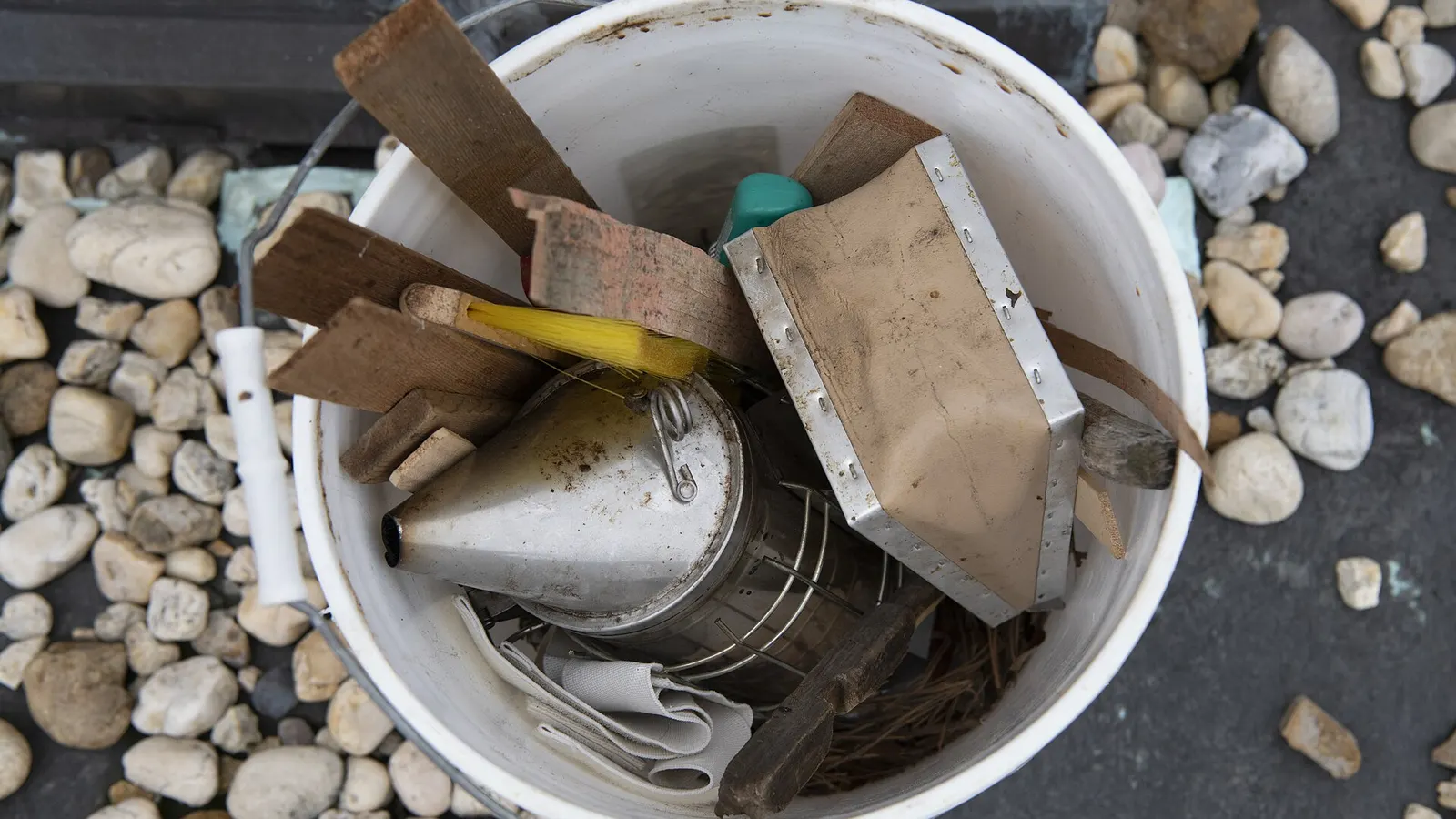
In this 14-minute episode of the University of Florida Honey Bee Lab’s Beekeeping Academy (July 2024), Dr. Jamie Ellis empties the bucket he takes to every apiary. A lit smoker and a hive tool are the two tools he calls most essential, followed by a bee brush, queen cages, queen clipping and marking tools, and a tack hammer with framing nails for frames that come apart. He carries it all in a metal bucket because a hot smoker can melt a plastic one. The second half covers shop tools worth owning later: frame grips, frame spacers, a frame cleaner, a frame rest, a spacer rim for pollen patties, ratchet straps and a two-person hive carrier.
Protective Gear: Veil, Suit or Jacket, Gloves and Boots
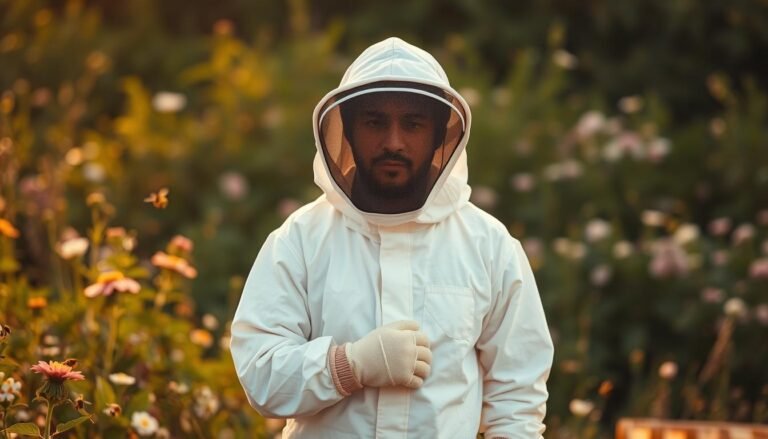
Protective gear cuts the number of stings sharply, but no suit is sting-proof. Texas A&M AgriLife Extension’s protective clothing fact sheet (ENTO-097) recommends starting with a full suit and stepping down only once you know your allergy level, your tolerance for stings and how comfortable you are around hives. If a child will help at the hive, buy gear made for their size; our kids’ bee suit buying guide explains why an adult suit will not do.
Veil: the one piece never to skip
The Mid-Atlantic Apiculture Research and Extension Consortium (MAAREC) says a veil should be worn at all times, because it protects the face and neck. It describes three types: veils open at the top that fit over a hat, hatless veils, and veils built into a suit or jacket. A wire or fabric veil that stands away from the face over a wide-brimmed hat gives the best protection; hatless veils fold flat but their elastic band can ride up and let the mesh fall against your face as you bend over. Texas A&M adds that a cap worn under a hooded veil keeps the mesh off your nose and chin. At Mann Lake, a simple pocket veil was $17.49, round and square veils $22.99 to $29.99, and a hat-and-veil combination $59.99 to $69.99. Our comparison of beekeeping veil types goes through each design.
Suit or jacket
A full suit covers everything except the hands and feet and is the most protective option. A jacket protects only the torso and head, so it needs sturdy long pants. Both come in two main fabrics. Polycotton or cotton is the traditional choice. Vented fabric is built from layers of netting that let air through, which Texas A&M recommends for Texas because cotton canvas suits get very hot in summer. At Mann Lake, jackets with veils ran from $89.99 (economy, hooded) to $249.95, with vented jackets at $139.99 to $164.99. Full suits ran from $109.99 to $279.95. If you work in heat, our guide to the best bee suit for hot weather covers vented designs in more detail.
Gloves
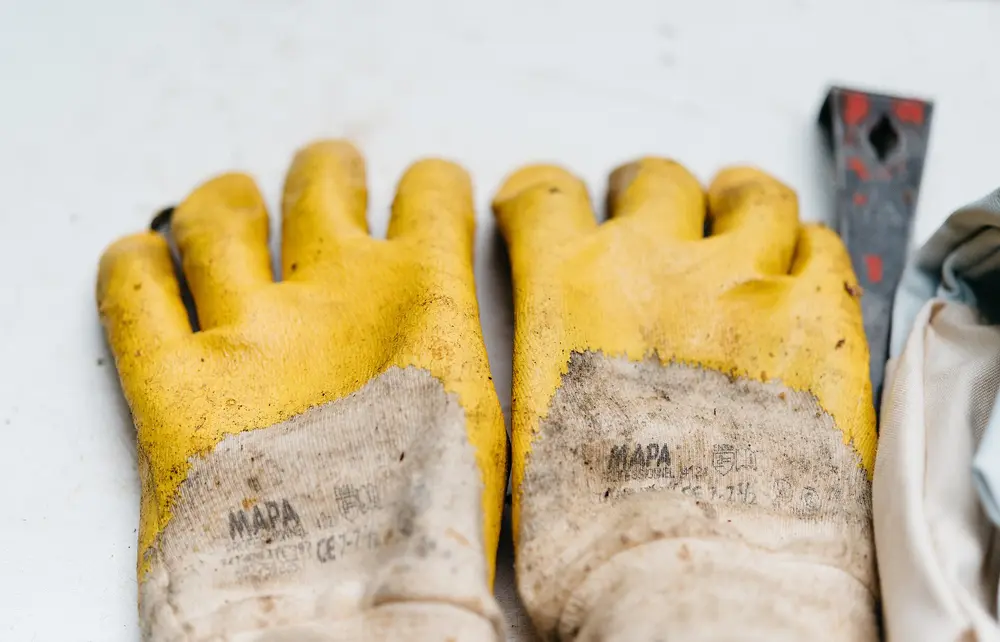
Beekeeping gloves are light in color, usually leather or goatskin, with long gauntlets that pull up over the elbow, worn over the suit sleeves. Texas A&M notes that gloves rarely fit perfectly: tight gloves let stings through at the knuckles, while loose gloves cost you dexterity. MAAREC adds that many experienced beekeepers give up gloves for easier handling, and that thin form-fitting gloves still reduce stings and sticky fingers.
| Glove type | Best for | Trade-off | Mann Lake price, 6 Oct 2026 |
|---|---|---|---|
| Cowhide with gauntlet | First season, defensive colonies | Thickest and least feel | $19.99 to $59.99 |
| Goatskin | Routine inspections | Thinner leather, better feel | $19.99 to $29.99 |
| Rubber-coated | Wet or sticky work | Hot; fit varies | $19.99 |
| Disposable | Gentle colonies, hygiene between hives | Little sting protection | $2.49 a pair |
Many beekeepers end up with two pairs: a heavy pair for difficult days and a thinner pair for routine work. Our guide to the best beekeeping gloves for beginners covers measuring your hand.
Boots and ankles
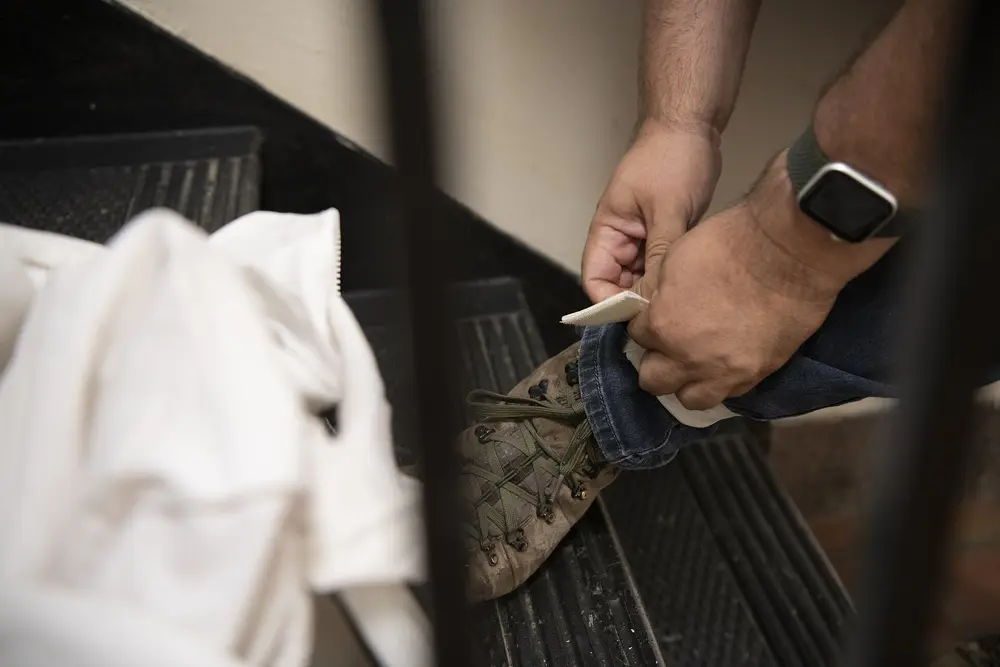
MAAREC points out that bees often go for the ankles first, because ankles sit at the level of the hive entrance, and that dark socks and open wrists are especially vulnerable. Texas A&M’s advice is to wear shoes that cover the ankle, with the suit legs over the boots rather than tucked in. If you don’t own boots, or a suit has lost the elastic at the leg, leg covers or hook-and-loop ankle bands close the gap.
How Protective Gear Should Fit
Stings get through where fabric is pulled tight against skin and through gaps at zippers, cuffs and ankles, so fit is the first thing to check. Texas A&M’s protective clothing fact sheet sets a simple test:
“Bee suits and jackets should not fit tightly. While suited, the person should be able to touch their toes without the suit or jacket pulling tight along their back or pulling the veil against their face.”
Try gear on over the clothes you will actually wear underneath, then run through five checks:
- Toe touch. Bend down: the back should not pull tight and the veil should stay off your face.
- Arms up. Reach overhead as if lifting a box onto a stack. Sleeves should not ride up past the glove cuffs.
- Veil seal. The veil zipper should meet the body zipper with no gap at the neck.
- Cuffs. Glove gauntlets go over the sleeves and as far up the arm as they will reach.
- Legs. Suit legs sit over the boots, with elastic or straps closed around the ankle.
Mann Lake’s own sizing advice is to choose a slightly loose suit, and its suits run from petite to 2XL. If you need larger or longer sizes, our plus-size and tall beekeeping suit guide lists makers that go further. Texas A&M also suggests double-checking every zipper, hook-and-loop tab and ankle strap each time you suit up, and covering zipper junctions with 1-inch tape around non-gentle hives, because bees can squeeze through surprisingly small holes.
Color, scent and what to leave at home
MAAREC recommends white or tan clothing, because bees react badly to dark colors, fuzzy materials and clothing made from animal fiber. It also advises skipping aftershave, perfume and cologne, and laundering inspection clothes and gloves regularly to remove sting and hive odors. Scent matters because of how bees raise the alarm: a 2019 review in the journal Insects by Zhengwei Wang and Ken Tan notes that isopentyl acetate was the first sting-associated alarm pheromone identified in bees, and that beekeepers know the banana-like smell of stressed bees well.
The Hive: Boxes, Frames and Foundation
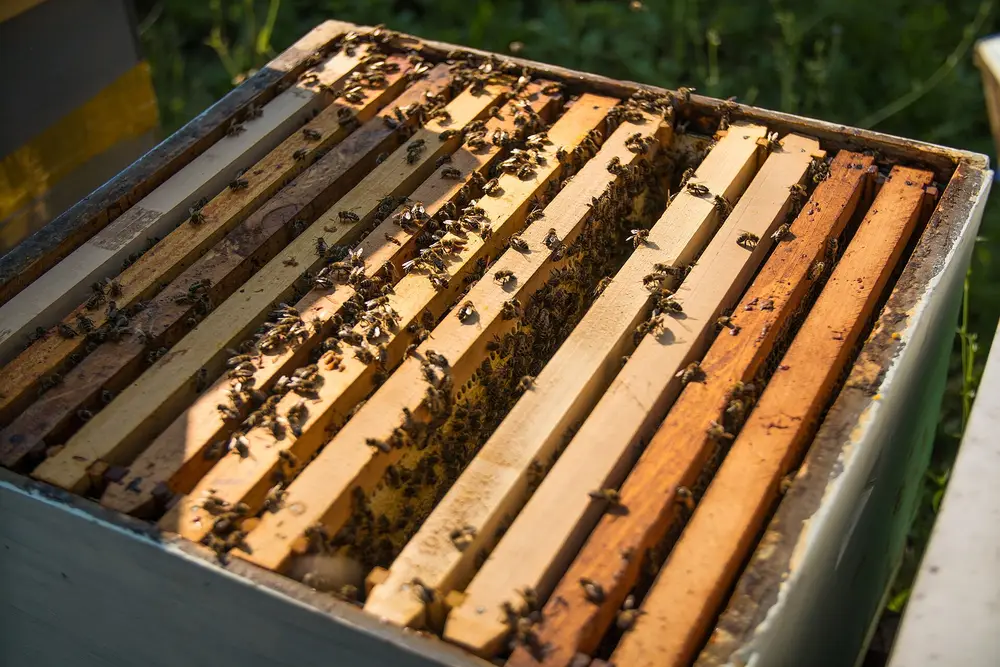
MAAREC notes that most beekeepers today use the Langstroth, or modern ten-frame, hive. A complete Langstroth hive is a bottom board with an entrance reducer, one or more boxes of hanging frames with foundation, an inner cover and a telescoping outer cover, ideally on a stand. Oklahoma State University Extension warns that component sizes can vary slightly between manufacturers, so buying from one supplier avoids parts that don’t sit flush. If you have not settled on a design, see our guide to beehive types for US beekeepers.
Choose one box width and depth before you buy
Decide two things first: ten-frame or eight-frame width, and which box depths you will use. Mann Lake points out that the only measurement that differs between ten-frame and eight-frame boxes is the width, and that eight-frame equipment is not always compatible between manufacturers. Depth decides weight. MAAREC gives the full-depth (deep) box as 9 5/8 inches tall and over 60 pounds when full of honey, the medium as 6 5/8 inches, and the shallow as the lightest to handle at about 35 pounds full. That is why many beekeepers run deeps for brood and mediums for honey, and some run all mediums so every frame fits every box.
How many brood boxes depends on your winter. The University of Georgia Bee Program notes that two hive bodies are common in cold-winter regions, while beekeepers where winters are mild succeed with one.
Frames and foundation
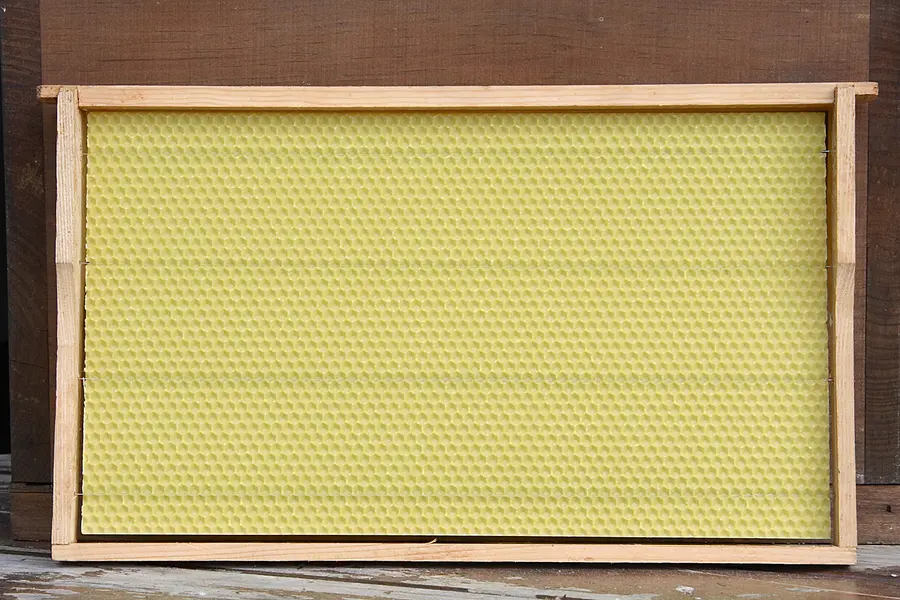
Frames hold foundation, a thin sheet embossed with hexagonal cells that guides the bees to build straight comb. Many beginners use wooden or plastic frames with waxed plastic foundation, which survives extraction and handling. OSU Extension notes that commercial plastic frames come with a little wax already applied, and that many beekeepers brush or roll on extra melted beeswax when starting a new hive to help the bees accept it. Pure beeswax foundation is the alternative; MAAREC advises not fitting sheets into frames until you need them, because storage temperatures and handling can stretch and warp the wax. At Mann Lake, a case of 20 assembled deep frames with waxed plastic foundation was $73.99, about $3.70 a frame, and unassembled deep frames ran $19.99 to $25.99 per ten without foundation.
Feeders, entrance reducers, mouse guards and a stand
A new colony needs sugar syrup until it has drawn comb, so a feeder belongs in the first order. OSU Extension compares the two common types. A Boardman entrance feeder (an upturned jar at the entrance) is easy to check and refill, but it holds little, can encourage robbing by other bees, and sunlight spoils the syrup quickly. An internal division-board feeder holds much more, but you must open the hive to refill it, and some bees can still drown. Mann Lake listed a Boardman feeder at $7.95, a one-gallon in-hive Pro Feeder at $15.50, an entrance reducer at $3.25 and a mouse guard at $10.99. OSU also says hives should be raised off the ground on a stand or cinder blocks, and notes that the legs of wooden stands may eventually rot. Our pick of mouse guards for Langstroth hives covers fall setup.
Inspection Tools: Hive Tool, Smoker and the Small Extras
Hive tool
Bees glue the hive together with propolis, so you cannot open a box or lift a frame without a lever. Texas A&M’s tools fact sheet (ENTO-095) says a beekeeper should never enter the bee yard without a hive tool. A standard tool has a flat, sharpened end for prying and scraping and a curved end for breaking frames apart; a J-hook tool swaps the curved end for a hook that cranks a frame up from its rest. The fact sheet advises slow, steady leverage rather than pulling or pushing, which jerks the frames and upsets the bees. MAAREC adds that a screwdriver or putty knife is a poor substitute that can damage frames. Mann Lake’s hive tools ran from $8.99 to $19.99. If your bees use a lot of propolis, see our guide to the best hive tool for propolis-heavy colonies.
Smoker and fuel
Texas A&M explains that smoke blocks the bees’ ability to sense alarm pheromones and drives them lower in the box. The one feature its fact sheet recommends is a heat shield, to avoid burning yourself or your suit, and Texas A&M’s clothing sheet warns that most suit and glove materials will melt or smolder if a smoker gets too close. MAAREC says the 4 by 7 inch smoker is probably the most widely used size. For fuel, the UGA Bee Program lists pine straw, grass and burlap; Texas A&M adds that burlap should be food grade, wood untreated, and nothing coated in chemicals. Make sure the fire is completely out before you walk away or put the smoker in a vehicle, since smokers can reignite.
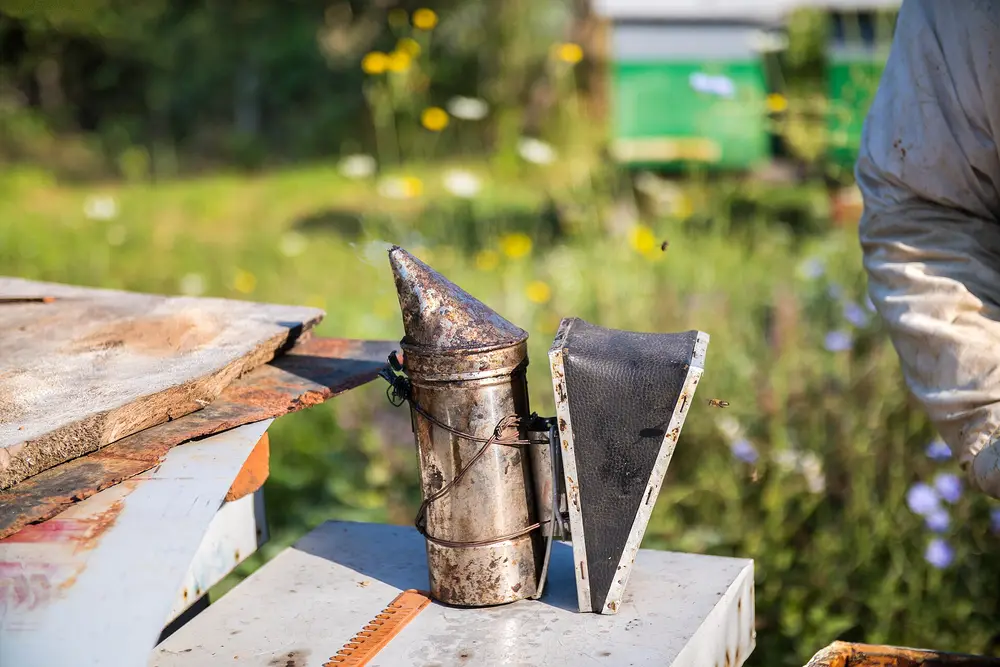
Mann Lake’s 4 by 7 inch stainless smokers with shields were $35.99 (economy) and $47.99 (Pro-Bellow), with other bellows smokers up to $69.99; half a pound of smoker fuel was $3.99. Our bee smoker buying guide compares sizes and bellows, and our tested list of the best smoker fuels covers what burns cool and what to avoid.
Bee brush, frame grip and frame holder
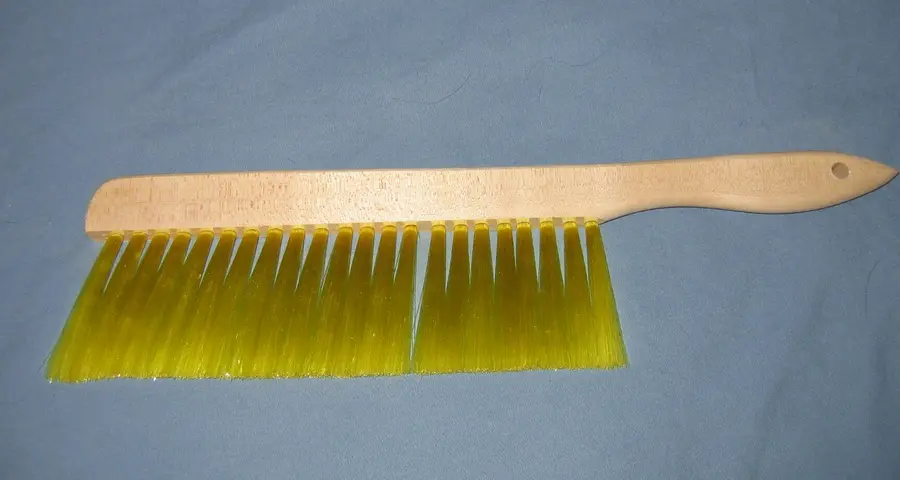
ENTO-095 covers three extras. A soft bee brush moves bees off frames; use a flicking motion rather than a long stroke so bees don’t tangle in the bristles, and don’t let the bristles get gummed with honey. A frame grip lets you lift a frame one-handed, which helps when you work alone. A frame holder hangs on the side of the box so you can park frames instead of setting them on the ground; the fact sheet suggests no more than two or three frames, and not brood frames, which can chill. At Mann Lake a frame grip was $9.99 and a frame perch $15.99.
Harvest Equipment: What It Costs and When You Need It
Harvest gear is the most expensive part of a beekeeping setup and the easiest to postpone. Before buying an extractor, ask your local beekeeping association whether it lends or rents one, and consider methods that need no extractor at all; our comparison of honey harvesting methods sets crush-and-strain and cut comb against extraction.
| Item | What it does | Mann Lake price, 6 Oct 2026 |
|---|---|---|
| Uncapping fork or scratcher | Opens wax cappings on small batches and low spots | $7.99 to $24.95 |
| Plain (cold) uncapping knife | Slices cappings off flat comb | $12.99 to $39.99 |
| Heated uncapping knife | Faster uncapping for many frames | $99.99 to $199.99 |
| 2-frame plastic extractor | Spins honey out of a few frames at a time | $129.99 |
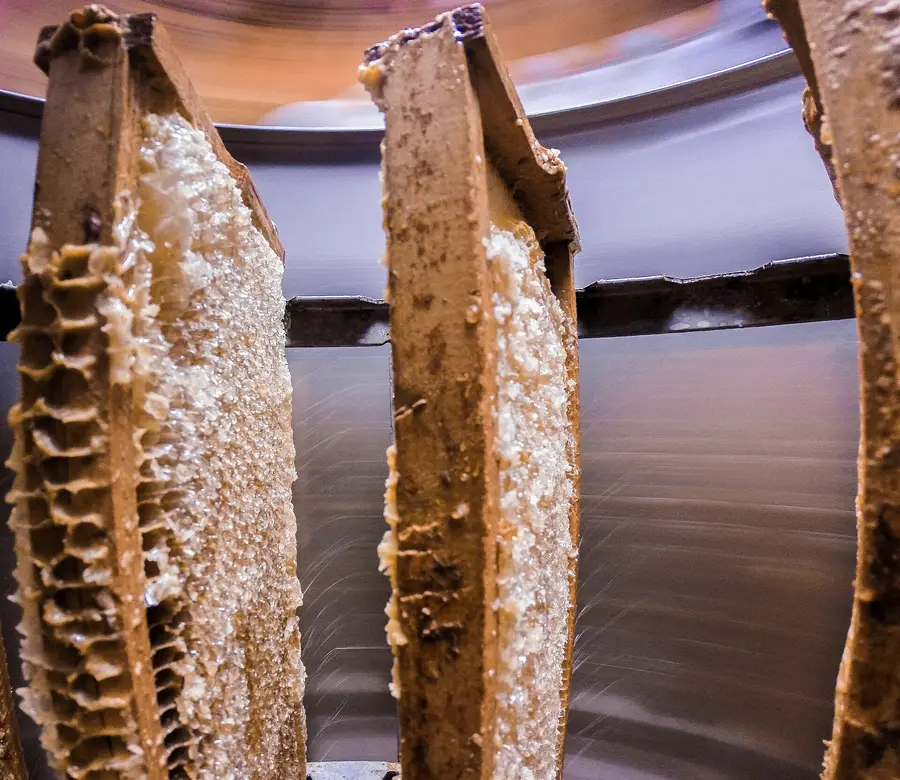
| 3-frame stainless hand-crank extractor | The common hobby size | $269.99 |
| Electric extractor | For larger apiaries | $1,599.99 |
| Stainless double sieve | Strains wax and debris | $49.99 |
| 5-gallon bottling pail with honey gate | Settles and dispenses honey into jars | $39.99 |
| Refractometer | Checks honey moisture before bottling | $99.99 |
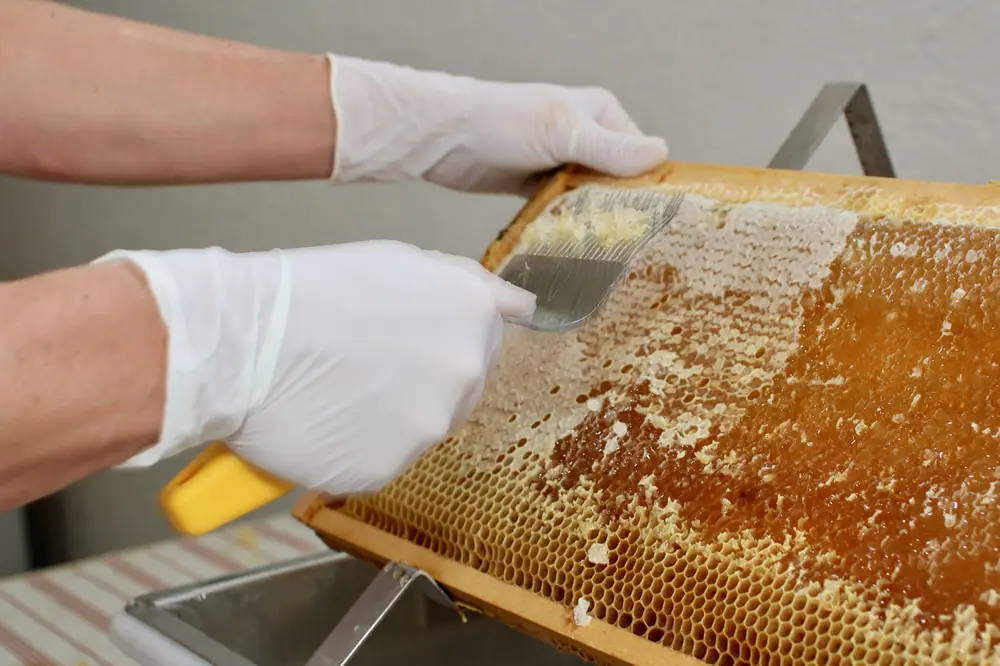
For choosing an extractor by hive count, see our guide to manual vs electric extractors. Our step-by-step guide to how honey is processed covers straining, settling and moisture.
What One Hive’s Equipment Costs in Year One
To put a current number on the list above, we priced one ten-frame Langstroth hive’s equipment item by item from Mann Lake’s category listings on 6 October 2026, twice: once with budget picks and once with upgrades. The totals cover equipment only, with no bees, sugar, mite treatments, tax or shipping.
| Item | Budget pick | Upgrade pick |
|---|---|---|
| Day one, before the bees arrive | ||
| Bottom board with entrance reducer | $26.99 | $29.99 (painted) |
| Deep box | $25.99 (unassembled) | $44.99 (assembled, painted) |
| 20 deep frames with waxed foundation (10 now, 10 for box two) | $73.99 | $73.99 |
| Telescoping cover with inner cover | $52.99 | $55.99 (painted) |
| One-gallon in-hive feeder | $15.50 | $15.50 |
| 4 by 7 inch smoker with shield, plus fuel | $35.99 + $3.99 | $47.99 + $3.99 |
| Hive tool | $9.99 | $15.99 (stainless) |
| Jacket with veil, or suit | $99.99 (economy jacket) | $194.99 (vented suit) |
| Gloves | $19.99 (cowhide) | $29.99 (vented goatskin) |
| Frame perch | none | $15.99 |
| Day-one subtotal | $365.41 | $529.40 |
| First season | ||
| Second deep box | $25.99 | $44.99 |
| Medium honey super with frames | $69.99 (unassembled kit) | $39.95 box + $68.99 for 20 frames |
| Mouse guard | $10.99 | $10.99 |
| First-season subtotal | $106.97 | $164.92 |
| First harvest, only if there is surplus | ||
| Uncapping | $13.99 (fork) | $99.99 heated knife + $13.99 fork |
| Extractor | $0 (borrowed) | $269.99 (3-frame stainless) |
| Straining and bottling | $19.95 filter pail + $39.99 bottling pail | $49.99 double sieve + $39.99 bottling pail |
| Harvest subtotal | $73.93 | $473.95 |
| Year-one equipment total | $546.31 | $1,168.27 |
Prices from Mann Lake’s hive bodies and supers, bee jackets and extracting equipment listings and its other category pages, read 6 October 2026.
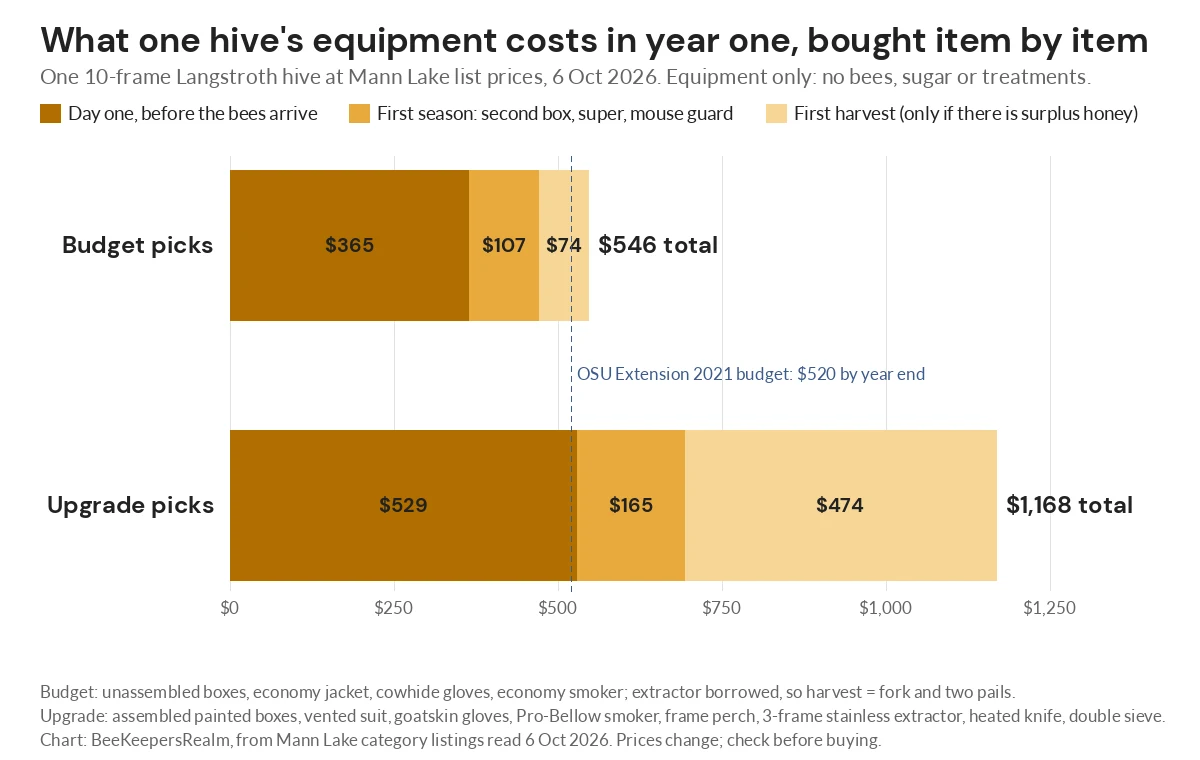
Two things stand out. First, the budget path’s day-one spend is close to the older public benchmarks. Oklahoma State University Extension’s 2021 fact sheet, Beginning Honey Beekeeping Equipment and Associated Costs, put the bare minimum equipment at $458, and $520 by the end of the first year. The UGA Bee Program’s undated figure of “about $200” for one new hive with bees and basic equipment would now cover little more than the protective gear and inspection tools. Second, most of the difference between the paths is harvest gear, which is exactly the part you can borrow or delay. Bees are extra: our starter kit comparison lists current package and nuc prices, and our full beekeeping cost breakdown covers sugar, treatments and later years.
Starter Kit or Item by Item?
A starter kit bundles the hive and usually some tools, and its main advantage is that every part comes from one maker. Our check of ten real US beekeeping starter kits found that most leave something out, often the protective gear, and that the true day-one cost ran from about $210 to $1,120 once the gaps were filled. Buying item by item, as above, costs about the same as a comparable kit plus clothing and lets you choose each piece.
Buying Used Beekeeping Equipment Safely
Used boxes and frames are the cheapest way to equip a hive and the most common way to buy a disease you can’t see. The main danger is American foulbrood (AFB), a bacterial disease of bee larvae. Penn State Extension’s fact sheet by Margarita López-Uribe and Robyn Underwood explains how long the risk lasts:
“AFB is most commonly transmitted through spores of the bacteria, which can be dormant in the colonies or used equipment for 70 or more years.”
Penn State’s guidance is that buying new equipment is the safest option. If you do buy used, ask the seller for inspection records, don’t buy from a beekeeper who has had AFB, and have the equipment irradiated before use; some beekeeping clubs organize irradiation events each year. MAAREC is blunter about beginners:
“Purchasing used equipment can present problems and is not recommended for the beginner.”
MAAREC also warns that used equipment may be built to non-standard dimensions, and advises always asking for a certificate showing a state apiary inspector examined the hives and found no disease.
| Used item | Risk | What to do |
|---|---|---|
| Drawn brood comb and old frames | Highest: disease spores and years of residue | Don’t reuse; fit new frames and foundation |
| Wooden boxes, bottom boards, covers | Spores in wax and propolis; non-standard sizes | Buy only with inspection records; scrape and scorch, or irradiate; check dimensions against your boxes |
| Hive tools, smokers, metal excluders | Lower; metal can be cleaned and flamed | Scrape and flame before use |
| Gloves | Texas A&M links old gloves to spreading disease between colonies | Buy new |
| Suits and veils | Worn seams, holes, broken zippers | Wash, then check every seam, zipper and the veil mesh |
Our used beekeeping equipment quarantine checklist walks through the six stages from the classified ad to putting gear back in service, and our guide to disinfecting wooden hive equipment covers scorching. To learn the signs, see American vs European foulbrood.
This section is educational information, not professional advice. Rules on inspecting, moving and selling used bee equipment vary by state; check with your state apiary inspector before you buy.
Gear Choices by US Climate
The equipment list is the same everywhere; what changes is fabric, box count and storage. These adjustments come from extension services in the regions concerned.
| Region | What to change | Source |
|---|---|---|
| Hot summers (Texas, the Southwest) | Vented suit or jacket; light exterior paint | Texas A&M: vented fabric suits Texas because cotton canvas gets very hot. MAAREC: light colors prevent heat buildup in the hive |
| Humid Southeast | Extract supers the day you remove them, or freeze them before storage, because of small hive beetles | Mississippi State University Extension: beetles spread rapidly through southeastern apiaries because of the favorable climate |
| Cold-winter North | Two brood boxes; mouse guards; plan winter stores | UGA Bee Program: two hive bodies are common in cold-winter regions |
| Mild-winter South | One brood box can be enough | UGA Bee Program |
| Windy Plains | Strap the hive or weigh down the lid | OSU Extension: in Oklahoma’s wind, secure hives with a tie-down or a large rock |
| Wet or rainy areas | Raise hives on a stand; tilt slightly forward | MAAREC: a stand reduces dampness; tilting keeps rain from running into the entrance |
For region-specific management, see our guides to cold-winter climates, the humid Southeast, hot, arid climates, the Great Plains and the Pacific Northwest. Northern beekeepers should also read how much honey bees need for winter.
Cleaning, Maintenance and Off-Season Storage
Most beekeeping equipment lasts for years if it is cleaned and stored properly. The routine below comes from the same extension sources.
- Suits and veils. Texas A&M says to remove the hood or veil, wash with a mild, unscented detergent and hang to dry. Hang a suit between uses too, because a folded suit may mold. Check regularly for holes, tears and damaged zippers, and patch small veil holes with flexible or silicone glue. After working a diseased hive, follow our guide to washing bee suits after diseased-hive inspections.
- Gloves. Replace them every one to two years. Texas A&M calls this an important practice to prevent spreading disease between colonies, since gloves absorb propolis, wax and honey.
- Hive tool and smoker. MAAREC suggests cleaning the hive tool by stabbing it into the ground or burning it in the smoker’s fire pot, which also helps limit disease spread. Let the smoker go completely cold before storing it.
- Frames. Penn State Extension recommends removing and replacing the oldest three or four frames in each box every year, and writing the year on new frames so you know which to retire.
- Woodenware. Paint only the outside surfaces; MAAREC notes the bees coat the inside with propolis themselves. OSU recommends a low-VOC exterior paint in white or pastel colors. Wax dipping is a longer-lasting alternative; see our guide to wax dipping beehive boxes.
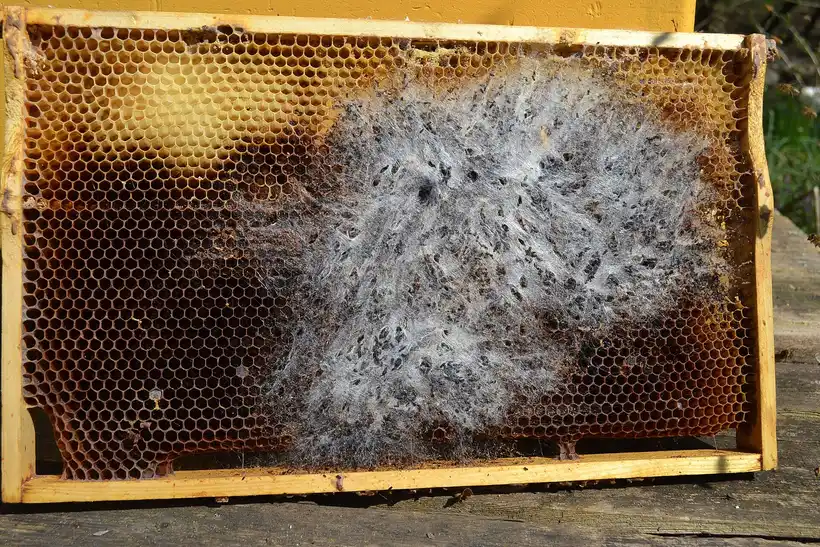
- Stored comb. Wax moths are the main threat to drawn comb in storage. UF/IFAS Extension’s fact sheet on the lesser wax moth says all its life stages die when held at 20°F for 24 to 48 hours, and that frozen comb can then be kept in airtight plastic bags to prevent re-infestation. Where small hive beetles are present, Mississippi State University Extension advises wrapping supers in heavy-duty trash bags and freezing them for at least 48 hours before storage.
For more on keeping comb safe, see preventing wax moths in stored equipment and storing supers between honey flows.
Where to Buy Beekeeping Equipment in the US
OSU Extension notes that beekeeping equipment is now sold in most farm stores, in beekeeping shops and online. The large national suppliers include Mann Lake (Minnesota), Dadant & Sons (Illinois) and Betterbee (New York); our Dadant, Mann Lake and Betterbee comparison covers their histories and ranges. Three practical rules: buy woodenware from one supplier so parts match, try a suit on in person if you can, and compare shipping on heavy boxes, since local pickup or a club group order can cost less than a lower list price.
If you are choosing protective gear, see bee suit vs jacket and what each costs.
For small-space setups, see urban beekeeping equipment.
Frequently Asked Questions
What are the five essential pieces of beekeeping equipment?
A veil (with a jacket or suit), gloves, a smoker, a hive tool and a complete hive with frames and foundation. Add a feeder before the bees arrive.
What equipment do you need to start beekeeping?
Protective gear, a smoker and fuel, a hive tool, a bottom board, one deep box with ten frames and foundation, an inner and outer cover, a feeder and a stand. Bought item by item at Mann Lake on 6 October 2026, that came to about $365 to $530.
What is the 7/10 rule in beekeeping?
It is a rule of thumb for adding space: put on the next box when the bees are using about seven of the ten frames in the top box. Oklahoma State University Extension uses a similar trigger of comb drawn on eight of ten frames, and advises painting the new box well ahead so it is ready.
Can bees sting through a bee suit?
Yes, occasionally, mostly where fabric is pulled tight against the skin or through gaps at zippers, cuffs and ankles. A suit that passes the toe-touch test, taped zipper junctions around defensive hives and gloves worn over the sleeves stop most stings.
Why can’t beekeepers eat bananas before an inspection?
Because stressed honey bees release an alarm pheromone that smells like bananas. Isopentyl acetate was the first sting-associated alarm pheromone identified in bees, and the advice is to avoid strong scents that could be mistaken for it.
Is it safe to buy used beekeeping equipment?
Only with care. Penn State Extension says buying new is safest; if you buy used, ask for inspection records, never buy from a beekeeper who has had American foulbrood, and irradiate the equipment. Never reuse someone else’s brood comb.
How much does beekeeping equipment cost for one hive?
About $365 to $530 for day one and $546 to $1,168 for the first year, at Mann Lake’s prices on 6 October 2026, not counting bees. Borrowing an extractor is the biggest single saving.
Why is beekeeping gear white?
MAAREC notes that bees react badly to dark colors, fuzzy materials and clothing made from animal fiber, so white or tan clothing is most suitable. Light colors are also cooler in the sun.
The Bottom Line
Buy protective gear that fits, a smoker with a heat shield, one good hive tool and one complete hive in one standard size, and leave harvest gear until there is honey to take. If you are still deciding whether to keep bees, start with our guide to how to start beekeeping.
Featured photo: beekeeping tools ready for a rooftop inspection at USDA headquarters, Washington, D.C. Photo: Christophe Paul, USDA, via Wikimedia Commons, public domain, cropped.