Reviewed by Sofia T. · Last Updated October 8, 2026 · How we review
The three main types of beehives are the Langstroth, the top-bar and the Warré. Most other designs are variations on those three: the long (horizontal) Langstroth, Layens, Flow, insulated poly hives, the Dadant, the British National and the Slovenian AŽ hive. In the United States the 10-frame Langstroth is the default, because nucs, spare parts, extractors and most local mentors assume its frames. Choosing between them comes down to four questions: which way the hive grows, whether the combs hang in frames or from bars, what you can lift, and how you want to harvest honey.
This guide compares every common design side by side, checks each one against the movable-comb rules that several states write into their apiary laws, and links to our full guide on each hive. If you are still deciding whether to keep bees at all, start with how to start beekeeping.
Key Takeaways
- Langstroth hives grow upward in stacked boxes of removable frames. L. L. Langstroth patented the design on October 5, 1852 (US Patent 9,300), and it is still the US standard.
- Horizontal hives (top-bar, long Langstroth, Layens) grow sideways on one level, so you lift one comb at a time instead of a full deep box that can weigh 60 to 90 pounds.
- The Warré grows downward: new boxes go under the stack. Each box holds about 18.9 liters, roughly 44% of a 10-frame Langstroth deep by our arithmetic.
- Florida, Vermont, Arkansas and Delaware require hives whose combs can be removed for inspection. Florida’s rule addresses top-bar hives by name. Skeps and log hives fail the test.
- For most US beginners an 8- or 10-frame Langstroth is the easiest start. Pick a horizontal hive if lifting is your limit.
Table of Contents
- Beehive Types at a Glance
- What Actually Differs Between Hive Types
- Vertical Hives: Boxes Stacked on Top
- Horizontal Hives: One Long Box
- The Warré Hive: Building Downward
- The AŽ Hive and Other Regional Designs
- Frame and Box Sizes Side by Side
- Movable Combs and State Law
- How to Choose a Hive Type
- Frequently Asked Questions
- The Bottom Line
Beehive Types at a Glance
Every hive in the table gives bees the same thing: a dry, dark cavity to build comb in. What changes is how the beekeeper gets at that comb, and how much work the design asks of you.
| Hive type | How it grows | Comb hangs in | What you lift | Usual honey harvest | US parts and nucs |
|---|---|---|---|---|---|
| Langstroth, 10-frame | Boxes added on top | Four-sided removable frames | Whole boxes; a full deep is 60 to 90 lb | Extractor, cut comb or crush | Everywhere; most nucs come on these frames |
| Langstroth, 8-frame | Boxes added on top | The same frames | About 18% less per box | Same as 10-frame | Wide; covers, bottoms and excluders are width-specific |
| Flow Hive | Boxes added on top | Langstroth frames below, Flow frames in the super | Brood boxes as Langstroth | Tap on each Flow frame | Flow frames mainly from Flow itself |
| Insulated poly | Boxes added on top | Mostly Langstroth frames | Boxes, as in a Langstroth | Extractor | Some brands stack with wooden 10-frame boxes |
| Modified Dadant | Boxes added on top | Deeper brood frames | A larger brood box | Extractor | Uncommon |
| British National | Boxes added on top | Smaller frames with long lugs | Smaller boxes | Extractor | Rare in the US; the UK standard |
| Long Langstroth | Sideways, by moving a follower board | Standard Langstroth deep frames | One frame at a time | Extractor | Uses standard frames; the box is often home-built |
| Top-bar (Kenyan) | Sideways | Bars only, no frame | One comb at a time | Crush and strain, or cut comb | No standard size |
| Layens | Sideways | Very deep frames | One frame at a time | Extractor that fits deep frames, or crush | A few small makers |
| Warré | New box underneath | Bars only, as a rule | The whole stack, to add a box below | Crush and strain | A few makers; simple to build |
| AŽ (Slovenian) | Opens from the back, inside a beehouse | Frames 41 x 26 cm | One frame at a time | Extractor | Rare in the US |
Weights are for a full 10-frame deep of honey, from the sources in our 8 vs 10 frame comparison. “Uncommon” and “rare” are rough guides: most US supply companies stock Langstroth equipment first, and sometimes only.
What Actually Differs Between Hive Types
Bees will live in a hollow tree, a wall cavity or a box. Hive designs exist for the beekeeper, and they differ in five practical ways.
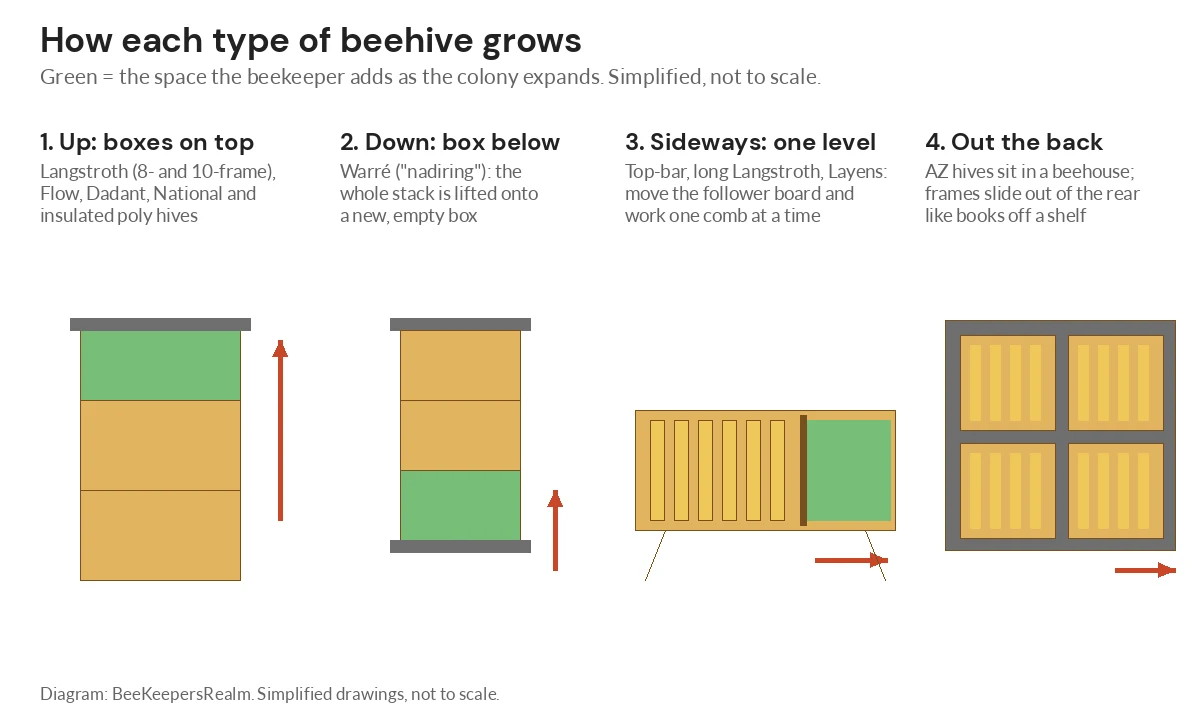
Direction of growth. A colony needs more room as it builds up in spring. Vertical hives add a box on top (a “super”). The Warré adds one underneath, which beekeepers call nadiring. Horizontal hives add space at the end of one long box by sliding a follower board back.
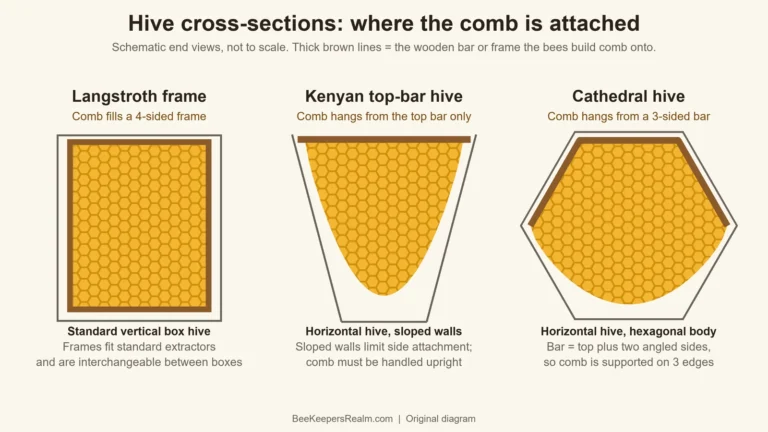
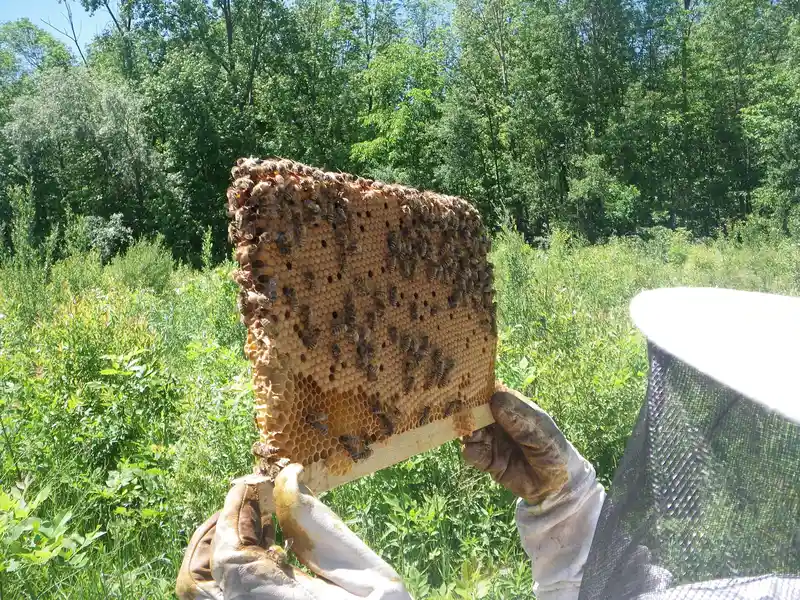
Frames or bars. A frame is a four-sided wooden or plastic rectangle; the bees build comb inside it, usually on a sheet of foundation. A top bar is just the top piece, so the comb hangs free like it would in a tree. Frames protect comb during handling and let honey be spun out in an extractor. Bars cost almost nothing and leave the bees to build their own cell sizes, but new comb is soft and can break off if you tilt it. All of these designs rely on bee space: in his 1853 manual Langstroth set the end frames about a quarter inch from the walls and the rest half an inch apart, close enough that the bees leave the gaps open instead of filling them with comb. Get the spacing wrong in any hive and you get burr comb that glues everything together.
What you lift. In a stacked hive you move whole boxes to reach the brood nest. In a horizontal hive you never lift more than one comb. That single difference is why many beekeepers with bad backs move to long hives.
How you harvest. Framed comb can be uncapped and spun in an extractor, then returned for the bees to refill. Comb from bars is usually crushed and strained, or sold as cut comb, so the bees rebuild it each year. You get more beeswax and less honey.
Inspection. State bee inspectors need to see every brood comb to look for American foulbrood. That is easy with frames and possible with straight top-bar comb. With fixed comb it is impossible, which is why some states ban it outright (see movable combs and state law).
Vertical Hives: Boxes Stacked on Top
Langstroth hives
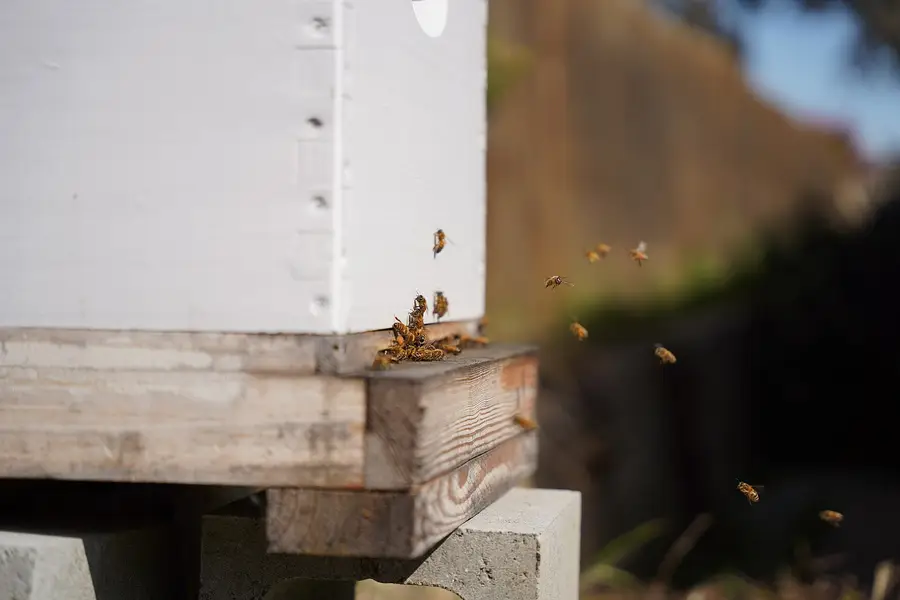
The Langstroth is the hive most Americans picture: white rectangular boxes stacked on a bottom board, with removable frames hanging inside. L. L. Langstroth, a minister from Philadelphia, patented it on October 5, 1852. His key change was hanging each comb in a frame that touched neither the top, bottom nor sides of the box, so any comb could be lifted out without cutting. Today’s boxes come in three depths. Deep frames are 9-1/8 inches tall, mediums 6-1/4 and shallows 5-3/8, all on a 19-inch top bar. Beekeepers usually keep brood in one or two deeps and honey in mediums above.
“I hope, however, that I may, without being charged with presumption, be permitted to put on record the prediction, that movable frames will in due season, be almost universally employed.”
The prediction held in North America. The practical payoff for a new beekeeper is compatibility: nucs (starter colonies) are usually sold on five Langstroth deep frames, extractors are built around those frames, and almost every club, course and extension guide assumes them. The drawback is weight. A full 10-frame deep of honey weighs 60 to 90 pounds depending on the source, and a medium 40 to 60. For the full history, see the history of the Langstroth hive.
8-frame Langstroth hives
An 8-frame box takes the same frames as a 10-frame box but is about 2-1/2 inches narrower. By our estimate a full 8-frame deep weighs about 49 to 73 pounds, roughly 18% less. Covers, bottom boards and queen excluders are sized to the box, so pick one width and stay with it. Our 8 frame vs 10 frame hive guide covers weights, parts and winter stores. If weight is the worry, box depth matters as much as width; see deep vs medium frames for the brood nest.
Flow Hive
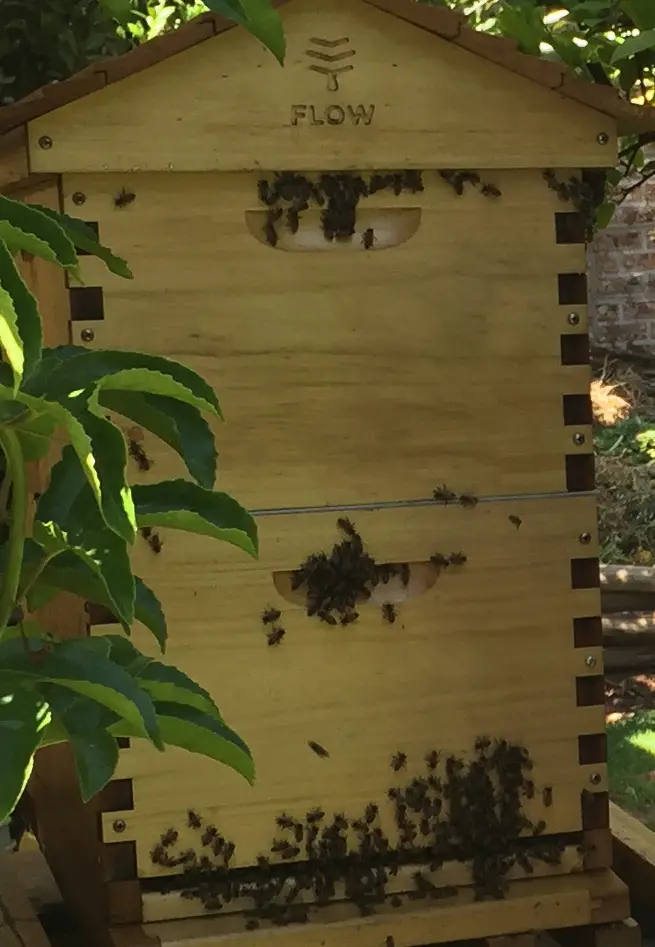
A Flow Hive is a Langstroth with a special honey super. Its plastic Flow frames have pre-formed cells that split apart when you turn a key, so capped honey drains down a channel and out of a tube into a jar without opening the hive. Cedar and Stuart Anderson launched it in Australia with a February 2015 Indiegogo campaign that raised more than $12 million. The brood boxes below are ordinary Langstroth boxes, so inspections, mite control and swarm management are exactly as demanding as in any other hive. See how the Flow Hive actually works and, for northern keepers, Flow Hive winter prep.
Insulated poly hives
Polystyrene and polyurethane hives use the Langstroth layout with thick foam walls. Sellers rate them at several times the insulation of a wooden box, and USDA studies we reviewed found foam hives slightly warmer than wood in winter. Some brands stack with standard 10-frame boxes; others use their own sizes. Our evidence review, best beehive for cold climates, compares them with wrapped wooden hives.
Modified Dadant
The Dadant line of hives traces to Charles Dadant, a French immigrant who settled in Illinois and championed large brood chambers. The modified Dadant keeps a Langstroth-style footprint but uses deeper brood frames, so the queen has more comb on one level. It is common in parts of Europe and uncommon here. Read our guides to the modified Dadant hive and to Charles Dadant himself.
British National and its cousins
The National is Britain’s standard hive. Its boxes are 18-1/8 inches (460 mm) square, the brood box is 8-7/8 inches tall, and its frames hold comb 14 inches wide on a 17-inch top bar with long handles. The British Standards that once fixed those sizes were withdrawn in 1984, but the dimensions stuck. The BS Commercial uses the same footprint with a deeper brood box. Nationals are hard to source in the US, and their frames are a different size from Langstroth frames. See our British Standard hive guide, plus the Smith hive and the single-box Rose hive, two British variations.
Horizontal Hives: One Long Box
Top-bar hives
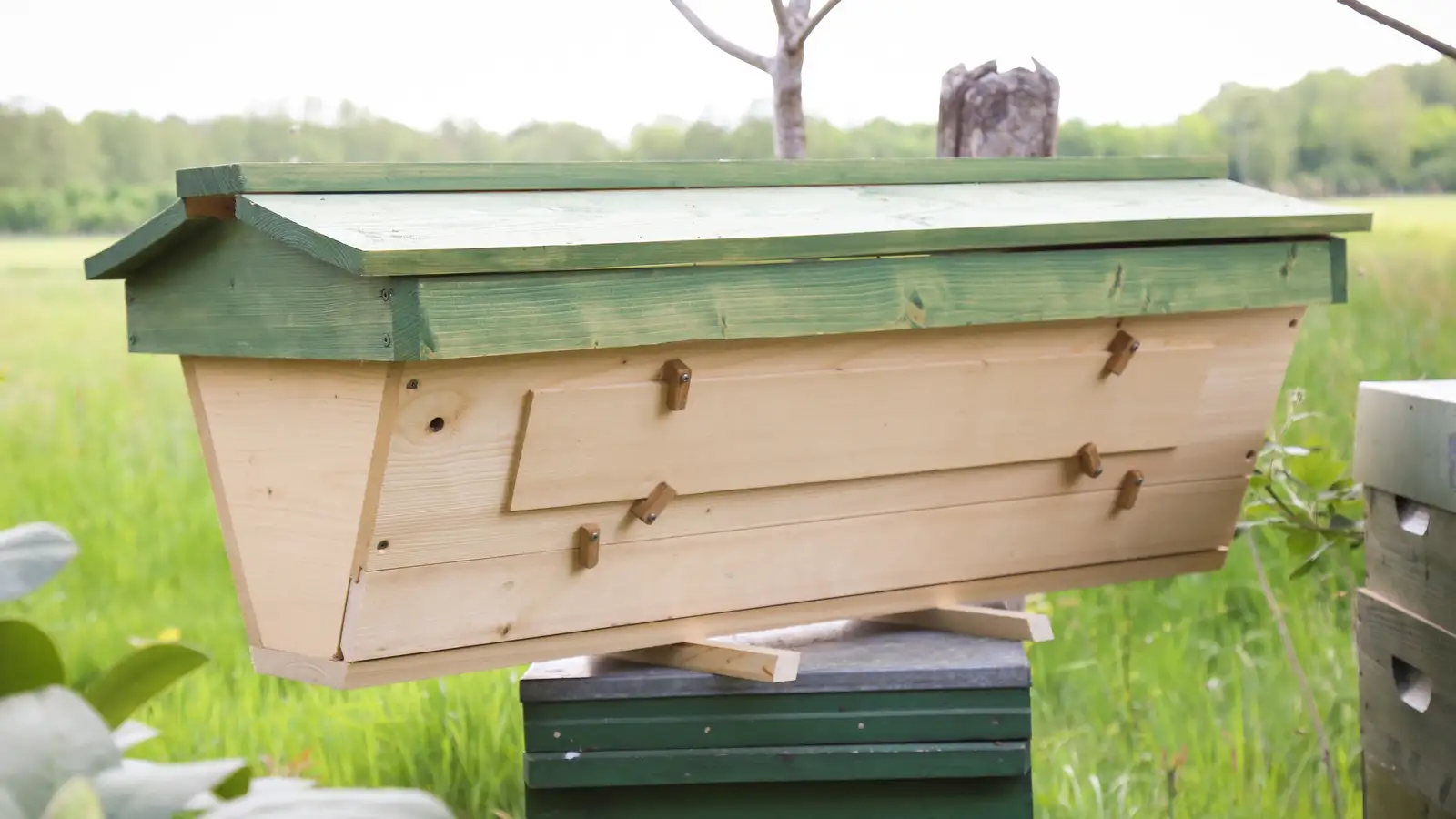
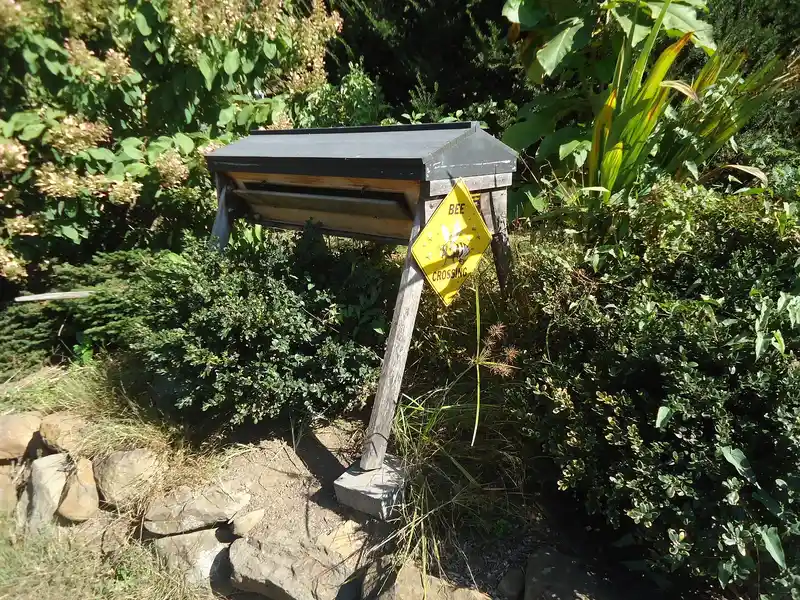
A top-bar hive is a long trough, often with sloping sides, roofed by a row of wooden bars. The bees hang their comb from the bars, and the beekeeper works along the box one comb at a time. The design most people now call the Kenyan top-bar hive was developed in 1971 by Maurice V. Smith and Gordon Townsend of the University of Guelph for a project in Kenya; the Tanzanian top-bar hive was developed separately. Bars are usually 1-1/4 to 1-3/8 inches wide. Many builders slope the sides, which is meant to discourage the bees from attaching comb to the walls.
Top-bar hives are cheap to build and kind to your back, and the hive usually sits at waist height. The trade-offs: there is no standard size, so parts rarely swap between makers; new comb breaks if you turn it flat; and honey is usually crushed and strained. They also need regular checks early on, because one crooked comb leads to the next. Our guides cover the top-bar beehive, the Kenyan top-bar hive and its dimensions, the Tanzanian top-bar hive and how the top-bar hive came about.
Long Langstroth hives
A long Langstroth is a single horizontal box that holds standard Langstroth deep frames side by side. A follower board limits the space while the colony is small and slides back as it grows. You get the low-lifting work of a top-bar hive with frames that fit any extractor and accept a nuc. Long box hives were more popular in the Southeast a century ago and faded because they are hard to move. The catch is space: when the box is full you must harvest, split or add a super. See horizontal beehives: pros, cons and trade-offs, and vertical vs horizontal hive airflow.
Layens hives
Georges de Layens, a French botanist, designed his hive in the second half of the 1800s around very deep frames and a hands-off routine of a few visits a year. It remains common in Spain and has a following among treatment-free beekeepers in the US, where small makers sell insulated versions. Deep frames hold more honey above the winter cluster, but they will not fit most hobby extractors, and a full long box is a two-person lift. Our Layens hive guide gives the verified frame size, about 36.5 x 39.5 cm (14-3/8 x 15-1/2 in), and plans. The Dartington long deep is a British take on the same idea.
The Warré Hive: Building Downward
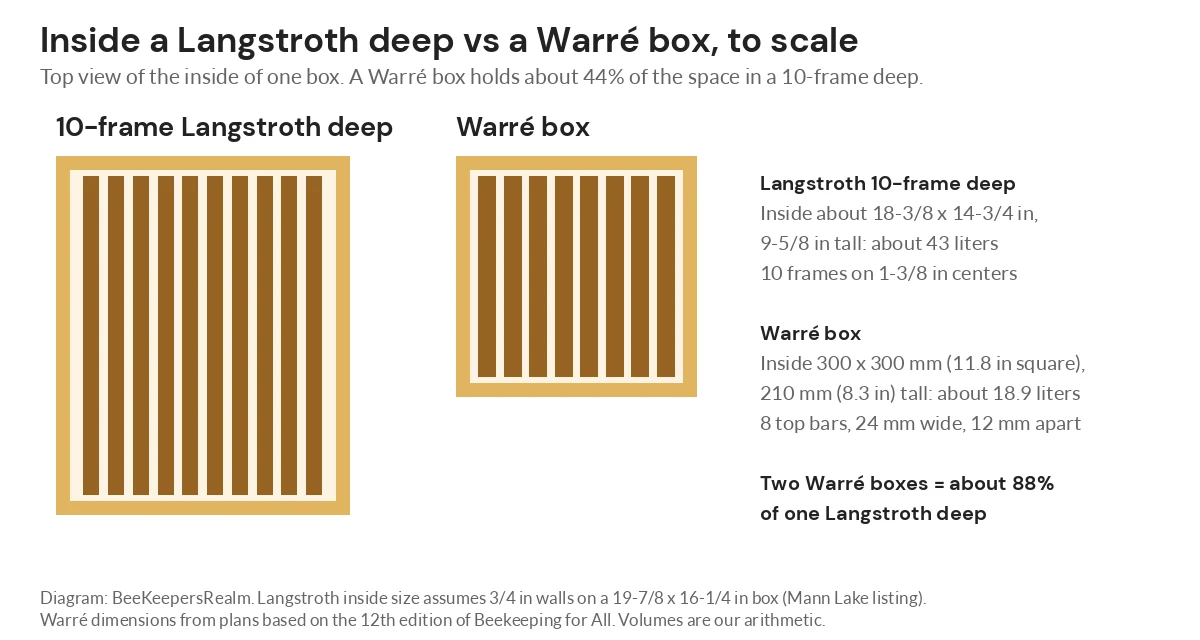
Abbé Émile Warré, a French priest, called his design the People’s Hive and published its final form in the 1948 edition of L’Apiculture pour Tous, translated into English as Beekeeping for All. It is a stack of small square boxes. Each box measures 300 x 300 mm inside and 210 mm tall, with eight top bars 24 mm wide and 12 mm apart. Instead of adding boxes on top, the beekeeper lifts the whole stack and slides an empty box underneath, so the bees build new brood comb at the bottom and fill the old comb above with honey. Honey is harvested from the top box, usually by crushing and straining.
Warré keepers aim for fewer inspections and comb that is renewed every few years. The cost is lifting: nadiring a three-box stack full of bees and honey is heavy work, and the small boxes make frame-by-frame disease checks slow. Our Warré beehive guide covers nadiring and the real limits, and the history of the Warré hive explains where it came from.
The boxes are small. By our arithmetic a Warré box holds about 18.9 liters, while a 10-frame Langstroth deep holds about 43, so two Warré boxes give a colony a little less room than one deep.
The AŽ Hive and Other Regional Designs
The AŽ hive is Slovenia’s national hive. Anton Žnideršič created his 9-frame Alberti-Žnideršič hive in 1903, based on the German Alberti leaf hive, and the Slovenian Beekeepers’ Association says it is still used by most of the country’s beekeepers. AŽ frames measure 41 x 26 cm. The hives sit side by side and stacked inside a beehouse, open from the back like cabinets, and the frames slide out like books from a shelf. You never lift a box, and you can work in the rain. In the US a few beekeepers build AŽ beehouses, but parts are scarce. See the association’s history of Slovenian beekeeping and our AZ beehive guide.

A few other designs have small but loyal followings. The Cathedral hive is a hexagonal top-bar hive, the Hex hive is a modular, wall-mounted observation hive, and observation hives are glass-sided display hives for schools and nature centers.
Frame and Box Sizes Side by Side
Published hive dimensions are scattered across standards, old manuals and supplier listings. These are the figures we could confirm from a named source.
| Design | Frame or comb | Box | Source |
|---|---|---|---|
| Langstroth deep | 19 in top bar; 9-1/8 in deep | 10-frame: 19-7/8 x 16-1/4 in outside, 9-5/8 in tall; about 43 liters inside* | Frame standards; Mann Lake listing |
| Langstroth medium | 19 in top bar; 6-1/4 in deep | Same footprint | Frame standards |
| Langstroth shallow | 19 in top bar; 5-3/8 in deep | Same footprint | Frame standards |
| 8-frame Langstroth | Same frames | About 13-3/4 in wide outside; about 35-1/2 liters for a deep* | Betterbee; our arithmetic |
| British National | 14 in comb width, 17 in top bar; 8-1/2 in deep (brood) or 5-1/2 in (shallow) | 18-1/8 in (460 mm) square; brood box 8-7/8 in tall | Former British Standard |
| AŽ | 41 x 26 cm | Original: 9 frames, two storeys | Slovenian Beekeepers’ Association |
| Warré | No frames; 8 bars, 24 mm wide, 12 mm apart | 300 x 300 mm inside, 210 mm tall; about 18.9 liters* | Plans from Beekeeping for All, 12th ed. |
| Kenyan top-bar | Bars 1-1/4 to 1-3/8 in wide | Length and wall slope vary by builder | Common practice |
*Our arithmetic from the inside measurements, assuming 3/4-inch walls for Langstroth boxes. Dadant frames are left out because published sizes vary by country; the Layens frame (about 36.5 x 39.5 cm) is covered in its own guide.
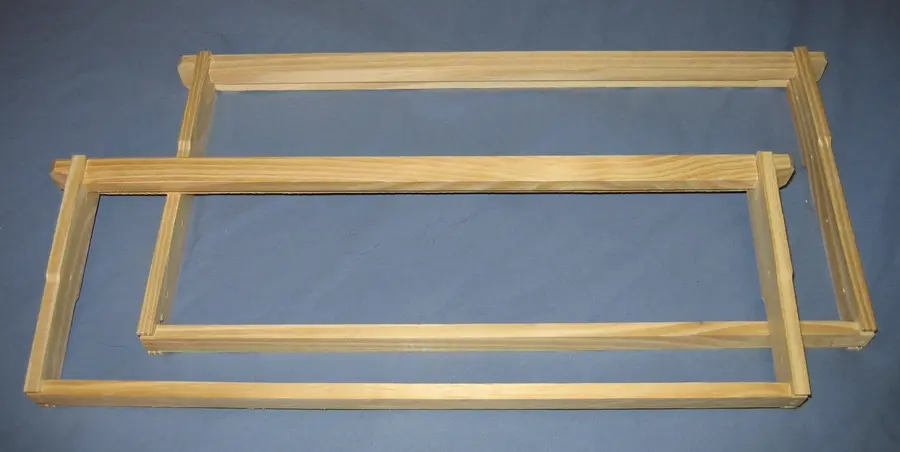
For how frame styles differ within one hive type (wedge top bars, grooved bars, plastic frames), see beehive frame types compared.
Movable Combs and State Law
The top-ranking hive guides we reviewed mention legality only in passing, and none cite an actual rule, but it can decide your choice. Several US states require bees to be kept on combs an inspector can lift out, because that is the only way to check brood for American foulbrood and other diseases.
“The keeping of honey bees in containers without movable frames by a beekeeper is prohibited.”
The next subsection of the same Florida rule covers top-bar hives directly: the owner is responsible for moving the comb during an inspection. Other states set similar rules:
- Vermont, 6 V.S.A. § 3029: hives must have frames that can be removed for inspection. The Secretary of Agriculture can order bees moved into a framed hive, or have the hive destroyed, and can permit unframed hives for exhibition.
- Arkansas, state apiary rules: no one may keep bees in a hive without movable frames, “to determine the presence of disease.”
- Delaware, 3 Del. C. § 7505: frames must be removable without damaging other combs, so every comb surface can be seen.
What this means for each hive type:
- Langstroth, Flow, poly, Dadant, National, long Langstroth, Layens and AŽ use frames, so they meet these rules by design.
- Top-bar and Warré hives use bars, not four-sided frames. Their combs can be lifted out only if the bees built them straight along each bar, so keep them straight and be ready to show the inspector every comb. In a state that says “frames,” ask the apiary program before you buy.
- Skeps, log hives and bee gums have fixed comb. They are illegal to stock with bees in states like these, and best kept as history. Read about skep beehives, log hives and Appalachia’s bee gums.
This section is educational information, not legal advice. Rules change and vary by state, and many states also require you to register your hives; check with your state department of agriculture’s apiary program.
How to Choose a Hive Type
Start with the problem you most need to solve, then pick the simplest hive that solves it.
- You want the easiest start and the most help. Choose a 10-frame Langstroth, or an 8-frame one if lifting 60 pounds is hard for you. Nucs, used gear and mentors are easiest to find. Our starter kit guide prices out complete setups.
- Lifting is the limit. Choose a long Langstroth if you want standard frames, or a top-bar hive if you want the lowest cost. All-medium 8-frame boxes are the lightest stacked option.
- You want natural comb and fewer inspections. Choose a top-bar hive or a Warré, and accept less honey, more wax and the state-rule question above.
- Your winters are long and hard. Any hive can winter well with enough honey and good top insulation. Insulated poly boxes and deep-framed Layens hives are the options built for it.
- You want honey without an extractor. A Flow super on a Langstroth, or crush and strain from any hive.
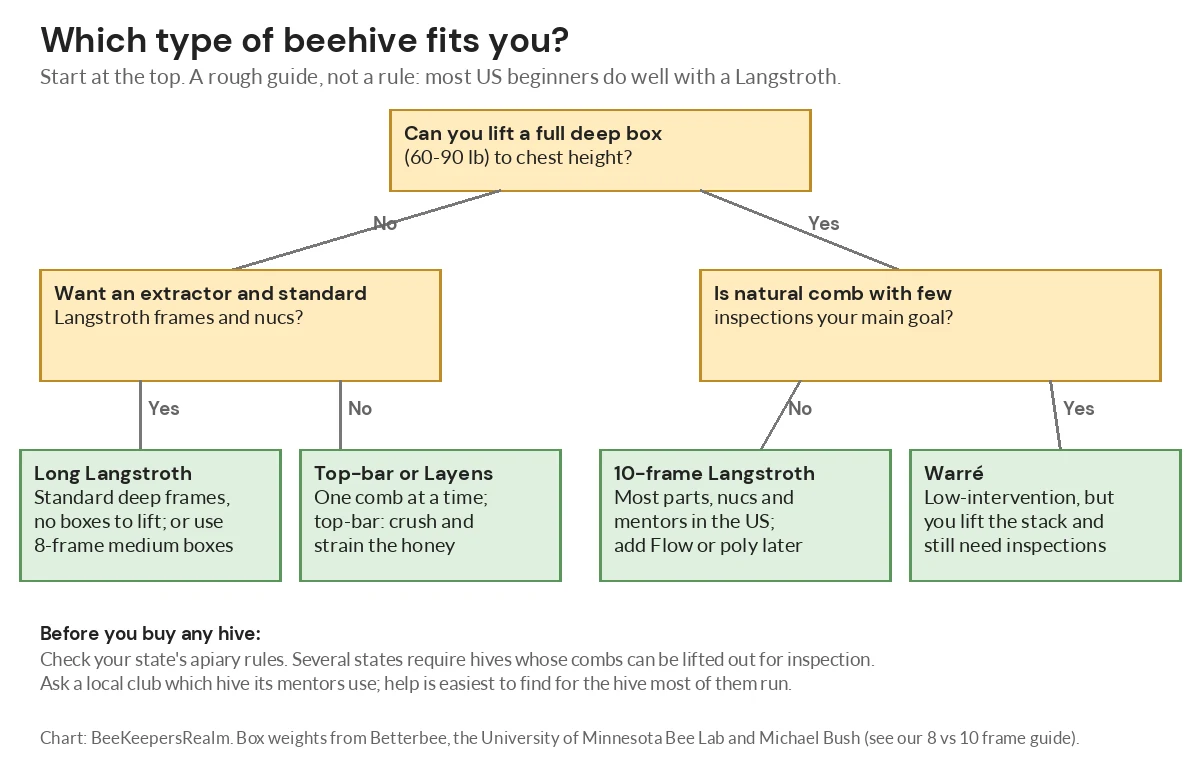
Two practical checks before you buy: ask your local club which hive its mentors run, and price the whole setup, not just the box. Our guides to beekeeping equipment and what beekeeping costs cover the rest.
Frequently Asked Questions
What are the three main types of beehives?
The Langstroth, the top-bar hive and the Warré. Most other designs, such as the Flow, Layens and long Langstroth, are variations on one of these.
What is the best type of beehive for beginners?
For most US beginners, an 8- or 10-frame Langstroth. Nucs, parts and mentors are easiest to find for it. If you cannot lift heavy boxes, a long Langstroth keeps the same frames on one level.
Which hive produces the most honey?
Framed hives such as the Langstroth, because extracted comb goes back to the bees for refilling. Top-bar and Warré colonies must rebuild comb after each crush-and-strain harvest.
Which beehive requires the least heavy lifting?
Horizontal hives: the top-bar, long Langstroth and Layens. You lift one comb at a time. The AŽ hive also avoids lifting boxes.
What is an old-fashioned beehive called?
A skep: a dome of coiled straw or wicker. Hollow log hives, called bee gums in Appalachia, are another. Both have fixed comb, which several states ban.
Are top-bar hives legal in the US?
Generally yes, if the combs can be lifted out for inspection. Florida’s apiary rule addresses top-bar hives by name. Check your state’s rules if they say “frames.”
What is the difference between a Warré and a top-bar hive?
Both use bars instead of frames. A top-bar hive is one long horizontal box; a Warré is a vertical stack of small square boxes, with new boxes added underneath.
The Bottom Line
Pick the hive you can lift, inspect and buy parts for, then learn it well. For most new beekeepers in the US that is a Langstroth; for anyone who cannot lift heavy boxes, a long Langstroth or top-bar hive. Before you buy, read the full guide for the type you choose and check your state’s apiary rules.
Image credits: Photo: Maja Dumat, via Wikimedia Commons, CC BY 2.0, cropped.