Reviewed by Daniel M. · How we review
To prepare a Flow Hive for a cold winter, Flow officially allows two setups: leave the Flow super on only if its frames are full of honey and the queen excluder is removed, or harvest it, let the bees clean it for a day, then take the Flow super and excluder off so the colony winters in its brood box or boxes. Where winters are hard, experienced owners on Flow’s own forum almost always recommend the second. Below the Flow super it is a normal Langstroth hive, so stores, mites and insulation follow the usual northern rules.
This guide is written from eastern North Dakota. It separates Flow’s official advice from community practice and puts dates on each step using NOAA climate normals for Fargo and Grand Forks. For how the frames work, see how the Flow Hive’s honey tap works.
Key Takeaways
- Flow’s support page offers a full Flow super left on with the excluder out, or the super removed and the hive packed down. It gives no “leave it on” option for a part-filled super.
- Cold does not damage Flow frames, says co-inventor Cedar Anderson. The reasons to pull the super are less space to heat, honey that can set in the cells, and a queen who may lay there in spring.
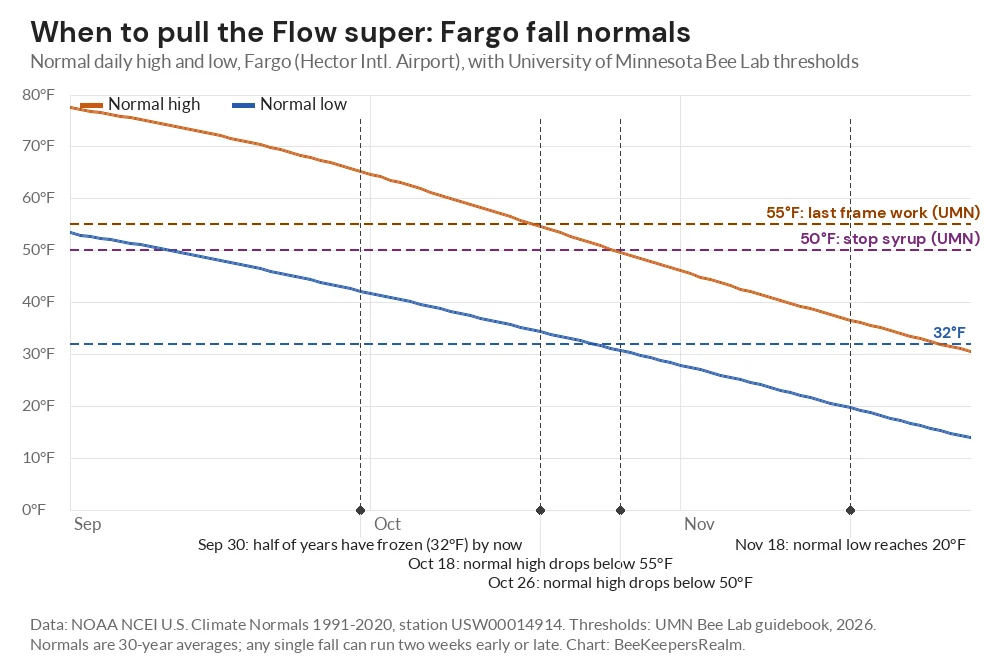
- In the Red River Valley, normal highs drop below 55°F around October 15 to 18 and below 50°F around October 23 to 26. Finish frame work and syrup feeding before then.
- Store Flow frames clean, dry, dark and sealed. Below 40°F in storage, the USDA says wax moths stop damaging comb.
- Go into winter with at least 75 pounds of honey in the boxes that stay on, the University of Minnesota Bee Lab’s target.
Table of Contents
- Flow’s Official Advice vs. What Cold-Climate Owners Do
- Leave the Flow Super On or Take It Off?
- A Red River Valley Timeline for Pulling the Super
- Storing Flow Frames Over Winter
- Insulation, Ventilation and the Base Tray
- Stores and Mites Before You Close Up
- Frequently Asked Questions
- The Bottom Line
Flow’s Official Advice vs. What Cold-Climate Owners Do
Flow’s support page, How do I prepare my Flow Hive for winter? (updated July 2025), says wintering a Flow Hive “is much the same as with conventional Langstroth equipment” and urges owners to ask local beekeepers. Regulars on Flow’s forum who answer cold-climate questions are blunter: take the Flow super off.
| Decision | What Flow officially says | What cold-climate owners commonly do |
|---|---|---|
| Flow super | Leave on only if full of honey; otherwise extract, let bees clean it a day, remove | Remove it by about September, even if partly full |
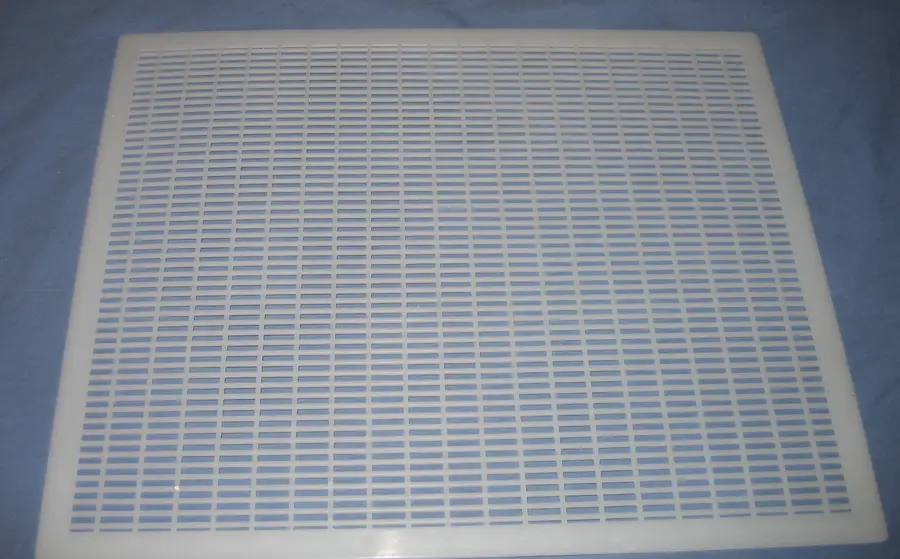
| Queen excluder | Remove before winter; wash and store | Same; a queen can lay in Flow frames in spring if the super stays |
| Cold and the frames | Cold does not harm the parts; frames can be frozen | Don’t open or close cells while frames are cold and brittle |
| Frame storage | Wash in water under 160°F, dry, store cool, dry and dark, wrapped or in a tub | Freeze first, then store vermin-proof |
| Ventilation | Ventilation without a draught; Flow’s course instructor recommends no top vent | Northern guides such as UMN’s keep a small upper vent under a moisture board |
| Base | Classic: corflute slider in the top slot. Flow Hive 2: ventilation control can block airflow | Flow Hive 2: tray flipped upside down to cut the air gap |
| Winter feeding | Support page: bags of 1:1 syrup on the inner cover; course instructor prefers dry sugar | Syrup only in fall; fondant or dry sugar in winter |
Sources: Flow Hive support and blog pages and a 2022 Flow livestream, checked October 7, 2026; Flow forum threads, 2017 to 2026; UMN Bee Lab guidebook, 2026.
Flow’s own winter video, from its online course, features Frederick Dunn, a beekeeper in the northeastern United States. Its chapters cover local advice, hive configuration, colony resources, fall preparation, storing equipment and packing down, insulation and ventilation, clearing the entrance, emergency feeding and cleansing flights. In Flow’s written summary, Dunn favors two boxes and dry sugar, and avoids top ventilation.
Leave the Flow Super On or Take It Off?
Flow says cold is not the problem. Asked in a 2022 livestream whether cold damages Flow frames, Cedar Anderson said no; the reason to remove the box is to make the colony’s home smaller for winter.
“I’ve had tests going in deep freezers for six years now. It doesn’t actually harm the parts.”
When leaving it on can work
Officially, the super stays only if it is full of honey, and only with the excluder out so the queen can move up with the cluster. Flow adds that she may start laying in late winter, so get her back into the brood box before then. That suits a strong colony with honey in the brood box too, where winters are shorter.
Why most northern owners take it off
Forum regulars give three reasons. Honey left in the cells can crystallize, and Flow’s help pages say set honey will not drain. With the excluder out, the queen can lay in the Flow frames in spring. And a super left on into fall gets propolized, which can make the next harvest hard. A fall flow can also fill the super with goldenrod honey, which is high in glucose and can set quickly.
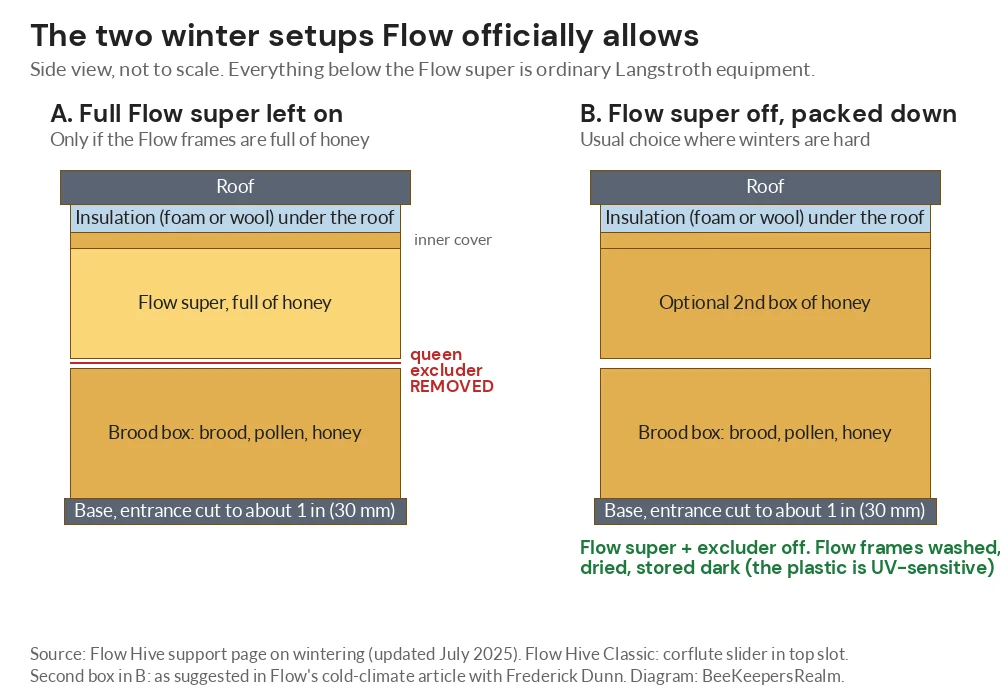
The part-filled super in October
Flow’s page skips this case. Harvest the capped frames on the warmest afternoon you get, since Flow notes honey drains more slowly in cool weather. One longtime forum contributor advises draining no more than two frames a day, because frames sometimes leak back and flood the hive. Give the bees a day to clean the super, then take it and the excluder off; see when to take a queen excluder off. Frames still holding honey can go in a freezer in a plastic bag; Flow suggests this for honey you want to keep until spring.
A Red River Valley Timeline for Pulling the Super
The University of Minnesota Bee Lab’s guidebook to beekeeping in northern climates sets two rules: pull frames only when the air is above 55°F, and stop syrup before daytime highs drop below 50°F. We matched them to NOAA’s 1991–2020 climate normals for the valley’s two main airports.
| Milestone (30-year normal) | Fargo | Grand Forks | For a Flow Hive |
|---|---|---|---|
| Half of years have had a 32°F night | Sep 30 | Sep 27 | Last Flow harvest done |
| Half of years have had a 28°F night | Oct 10 | Oct 5 | Super and excluder off |
| Normal high falls below 55°F | Oct 18 | Oct 15 | Last day to pull frames |
| Normal high falls below 50°F | Oct 26 | Oct 23 | Syrup finished; wrap once broodless |
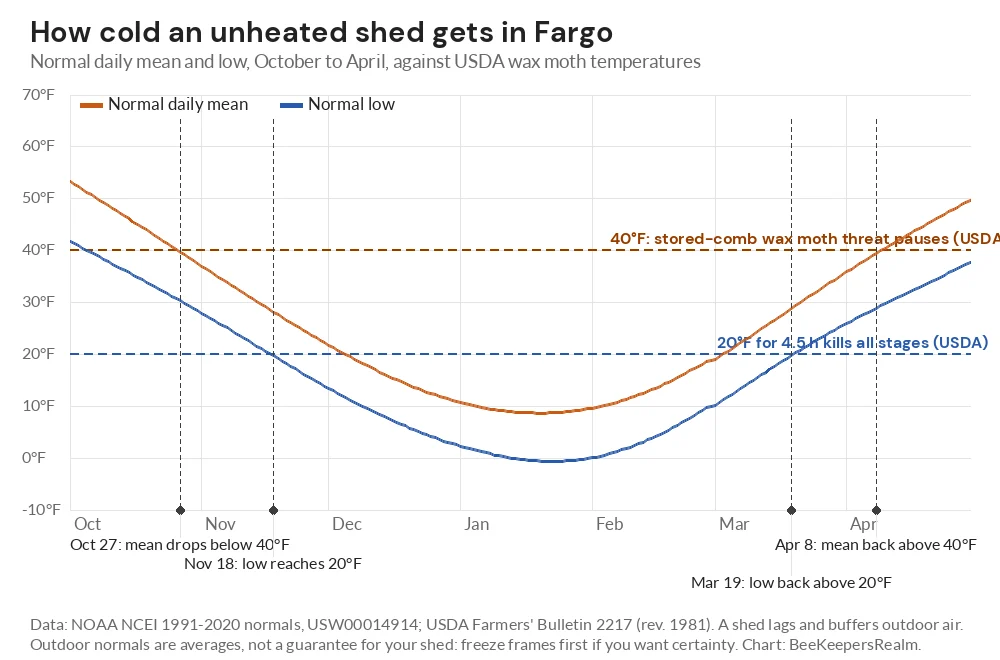
| Normal daily mean falls below 40°F | Oct 27 | Oct 23 | Stored frames past the wax moth threshold |
| Normal low reaches 20°F | Nov 18 | Nov 11 | Sheds near the USDA freeze treatment |
Source: NOAA NCEI U.S. Climate Normals 1991–2020, stations USW00014914 and USW00014916. Interpretation by BeeKeepersRealm.
So the Flow super should come off in mid to late September, matching the deadline forum regulars give. That leaves about four weeks for 2:1 syrup if the hive hefts light. If it is late October and the super is still on, harvest what drains on a mild afternoon, freeze or store the rest, and close up without pulling brood frames.
Storing Flow Frames Over Winter
Flow’s instructions: wash the frames in warm to hot water, never above 70°C (160°F) and without solvents, dry them fully in the shade, and store them cool, dry and dark, wrapped in plastic or in a tub. The frame plastic is UV-sensitive. Flow names wax moths and rats as the pests to keep out.
Wax moth is the bigger risk, and northern cold helps:
“The threat of damage by the greater wax moth to stored combs is continuous, except when temperatures in the storage area drop below 40°F (5°C).”
The bulletin says all stages die after 4.5 hours at 20°F, 3 hours at 10°F or 2 hours at 5°F, and that a home freezer works. In Fargo, the normal daily mean stays below 40°F from about October 27 to April 8, and the normal low is at or below 20°F from about November 18 to March 19. An unheated shed will usually do the job, but a shed is not a freezer. For certainty, freeze the sealed frames first, as Flow suggests, then store them where adult moths can’t reach. See preventing wax moths in stored equipment for your other comb.
Insulation, Ventilation and the Base Tray
With the super off, insulate like any northern Langstroth hive. Flow suggests foam or wool between the inner cover and the roof, plus a wrap where needed. UMN uses a moisture board or 2-inch foam above the inner cover, with side insulation at a lower R-value than the top.
Ventilation is where sources disagree. Dunn avoids top ventilation; UMN opens a small upper vent under a moisture board. Pick one system and follow it fully; see our comparison of a winter quilt box vs. a moisture board.
- Flow Hive Classic. Flow says to put the corflute slider in the top slot to cut draughts.
- Flow Hive 2. Flow says the ventilation control raises or lowers airflow with the weather. A Flow team member explained on the forum that with the spirit level on top of the brass knob, ventilation is blocked; forum users set it that way for winter. Flipping the tray upside down to shrink the air space is community practice, not Flow instruction.
- Entrance. Flow suggests about 1 inch (30 mm). Add a mouse guard and keep snow and dead bees clear.
Stores and Mites Before You Close Up
Honey drained from the Flow super is honey the bees won’t eat, so the boxes that stay on must carry the winter food.
“Prepare your colony with at least 75 pounds of honey so you do not need to feed it over winter.”
UMN feeds 2:1 syrup if the top box has fewer than eight frames of honey or the hive lacks ten full deep frames. See how much honey bees need for winter to convert pounds to frames. Flow’s page suggests bags of 1:1 syrup on the inner cover; UMN instead stops syrup before highs fall below 50°F and uses honey frames, sugar patties, a candy board or dry sugar in winter. See fondant for bees.
UMN applies a clean-up varroa treatment, such as an oxalic acid dribble or vapor, once the colony is broodless, then wraps the hive. See our oxalic acid vaporization guide and follow the product label; this is general education, not treatment advice.
For standard Langstroth hives, see winterizing beehives in northern states.
Frequently Asked Questions
Should I empty a Flow Hive before winter?
In a cold climate, yes. Harvest the Flow super, let the bees clean it, then remove it and the excluder. Flow allows a full super to stay with the excluder out.
What do you do with a Flow Hive in winter?
Very little. Keep it closed, heft it now and then, keep the entrance clear, and add solid feed if it feels light.
Can Flow frames freeze?
Yes. Flow says freezing does not damage them, though wax and propolis turn brittle, so don’t operate the cells until they warm.
Do I need to remove the queen excluder for winter?
Yes. If anything stays above it, the queen can be left behind when the cluster moves up.
How cold is too cold to open a Flow Hive?
The UMN Bee Lab pulls frames only above 55°F. A quick lid lift to add feed is possible near freezing; see how cold is too cold to open a beehive.
Can you harvest a Flow Hive in cold weather?
Flow says honey drains more slowly in cool weather and set honey will not drain at all, so plan the last northern harvest for September.
The Bottom Line
In a northern winter, treat the Flow super as a summer box: harvest it in September, store the frames sealed and dark, and winter the colony like any Langstroth hive. For the rest of the northern season, see beekeeping in cold-winter, short-summer climates.