Reviewed by Thomas B. · Last Updated September 22, 2026 · How we review
The Flow Hive replaces the last, messiest step of beekeeping — pulling frames, uncapping wax, and spinning an extractor — with a plastic frame that splits open at the turn of a key and lets honey drain straight into a jar. It was invented in Australia by Cedar Anderson and his father Stuart Anderson and became one of the most successful crowdfunding products in history when it launched. This guide covers exactly how the mechanism works, what its 2015 launch actually proved, and where the “without disturbing the bees” pitch ran into real pushback from experienced beekeepers.
Key Takeaways
- The Flow Hive uses a Langstroth-compatible frame with partially-formed plastic comb; turning the Flow Key splits each cell vertically, breaking the wax capping and letting honey drain by gravity into jars.
- Cedar and Stuart Anderson’s February 2015 Indiegogo campaign raised over $12 million from nearly 25,000 orders in 130-plus countries, at the time Indiegogo’s most successful campaign ever.
- It only changes the harvesting step. The hive body itself is a standard Langstroth box, so all normal colony management — mite treatment, swarm control, feeding, winter prep — is unchanged and still required.
- Early marketing claiming honey could be harvested “without disturbing the bees” drew real criticism from experienced beekeepers, and Cedar Anderson later clarified the claim publicly.
- Flow Hive’s patents cover the split-cell mechanism; a Chinese competitor, TapComb, was found to infringe them and ceased operations in late 2018.
- Harvested honey must be fully capped before the key is turned — draining uncapped honey produces a high-moisture product that can ferment in the jar.
Table of Contents
- Who Invented the Flow Hive, and When
- How the Flow Frame Actually Works
- Harvesting: What Actually Happens
- The Rest of the Hive Is Still a Langstroth
- The “Without Disturbing the Bees” Controversy
- Patents and Competing Products
- What First-Time Buyers Get Wrong
- Is a Flow Hive Actually Worth the Cost
- Flow Hive vs Standard Langstroth Extraction
- Real Limits and Who It Actually Suits
- Frequently Asked Questions
Who Invented the Flow Hive, and When
Cedar Anderson and his father Stuart Anderson developed the Flow Hive in Australia and launched it publicly in 2015. Their Indiegogo crowdfunding campaign that February raised more than $12 million from close to 25,000 orders across over 130 countries, making it, at the time, the most successful campaign the platform had hosted. That launch is largely what put the split-cell honey frame concept in front of a mainstream, non-beekeeping audience for the first time, well beyond the niche hobbyist and commercial channels that most hive equipment sells through.
How the Flow Frame Actually Works
A Flow frame looks like an ordinary Langstroth frame from the outside, but it is fitted with partially-formed honeycomb cells made of food-grade, BPA- and BPS-free plastic. Bees coat the plastic cells with their own wax and fill them with honey and cap them, exactly as they would natural comb. Each cell is split vertically down the middle; when a beekeeper inserts the Flow Key and turns it roughly 90 degrees, the two cell halves shift and realign, breaking the wax capping and opening a channel that runs down through the frame to a spout at the base.

Harvesting: What Actually Happens
Once the key is turned, honey drains by gravity through the newly opened channels and out through tubes at the back of the hive into a jar or container, typically taking 20 to 40 minutes per frame. The hive needs a slight backward tilt so gravity pulls honey toward the harvest tubes rather than pooling inside the frame. Only fully capped honey should be harvested this way: draining uncapped, unripe honey pulls in honey with too much water content, which risks fermenting in the jar rather than storing safely. Compared with a traditional harvest — pulling frames, uncapping wax by hand, spinning an extractor, filtering, and cleaning everything afterward, which can take a full afternoon for six frames — a Flow harvest of the same scale is commonly reported at under two hours including cleanup.

The Rest of the Hive Is Still a Langstroth
It is easy to assume the Flow Hive is a different hive system altogether, but only the honey frames are proprietary; the box, brood chamber, and general management are standard Langstroth equipment. That means every other part of beekeeping — monitoring and treating varroa, managing swarm pressure, feeding through dearth, and winter preparation — is exactly as demanding as it is for any other Langstroth colony. The Flow Hive removes labor from one specific afternoon of the beekeeping year, not from the ongoing weekly judgment the rest of the season requires.
The “Without Disturbing the Bees” Controversy
Flow Hive’s early marketing described harvesting honey “without disturbing the bees,” a claim experienced beekeepers pushed back on directly, since opening a hive to insert a key and drain frames still involves the colony and does not remove the need for normal hive maintenance and inspection.
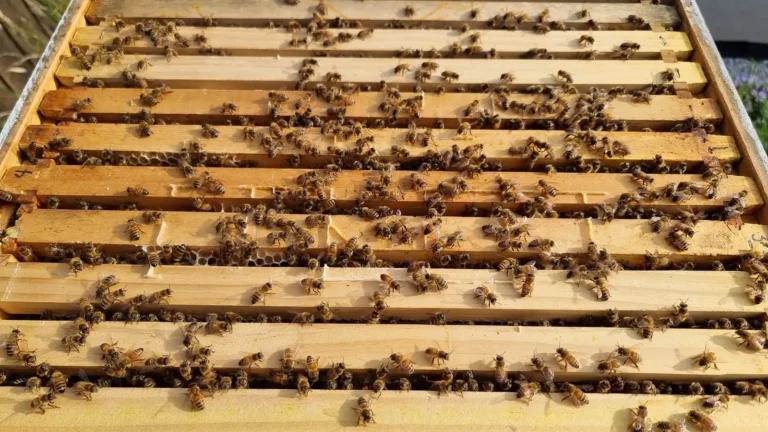
The Flow Hive system only changes the honey harvesting process, while not changing the rest of the beekeeping process.
That clarification is the accurate way to understand the product: it is a genuine improvement to one task, not a replacement for beekeeping skill or colony management, and treating it as the latter is where new beekeepers who bought a Flow Hive as their first-ever hive ran into the most trouble.
Patents and Competing Products
The Andersons hold patents covering split-cell honey frame designs generally, not just their specific product. A Chinese manufacturer, TapComb, produced a frame using the same split-cell mechanism and was found to infringe those patents; the company ceased operations in late 2018 as a result. The patent position has kept the split-cell honey frame category effectively a single-product market since launch, which is part of why Flow Hive frames remain priced well above a standard set of Langstroth frames and foundation.
What First-Time Buyers Get Wrong
The Indiegogo campaign’s reach meant a large share of Flow Hive’s first buyers were people who had never kept bees at all, drawn in by the harvesting demonstration rather than by an existing interest in colony management. The recurring mistake that group makes is buying the hive expecting the harvesting convenience to substitute for beekeeping knowledge generally: skipping mite monitoring, underestimating how much attention swarm season needs, or assuming a colony that has not touched the Flow frames yet is somehow failing, when new colonies commonly work brood-area comb first and Flow frames only once established. None of this is a flaw in the product; it is a mismatch between what the marketing emphasized — the harvest — and what actually determines whether a colony survives its first year, which is everything that happens in the other eleven months.
A second, more practical mistake is skipping the tilt and capping checks the mechanism depends on. Beekeepers new to the system sometimes turn the key before comb is fully capped, drawing off high-moisture honey that ferments in storage, or install the hive without the slight backward tilt gravity drainage requires, leaving honey pooling inside the frame instead of reaching the collection jar.
Is a Flow Hive Actually Worth the Cost
The honest answer depends entirely on what is being valued. Measured purely on harvest labor, the case is strong and well documented: a multi-frame harvest that could consume an afternoon with a traditional extractor is reported to take under two hours including cleanup with Flow frames. Measured on honey yield, equipment cost, or the skill required to keep the colony alive, a Flow Hive offers no advantage over a standard Langstroth at all, and its frames cost meaningfully more than standard frames and foundation. For a beekeeper who dislikes or physically struggles with the extraction process specifically, and who already has or is prepared to build real colony-management skill, the premium can be a reasonable trade. For someone hoping the purchase itself lowers the bar to keeping bees successfully, it does not.
Flow Hive vs Standard Langstroth Extraction
| Feature | Flow Hive Frames | Standard Langstroth Extraction |
|---|---|---|
| Harvest method | Turn key, honey drains by gravity | Uncap wax, spin frames in an extractor |
| Time for 6 frames | Roughly 2 hours including cleanup | Can run a full afternoon |
| Equipment needed | Flow frames, jars, tubing | Uncapping tool, extractor, filter |
| Upfront cost | Higher, proprietary plastic frames | Lower, standard frames and foundation |
| Colony management required | Same as any Langstroth colony | Same as any Langstroth colony |
Real Limits and Who It Actually Suits
The Flow Hive suits someone who already understands, or is prepared to separately learn, standard colony management and simply wants to remove the extraction step’s mess and time. It does not suit someone hoping a purchase substitutes for beekeeping knowledge: mite counts, swarm prevention, and seasonal feeding are unaffected by which honey frame is installed. The upfront cost is real, since Flow frames sell at a premium over standard equipment, and the harvest convenience only pays off once the frames themselves are fully drawn and capped, which still takes a colony a full season to establish just as it would with any other frame type — the same inspection routine applies regardless. If easy harvest is the priority, our Beehaus guide covers another low-labor commercial hive option, and our full guide to beehive types and beginner hive-choosing guide cover the rest of the field.
For how Flow frames compare with extractors, crush and strain and cut comb, see honey harvesting methods compared.
For what to do with a Flow super before a cold winter, see how to winterize a Flow Hive.
Frequently Asked Questions
Who invented the Flow Hive?
Cedar Anderson and his father Stuart Anderson invented it in Australia, launching it publicly with a February 2015 Indiegogo campaign that raised over $12 million from nearly 25,000 backers.
How does the Flow Hive actually work?
Flow frames contain partially-formed plastic honeycomb cells that bees fill and cap with honey. Turning the Flow Key splits each cell vertically, breaking the wax capping and opening a channel that lets honey drain by gravity out through a tube into a jar.
Do bees get hurt when you harvest a Flow Hive?
The mechanism itself does not crush or kill bees inside the frame, since only the wax capping is split, but the hive still requires opening and normal handling, so the “without disturbing the bees” framing used in early marketing was misleading and has since been clarified by the inventors.
Does a Flow Hive still need regular beekeeping management?
Yes. Only the honey frames are different; the rest of the hive is a standard Langstroth box, so varroa monitoring, swarm control, feeding, and winter preparation are all still required exactly as they would be with any other hive.
How much honey can you harvest from a Flow Hive frame?
A single fully capped frame typically drains in 20 to 40 minutes once the key is turned, and a comparable six-frame harvest that might take a full afternoon with a traditional extractor can be done in under two hours including cleanup.
Is Flow Hive honey lower quality than extracted honey?
Not if harvested correctly. Honey must be fully capped before the key is turned; draining uncapped comb pulls in higher-moisture honey that can ferment in storage, which is a harvesting-timing issue rather than a difference in the honey itself.
Can a total beginner start with a Flow Hive?
A beginner can technically start with one, but the hive body and colony management are unchanged from a standard Langstroth, so a first-time keeper still needs to learn mite monitoring, swarm control, and seasonal management independently of whichever honey frames are installed.
Why is Flow Hive equipment more expensive than standard frames?
The Andersons hold patents on the split-cell mechanism, which has kept genuine competitors out of the category since launch — a Chinese competitor, TapComb, was found to infringe the patents and shut down in 2018 — leaving Flow frames priced well above standard frames and foundation.