Reviewed by Thomas B. · Last Updated September 22, 2026 · How we review
The Warré hive is a stacked-box, top-bar design built around one idea: a colony should be managed by adding space below it, not above it, and left alone as much as the bees will tolerate. It was developed by a French priest who spent over fifteen years comparing hive designs before settling on this one, and it remains the most widely adopted low-intervention hive in the English-speaking world after the Langstroth. This guide covers how the Warré hive actually works, what nadiring means in practice, and where its low-maintenance reputation runs into real limits.
Key Takeaways
- The Warré hive, nicknamed “the People’s Hive,” was designed by Abbé Émile Warré (1867-1951), a French priest who tested a variety of hive models for more than fifteen years before publishing the design in 1948.
- It is a vertical stack of square top-bar boxes, expanded by “nadiring” — adding a new empty box underneath the stack, not on top — once the bottom box is roughly 80% full.
- A quilt box filled with absorbent material sits on top of the stack under the roof, managing moisture without the ventilation gaps a Langstroth relies on.
- Comb is built freely from wedge-guided top bars rather than removable frames, so honey is typically harvested by cutting and crushing comb rather than spinning it in an extractor.
- It is a genuinely different design from the woven, vertical Sun Hive, even though both are marketed to the same natural-beekeeping audience — see our Sun Hive guide for that comparison.
- No queen excluder is used, and inspections are deliberately infrequent compared with a managed Langstroth colony.
Table of Contents
- Who Designed the Warré Hive, and Why
- How the Warré Hive Actually Works
- Nadiring: Expanding a Warré Hive
- The Quilt Box and Moisture Management
- Inspections and Seasonal Management
- Harvesting Honey From a Warré Hive
- A Warré Season, Month by Month
- Common Mistakes New Warré Beekeepers Make
- Warré vs Langstroth vs Top-Bar Hive
- Real Limits of the Warré Design
- Frequently Asked Questions
Who Designed the Warré Hive, and Why
Abbé Émile Warré was a French Catholic priest, ordained in 1891, who kept bees as a parallel vocation. Rather than adopting one of the many frame hives already on the market in the early twentieth century, he spent more than fifteen years building and comparing a series of his own designs before settling on the vertical box hive that became known as la Ruche Populaire, or the People’s Hive. By 1948, the year his book on the design was published in its final French edition, he was managing roughly 350 hives himself.
Anyone with simple tools and his book.
Warré’s book, L’Apiculture Pour Tous, ran to twelve French editions in his lifetime. The standard English translation, Beekeeping For All, was made from that final 1948 edition by Patricia and David Heaf in 2007, and remains the primary English-language source for the design today.
How the Warré Hive Actually Works
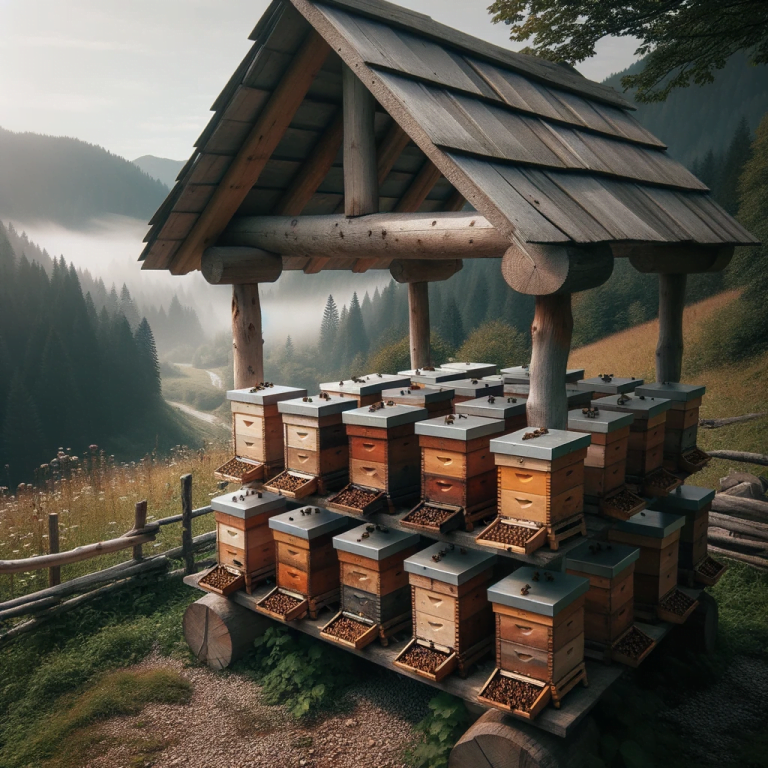
A Warré hive is a stack of square wooden boxes, each fitted with a row of top bars rather than removable frames. Bees are given a wedge or comb guide on the underside of each bar and build comb downward from it, the same foundationless principle used in a Kenyan top-bar hive or a log hive, just arranged as a vertical tower of boxes instead of one long horizontal trough. Brood is generally reared in the lower boxes, with honey stored above it as the colony builds upward through the stack over a season.

Nadiring: Expanding a Warré Hive
The Warré hive’s defining management move is nadiring: adding a new, empty box underneath the existing stack rather than on top of it, generally once the bottom box is judged to be about 80% full of comb. This inverts the logic of a Langstroth, where a beekeeper supers upward as the colony fills existing space. Nadiring lets the colony continue building fresh comb at the bottom while older comb migrates toward the top of the stack over time, which is also the mechanism by which older brood comb is naturally retired from the active brood nest.
The Quilt Box and Moisture Management
A cloth-bottomed quilt box sits at the top of the stack, under the roof, filled with an absorbent material such as wood shavings or sawdust. It manages the moisture a colony produces through respiration and evaporation without relying on the ventilation gaps a Langstroth’s inner cover or screened bottom board provides. This is one of the more distinct engineering choices in the design: rather than venting excess moisture out, the quilt box is meant to absorb and slowly release it, keeping the box itself dry.

Inspections and Seasonal Management
Warré hives are managed with deliberately infrequent inspections compared to a Langstroth colony under active management. Because there are no removable frames to pull and inspect individually, a full internal check means lifting boxes apart rather than sliding out one frame, which is more disruptive per look than a standard frame inspection. Most Warré keepers limit full inspections to nadiring checks and end-of-season assessment, relying on entrance activity and box weight as day-to-day signals of colony health rather than routine internal inspection.
Harvesting Honey From a Warré Hive
Because comb is built on fixed top bars rather than removable frames, most Warré honey is harvested by cutting capped comb free and crushing and straining it, rather than spinning it in a conventional extractor built for standard frames. That means harvested comb is not returned to the colony to be refilled the way an extracted Langstroth frame is, which caps realistic per-box yield below what the same size colony could produce in a frame hive built for repeated extraction.
A Warré Season, Month by Month
Because Warré management is built around infrequent intervention, most of the calendar year is about watching rather than opening the hive. In early spring, once temperatures allow, the first check is whether the colony survived winter and whether the bottom box already needs nadiring — a colony that wintered well can fill its lowest box faster than a beekeeper expects. Through late spring and summer, nadiring continues as needed, generally judged by lifting the whole stack slightly to gauge weight and glancing under the bottom box for comb, rather than lifting individual bars on a fixed schedule. Swarm season deserves closer attention than the rest of the year: because a Warré is not opened often, early swarm preparations can go unnoticed longer than in a weekly-inspected Langstroth colony, so many keepers add one dedicated swarm-season check even if it breaks their usual low-intervention rhythm.
Harvest, where taken, generally happens in late summer or early autumn from the uppermost boxes, leaving enough stores in the lower boxes for winter. Going into autumn, the quilt box is checked and its absorbent material refreshed if damp or compacted, since its condition going into winter is what determines how well it manages condensation through the cold months. Over winter, the hive is generally left entirely alone beyond occasional entrance checks for adequate ventilation and to confirm the colony is still active.
Common Mistakes New Warré Beekeepers Make
The most common error is treating “low intervention” as “no observation.” A Warré still needs its keeper to notice trouble — a queenless colony, a mite problem, or dwindling stores — even though the inspection method is lighter-touch than a frame-by-frame Langstroth check. A second common mistake is nadiring too early or too late: adding a box well before the bottom one is close to full wastes the colony’s effort maintaining unused space, while waiting too long crowds the colony and increases swarm pressure. A third is neglecting the quilt box, letting its absorbent material become damp and compacted, which undermines the moisture management the whole design depends on. None of these mistakes are unique to the Warré specifically, but its lighter inspection schedule means they take longer to surface and longer to notice once they do.
Warré vs Langstroth vs Top-Bar Hive
| Feature | Warré Hive | Langstroth | Kenyan Top-Bar Hive |
|---|---|---|---|
| Orientation | Vertical stacked boxes | Vertical stacked boxes | Horizontal single trough |
| Comb system | Foundationless top bars | Removable frames, often foundation | Foundationless top bars |
| Expansion method | Nadiring (add box below) | Supering (add box above) | Slide bars along the box |
| Moisture control | Quilt box (absorbent material) | Ventilated inner cover / screened bottom | Ventilation gaps, design-dependent |
| Typical harvest method | Cut comb, crush and strain | Extractor, comb reused | Cut comb, crush and strain |
Real Limits of the Warré Design
The low-intervention reputation cuts both ways. Fewer inspections mean problems like a failing queen, disease, or a mite spike can go unnoticed longer than in a hive inspected frame-by-frame on a regular schedule, and lifting whole boxes apart to check brood is more disruptive to the colony than sliding out a single frame. Comb that cannot be returned to the hive after harvest means Warré colonies generally produce less surplus honey than an equivalent Langstroth colony managed for extraction. None of this makes the design worse, but it does mean “low-maintenance” describes the inspection schedule, not the level of beekeeping judgment required to run one well — the fundamentals covered in our beekeeping skills guide still apply regardless of hive style. If you are weighing a Warré against other designs, see our full guide to beehive types and beginner hive-choosing guide.
Frequently Asked Questions
Who invented the Warré hive?
Abbé Émile Warré, a French Catholic priest, designed the hive after more than fifteen years of testing and comparing different hive models, publishing the final design in the 1948 edition of his book L’Apiculture Pour Tous.
What does “nadiring” mean?
Nadiring is the practice of adding a new, empty box to the bottom of a Warré hive stack, rather than on top, once the lowest existing box is roughly 80% full of comb.
Do Warré hives need a queen excluder?
No. Warré management does not use a queen excluder; the assumption is that the queen will generally stay in the lower, newer comb near the brood nest without one.
How do you harvest honey from a Warré hive?
Most Warré keepers harvest by cutting capped comb from the top boxes and crushing and straining it for honey, since the fixed top bars are not designed to be spun in a standard frame extractor.
Is a Warré hive good for beginners?
It can work for a beginner who wants a low-cost, low-intervention hive and accepts a lower honey yield and less frequent inspection, but the infrequent-inspection style also means early problems like a failing queen are easier to miss than in a hive inspected weekly.
What is a quilt box?
The quilt box is a cloth-bottomed box filled with absorbent material, placed at the top of the hive stack under the roof, that manages colony moisture by absorption rather than through the ventilation gaps most other hive designs rely on.
When should you nadir a Warré hive?
The general rule is to add a new box under the stack once the current bottom box is roughly 80% full of comb, judged by lifting the stack slightly to feel its weight and checking under the bottom box, rather than on a fixed calendar date.
Is a Warré hive the same as a Sun Hive?
No. Both are marketed to the same natural-beekeeping audience, but a Warré hive is a stack of milled wooden boxes with top bars, while a Sun Hive is a single woven, basket-like vertical structure with a very different construction method.