Published October 13, 2023 · Last Updated September 8, 2026
Honeybees, known for their industrious nature and vital role in pollination, have developed intricate methods to regulate temperature within their hives. The ability to maintain a consistent internal environment is crucial for the survival of the colony, especially during extreme weather conditions. In this segment, we’ll delve into the mechanisms honeybees employ to achieve this remarkable feat.
Table of Contents
- The Importance of Temperature Regulation
- The Role of Worker Bees
- The Science Behind Bee Thermoregulation
- External Factors Affecting Hive Temperature
- Honeybee Temperature Regulation: The Hive’s Natural Thermostat
- The Significance of Hive Temperature
- The Role of Bees in Temperature Maintenance
- The Architectural Genius of Beehives
- External Influences on Hive Temperature
- Honeybee Temperature Regulation: The Hive’s Natural Air Conditioning
- Thermoregulation Techniques in Honeybees
- The Architectural Design of Beehives
- The Role of Individual Bees in Thermoregulation
- External and Internal Factors Influencing Hive Temperature
Key Takeaways
- Honeybees maintain a consistent temperature within their hives to ensure the survival of the brood, since even short swings can harm developing larvae.
- Worker bees play a pivotal role in regulating hive temperature, switching tasks as conditions inside the hive change.
- Honeybees employ various techniques, from fanning to clustering, to achieve temperature regulation depending on the season and the weather that day.
- External factors, such as weather conditions and hive placement, can impact the internal temperature of the hive, which is why site selection matters so much.
- Honeybees work collectively to maintain a consistent temperature in their hives, with no single bee capable of doing the job alone.
- The design and structure of beehives play a significant role in temperature regulation, from the hexagonal comb to the materials used in construction.
- External factors, such as weather and hive placement, can influence the internal temperature of the hive, sometimes forcing a colony to spend extra energy compensating.
- Honeybees utilize a combination of behavioral and architectural techniques for temperature regulation, blending what they do with how the hive itself is built.
- Individual bees play specific roles in maintaining the hive’s temperature, often tied to their job assignment at that stage of life.
- The design of beehives aids in insulation and temperature control, reducing how hard the colony has to work to stay comfortable.
- Both external and internal factors can influence the hive’s temperature, so beekeepers benefit from watching both the weather and the colony itself.
The Importance of Temperature Regulation

Honeybee temperature regulation is vital for the survival and health of the colony. The brood, or developing bees, require a specific temperature range to develop properly. Any deviation from this range can lead to developmental issues or even death. The optimal temperature for brood development is between 32°C to 35°C (90°F to 95°F), a range the colony works to hold steady even as outside conditions swing widely.
The Role of Worker Bees
Worker bees are the unsung heroes when it comes to honeybee temperature regulation, adjusting their behavior constantly as conditions inside and outside the hive shift. Depending on the need, they employ various techniques:
- Fanning: During hot conditions, worker bees fan their wings at the entrance of the hive, creating airflow and cooling the interior, often lining up in rows to push air through in one direction.
- Clustering: In cold conditions, bees cluster around the brood, using their body heat to warm the hive, with bees on the outer edge periodically rotating inward to share the work of staying warm.
- Water Collection: Bees collect water and spread it inside the hive. The evaporation of this water helps cool the hive during hot conditions, much like how sweat cools the human body as it dries.
The Science Behind Bee Thermoregulation
Researchers have studied this behavior for decades, and much of what beekeepers now take for granted was once a genuine scientific mystery.
Honeybees have evolved various physiological and behavioral adaptations to regulate temperature over millions of years. Their ability to sense temperature changes allows them to take collective action. For instance, when the hive gets too hot, a group of bees might venture out to collect water, while others fan the hive’s entrance to increase ventilation.
External Factors Affecting Hive Temperature
These outside pressures set the baseline conditions that the colony’s own behaviors then have to work against.
While bees have developed mechanisms to regulate temperature, external factors play a significant role that beekeepers can influence through good site selection. The hive’s placement, for instance, can determine how much sunlight it receives. Additionally, weather conditions, such as ambient temperature and humidity, directly impact the hive’s internal environment.
Learn more about the external factors influencing hive temperature.
Honeybee temperature regulation showcases the incredible adaptability and collective intelligence of these insects. Their ability to maintain a stable environment, despite external challenges, underscores the importance of understanding and preserving these remarkable creatures. As we continue our exploration into the world of honeybees, we are constantly reminded of the delicate balance of nature and the intricate systems that sustain life.
Honeybee Temperature Regulation: The Hive’s Natural Thermostat
This next part looks more closely at how the colony functions almost like a single organism when it comes to holding a steady internal temperature.

Honeybees are not just remarkable for their pollination skills or honey production. They also exhibit an incredible ability to regulate the temperature of their hives, ensuring the survival of their brood and the overall health of the colony. In this segment, we’ll delve deeper into the mechanisms and behaviors that honeybees employ to maintain an optimal temperature within their living quarters.
The Significance of Hive Temperature
It is worth restating just how little margin for error the colony actually has here.
For honeybees, maintaining the right temperature within the hive is a matter of life and death. The brood, especially the developing larvae, requires a specific temperature range for healthy growth, with almost no tolerance for prolonged swings outside that band. Any significant deviation from this range can lead to developmental issues or even the death of the larvae.
The Role of Bees in Temperature Maintenance
These behaviors look simple from the outside but rely on constant, split-second communication among thousands of individuals.
Honeybees employ a variety of techniques to regulate the temperature of their hives, many of which involve every member of the colony working in coordination:
- Fanning: Bees fan their wings to circulate air within the hive, cooling it during hot conditions.
- Clustering: In colder conditions, bees cluster together, generating heat to warm the hive.
- Heater Bees: Some bees, known as heater bees, can elevate their body temperature by vibrating their flight muscles without moving their wings, warming specific parts of the hive.
The Architectural Genius of Beehives
Bees did not engineer this structure consciously, but natural selection has refined it over millions of years all the same.
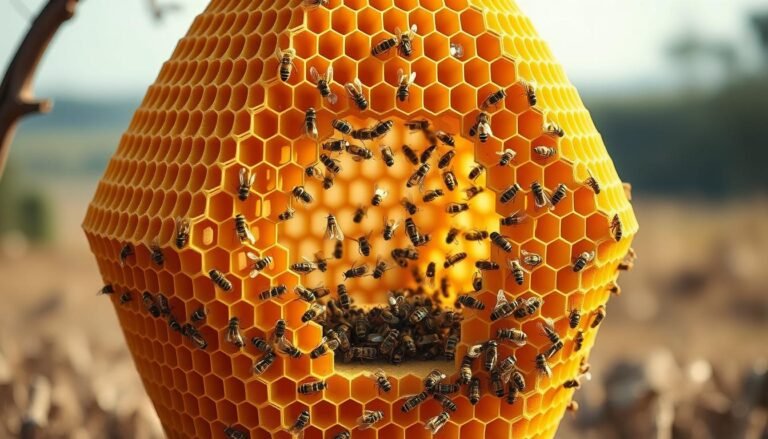
The design of beehives plays a pivotal role in honeybee temperature regulation. The hexagonal structure of honeycomb cells provides insulation, while the orientation and placement of the hive can influence its exposure to sunlight and wind, factors a beekeeper can partly control when siting a hive.
External Influences on Hive Temperature
None of these outside pressures can be eliminated entirely, but understanding them helps a beekeeper anticipate rather than just react.

Several external factors can influence the temperature within a beehive, some of which a beekeeper can manage and others that simply have to be worked around:
- Weather Conditions: The ambient temperature, humidity, and wind can directly impact the hive’s internal temperature, forcing bees to work harder during sudden cold snaps or heat waves.
- Hive Placement: A hive placed in direct sunlight will naturally be warmer than one placed in the shade.
- Predators and Pests: The presence of pests or predators can stress the bees, leading to increased activity and heat generation that can throw off the hive’s normal temperature balance.
The ability of honeybees to regulate the temperature of their hives showcases their adaptability and the intricate balance of nature. As we continue to explore the world of these fascinating insects, we gain a deeper appreciation for their resilience and the vital role they play in our ecosystem.
Honeybee Temperature Regulation: The Hive’s Natural Air Conditioning
Cooling a hive takes just as much coordination as warming one, and the strategies bees use here are worth a closer look.
Honeybees, with their intricate societal structures and behaviors, have developed fascinating methods to regulate the temperature of their hives. This ability is not just a mere adaptation but a necessity for the survival of the colony. In this segment, we’ll explore the advanced techniques honeybees employ to ensure their hives remain at an optimal temperature, regardless of external conditions.
Thermoregulation Techniques in Honeybees
Bringing behavioral and architectural strategies together is what actually makes hive-wide temperature control possible.
Honeybee temperature regulation is a combination of individual and collective efforts. Bees employ various techniques, such as fanning, clustering, and even vibrating their muscles, to produce or dissipate heat, switching methods as conditions change throughout the day. These actions help maintain the hive’s temperature, especially crucial for the brood’s development.
A deeper dive into honeybee thermoregulation techniques.
The Architectural Design of Beehives
Wild colonies choose their own cavities carefully, and managed hives try to replicate many of the same insulating properties.
The structure of beehives plays a significant role in temperature regulation. The hexagonal cells provide insulation, while the materials used in constructing the hive, like beeswax, have insulating properties that help buffer the colony against rapid outside temperature swings. The hive’s orientation and placement can also influence its exposure to external elements, further aiding in temperature control.
The Role of Individual Bees in Thermoregulation
Rather than a single specialized caste, thermoregulation duty tends to fall on whichever bees are already positioned to help at that moment.
Every bee in the hive has a role to play in temperature regulation, often tied closely to its age and job assignment:
- Forager Bees: Collect water to spread inside the hive, aiding in cooling through evaporation, sometimes making dozens of short trips on a single hot day.
- Guard Bees: Fan their wings at the entrance, promoting airflow while also watching for intruders at the same time.
- Nurse Bees: Cluster around the brood, providing warmth while also feeding and tending to the developing larvae.
Learn more about the roles of individual bees in thermoregulation.
External and Internal Factors Influencing Hive Temperature
Pulling these threads together helps explain why two hives sitting just a few feet apart can behave quite differently on the same day.
Several factors can influence the hive’s temperature, and a beekeeper who understands them can often prevent problems before they start:
- Weather Conditions: Ambient temperature, wind, and humidity can impact the hive’s internal environment.
- Hive Placement: A hive in direct sunlight will be warmer than one in the shade.
- Hive Health: A healthy hive with a strong population can regulate its temperature more effectively than a weak or diseased one, since fewer bees means fewer hands available for fanning or clustering.
Explore the various factors influencing hive temperature.
The world of honeybees is a testament to nature’s brilliance. Their ability to regulate the temperature of their hives showcases their adaptability and the intricate balance of nature. As we delve deeper into the mechanisms and behaviors of these remarkable insects, we are reminded of the delicate systems that sustain life on our planet.
FAQ
How do bees keep the hive warm in cold weather?
Bees cluster tightly together and vibrate their flight muscles to generate heat, forming a living insulating layer that keeps the cluster’s core close to a stable temperature even when the outside air is well below freezing.
How do bees cool the hive when it gets too hot?
Worker bees fan their wings at the entrance to circulate air and collect water to spread inside the hive, using evaporative cooling to bring the temperature down during the hottest part of the day.
Why is precise temperature control so important to a colony?
Brood needs a narrow, stable temperature range to develop properly, so even small swings can affect the health of the next generation of bees, sometimes leading to deformed wings or shortened lifespans in survivors.