Table of Contents
- What the Mini Plus System Actually Is
- Real Specifications
- The Six-Frame Advantage Over Apidea and Kieler
- Genuine Overwintering Capability
- Wood vs. Polystyrene Versions
- Mini Plus vs. Apidea vs. Kieler
- Setting Up a Mini Plus Colony
- Cost and Where to Buy
- Foundation Options for Mini Plus Frames
- How Often to Inspect a Mini Plus Colony
- Who Should Choose Mini Plus
- A Genuine Path to Full-Size Colony Expansion
- Feeding Requirements for a Six-Frame Colony
- Mite Monitoring in a Mini Plus Colony
- Off-Season Storage for Unused Units
- Regional Availability Outside Europe
- Pairing Mini Plus With High-Yield Queen-Rearing Methods
- Handling and Transport Considerations
- Tracking Colony Performance Over Time
- Trying a Small Number Before Full Adoption
- Combining Weaker Colonies at Season’s End
- Entrance Management and Robbing Prevention
- How Often to Inspect a Mini Plus Colony
- Common Mistakes
What the Mini Plus System Actually Is
Mini Plus is a European mating nucleus system built around six small frames, designed specifically to give queen breeders a genuinely functional miniature colony capable of not just hosting a mating queen but also overwintering as a small, self-sustaining unit — a meaningfully more capable design than the smallest frameless mating-nuc systems on the market. It represents a middle tier between the very smallest mating nucs and a full-size standard hive.
Real Specifications
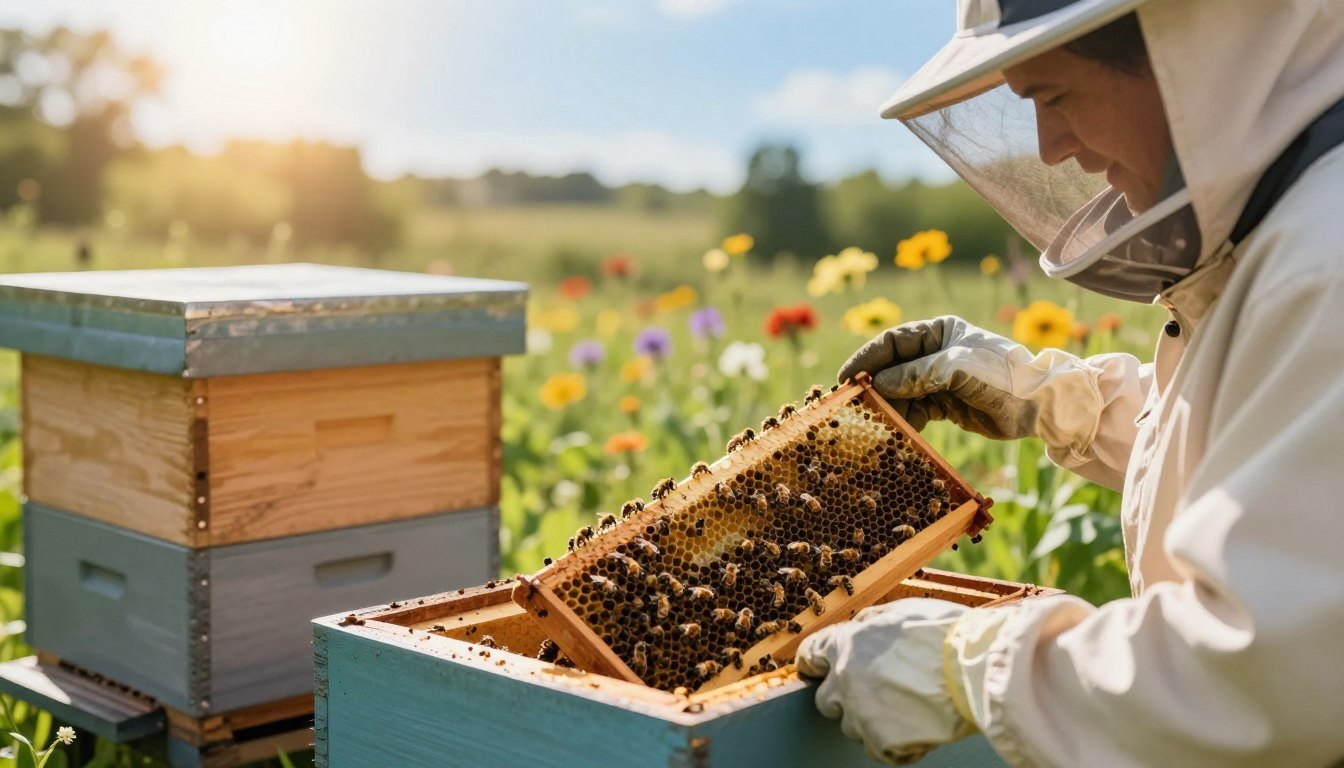
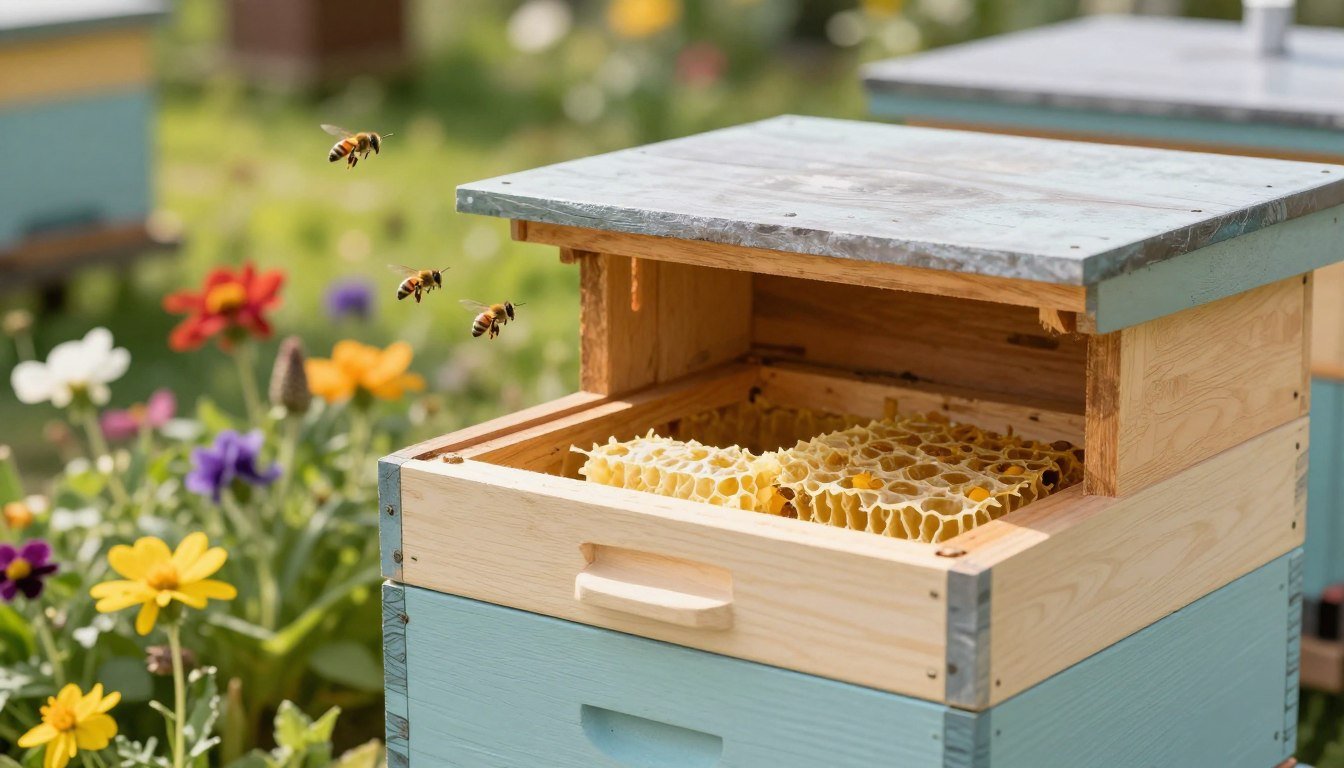
A standard Mini Plus unit measures roughly 28 by 28 by 27 centimeters and weighs around 3.5 kilograms, built from wood roughly 22 millimeters thick (with a 14-millimeter top cover) for genuine thermal insulation and weather protection, and includes six frames sized specifically for the system rather than standard Langstroth dimensions. This real insulation value, combined with the six-frame capacity, is the core reason Mini Plus can support colonies through conditions smaller mating nucs simply can’t handle.
The Six-Frame Advantage Over Apidea and Kieler
Unlike Apidea‘s frameless design or Kieler‘s simpler small-box construction, Mini Plus’s six-frame capacity gives the colony genuine room for brood development, honey and pollen storage, and colony expansion beyond just hosting a virgin queen through her mating flights — this structural difference is the core reason Mini Plus supports meaningfully more sustained colony activity than the smaller systems.
Genuine Overwintering Capability
The combination of six frames’ worth of stores capacity and real wooden insulation gives Mini Plus colonies a genuine, documented ability to survive winter as small standalone units, something neither Apidea nor Kieler boxes are generally designed or expected to do — most beekeepers using those smaller systems combine or requeen colonies into standard equipment before winter rather than attempting to overwinter the mating nuc itself. This overwintering capability is Mini Plus’s single most significant practical differentiator within the mating-nuc equipment category.
Wood vs. Polystyrene Versions
Mini Plus systems are available in both traditional wood construction and polystyrene variants, following the same general insulation-versus-durability trade-off covered in our poly nuc buying guide — polystyrene offers a higher insulation value and lighter weight, while wood offers greater impact resistance and, for many beekeepers, a more traditional feel and handling experience. Neither material choice changes the core six-frame system design; it’s purely a construction-material decision layered on top of the same functional structure.
Mini Plus vs. Apidea vs. Kieler
| Factor | Mini Plus | Apidea | Kieler |
|---|---|---|---|
| Frame structure | 6 dedicated small frames | Frameless comb building | Simple box, minimal internal structure |
| Overwintering capability | Genuinely capable | Not typically attempted | Not typically attempted |
| Colony sustainability | Can function longer-term | Short-term mating use | Short-term mating use |
| Cost and complexity | Higher | Lower, simpler | Lowest, simplest |
This comparison makes the trade-off explicit: Mini Plus costs and weighs more than the simpler systems, but delivers genuine colony-sustainability capability those simpler, cheaper systems were never designed to provide.
Setting Up a Mini Plus Colony
A Mini Plus unit is typically populated with a small shake of bees plus a ripe queen cell or virgin queen, following the same basic principle as other mating-nuc setups — a small, confined colony population that readily accepts and successfully mates a new queen in a controlled space. The six-frame capacity means Mini Plus colonies can accept a somewhat larger starting bee population than the smallest frameless systems, giving the colony a stronger foundation from the outset.
Cost and Where to Buy
Mini Plus units and frames are available through several European beekeeping equipment suppliers and increasingly through international sellers shipping to the U.S., generally at a higher price point than Apidea or Kieler systems, reflecting the more substantial six-frame construction and genuine overwintering-capable design. Buyers should factor in international shipping costs and lead times specifically if ordering from a European-based supplier rather than a domestic source.
Who Should Choose Mini Plus
Queen breeders wanting mating nucs capable of sustained, longer-term colony function — including genuine overwintering — rather than purely single-season mating use are the strongest fit for Mini Plus. A breeder focused purely on high-volume, single-season mating throughput with minimal per-unit cost may find Apidea or Kieler’s simpler, cheaper design a more efficient fit for that specific goal instead.
A Genuine Path to Full-Size Colony Expansion
Because Mini Plus colonies can genuinely sustain themselves over a longer period than the smallest mating-nuc systems, some beekeepers use successful Mini Plus units as a starting point for gradual expansion into a full-size colony, progressively adding frames and eventually transferring the queen and population into standard equipment once the colony has proven itself — a genuinely practical middle path between a purely disposable mating tool and starting a new colony from scratch with a package or nuc.
Feeding Requirements for a Six-Frame Colony
A Mini Plus colony’s larger population and brood-rearing capacity compared to the smallest mating nucs means it also has genuinely higher feeding needs, particularly during establishment and again heading into any overwintering attempt — beekeepers should plan for a dedicated small feeder appropriately sized for the unit rather than assuming the same minimal feeding approach used for a simple Apidea box will adequately support a larger Mini Plus colony.
Mite Monitoring in a Mini Plus Colony
Because Mini Plus colonies can genuinely sustain themselves over a longer period, including through winter, standard mite monitoring practices remain relevant even at this smaller scale — a colony surviving long enough to overwinter is also a colony that needs the same basic varroa management attention any standard colony requires, rather than being exempt from monitoring simply because of its smaller size and specialized mating-nuc purpose.
Off-Season Storage for Unused Units
Mini Plus units not actively housing a colony between mating seasons should be stored dry, cleaned of any residual wax or propolis, and protected from moisture and pest access, similar to standard off-season equipment storage practices, with wooden units specifically benefiting from a dry, covered storage location to protect the wood from weathering damage over the off-season months.
Regional Availability Outside Europe
While Mini Plus originated and remains most widely used within European beekeeping, availability through international shipping and a growing number of North American specialty suppliers has improved in recent years, though buyers in the U.S. should still expect somewhat less local stock availability and potentially longer lead times compared to more universally available systems like Apidea, which has broader established North American distribution.
Pairing Mini Plus With High-Yield Queen-Rearing Methods
Breeders using high-yield queen-cell production methods, whether grafting-based or graft-free techniques like the Hopkins method that can produce a large batch of cells from a single setup, need a proportionally large number of mating nucs to actually mate all those resulting queens — Mini Plus’s genuine sustainability advantage makes it a reasonable choice for at least some portion of that mating-nuc fleet, particularly for queens a breeder wants to evaluate over a longer trial period before committing them to full colony introduction.
Handling and Transport Considerations
The larger, heavier six-frame construction makes Mini Plus units genuinely less portable than the smallest mating-nuc systems, a real practical consideration for beekeepers planning to move units between an isolated mating yard and their main apiary regularly. Operations managing many Mini Plus units simultaneously should factor this handling weight into their overall workflow planning, particularly if regular transport between locations is part of the operation’s standard practice.
Tracking Colony Performance Over Time
Given the genuine overwintering capability that sets Mini Plus apart from simpler mating nucs, keeping records on individual unit performance across seasons — mating success rate, overwintering survival, and any colonies expanded into full-size equipment — builds genuinely useful data for evaluating whether the system’s higher cost is delivering real value for your specific operation compared to simpler alternatives.
Trying a Small Number Before Full Adoption
Given the higher per-unit cost compared to simpler mating-nuc systems, purchasing a small initial batch of Mini Plus units to trial for a season before committing to a larger fleet is a reasonable, low-risk way to confirm the overwintering and sustainability benefits genuinely translate into practical value for your specific operation and climate before scaling up the investment further.
Combining Weaker Colonies at Season’s End
Not every Mini Plus colony successfully builds enough strength to overwinter independently, and beekeepers should assess each unit honestly heading into fall — combining a genuinely weaker colony’s bees into a stronger unit, rather than attempting to overwinter every single Mini Plus colony regardless of actual condition, generally produces better overall survival outcomes across your whole mating-nuc fleet than an unrealistic one-size-fits-all approach.
Entrance Management and Robbing Prevention
Small mating-nuc colonies, including Mini Plus units, are genuinely more vulnerable to robbing than full-strength colonies given their proportionally smaller defensible population, making entrance reduction and careful placement (avoiding direct proximity to stronger colonies where possible), as covered in our guide to protecting new colonies from robbing, a worthwhile precaution, particularly during dearth periods when robbing pressure runs highest across an apiary.
How Often to Inspect a Mini Plus Colony
A newly established Mini Plus colony generally benefits from a check roughly a week after setup to confirm the queen was successfully mated and has begun laying, followed by periodic checks similar in frequency to a standard small colony rather than daily monitoring, which risks unnecessary disturbance during the sensitive early establishment period.
Common Mistakes
Assuming Mini Plus functions identically to smaller frameless mating nucs, and therefore skipping the more deliberate setup and management its six-frame structure genuinely benefits from, underutilizes what the system actually offers. Attempting to overwinter an Apidea or Kieler box the same way a Mini Plus colony can be overwintered overlooks the real structural and insulation differences between these systems. Ordering from an overseas supplier without accounting for realistic shipping lead times risks equipment arriving later than needed for planned season timing.
Foundation Options for Mini Plus Frames
Mini Plus frames typically accept small sheets of wax or plastic foundation sized specifically for the system’s dimensions, and starting with proper foundation rather than expecting bees to draw comb entirely from scratch generally speeds up initial colony establishment, similar to the standard foundation-versus-foundationless considerations relevant to any frame-based hive equipment.
Sources
Equipment specifications and design details reflect published manufacturer documentation on the Mini Plus mating nucleus system from established European beekeeping equipment suppliers. For current, authoritative detail, see University of Florida IFAS Extension’s Swarm Control for Managed Beehives guide.
FAQ
Can Mini Plus colonies really survive winter?
Yes — the combination of six-frame stores capacity and genuine wooden insulation gives Mini Plus colonies a real, documented ability to overwinter as standalone units, unlike smaller mating-nuc systems generally not designed for this.
Is Mini Plus more expensive than Apidea or Kieler?
Generally yes — the more substantial six-frame construction and genuine overwintering capability come at a higher price point than the simpler, smaller mating-nuc systems.
Does Mini Plus use standard Langstroth frames?
No — Mini Plus uses its own dedicated smaller frame size specific to the system, not standard Langstroth dimensions.
Should I choose wood or polystyrene Mini Plus units?
This follows the same general trade-off as other poly vs. wood equipment decisions — polystyrene offers better insulation and lighter weight, while wood offers greater impact resistance; neither changes the core six-frame functional design.
How many bees do I need to start a Mini Plus colony?
The six-frame capacity generally accepts a somewhat larger starting bee population than the smallest frameless mating-nuc systems, though exact quantities depend on the specific colony and season; following manufacturer setup guidance for your specific unit gives the most reliable starting point.
Can a Mini Plus colony be expanded into a full-size hive?
Yes — some beekeepers use successful Mini Plus units as a starting point, progressively adding frames and eventually transferring the queen and population into standard equipment once the colony has proven itself, a genuinely practical middle path between a disposable mating tool and starting fresh.