Table of Contents
- What Royal Jelly Harvesting Involves
- It Uses the Same Equipment as Queen Rearing (With a Twist)
- Timing: Why Day 3 Matters
- Equipment Needed
- Step-by-Step Harvesting Process
- Yield: What to Actually Expect
- Storage: Why Speed Matters
- Hygiene and Safety Practices
- Impact on the Donor Colony
- Is This Worth Doing for a Small Apiary
- Feeding the Production Colony
- Commercial-Scale Production Context
- Selling Royal Jelly: What to Know First
- What Affects Jelly Quality
- Common Mistakes
- FAQ
What Royal Jelly Harvesting Involves
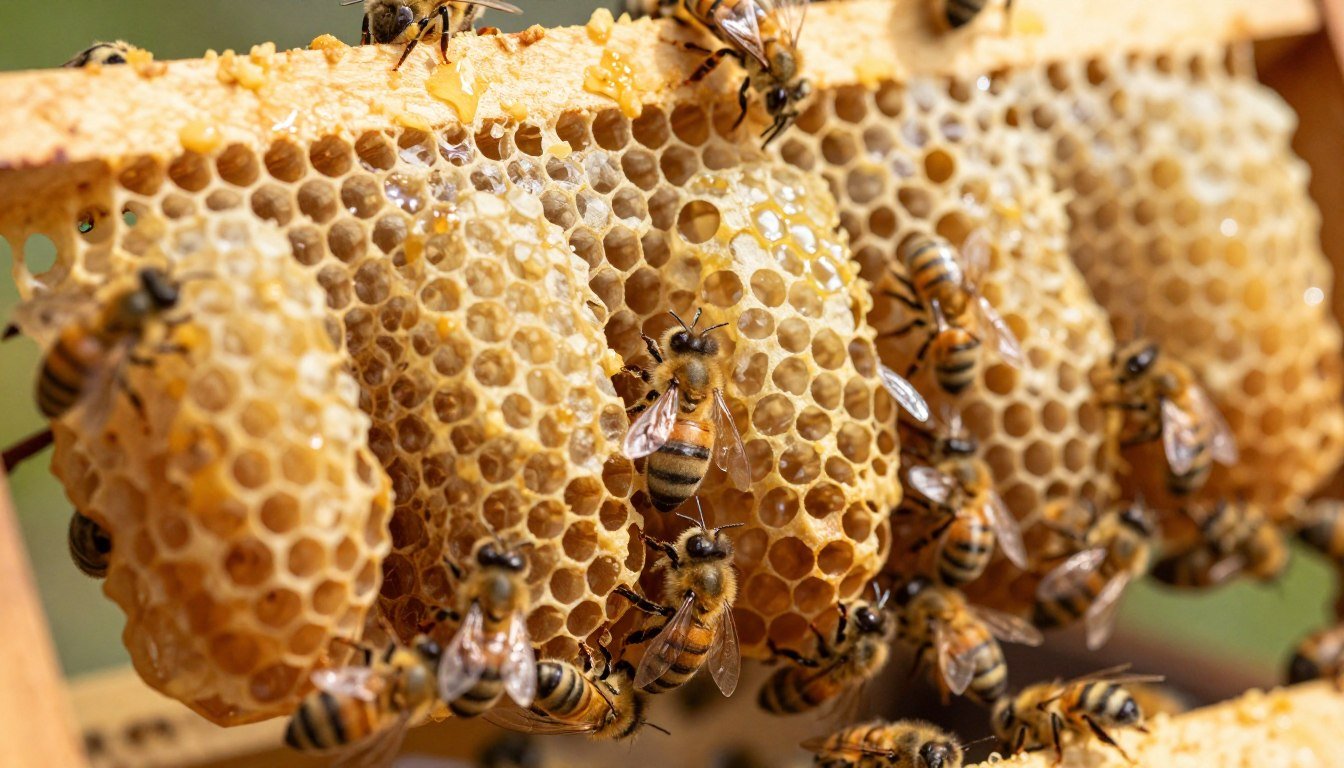
Harvesting royal jelly means collecting the thick, protein-rich secretion nurse bees deposit into queen cells to feed developing queen larvae, extracted directly from the cell before the larva consumes it all. It requires setting up a colony to produce numerous queen cells at once — essentially the same setup used for queen rearing — but with a fundamentally different goal and timing: instead of letting cells develop into mature queens, you’re interrupting the process early specifically to collect the jelly itself. Once harvested, this same secretion is often sold as a health supplement — including for its studied antiviral uses — which is part of why timing and storage matter so much for quality.
It Uses the Same Equipment as Queen Rearing (With a Twist)
If you’ve read about graft-free queen-rearing systems like Jenter and Nicot, or grafting-based methods like the ones used with a Cloake board, the setup for royal jelly harvesting will look familiar — a strong colony or cell-building setup producing multiple queen cells from grafted or transferred larvae. The difference is entirely in what happens next: queen rearing lets those cells develop to maturity, while royal jelly harvesting deliberately interrupts the process at peak jelly volume, well before a queen would actually emerge.
Timing: Why Day 3 Matters
The standard harvesting window is when the queen larva is roughly 3 days old, since this is when royal jelly volume within the cell is at its peak — nurse bees continually add jelly as the larva develops, but the larva also continually consumes it, and day 3 is the point most commonly cited as the best balance between jelly having accumulated and not yet being mostly consumed. Waiting longer means less jelly remains per cell as consumption catches up with production; harvesting earlier means less total jelly has been deposited yet. This timing precision is why royal jelly production is run on a tight, repeating schedule rather than as an occasional side activity.
Equipment Needed
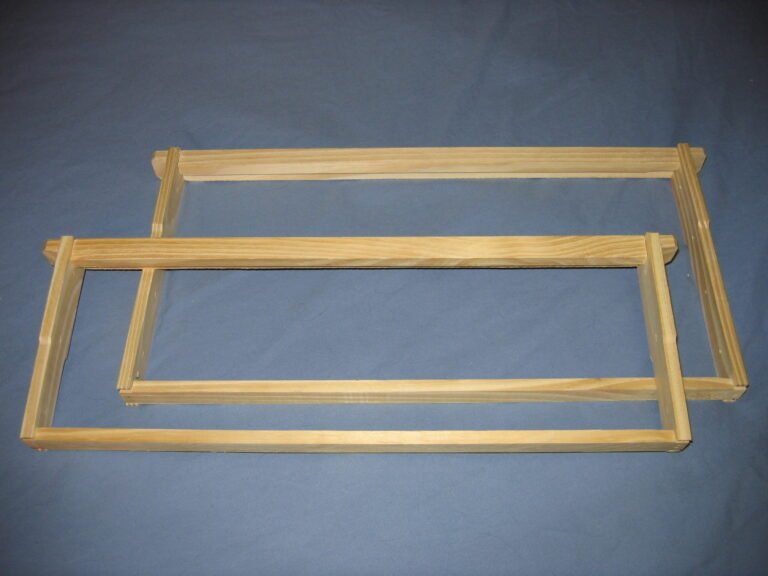
- A strong colony set up to produce numerous queen cells simultaneously (grafting frames or a graft-free system adapted for volume)
- A queen excluder, to keep the actual laying queen separate from the cell-production area
- Sterilized fine tools: a sharp knife, small tweezers, and pipettes or a syringe for extraction
- Dark glass containers with tight seals for immediate storage
- Refrigeration (and ideally freezer capacity) on hand at the harvesting location, not just back at a home base
Step-by-Step Harvesting Process
- Set up cell production using your chosen grafting or graft-free method, timed so you know exactly when larvae reach day 3.
- Remove the frame of cells from the hive at the day-3 mark, working as quickly and cleanly as possible.
- Carefully remove the developing larva from each queen cup using sterilized tweezers, setting it aside.
- Extract the royal jelly remaining in the cell, either by hand with a small tool or using a syringe/pipette for a faster, more mechanized approach.
- Transfer collected jelly immediately into a dark glass container, sealed tightly to limit air exposure.
- Refrigerate without delay — ideally within minutes, not hours, of collection.
Yield: What to Actually Expect
Reported yields vary considerably by setup scale and colony strength, but a well-maintained, dedicated production colony is sometimes cited as capable of producing in the range of several hundred grams across a full harvest cycle — a meaningful quantity, but one that depends heavily on running multiple grafting/harvest rounds and maintaining strong, well-fed colonies throughout. A single casual attempt with one frame of cells will produce a far smaller amount, proportionate to how many cells were actually set up and successfully developing at the time of harvest.
Storage: Why Speed Matters
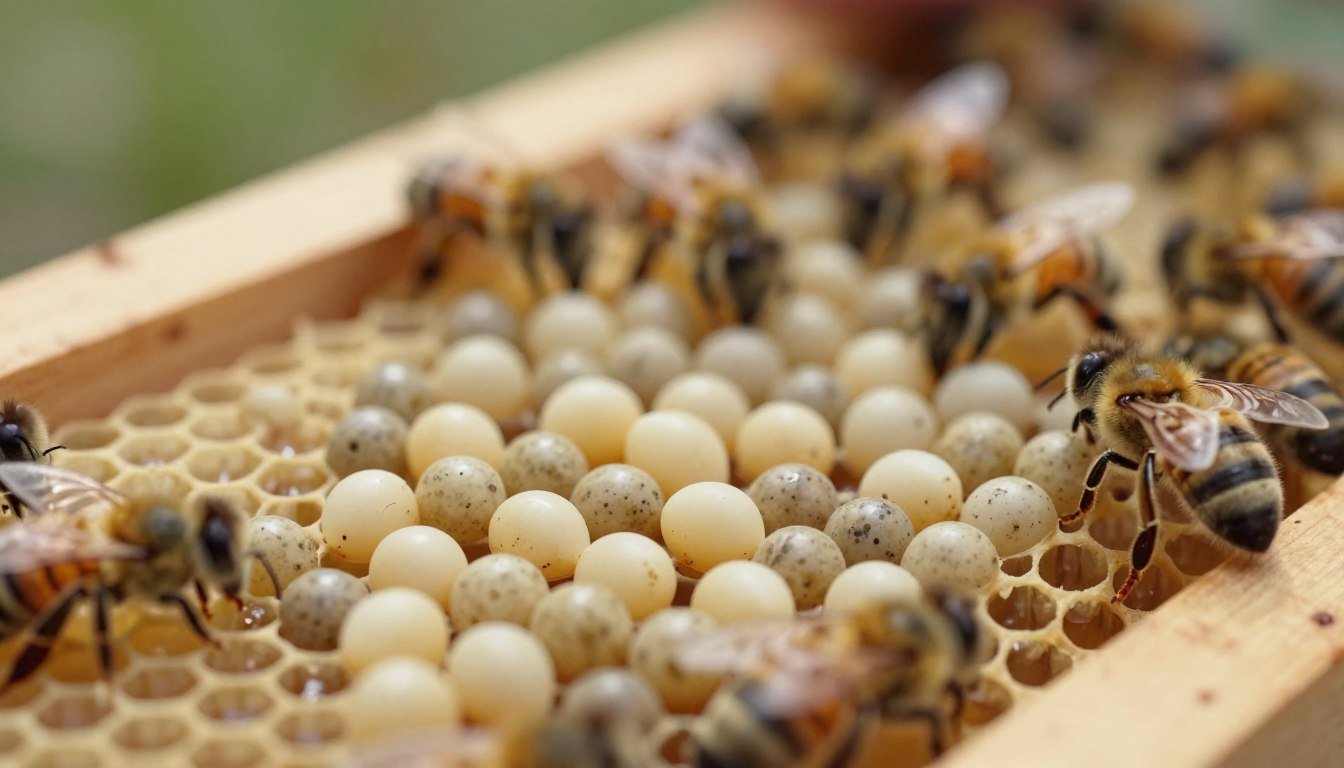
Royal jelly degrades quickly once exposed to air and ambient temperature — unrefrigerated jelly can spoil within just a few hours, which is why immediate cold storage isn’t a minor detail but a core part of the process. Store it in dark glass containers, sealed tightly to minimize air exposure, and refrigerated promptly; properly refrigerated royal jelly can remain viable for well over a year, with frozen storage (in appropriate vials, leaving some headspace) extending shelf life further still. Labeling each container with the harvest date before storing it is a small habit that pays off later when tracking freshness across multiple batches. If you’re harvesting away from a fridge, bringing a small cooler specifically for this purpose, and moving jelly to real refrigeration as soon as possible afterward, is a practical necessity, not an optional precaution.
Hygiene and Safety Practices
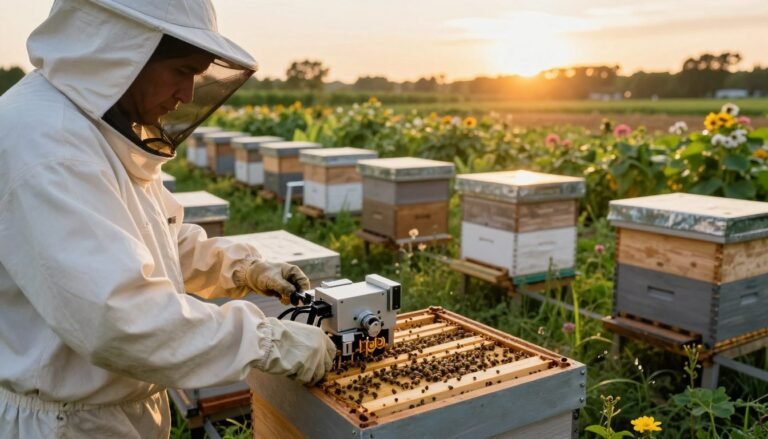
Full protective beekeeping gear (suit, gloves, veil) is standard for the harvesting session itself, and sterilized tools matter more here than in most other beekeeping tasks, since royal jelly is typically intended for consumption and contamination during collection directly affects product quality and safety. Where practical, doing the actual extraction step indoors, in a cleaner environment than the apiary itself, and collecting in small batches you can move to refrigeration quickly rather than accumulating a large amount in the field before storing it, both reduce contamination and degradation risk.
Impact on the Donor Colony
Running a colony repeatedly for royal jelly production is a real resource demand — the colony needs to be genuinely strong and well-fed to sustain repeated cell-building cycles without being weakened over a season, similar to the colony-strength requirements covered for repeated queen-rearing cycles with methods like the Cloake board. A colony that’s just come off a demanding stretch of any queen-rearing or jelly-production work benefits from a genuine rest period before being put back into service, rather than being cycled continuously without a break. Rotating which colonies are used for production, rather than running the same one continuously all season, and ensuring adequate pollen and nectar resources throughout, helps avoid depleting any single colony’s overall health for the sake of jelly output.
Is This Worth Doing for a Small Apiary
For a hobbyist with one or two hives, dedicated royal jelly production is generally not a practical undertaking — the timing precision, equipment, and colony-strength demands make more sense at a scale where you’re running multiple strong colonies and can dedicate real attention to the tight harvesting schedule. It’s a more natural fit for beekeepers already doing active queen rearing who want to add jelly collection as a complementary product, leveraging equipment and skills they’ve already built rather than starting from scratch purely for jelly. Approached that way, the marginal effort is mostly about mastering the timing and storage steps specific to jelly, not building a new operation from the ground up.
Feeding the Production Colony
Because a dedicated production colony is being asked to divert substantial nurse-bee effort into producing jelly in numerous cells simultaneously, adequate pollen and nectar resources matter even more than in typical queen-rearing cycles run less frequently. Supplemental pollen patties and syrup feeding, especially during a run of repeated harvest cycles, help ensure the colony has the raw materials to keep producing at a consistent volume without drawing down its own broader health and stores in the process. A colony running on marginal resources will show declining jelly output and cell quality well before it shows obvious signs of overall colony distress, so proactive feeding during an active production run is worth treating as standard practice rather than a response to problems already showing. Building this feeding routine into your regular harvest-cycle schedule, rather than treating it as a separate task easy to forget, keeps the colony in better condition across a full production season.
Commercial-Scale Production Context
Large-scale commercial royal jelly production, mainly concentrated in a handful of countries with established industries, runs on a much more intensive version of the same basic process covered here — many colonies, continuous overlapping harvest cycles, and dedicated trained labor managing the tight timing across a large operation. For a hobbyist or small-scale beekeeper, understanding this context is useful mainly to calibrate expectations: matching commercial yield and consistency isn’t realistic or necessary at small scale, and a more modest, occasional harvest from a strong colony or two is a reasonable and legitimate goal without needing to replicate industrial methods. Approach it as a niche, occasional value-added activity layered onto existing queen-rearing work, not as a standalone business plan, and the scale question mostly resolves itself.
Common Mistakes
| Mistake | Why it matters |
|---|---|
| Harvesting too early or too late relative to day 3 | Misses the peak jelly-volume window, reducing yield per cell either way — and this is exactly the kind of detail worth tracking closely rather than estimating loosely |
| Delaying refrigeration after collection | Royal jelly can spoil within hours at room temperature — speed to cold storage is essential, not optional |
| Using unsterilized tools | Contamination directly affects the quality and safety of a product typically intended for consumption |
| Running one colony continuously without rest | Repeated intensive cell-production cycles can weaken a colony over a season without rotation or adequate resources |
Selling Royal Jelly: What to Know Before You Start
If harvested royal jelly is intended for sale rather than personal use, treat it the same way as any other fermented or specialty hive product discussed elsewhere on this site — as a distinct regulated product with its own food-safety and labeling considerations, not automatically covered by whatever rules apply to selling honey. Assuming otherwise is a common and avoidable oversight. Royal jelly in particular tends to attract closer scrutiny in many regions given its status as a specialty health product, so checking specific labeling, health-claim, and food-safety requirements with local authorities before offering any for sale is a reasonable and often necessary step. Making unverified health claims about royal jelly’s benefits is also worth avoiding regardless of what you may have read elsewhere — stick to factual product descriptions rather than medical or therapeutic claims you can’t substantiate. This is both a legal precaution in most jurisdictions and simply honest practice — let the product speak for itself rather than overselling it.
What Affects Jelly Quality
Beyond timing and storage, jelly quality is influenced by the overall health and nutrition of the producing colony, the freshness of harvest (fresher is generally considered higher quality), and how carefully contamination was avoided throughout collection and storage. Jelly from a well-fed, healthy, unstressed colony harvested precisely at the day-3 window and moved to refrigeration within minutes represents close to best-case quality; any deviation from that — a nutritionally stressed colony, imprecise timing, or delayed cold storage — tends to show up as lower quality in the final product, whether or not that’s immediately visible without lab testing. If quality consistency matters for your purposes, keeping simple records of harvest date, storage timing, and colony condition for each batch builds a useful reference over multiple seasons.
Sources
Timing, yield ranges, and storage requirements reflect published beekeeping guidance on royal jelly harvesting technique, consistent with widely documented commercial and hobbyist royal jelly production practices. For current, authoritative detail, see the USDA Agricultural Research Service’s Honey Bee Breeding, Genetics and Physiology Research Unit.
FAQ
When should royal jelly be harvested?
Typically when the queen larva is about 3 days old, since this is when jelly volume in the cell is at its peak before ongoing larval consumption reduces it.
How quickly does royal jelly need to be refrigerated?
Very quickly — unrefrigerated royal jelly can spoil within a few hours at room temperature, so prompt cold storage right after collection is essential.
Does royal jelly harvesting require special equipment beyond queen rearing tools?
Mostly the same equipment (grafting frames, queen excluder), plus sterilized fine extraction tools (tweezers, pipettes or syringe) and immediate access to refrigeration.
Is royal jelly harvesting practical for a small backyard apiary?
Generally not as a dedicated activity — it makes more sense at a scale with multiple strong colonies, or as an add-on for beekeepers already doing active queen rearing.