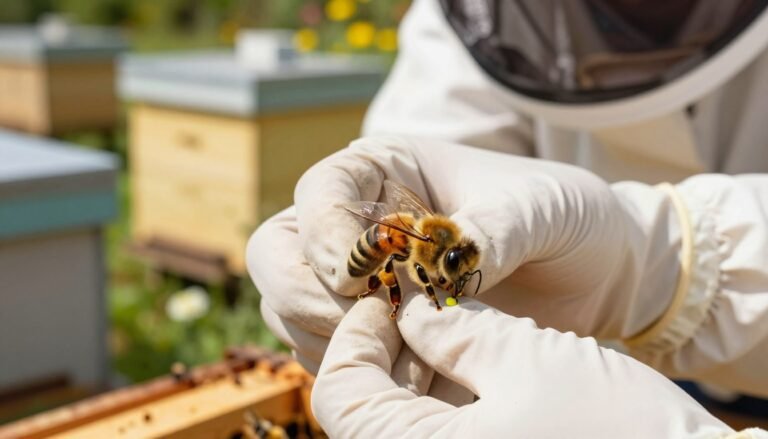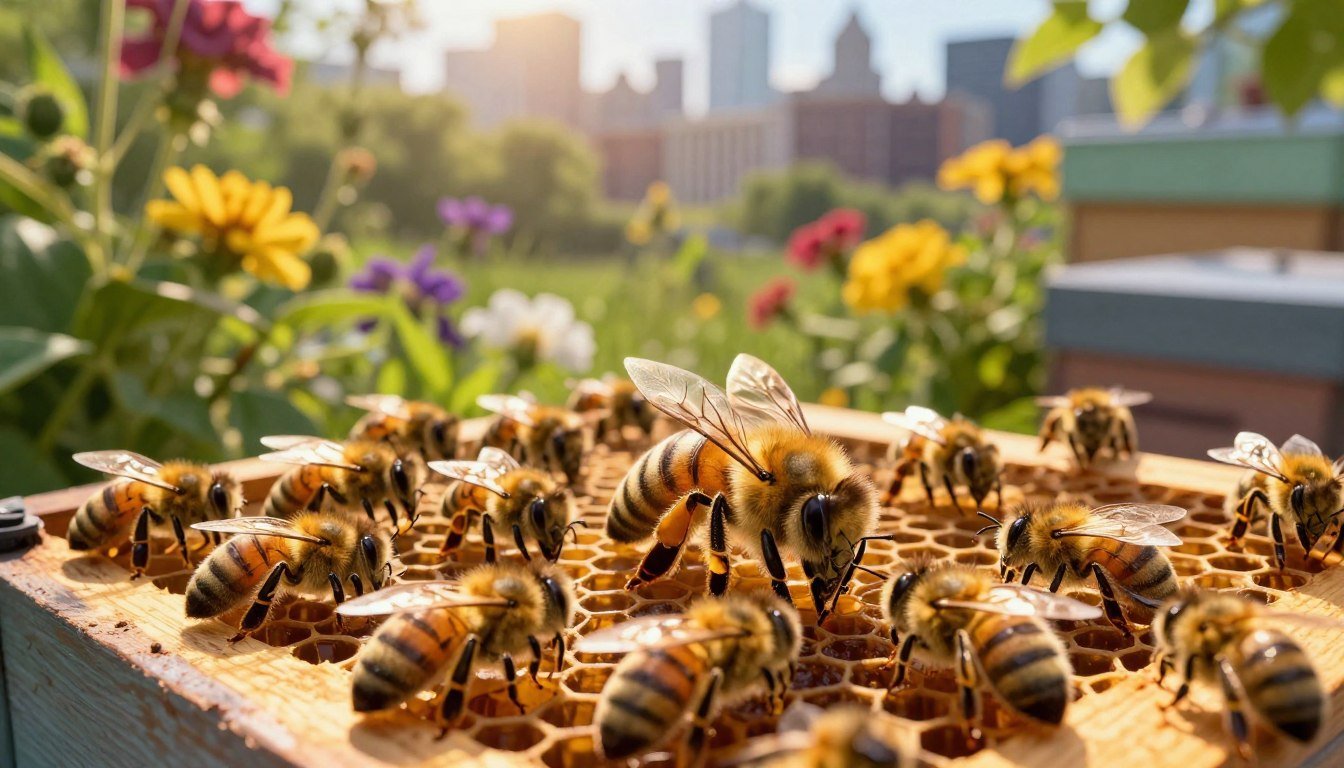
Sooner or later every beekeeper who raises or buys queens ends up holding a mated queen with nowhere to put her yet. The split isn’t ready, the nuc you ordered is a week late, or your mating nucs produced more queens than you have colonies to requeen. A caged queen with a few attendants won’t last long on candy alone, so the standard answer is a queen bank: a colony set up to feed and keep caged queens alive until you need them.
This guide covers the short-term version of that technique, holding queens for days up to about two weeks, which is what most hobbyists and sideliners need. For the commercial side (hundreds of queens, long-term and overwinter banks), see our companion piece on how commercial breeders store mated queens.
Key Takeaways
- A queen bank is a colony, usually queenless, that feeds caged queens through the cage mesh until they are introduced or shipped.
- For holds of under two weeks, a strong queenless 5-frame nuc or single brood box is enough.
- Remove the colony’s own queen, bank the caged queens in the center of the brood nest, and check for emergency queen cells 7-10 days later.
- Take attendant bees out of the cages before banking, and keep cage corks or plugs sealed so workers can’t release the queens.
- Expect a few losses in the first week. Longer banking works but costs more management, and survival drops in hot or cold weather.
Table of Contents
- What a Queen Bank Is (and Isn't)
- Why Beekeepers Bank Queens
- How to Bank Queens for a Short Period
- Preparing the Queen Cages
- Where to Put the Cages in the Hive
- Keeping the Bank Supplied with Young Bees (Holds Longer Than Two Weeks)
- Feeding the Bank Colony
- Monitoring the Bank and Troubleshooting
- How Long Can Queens Stay in a Bank?
- Taking Queens Out and Introducing Them
- Conclusion
- FAQ
What a Queen Bank Is (and Isn’t)
A queen bank holds already-mated queens, each sealed in her own cage, inside a colony whose workers feed and warm them through the mesh. The cages keep the queens from fighting each other and let you pull out any queen you want when you need her.
Don’t confuse it with the other queen-rearing colonies. A cell builder raises queen cells from grafted larvae. A mating nuc is where a virgin queen matures, flies out to mate and starts laying. A bank does neither of those things. It’s just storage and life support for queens that have already finished mating. The Oregon State University Guide to Honey Bee Queen Banking (Topitzhofer and Sagili, SARE/Project Apis m.) is the most detailed free reference on the practice, and most of the numbers below come from it.
Why Beekeepers Bank Queens
Queens are produced on a biological schedule, and colonies are ready on a management schedule. The two rarely line up. A bank covers the gap:
- Timing splits and nucs. Queens arrive or finish mating before the colonies meant to receive them are ready.
- Emergency replacements. A spare mated queen on hand means you can requeen a failing or queenless colony the same day instead of waiting three to four weeks for a new queen to be raised and mated.
- Surplus from queen rearing. If mating nucs produce more laying queens than you have homes for, banking frees up the nucs for the next round of cells.
- Shipping and sales. Breeders hold queens until a customer’s pickup or shipping day.
How to Bank Queens for a Short Period
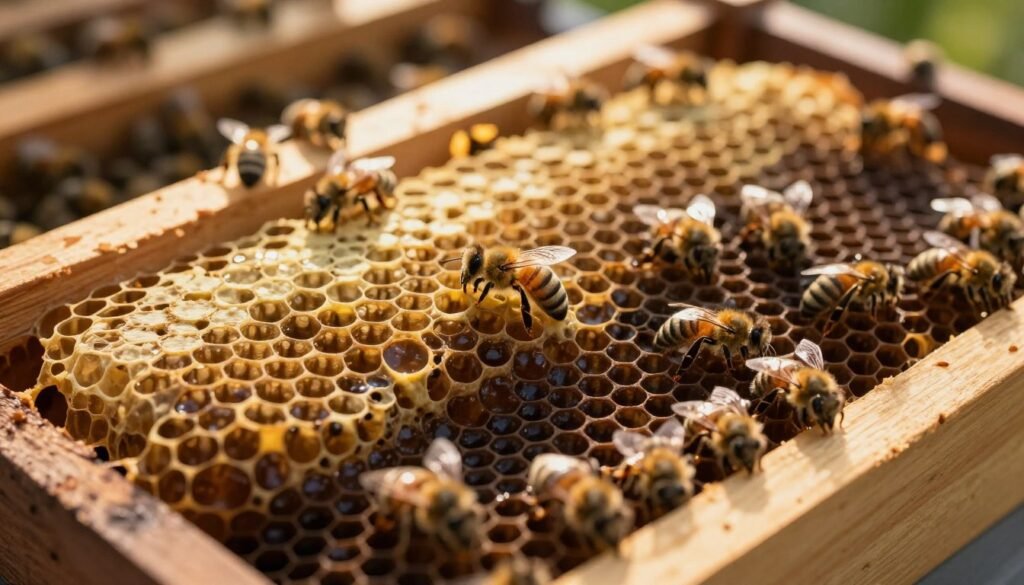
For holding queens up to about two weeks, the OSU guide recommends a short-term queenless bank. It doesn’t need extra young bees brought in, mite treatment or heavy stores, so a small colony works:
- Pick a healthy colony. Use a 5-frame nuc with at least 2 frames of brood, or a single brood box with 3-4 brood frames, with every frame covered in bees. It should have a low Varroa count, no signs of brood disease, and about a frame of honey and pollen, enough food for two weeks.
- Remove its queen. Find and remove the resident queen, then check every frame for a second queen or a virgin. A free-running queen in a bank is the most common cause of mass losses among the caged queens.
- Wait briefly. Beekeepers wait anywhere from 15 minutes to 24 hours before putting the caged queens in. OSU’s bee lab uses about 15 minutes. Waiting much longer than a day just gives the colony a head start on emergency queen cells.
- Insert the queens. Place the cages on a bank frame, or pressed into drawn comb, in the center of the brood nest.
- Check for queen cells. Seven to ten days after removing the original queen, go through every brood frame and destroy any queen cells. Shaking the bees off each frame makes cells much easier to spot.
If you need to hold queens longer than two weeks, the colony needs a steady supply of young bees. That setup is covered below.
Preparing the Queen Cages
How the cages are prepared matters as much as the colony:
- Remove the attendants. The workers shipped in the cage with the queen won’t survive in a bank, and the bank’s own workers will do the feeding. Add fresh attendants only just before you ship or transport the queen.
- Keep the cage sealed. Corks should sit flush with the cage opening, and candy ends should face down or be taped over. Otherwise the bank’s workers will chew through the candy and release the queen into a colony full of other caged queens.
- Keep the mesh exposed. Workers can only feed a queen through open mesh. Leave a bee space between the cages and the next frame.
- Group the cages tightly. Putting cages side by side on the bank frame, rather than spacing them out, lets the bees cluster over all of them at once. That keeps the queens warm and makes it harder for small hive beetles to get in.
- Bank like with like. Workers will favor some queens over others. Don’t mix mated and virgin queens in the same bank, and try to keep the queens close in age.
California mini cages, three-hole wooden cages, JZs BZs and hair-roller cages all work. The small wooden cages have finer mesh, which gives the queens’ feet some protection if workers start biting through it. For more on cage types, see our guide to the best queen cages for introduction.
Where to Put the Cages in the Hive
Hang the bank frame in the middle of the brood nest, ideally between frames of sealed brood, where the cluster stays densest and the temperature is steadiest. Keep cages away from the outer frames and the entrance, where temperatures swing.
In cool weather, the queens most likely to die are the ones in the outermost cages on the bank frame, so keep queens to the center of the frame and the upper rows. In hot weather the risk flips. A small box packed with bees and queen cages can struggle to cool itself, so shade the bank and don’t overcrowd it.

Keeping the Bank Supplied with Young Bees (Holds Longer Than Two Weeks)
Young nurse bees are the ones that feed banked queens. A queenless colony can’t raise more, so as its bees age into foragers, care for the queens drops off. For any bank you plan to run past two weeks:
- Add brood weekly. Move 1-3 frames of brood from donor colonies into the bank each week. Capped or emerging brood gives you young bees quickly and is less likely to be used for emergency queen cells than open brood.
- Or add young bees directly. Shaking 2-4 lbs. of bees off brood frames into the bank each week also works. Pass them through a queen excluder or shaker cage so you don’t bring in a loose queen by accident.
- Re-check for queen cells. Inspect each new brood frame 7-10 days after adding it and destroy any queen cells.
An alternative for long holds is a queenright bank. The colony’s own laying queen stays below a queen excluder or double screen, and the bank frame sits in a box above her, so the colony raises its own young bees. The trade-off is that a warped or damaged excluder that lets her through can wipe out the whole bank.
Feeding the Bank Colony
Banked queens are fed by the nurse bees, and the nurse bees depend on the colony’s stores. Keep at least a frame or two of honey and a frame of pollen in the bank. Add pollen frames or a pollen patty during a dearth, and feed syrup unless robbing is a problem in your apiary. Banks holding many queens need more stores than a normal colony of the same size.
Two practical cautions:
- If you use a top feeder, make sure syrup can’t drip onto the caged queens.
- Robbing thins out a bank quickly. Work it early in the morning, keep inspections short, and use an entrance reducer during a dearth.
Monitoring the Bank and Troubleshooting
Check the queens every few days. Losing a few queens in the first week is normal. Heavy losses, or losses in a pattern, point to a specific problem:
| What you see | Likely cause | What to do |
|---|---|---|
| Many caged queens dead at once, fresh eggs in worker cells | A free-roaming queen (missed original queen, escaped caged queen, or a virgin from a missed queen cell) | Find and remove her, re-seal any chewed corks or candy, and re-check all brood frames for queen cells |
| Queens with chewed or missing feet (tarsi) | Worker aggression through the mesh | Tape over part of the mesh on each cage, dab a little honey on the cages, or switch to wooden cages with finer mesh |
| Deaths concentrated in the outermost cages | Cold, with the cluster pulling away from the edges of the bank frame | Move the queens to the center of the frame and add bees, or move the queens to a stronger bank |
| Multiple eggs per cell, drone brood in worker cells | Laying workers in a colony that has been queenless for a long time | Add brood frames or young bees. Laying workers alone are not usually fatal to the banked queens |
| Eggs in the bottom of a queen’s cage | A healthy mated queen laying in the cage | No action needed |
If laying workers are new to you, our guide to spotting laying workers in a queenless hive covers what to look for.
How Long Can Queens Stay in a Bank?
A few days to about two weeks is routine and needs little management. Beyond that, well-run field-season banks with a steady supply of young bees can hold queens for weeks to months. The OSU guide cites a study in which banked queens were held for up to six months (Wyborn 1991). Survival is the main cost. Studies of overwintered banks summarized in the OSU guide reported average queen survival of roughly 40-80%, depending on temperature and on how many queens each bank held. Among queens that survived, long-term banking was not found to hurt their later laying or the performance of the colonies they headed.
For a hobbyist, the practical rule is to bank queens for as short a time as you can and to use the oldest-banked queens first.
Taking Queens Out and Introducing Them
Move a queen from the bank into her new colony as quickly as you can:
- Make sure the receiving colony is queenless. Remove its old queen 15 minutes to 24 hours beforehand, and destroy any queen cells.
- Replace the cage’s cork or cap with a candy plug. Workers usually chew through it and release the queen in about one to three days. See our explainer on how queen cage candy plugs work.
- Press the cage into comb near open brood, candy end angled down, with the mesh facing the bees.
- Leave the colony alone for at least three days, then check for release and eggs. If you prefer a slower introduction, a push-in cage is a good alternative.
If the new queen is rejected, our article on why bees reject a queen walks through the usual causes.
When the bank is empty, remember it’s now a queenless colony full of older bees that won’t easily accept a new queen. The easiest way to requeen it is to combine it with a queenright nuc using the newspaper method, or to give it a frame of open brood along with a caged queen.
Conclusion
Short-term queen banking is one of the most useful techniques you can learn once you start raising or buying your own queens. Use a strong, healthy, fully queenless colony. Seal the cages, take out the attendants, and group the cages in the center of the brood nest. Check for queen cells 7-10 days in, keep the bank fed, and bring in young bees if the hold runs past two weeks. Done that way, a bank turns a queen that arrived too early into a spare you can use when a colony needs one.
FAQ
What is short-term queen banking?
It means holding one or more caged, mated queens inside a queenless colony for a few days up to about two weeks. The colony’s workers feed the queens through the cage mesh until each one is introduced to a new colony, shipped or sold.
How long can a mated queen be kept in a queen bank?
Up to about two weeks needs very little management. With weekly additions of young bees, field-season banks can hold queens for weeks to months, and research banks have held queens for up to six months. Survival declines the longer queens are held and in hot or cold weather, so use banked queens as soon as you can.
Does the bank colony have to be queenless?
For short-term banking, yes. Remove the resident queen and make sure there is no virgin or second queen, because a free-running queen causes workers to neglect or attack the caged queens. For long holds, a queenright bank can work if the laying queen is kept below a queen excluder or double screen, away from the bank frame.
Should I remove the attendant bees from the queen cage before banking?
Yes. Attendants don’t survive in a bank colony, and the bank’s own workers feed the queen through the mesh. Add fresh attendants only just before shipping or transporting a queen.
How far apart should queen cages be in a bank?
Group them close together on the bank frame, not spread out, so the cluster covers all of them. Leave a bee space between the cages and the neighboring frames so workers can reach the mesh, and keep queens out of the outer edges of the frame in cool weather.
Why are my banked queens dying?
The most common cause is a free-roaming queen in the colony, often a virgin from an emergency queen cell. Other causes are workers biting queens’ feet through the mesh, cold at the edges of the cluster, overheating, and too few young bees. Some losses in the first week are normal.
Can I bank virgin queens?
Only briefly, and never in the same bank as mated queens, because workers treat the two differently. Most beekeepers bank mated, laying queens and keep virgins in mating nucs.