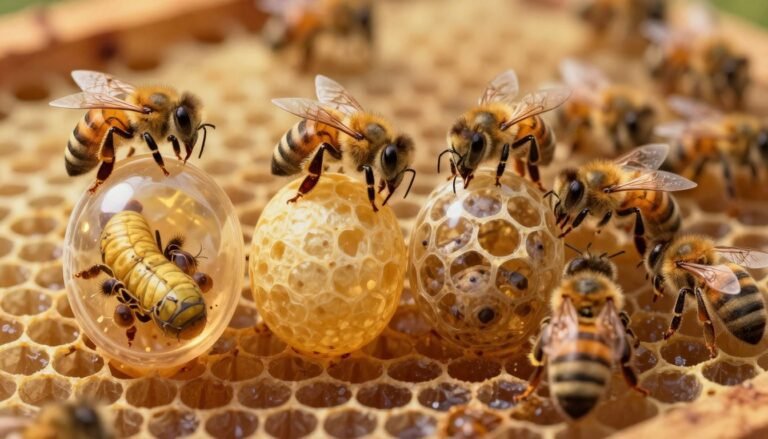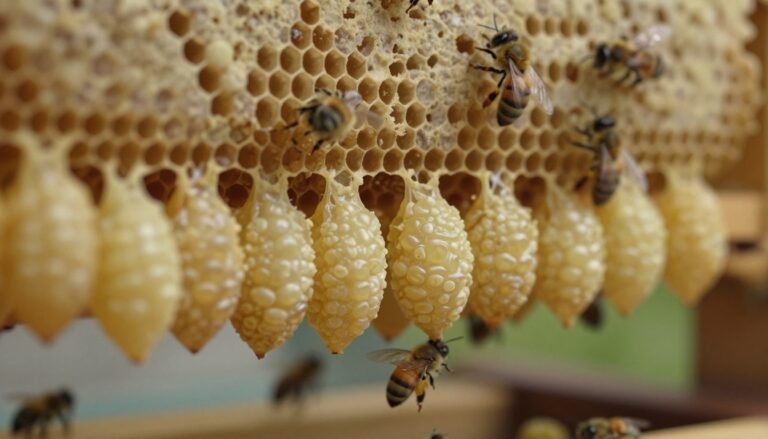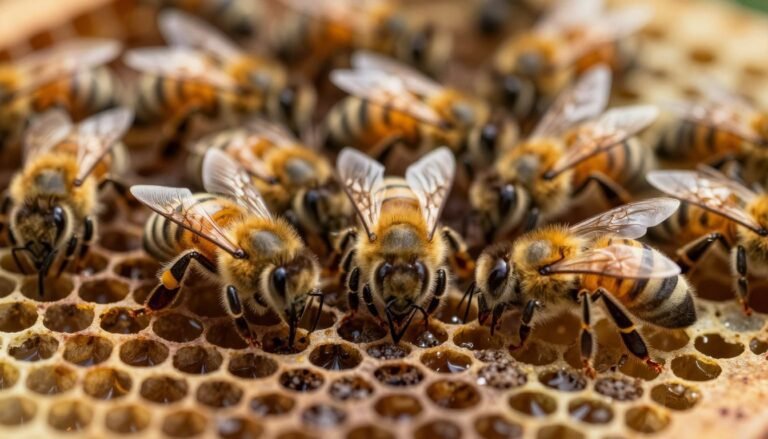
Commercial queen breeders raise far more mated queens in a given week than they can ship out the same day, and a mated queen can’t just sit in her cage waiting — she needs a colony of worker bees around her to survive. Queen banking solves that mismatch: caged mated queens are held inside a specially managed, queenless “bank” colony packed with young nurse bees for anywhere from several days to a few weeks, decoupling when a queen finishes mating from when she actually gets shipped or sold.
Key Takeaways
- A queen bank is a queenless (or carefully separated queenright) colony maintained specifically to keep caged mated queens alive and fed until they’re shipped or introduced.
- A solid bank needs at least 6 frames of adult bees — with half or more being young nurse bees — plus 2 or more frames of capped, sealed brood to keep replenishing that nurse-bee population.
- A single well-managed bank colony can hold anywhere from a few dozen to several hundred caged queens at once, depending on colony strength.
- Queens are generally kept banked for the shortest time practical — while banks can run for several weeks, most breeders treat that as a ceiling, not a target.
- Oregon State University’s Ellen Topitzhofer and Ramesh Sagili produced a SARE-funded guide specifically on queen banking best practices, reflecting real research interest in getting this technique right.
What Queen Banking Actually Solves
Mated queens are produced on a biological schedule that doesn’t care about shipping calendars: a virgin queen needs roughly a week to mature, take her mating flights, and begin laying before a breeder can confirm she’s a good queen worth selling. Orders, by contrast, come in on a commercial schedule — batches, weekly shipping days, and customer pickup windows that rarely line up neatly with when queens actually finish mating. Queen banking is the practice that absorbs that mismatch: instead of shipping a queen the moment she’s confirmed mated, cages her, or trying to time mating to a delivery date, breeders hold confirmed mated queens in a dedicated bank colony until the actual shipping or sale date arrives.
This is a genuinely different practice from the mating nucs and grafting systems this site has already covered — a mating nuc is where a virgin queen actually mates and starts laying, while a queen bank is purely a holding and life-support setup for queens that have already finished that process. It’s also distinct from a queenless colony simply raising an emergency queen; a bank is deliberately kept broodless of any developing queen cells and never intended to raise its own new queen at all.
How a Real Queen Bank Is Set Up
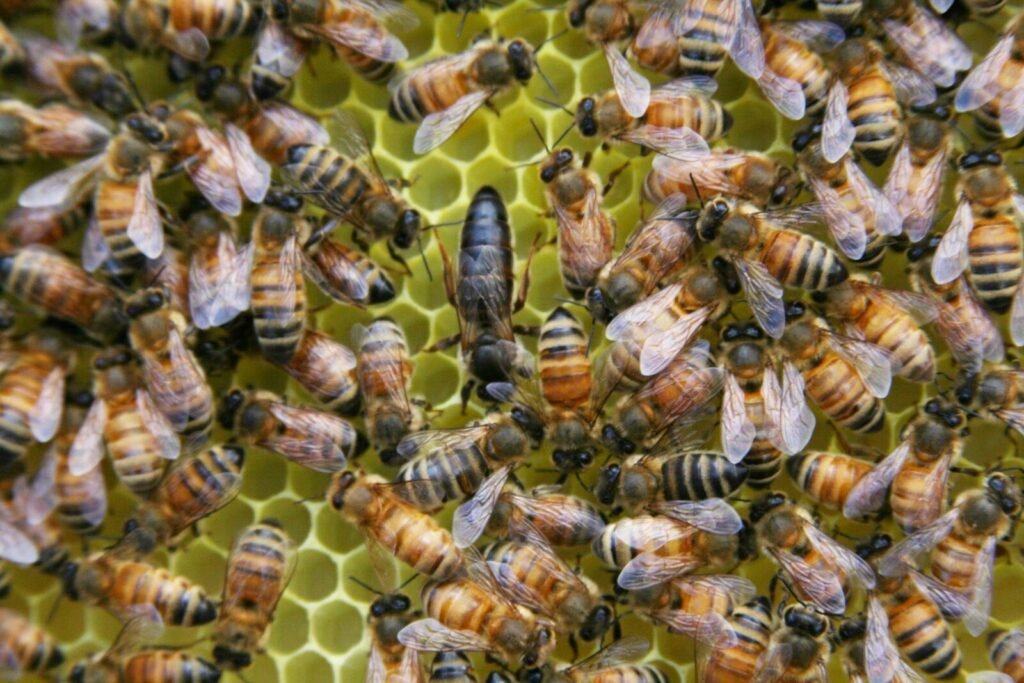
According to Foxhound Bee Company’s own detailed writeup on running a queen bank, a commercial queen breeder that also produced a video walkthrough of its banking setup, a workable bank needs real colony strength behind it: at least 6 frames of adult bees, with half or more being young nurse bees specifically, plus 2 or more frames of capped, sealed brood to keep that nurse-bee population replenished as older bees age out. Nurse bees matter more than raw bee count here because they’re the ones actually feeding and attending each caged queen through the mesh — a bank full of older foragers with too few nurse bees will neglect and sometimes kill banked queens even if the total bee count looks adequate on paper.
Breeders run banks two ways. The simpler queenless setup removes or separately cages the colony’s own laying queen entirely, so every bee’s attention goes to the banked queens. A queenright setup instead keeps the colony’s laying queen working below a queen excluder or double-screened board, with the bank frames held above — more complex to manage, since pheromone transfer between the laying queen and banked queens has to be blocked, but it avoids permanently disrupting the host colony’s own queen.
Cages and Colony Capacity
Banked queens stay in individual cages rather than loose in the colony, both so they can’t fight each other and so a breeder can track, retrieve, and ship specific queens on demand. Three cage types are in common commercial use: the small wire-mesh California mini cage, the plastic JZBZ cage (Foxhound’s stated preference for banking specifically, since its shipping-bar design keeps bees from releasing a queen prematurely through her candy plug), and the older three-hole wooden cage with pluggable openings. A single strong bank colony can hold anywhere from a few dozen queens up to several hundred, scaling with colony strength — this is exactly why banking makes sense at commercial volume in a way it usually doesn’t for a hobbyist raising two or three queens a season.
Foxhound Bee Company’s own video walkthrough, embedded above, shows this exact setup in practice — how the company stages its banking colonies, loads cages onto frames, and pulls specific queens back out to fill an order, which is a clearer picture of the physical workflow than a written description alone can give.
Duration, Feeding, and What Actually Goes Wrong
The general practice, per Foxhound’s own guidance, is to limit banking to the shortest time that’s actually necessary rather than treating several weeks as a routine target — banked queens can survive for a few weeks under good conditions, but that’s a ceiling breeders lean on when they have to, not a comfortable default. A bank needs a steady supply of syrup, honey stores, and pollen or pollen substitute to keep nurse bees fed and productive, and breeders typically rotate frames weekly to keep replenishing the nurse-bee population as brood continues to emerge.
The most commonly cited failure points are straightforward once you know to watch for them: summer heat can overheat a densely populated bank colony, a colony with too few young nurse bees will neglect caged queens regardless of total population, and failing to check regularly for developing queen cells can let the bank raise its own queen and disrupt the entire setup. Real research attention has gone into getting this right — Oregon State University’s Ellen Topitzhofer and Ramesh Sagili produced a SARE-funded, 42-page guide specifically on queen banking technique, developed through a grant that studied overwintering and bulk queen storage — a sign this is a technique serious enough in commercial beekeeping to merit dedicated academic study, not just breeder folklore.
Frequently Asked Questions
What is queen banking in beekeeping?
Queen banking is the practice of holding caged, already-mated queen bees inside a dedicated queenless (or carefully partitioned queenright) colony for days to a few weeks, so a breeder can decouple when a queen finishes mating from when she’s actually shipped or sold.
How many queens can be kept in one queen bank?
A single strong bank colony can hold anywhere from a few dozen queens up to several hundred, depending on colony strength — particularly how many young nurse bees are available to attend the caged queens.
How long can a queen safely stay in a bank?
Banked queens can survive for several weeks under good conditions, but breeders generally treat that as a ceiling rather than a routine target, aiming to limit banking to the shortest time actually necessary.
Is queen banking the same as a mating nuc?
No. A mating nuc is where a virgin queen actually mates and begins laying; a queen bank is a separate holding setup used only after a queen has already been confirmed mated, purely to keep her alive until shipping or introduction.
What’s the biggest risk in running a queen bank?
Having too few young nurse bees relative to the number of caged queens is the most common failure point — nurse bees are the ones directly feeding and attending each caged queen, so a bank with the wrong bee-age mix can neglect queens even with an adequate total bee count.