Reviewed by Thomas B. · Last Updated September 23, 2026 · How we review
Yes, you can get a laying worker colony to accept a new queen, but putting a caged queen straight into the hive is the method most likely to fail. What works is brood first, queen second. Give the colony frames of eggs and very young larvae to suppress the laying workers, then introduce a mated queen, ideally through a nuc united over newspaper. If the colony is small or the season is late, combine it instead.
The order matters because of what each step adds to the hive. A caged queen adds mostly queen pheromone. Young larvae add brood pheromone, and in a published experiment brood pheromone was the stronger brake on worker egg-laying: it cut the share of workers with activated ovaries from 82% to 40%, while queen pheromone only brought it to 73%. Most guides just say “add open brood”. Few explain which brood matters, and none of the top results we reviewed show the measured effect.
Written by Michael R., who keeps about 60 colonies in North Dakota’s Red River Valley and covers queen failure and requeening. Reviewed by Thomas B. (western Minnesota) under this site’s second-review rule for colony-health articles. The “Last Updated” date above is when that review was last completed against the sources linked below.
Key Takeaways
- A laying worker colony usually kills a queen introduced on her own, even in a cage.
- Larvae up to about 3 days old give off the most E-β-ocimene, the brood pheromone that suppresses worker ovaries. Donor frames should carry eggs and the youngest larvae, not capped brood.
- The most reliable fixes are weekly brood frames and then a queen, or a queenright nuc united over newspaper. Small colonies are better combined.
- Workers take three to four weeks to lay viable eggs after queen loss. Regular inspections catch most colonies before that point.
- In the Northern Plains, after about mid-August, combining usually beats rebuilding.
On this page
- Why a caged queen alone usually fails
- Confirm it is laying workers first
- Why young larvae are the real fix
- The four methods compared
- Method 1: Weekly brood frames, then a queen
- Method 2: Queenright nuc united over newspaper
- Method 3: Combine into a strong colony
- Method 4: The shake-out, honestly assessed
- Introducing the queen
- Timing in the Northern Plains
- Preventing laying workers
- Frequently Asked Questions
Why a Caged Queen Alone Usually Fails
From the colony’s point of view, it isn’t really queenless. Many workers have active ovaries and are laying, and bees that would have fed a new queen now treat her as a rival. They ball the cage, or they kill her within a day of release, and the drone-laying carries on.
A colony has only one queen, but it can have many laying workers, and they look like every other worker, so you can’t find and remove them. Their eggs are unfertilized, so every week the colony loses workers and gains drones. Some colonies also start with a head start toward worker laying. According to Woyciechowski and Kuszewska (2012, Current Biology), larvae that spend their last four or more feeding days queenless, as can happen after a swarm, can become “rebel” workers with more ovarioles.
Confirm It Is Laying Workers First
A failing queen and a young queen just starting to lay can look like laying workers, and each needs a different fix. Our guide to the signs of laying workers in a queenless hive covers diagnosis in full. The quick version:
| What you see | Laying workers | Drone-laying queen | New queen starting |
|---|---|---|---|
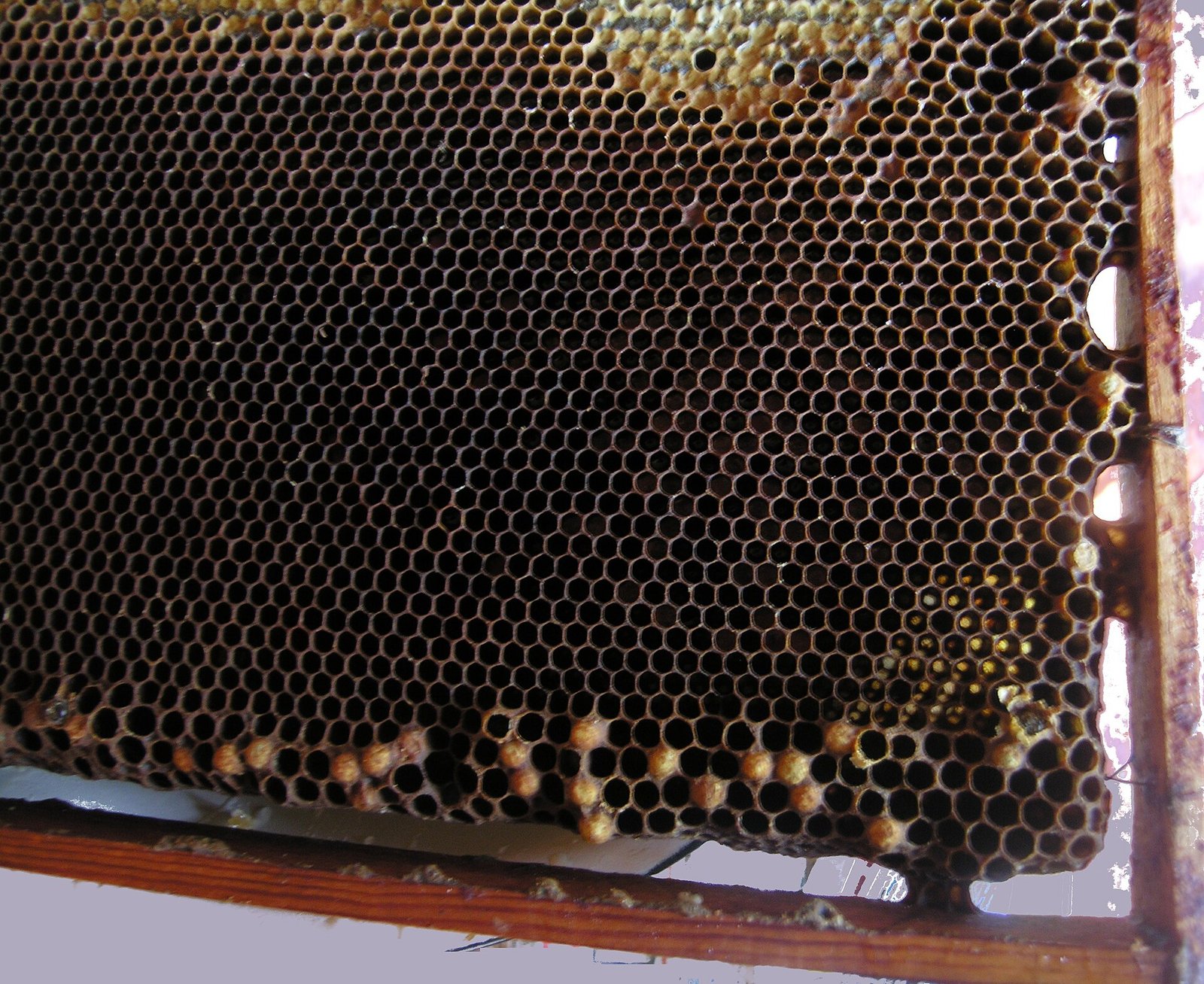
| Eggs per cell | Often 2 or more, some on cell walls | One, centered | One, occasionally doubled at first |
| Brood | Raised drone cappings in worker cells, scattered | Raised drone cappings, compact patch | Flat worker cappings, small tidy patch |
| Queen visible | No | Yes | Yes, slimmer and quick-moving |
| Response | This guide | See what to do about a drone-laying queen | Wait a week, recheck |
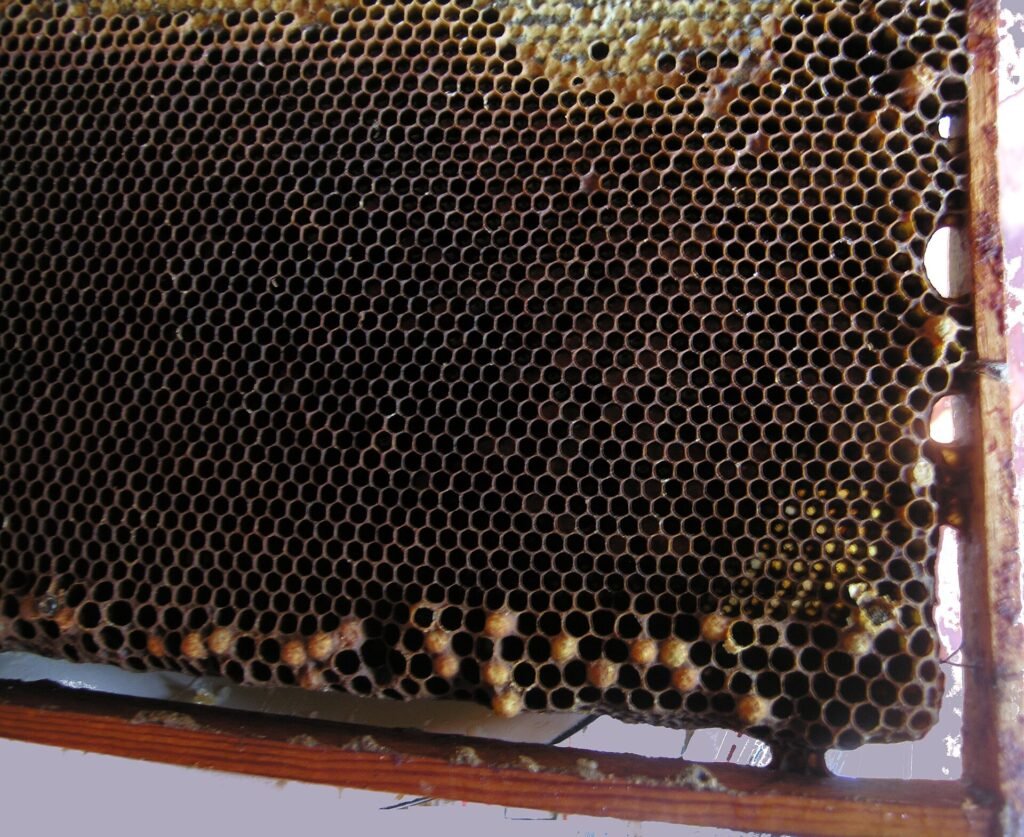
If you’re unsure, add a test frame of eggs and young larvae and look again after four to five days. Queen cells on it mean the colony knows it’s queenless, which is good news. No queen cells points to either a missed queen or established laying workers.
Why Young Larvae Are the Real Fix
Brood pheromone isn’t a single signal that all brood gives off equally. Maisonnasse and colleagues (2010, PLoS ONE) found that newly hatched to three-day-old worker larvae produce the most E-β-ocimene relative to body weight. Older larvae produce far less, and nurses don’t feed capped brood at all.
Traynor, Le Conte and Page (2014, Behavioral Ecology and Sociobiology) then caged 10-day-old workers with each pheromone and measured how many had activated ovaries:
| Treatment | Workers with stage 1+ ovary activation |
|---|---|
| No pheromone (control) | 82% |
| Queen mandibular pheromone (QMP) only | 73% |
| Young-larva pheromone (E-β-ocimene) only | 40% |
| Both together | 50% |
“The bees reared with only QMP had significantly more developed ovaries than bees exposed to eβ … indicating that eβ is more effective at suppressing OA [ovary activation] than QMP.”
This was a cage study, and we found no published trial of the full fix in real laying worker colonies. Still, it matches field experience and gives three practical rules:
- Pick the right frame. Look for eggs and larvae barely bigger than eggs. A frame of mostly capped brood adds future bees but little of the signal you need.
- Put the brood in before the queen. A caged queen supplies the weaker signal, into a colony that’s primed to reject her.
- Repeat weekly. Larvae outgrow the high-signal stage within days, so each new frame renews the signal.
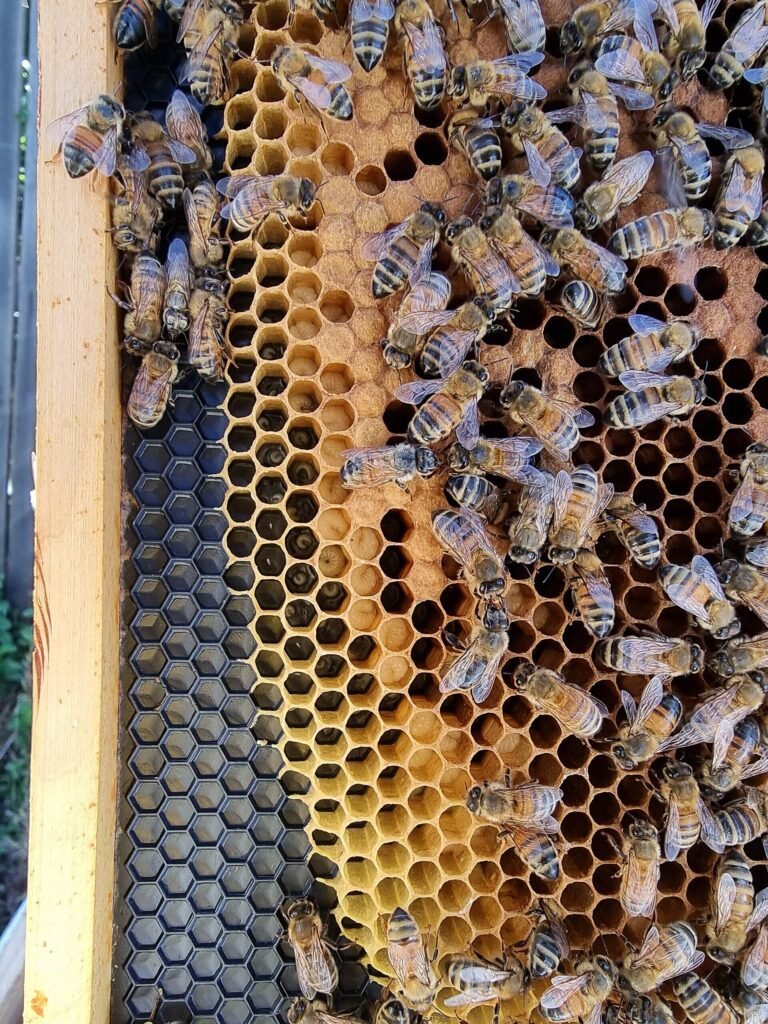
It also explains why the colony can’t fix itself. Its own brood is drone brood, and the research measured worker larvae. We found no evidence that drone larvae provide the same suppression.
The Four Methods Compared
The reliability ratings are our editorial judgment from field consensus and the biology above. We found no study comparing these methods head to head.
| Method | You need | Time until queenright | Reliability | Best when |
|---|---|---|---|---|
| Weekly brood frames, then queen | Strong donor colony, 2 to 3 frames of young brood, mated queen | 3 to 4 weeks | Good | Colony still covers several frames; early or mid season |
| Queenright nuc over newspaper | Mated queen, 2 to 3 frames of brood and bees | About 2 weeks | Good to very good | You want to keep the colony’s bees and comb |
| Combine into strong colony | Strong queenright colony | Immediate | Very good | Small colony, or late season |
| Shake-out | Space 100+ feet away, strong neighbouring hives | Depends on follow-up | Mixed, untested | Only as a first step |
Method 1: Weekly Brood Frames, Then a Queen
This method deals most directly with the underlying problem. It’s the one we’d start with for a colony that still has decent numbers.
- Day 0: Take a frame of eggs and the youngest larvae from your strongest colony and brush off the adult bees so you don’t move the donor queen. Place it in the center of the laying worker colony’s brood area.
- Day 7: Add a second frame. If queen cells have appeared on the first one, the colony now recognises it’s queenless. Laying worker colonies don’t build them.
- Day 14: If there are still no queen cells, add a third frame.
- Once queen cells appear, you can let the colony raise its own queen, which adds roughly a month and needs drones for mating. The faster option is to cut the cells out and introduce a mated queen the same day, which is usually better in a short northern season.
Our guide to whether laying workers can raise a new queen explains why the colony can only rear one from the eggs you give it.
Method 2: Queenright Nuc United Over Newspaper
This keeps the new queen away from the laying workers until she’s laying and giving off a strong signal of her own.
- Make a queenless nuc from two or three frames of brood and bees from a healthy colony, and introduce the mated queen to it in a candy-plug cage. Young nurse bees accept queens far more readily than an established colony, as our comparison of introducing queens to nucs vs full colonies explains.
- At the same time, give the laying worker colony a frame of eggs and young larvae.
- When the queen is laying (usually 7 to 10 days), move the nuc’s frames into a full-size brood box on the laying worker colony’s stand. Cover it with one sheet of newspaper, cut a few slits, and set the laying worker box on top with its own entrance closed.
- Leave it for a week, then consolidate, removing frames that are mostly drone brood.
More detail is in our guide on how to unite a queenless hive with another colony.
Method 3: Combine Into a Strong Colony
If the colony covers fewer than about four or five frames, or it’s late in the season, its bees and comb are worth more as part of a strong queenright colony. Use newspaper with the strong colony below and the laying worker box on top. Always merge into a strong colony, because a weak one can lose its own queen. Remove frames that are mostly drone brood first, freeze them for 48 hours, and give them to a strong colony to clean out. Our guide on how to combine two weak colonies covers the biosecurity checks worth doing first.
Method 4: The Shake-Out, Honestly Assessed
You carry the hive 100 feet or more away, shake every bee onto the ground, and return the empty equipment to its stand. The theory is that laying workers have never oriented to the hive’s location, so only foragers find their way back.
We couldn’t find a controlled study supporting this, and beekeepers’ reports go both ways. The idea that laying workers are all young bees that have never flown is an assumption, not a documented finding. Use the shake-out only as a first step before brood frames or a nuc unite, never on its own.
Introducing the Queen
Never release a queen straight onto the comb in a colony that has had laying workers:
- Candy-plug cage: hang it between two brood frames with the candy end angled slightly up. Workers usually chew through in two to four days. See how a queen cage candy plug works.
- Push-in cage: the most protective option. Press it over capped brood that’s about to emerge so the newly hatched bees tend her and she can start laying before the colony reaches her. See our push-in cage introduction steps.
- Read the cage: bees feeding and walking calmly on it are a good sign. Bees clamped onto the mesh and biting are not, so leave her caged another day or two.
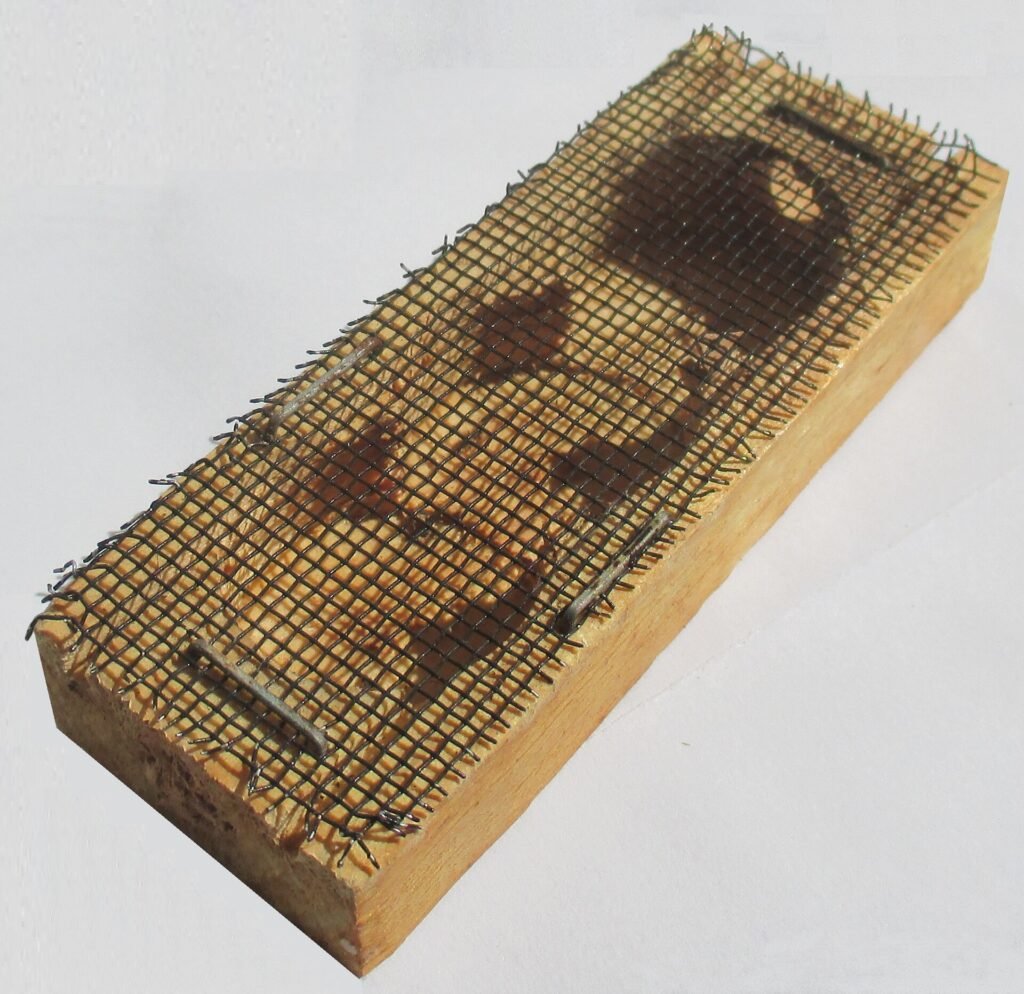
Seven to ten days after release, look for single centered eggs and young worker larvae. Our checklist on how to check if a new queen was accepted covers the details.
Timing in the Northern Plains
In eastern North Dakota and western Minnesota, colonies spend late summer rearing the long-lived bees that carry them through winter. A laying worker colony found then is ageing and producing drones instead of winter bees.
Count forward. Method 1 can take three weeks before a queen goes in, and her first workers take 21 days to emerge once she starts laying. So a colony found in mid-August won’t see its first new workers until about October, and it goes into winter small. A colony left to raise its own queen late in the season also has fewer drones available to mate her.
Our recommendation for this region is to rebuild only while more than six weeks of active brood rearing clearly remain. After about mid-August, combine, and make up the colony numbers with a spring split. The University of Minnesota Bee Lab’s Beekeeping in Northern Climates manual, free through North Central SARE, is the standard regional reference.
Preventing Laying Workers
Laying workers are what happens when requeening fails, not what normally follows queen loss. In a two-season study by Michael L. Smith (2018, Evolution), 16 of 17 queenless colonies in 2015 and 22 of 26 in 2016 raised a new laying queen. The paper also notes that workers need three to four weeks to lay viable eggs.
“[C]olonies were more likely to become queenright after having been queenless, than they were to become hopelessly queenless.”
Those weeks are when to act. Inspect every 7 to 10 days during the season, and most problems will show up while the colony can still raise or accept a queen. Watch for the signs your hive is queenless, and see how long a hive can stay queenless for what happens week by week. If you can’t find the old queen to confirm she’s gone, start with how to requeen a hive without finding the old queen.
The bottom line: suppress the laying workers with young brood, then introduce a queen under protection. If the colony is small or the season is late, combine it.
Frequently Asked Questions
Will a laying worker hive accept a new queen?
Rarely, if she’s the only thing you add. Acceptance becomes much more likely after one to three weekly frames of eggs and young larvae, or if you establish her in a nuc and unite it over newspaper.
How long after losing the queen do laying workers start?
Workers need about three to four weeks to lay viable eggs after queen loss (Smith, 2018). You usually notice them some weeks after the last queen-laid brood has emerged.
Can a laying worker colony fix itself?
No. Laying workers lay only unfertilized, drone eggs, so the colony has nothing to raise a queen from. It needs young brood from another colony, a mated queen, or a combine.
Does shaking out laying workers work?
Results are mixed, and we found no controlled study behind the method. Use it only as a first step before adding brood or uniting with a queenright nuc.
Should I remove the drone brood laid by laying workers?
Yes, when you consolidate or combine. Freeze those frames for 48 hours and let a strong colony clean them out, so you keep the drawn comb without raising more drones.
Can I use a queen cell instead of a mated queen?
You can, but it’s slower and less certain, because the virgin has to emerge, mate and start laying. After laying workers, a mated queen introduced once you’ve added brood frames is the surer route.
Is it worth saving a laying worker hive in late summer?
In northern regions, usually not. The new queen’s workers would emerge too late to build a good winter population, so after about mid-August it’s better to combine.