
While the “murder hornet” panic of 2020 grabbed headlines and was ultimately resolved with a genuine eradication success, a different invasive hornet has quietly become the actual, ongoing threat US beekeepers should be tracking today. The yellow-legged hornet was first confirmed in the continental US near Savannah, Georgia, in August 2023, and as of 2026 it remains established and actively being fought, with hundreds of individual hornets trapped and dozens of nests located and destroyed annually as part of an ongoing eradication effort that, as of the latest reporting, has not yet succeeded in fully clearing the state. This guide covers what the yellow-legged hornet actually is, its distinctive and genuinely damaging hunting behavior at honeybee hive entrances, its current confirmed US range as of the latest reporting, and exactly what to do if you happen to spot one.
Table of Contents
- What the Yellow-Legged Hornet Actually Is
- Identification: Look at the Legs
- “Hawking”: The Hunting Behavior That Makes It So Damaging
- Current US Status: An Active, Unresolved Eradication Effort
- What to Do If You Spot One
- What Happened in Europe: A Warning Worth Taking Seriously
- How It Compares to Other Hornets Covered on This Site
- Common Mistakes
- Nesting Habits: High in the Canopy
- Frequently Asked Questions
What the Yellow-Legged Hornet Actually Is
Vespa velutina is native to Southeast Asia and has already caused major, well-documented harm to beekeeping in Europe after arriving in France in 2004 and spreading across most of Western Europe over the following two decades. It was first confirmed in the continental United States near Savannah, Georgia, in August 2023, a first-of-its-kind detection that triggered an immediate, aggressive, multi-agency eradication response from Georgia’s Department of Agriculture working with USDA APHIS and Clemson University’s Honeybee Protection Program, precisely because the European experience made the potential consequences of inaction so clear.
Identification: Look at the Legs
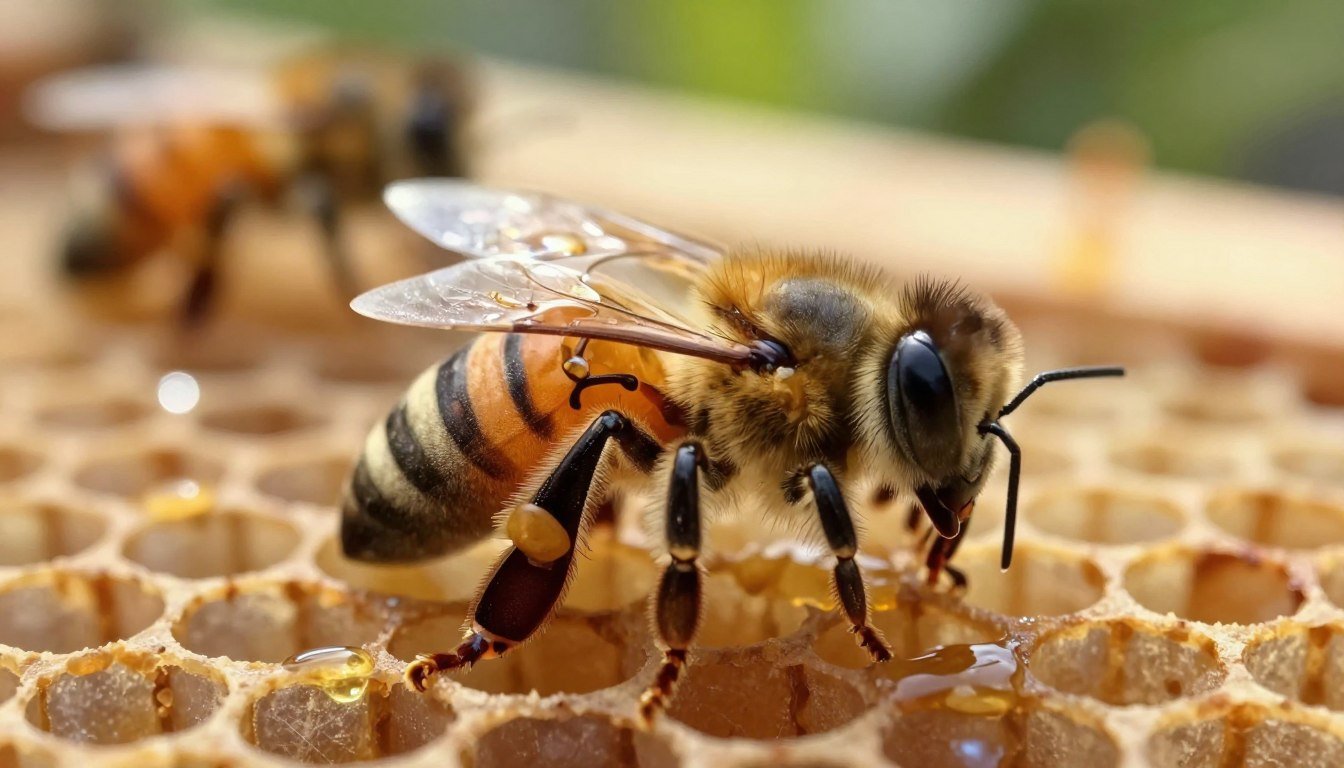
The name gives away the single fastest identification cue: yellow-legged hornets have distinctly yellow leg tips (tarsi), a genuinely reliable diagnostic feature not shared by the European hornet or any yellowjacket covered elsewhere on this site. The body is otherwise mostly dark, with a dark thorax and an abdomen that’s dark at the base and gradually lightens toward the tip. In size, queens run about 1.2 inches, males around 0.9 inches, and workers roughly 0.8 inches, making workers noticeably smaller than a European hornet but still larger than any yellowjacket species. The combination of yellow leg tips with an otherwise dark body is the detail worth remembering above all others when trying to tell this species apart from anything else in this site’s identification cluster.
“Hawking”: The Hunting Behavior That Makes It So Damaging
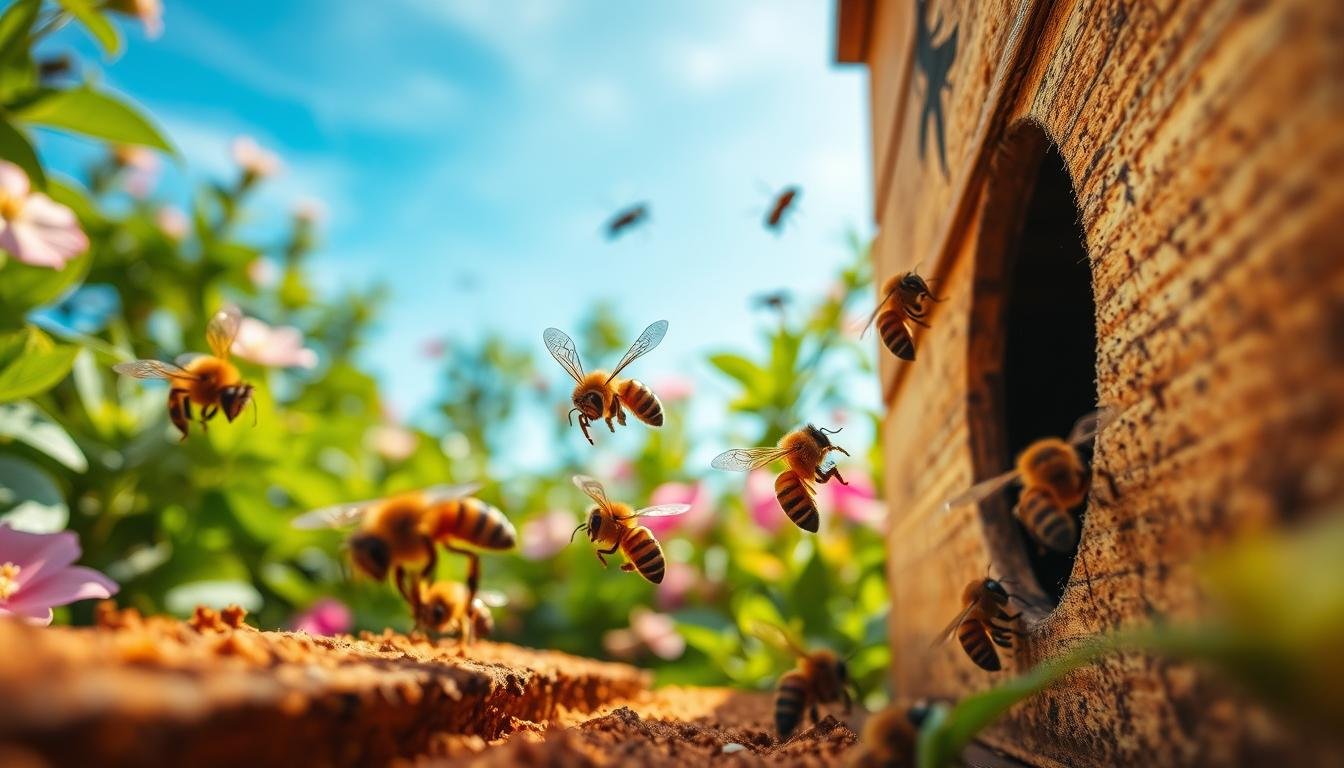
The yellow-legged hornet’s real danger to beekeeping comes from a specific, well-documented hunting strategy called hawking. A hornet positions itself hovering in the air directly above or in front of a honeybee hive entrance, patrolling a tight area sometimes less than a square meter, and picks off individual foraging bees as they return home, sometimes maintaining this position for up to 20 minutes at a stretch. Even when a hive isn’t losing enough individual foragers to collapse outright, the mere presence of hawking hornets can intimidate the colony into reducing or halting foraging activity altogether, since bees become reluctant to leave or return to the hive while a hornet is stationed at the entrance, a genuinely damaging indirect colony-stress effect that’s distinct from, and can compound, the raw predation numbers alone. This behavior, sustained and repeated across a season, is what has made the species such a documented problem for European beekeeping and is exactly why US agricultural agencies have responded so aggressively to its arrival.
Current US Status: An Active, Unresolved Eradication Effort
Unlike the Asian giant hornet, covered in this site’s guide to that now fully eradicated species, the yellow-legged hornet remains an active, unresolved situation as of 2026. Georgia’s public eradication dashboard has reported hundreds of hornets trapped and dozens of nests located and destroyed during the current year alone, with confirmed detections concentrated across several counties in the Savannah, Georgia area. The standard threshold for declaring genuine eradication, three consecutive years with zero new detections, has not yet been reached, meaning this is a genuinely ongoing effort rather than a resolved success story, in direct contrast to the Asian giant hornet’s outcome.
Can individual beekeepers do anything to protect their hives from yellow-legged hornets in the meantime?
Beekeepers in or near the currently affected Georgia counties are generally advised to install modified hive entrance guards that let bees pass but restrict hornet access, monitor hive activity closely for signs of hawking behavior, and report any suspected sighting promptly rather than attempting independent hornet control, coordinating directly with state agricultural extension services for the most current, locally specific guidance.
What to Do If You Spot One
Given the active, ongoing nature of this eradication effort, a suspected sighting is worth reporting rather than ignoring or attempting to handle personally. Photographing the insect from a safe distance, noting the exact location, and reporting it to your state department of agriculture, particularly if located anywhere in the southeastern US, gives officials a genuine chance to track and address a potential new detection before a nest becomes established in a previously unaffected area. This is meaningfully different advice from what applies to any of the other, already-established wasps and hornets covered elsewhere on this site; a yellow-legged hornet sighting outside the currently known Georgia range specifically warrants prompt official reporting rather than routine DIY handling.
What Happened in Europe: A Warning Worth Taking Seriously
The urgency behind the US response makes considerably more sense in light of what actually happened after the yellow-legged hornet arrived in France in 2004, reportedly via imported pottery from China. Within roughly two decades, the species spread across most of France and into neighboring countries including Spain, Portugal, Italy, and the UK, becoming a well-documented, ongoing burden on beekeeping across the region, with individual apiaries in heavily affected areas reporting significant colony losses and beekeepers needing to invest in hive-protection measures like modified entrance guards and trapping programs as a routine part of managing colonies in affected areas. This European precedent, a genuinely successful, self-sustaining invasive population causing measurable, lasting agricultural harm, is precisely the outcome US officials are working to prevent by responding so aggressively to the 2023 Georgia detection rather than waiting to see how the situation develops.
Why was pottery imported from China suspected as the original entry pathway into France?
Investigators traced the initial 2004 French detection to a shipment of pottery from China, theorizing that one or more mated queens, which overwinter in small, hidden, protected spaces, were inadvertently transported inside packing material, a plausible and well-documented pathway for invasive insect species generally, underscoring how international shipping and cargo remain a persistent route for new hornet incursions worldwide.
How It Compares to Other Hornets Covered on This Site
The yellow-legged hornet’s current status sets it apart from every other species in this site’s identification cluster. Unlike the European hornet, established in the US for nearly two centuries with a research-confirmed mild impact on honeybee colonies, the yellow-legged hornet is newly arrived and has a well-documented history of serious harm elsewhere. Unlike the Asian giant hornet, successfully eradicated after a contained, early-caught incursion, the yellow-legged hornet’s US eradication effort remains active and unresolved as of the most recent reporting. For general bee-versus-wasp identification basics, see this site’s complete identification guide.
How is the yellow-legged hornet’s threat to human safety compared to its threat to honeybees?
Its primary documented harm is to honeybee colonies and beekeeping operations rather than to people directly; while it can sting defensively like any social wasp if its nest is disturbed, it hasn’t been characterized as unusually dangerous to humans the way early “murder hornet” coverage suggested about the unrelated Asian giant hornet, and the appropriate level of concern here is specifically agricultural and ecological rather than personal-safety-focused. This distinction matters in practice.
Why does this species seem to specifically target honeybee hives rather than hunting more broadly?
It does hunt a range of other insects too, but honeybee colonies represent a uniquely concentrated, reliable, and easily located food source, with a predictable stream of individual bees arriving and departing a fixed point all day, making hive entrances a genuinely efficient hunting ground compared to searching more broadly for scattered individual insect prey elsewhere in the landscape.
Common Mistakes
The most significant mistake, particularly for anyone who followed the 2020 “murder hornet” coverage, is confusing the yellow-legged hornet with the Asian giant hornet; they’re different species with different US outcomes, one fully eradicated, the other still an active, ongoing concern, and conflating the two risks either unwarranted panic or, worse, false reassurance about a genuinely unresolved situation. Another mistake is assuming the threat is confined entirely to Georgia and irrelevant elsewhere; given how the species spread rapidly across Western Europe after its initial 2004 introduction, agricultural officials in neighboring states remain on alert for any signs of range expansion. People also sometimes attempt DIY nest destruction upon spotting a suspected yellow-legged hornet nest, when reporting to trained officials, who can properly track and eliminate the entire colony including the queen, is both safer and more effective for an active eradication effort.
How does the yellow-legged hornet’s colony size compare to other social wasps covered on this site?
Colonies can grow substantially larger than a typical yellowjacket or bald-faced hornet nest by the end of a season, with some mature nests documented holding several thousand individuals, a scale that helps explain why sustained hawking pressure from a single established nest can meaningfully affect multiple nearby honeybee colonies over a single foraging season.
Nesting Habits: High in the Canopy
Yellow-legged hornets typically build large, enclosed, spherical paper nests high in tree canopies, often 30 feet or more above ground, a location that makes nests considerably harder to spot and destroy compared to the more visible or accessible nest sites favored by many of the wasps and hornets covered elsewhere on this site. Colonies can grow quite large by late season, and unlike a bald-faced hornet’s exposed nest, a yellow-legged hornet nest positioned deep in a mature tree canopy may go completely unnoticed by homeowners until leaf-drop in fall, which is part of why officials rely heavily on trapping and radio-tracking live hornets back to their nests rather than depending on visual spotting alone.
New Zealand treats the hornet as a notifiable organism; see New Zealand's beekeeping laws and notifiable pests.
Sources
For additional authoritative detail on this topic, see USDA APHIS’s update on yellow-legged hornet response efforts.
Frequently Asked Questions
Does the yellow-legged hornet only threaten managed honeybee colonies, or wild pollinators too?
Both, in practice; while its documented impact on managed apiaries gets the most attention given the direct economic and food-production stakes, the same hawking predation pressure applies to any honeybee colony, wild or managed, and the species also preys more broadly on other flying insects encountered while foraging, giving it a genuine, if less thoroughly documented, impact on wild pollinator populations as well.
How can the public help with the ongoing eradication effort besides just reporting sightings?
Learning accurate identification well enough to avoid both false reports of harmless look-alikes and missed genuine detections is itself a meaningful contribution, and following official state agriculture department updates for the current confirmed range helps residents in and near affected areas stay appropriately alert without either overreacting to unrelated insects or underreacting to a genuine sighting.
Is the yellow-legged hornet the same as the “murder hornet”?
No, they’re different species. The Asian giant hornet (the “murder hornet”) was eradicated from the US in December 2024. The yellow-legged hornet is a separate species, first detected in Georgia in 2023, and remains an active, unresolved eradication effort.
Where in the US has the yellow-legged hornet actually been found?
Confirmed detections remain concentrated in several counties around Savannah, Georgia, near the South Carolina border, as of the most recent reporting, though officials in neighboring states continue monitoring for any signs of spread.
Should beekeepers outside Georgia be worried right now?
Not urgently, but staying informed is reasonable; given how the species spread across Europe after its initial introduction, continued vigilance and prompt reporting of any suspected sighting anywhere in the southeastern US remains a sensible precaution.