“Was that a bee or a wasp?” is one of the most common questions people have about the flying, stinging insects they encounter, and getting the answer right matters considerably more than simple idle curiosity might suggest. Bees and wasps look broadly similar at a glance but differ enormously in diet, temperament, sting behavior, and ecological role, and misidentifying one for the other is directly responsible for a lot of unfair fear directed at gentle, beneficial bees. This guide covers the fast, reliable ways to tell bees and wasps apart in general, then links out to detailed guides on the specific species people confuse most often.
Table of Contents
- The Core Differences at a Glance
- Body Shape: The Fastest Visual Cue
- Diet and Behavior: Why It Actually Matters
- Nest Materials and Construction
- Sting Mechanics: The Real Reason Behavior Differs
- Species-by-Species: Which Guide Do You Need?
- Where Hornets Fit Into This Picture
- When Sting Reactions Actually Warrant Medical Attention
- Why This Distinction Matters for Gardens and Ecosystems
- Common Mistakes
- Solitary vs. Social: The Other Key Variable
- Frequently Asked Questions
The Core Differences at a Glance
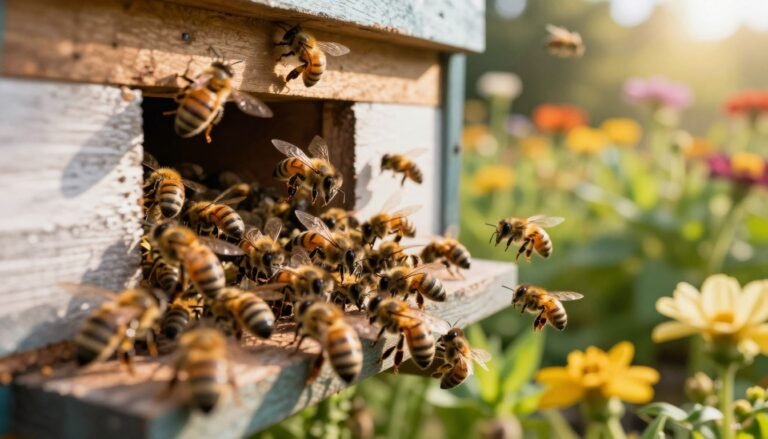
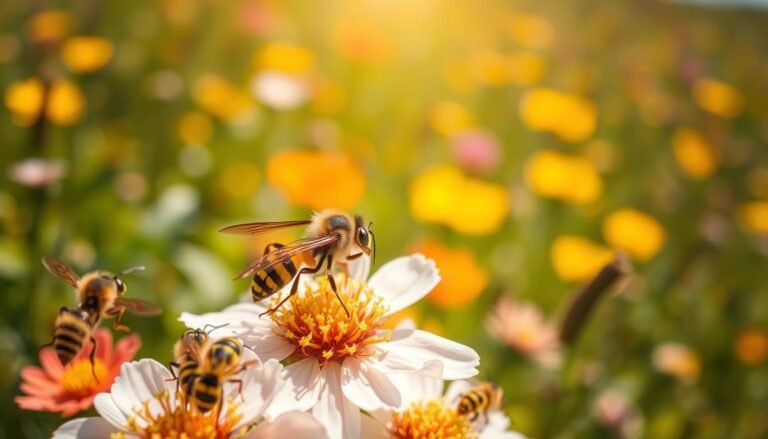
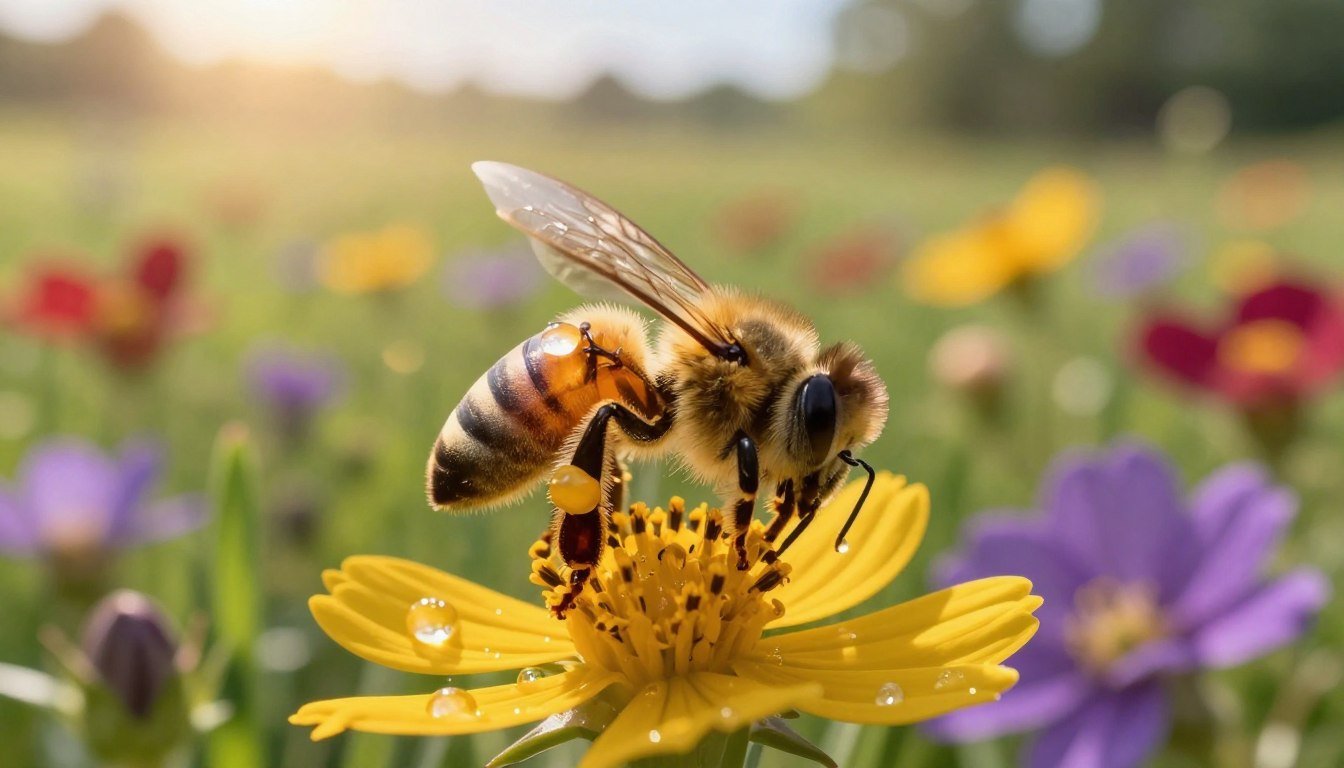
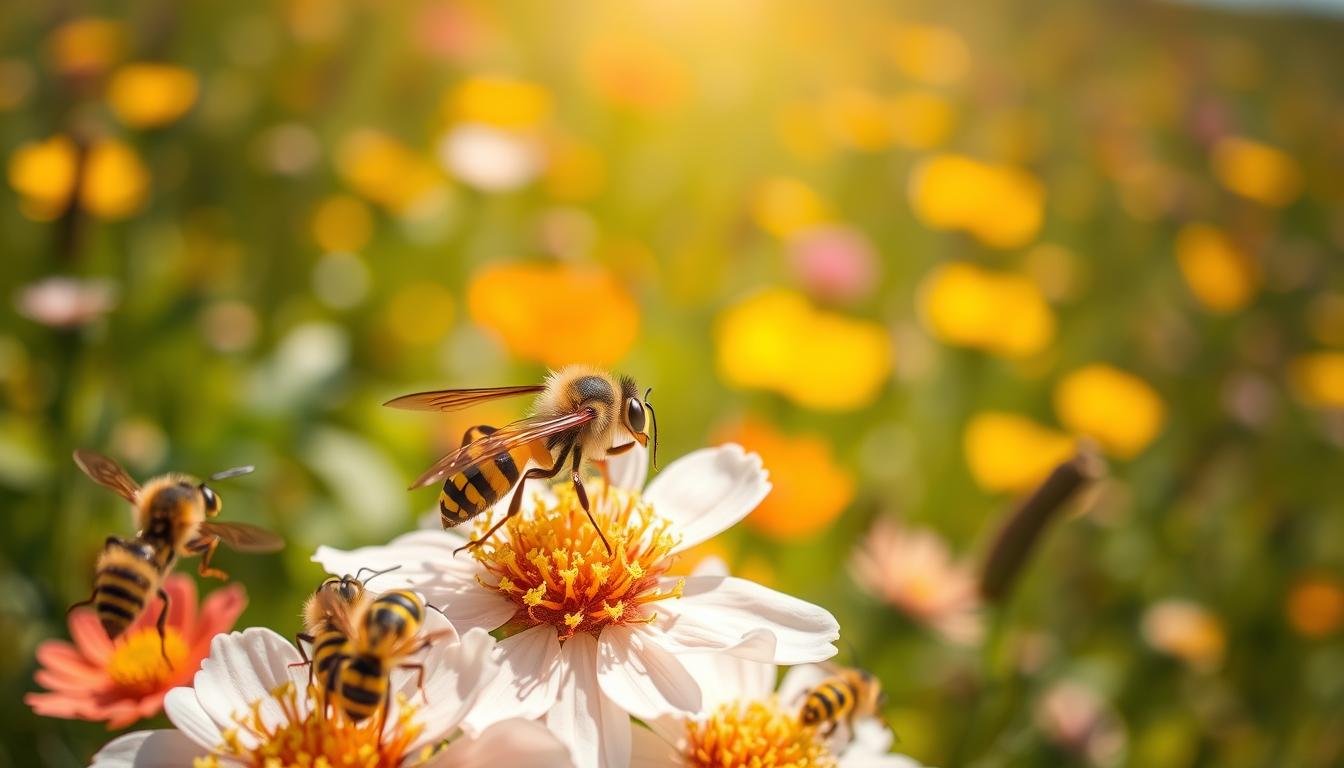
At the broadest level, bees are vegetarians built for pollen collection, while wasps are largely predators and scavengers built for hunting and food-gathering versatility. Bees have branched, feathery body hair specifically adapted to trap pollen, a rounder, fuzzier overall silhouette, and muted, often golden-brown coloring. Wasps have smooth, shiny bodies with minimal hair, a distinctly narrow “wasp waist” between the thorax and abdomen, and typically sharper, higher-contrast yellow-and-black or black-and-white banding. These aren’t hard-and-fast rules for every one of the many thousands of species that exist within each group worldwide, but they hold up well enough to correctly identify the vast majority of everyday backyard encounters.
Body Shape: The Fastest Visual Cue
If only one detail is available, body texture and waist shape settle most cases. A bee’s head and thorax blend into a continuous, rounded, fuzzy body with no obvious narrow “waist,” while a wasp’s body shows a sharply pinched, narrow connection between its thorax and abdomen, the feature that gives rise to the phrase “wasp-waisted.” Combined with hairiness, fuzzy and rounded means bee, shiny and pinch-waisted means wasp, this two-part check resolves the overwhelming majority of casual sightings without needing to know a specific species at all.
Diet and Behavior: Why It Actually Matters
Bees feed exclusively on nectar and pollen throughout their entire adult lives and provision their offspring with the same, a specialization that shapes both their body (pollen-carrying hair and structures) and their behavior (little interest in human food, meat, or trash). Wasps are far more dietarily flexible: many species hunt insects and spiders to feed their larvae while adults themselves also seek out sugary substances, which is exactly why wasps, and yellowjackets in particular, show up around picnics, soda cans, and open trash in a way bees essentially never do. This single dietary difference explains most of the behavioral gap people actually notice day to day between the two groups.
Nest Materials and Construction
Bees build with wax, a substance they biologically produce themselves from specialized glands, forming the familiar hexagonal comb structure inside a hive or cavity. Social wasps, including yellowjackets and hornets, build nests from a paper-like material made by chewing wood fiber and mixing it with saliva, producing the gray, papery, layered nests often seen hanging from eaves or hidden underground. This is a reliable secondary identification method when an actual nest is visible: wax comb means bees, gray paper construction means wasps.
Sting Mechanics: The Real Reason Behavior Differs
The anatomical detail that explains almost everything about why bees seem cautious and wasps seem reckless comes down to the stinger itself. A honeybee’s stinger is barbed and tears away from its body after stinging, which kills the bee, so honeybees sting only as an absolute last resort defending the colony. A wasp’s stinger is smooth and can be withdrawn and reused repeatedly without injuring the wasp, removing that same evolutionary brake on stinging behavior. This single mechanical difference is the actual root cause behind the behavioral pattern most people describe as “wasps are more aggressive than bees,” and it’s covered in more specific detail in this site’s guide to yellowjackets vs. honeybees.
Species-by-Species: Which Guide Do You Need?
General rules only go so far, since real-world confusion usually centers on a handful of specific look-alike species. If a large, fuzzy bee is hovering near deck wood or eaves, see this site’s guide to carpenter bees, easily confused with bumblebees but identifiable by a shiny, hairless abdomen. For the large, black-and-yellow bee actively working flowers rather than patrolling wood, see this site’s guide to bumblebees. For the smooth, sharply striped insect showing up at a picnic or trash can, see the yellowjacket guide linked above. And for background on the largest hornet species ever recorded in North America, now fully eradicated from the US, see this site’s guide to the Asian giant hornet.
Where Hornets Fit Into This Picture
Hornets are actually a specific type of wasp rather than a separate category entirely, generally larger, in the same broad family (Vespidae) as yellowjackets and paper wasps. All the general bee-versus-wasp identification rules covered above apply equally to hornets: smooth bodies, a narrow waist, and predatory-scavenging dietary behavior rather than the pollen-focused vegetarian diet of bees. Size is often the main practical distinction people use between hornets and their smaller wasp relatives, though as this site’s guide to the Asian giant hornet covers, size alone can lead to serious misidentification when people assume any unusually large stinging insect must be a rare, dangerous species rather than a large but harmless native one.
When Sting Reactions Actually Warrant Medical Attention
Regardless of which insect delivered a sting, the medical response threshold is the same and worth knowing clearly. A normal local reaction, pain, redness, and swelling confined to the sting site, typically resolves within a day or two with basic care. A genuine allergic reaction looks different and demands immediate attention: widespread hives or swelling away from the sting site, difficulty breathing or swallowing, dizziness, or a rapid heartbeat are signs of anaphylaxis and require emergency care right away, regardless of whether the culprit was a bee, wasp, or hornet. Readers who experience recurring, severe sting reactions and want to understand medical treatment options can find more detail in this site’s guide to bee venom immunotherapy.
Do all wasps live in colonies like yellowjackets and hornets?
No, the large majority of wasp species worldwide are actually solitary, working entirely alone with no shared nest to defend; the aggressive, colony-defending reputation most people associate with “wasps” really describes the smaller subset of social species, yellowjackets, hornets, and paper wasps, rather than wasps as a whole.
Why This Distinction Matters for Gardens and Ecosystems
Beyond personal safety, correctly telling bees and wasps apart has real ecological stakes. Bees, as dedicated pollen and nectar specialists, do the overwhelming majority of pollination work in most gardens and natural landscapes, from honeybees and bumblebees down to the specialist native species covered throughout this site, including leafcutter bees. Indiscriminately spraying pesticide at every stinging insect encountered, out of an understandable but often misapplied fear, risks killing genuinely beneficial, non-aggressive native bees right alongside any actual wasp problem, a real, avoidable cost given how much specialized, often quietly irreplaceable pollination work many of these native species perform without most people ever noticing. Learning the basic identification cues covered in this guide is a small effort that pays off in both personal safety and, cumulatively, in how much unnecessary harm gets done to beneficial pollinators out of simple misidentification.
Is it true that bees will only sting if provoked, but wasps sting for no reason?
That framing oversimplifies things slightly: most wasps, including social species, do sting in response to a perceived threat rather than truly “for no reason,” but their threshold for what counts as provocation is considerably lower than a honeybee’s, and their willingness to sting repeatedly without dying makes that lower threshold far more consequential in practice.
Can hover flies or other insects be mistaken for bees or wasps too?
Yes, quite commonly; certain hover flies (also called flower flies) have evolved yellow-and-black banding that mimics bees or wasps as a defense against predators, despite having none of the actual biology, two wings instead of four, no stinger, and large fly-like compound eyes, that would make them dangerous at all.
Does the color pattern alone (yellow and black) reliably tell bees and wasps apart?
No, color alone is one of the least reliable identifiers, since many bee species also show yellow-and-black patterning; body texture and waist shape remain far more dependable cues than coloring by itself.
Common Mistakes
The single most consequential mistake is blaming honeybees for unprovoked, repeated stings that were almost certainly delivered by a wasp, since honeybees rarely sting without direct provocation and physically cannot sting more than once. Another common mistake is assuming every large, intimidating flying insect represents an equal threat; solitary wasps and bees, including cicada killers and most carpenter bees, are considerably less inclined to sting than social species defending an active nest or colony. People also frequently destroy a nest immediately upon discovery without confirming what’s actually inside it, sometimes eliminating a beneficial, non-aggressive native bee nest based on nothing more than surface-level resemblance to a genuinely troublesome wasp colony.
Solitary vs. Social: The Other Key Variable
Whether a species is solitary or social matters just as much for real-world risk assessment as whether it’s a bee or a wasp. Social species, honeybees, bumblebees, yellowjackets, and hornets among them, defend a shared nest or colony and can recruit many individuals to respond to a perceived threat at once, which is where most serious multi-sting incidents come from. Solitary species, including mason bees, leafcutter bees, squash bees, and most carpenter bees, work entirely alone with no colony to defend (sweat bees range from solitary species to small social colonies), and are correspondingly far less inclined to sting regardless of whether they’re technically a bee or a wasp. This site covers several of these solitary native bees in detail, including mason bees, squash bees, and sweat bees, all considerably gentler encounters than their social, colony-defending counterparts despite superficial visual similarities in some cases.
For how the stings themselves differ, see bee sting vs wasp sting.
A famous case of bee-or-wasp confusion is the Malia Pendant.
Sources
See University of Maine Cooperative Extension’s fact sheet on hornets, wasps, and yellowjackets for further verification of the material covered here.
Frequently Asked Questions
Do wasps and hornets provide any pollination benefit at all, or is it purely bees?
Wasps do visit flowers for nectar as an energy source and can incidentally transfer some pollen in the process, but because their bodies lack the branched, pollen-trapping hair bees evolved specifically for the job, their pollination contribution is generally minor compared to a dedicated pollen specialist visiting the same flower.
Why do some bees, like carpenter bees, look almost identical to certain wasps at a glance?
Convergent evolution and shared ancestry both play a role; bees actually evolved from a wasp-like ancestor millions of years ago, so some of the underlying body plan similarities are genuinely inherited rather than coincidental, even as bees as a group later diverged toward the fuzzy, pollen-specialized body plan that now typically separates them from true wasps.
What’s the single fastest way to tell a bee from a wasp?
Check for a narrow “wasp waist” and body hair: a rounded, fuzzy body with no obvious pinched waist is almost always a bee, while a smooth, shiny body with a sharply narrowed waist is almost always a wasp.
Are wasps always more dangerous than bees?
Not automatically, but in practice, social wasps like yellowjackets do sting more readily and repeatedly than honeybees because their smooth stinger carries no fatal cost, which is the main practical safety difference most people actually experience.
If I get stung and I’m not sure which insect did it, what should I do?
Basic first aid is largely the same regardless: wash the area, apply a cold compress, and take an antihistamine or pain reliever as needed; watch for signs of a severe allergic reaction (widespread hives, difficulty breathing, swelling of the face or throat) and seek emergency care immediately if any appear, regardless of which insect was responsible.