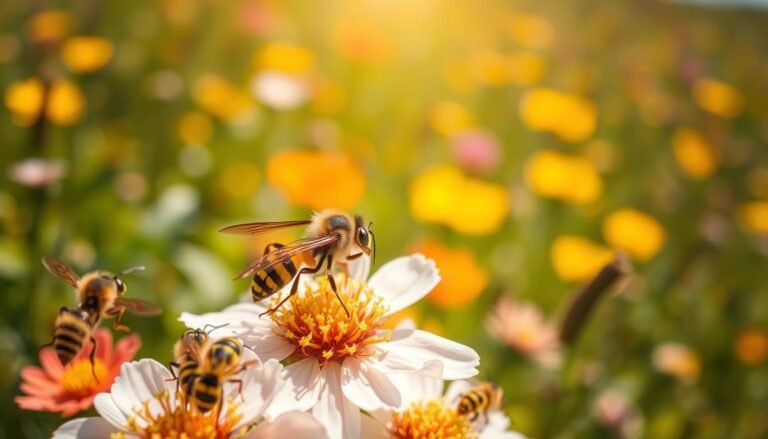
That small, yellow-and-black striped insect hovering motionlessly in mid-air over a garden flower, then darting sideways in an instant, is very likely not a bee or wasp at all, despite looking convincingly like one at a glance. Hover flies are true flies that have evolved to mimic the warning coloration of stinging insects without possessing any sting of their own, and their larvae are, in many species, among the most effective aphid predators a garden can host. This guide covers what hover flies actually are, how their flight and body shape give them away as flies rather than bees or wasps, why their larvae are such valuable natural pest control, and why they’re considered one of the most beneficial insect groups a gardener can encourage.
Table of Contents
- What Hover Flies Actually Are
- Identification: How to Tell a Hover Fly From a Bee or Wasp
- Batesian Mimicry: Borrowing a Warning Without a Weapon
- Aphid-Eating Larvae: The Real Garden Benefit
- Not All Hover Fly Larvae Eat Aphids
- A Genuinely Major Pollinator Group
- Quick Identification Comparison
- Why Agricultural Researchers Take Hover Flies Seriously
- How Hover Flies Fit Alongside Native Bees and Honeybees
- Seasonal Activity and Where to Find Them
- Life Cycle: Egg to Adult
- Common Mistakes
- Frequently Asked Questions
What Hover Flies Actually Are
Hover flies, also commonly called flower flies or syrphid flies, belong specifically to the family Syrphidae within the larger order Diptera, the true flies, making them entirely unrelated to bees and wasps despite the strong resemblance many species share with both. With well over 6,000 described species worldwide and hundreds found across North America, hover flies are genuinely one of the most diverse and ecologically important fly families, filling roles as both significant pollinators and, in many species, effective natural predators during their larval stage.
Identification: How to Tell a Hover Fly From a Bee or Wasp
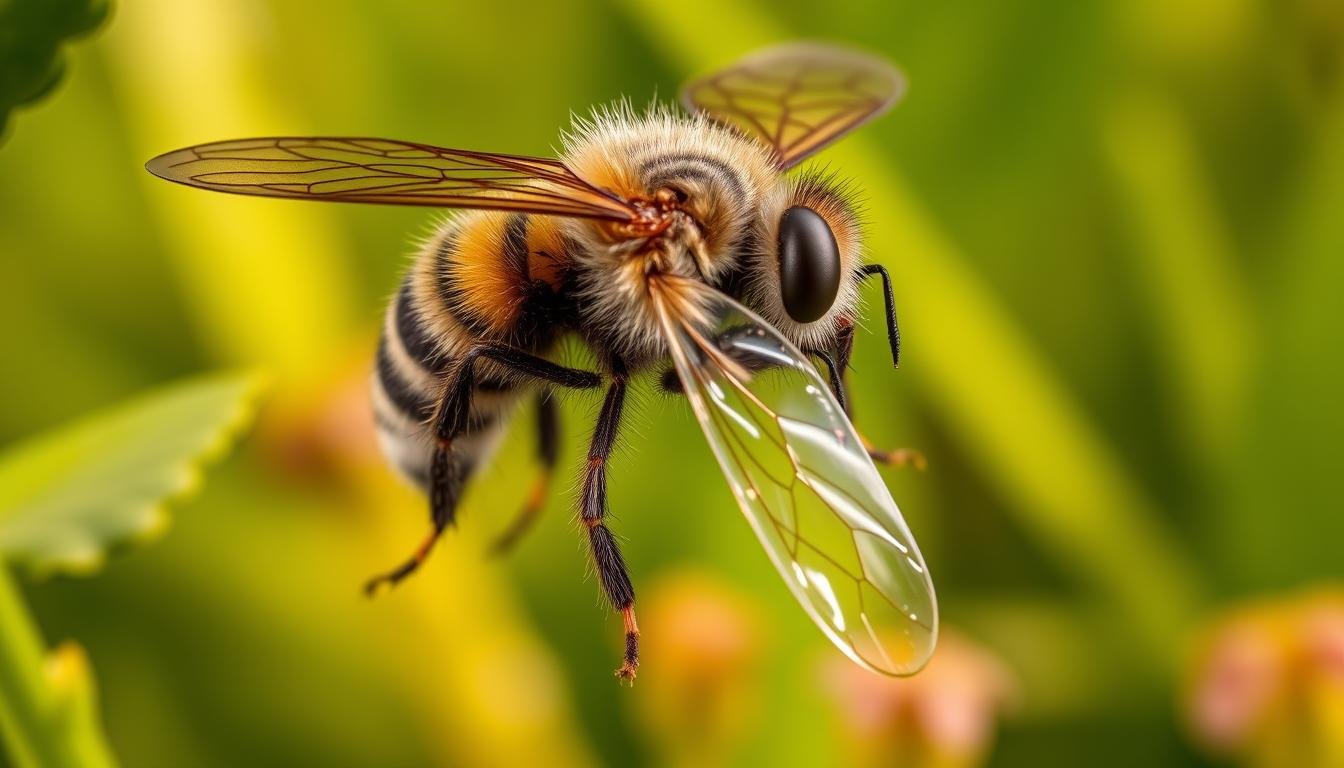
Several reliable physical traits separate hover flies from actual bees and wasps once you know what to look for. True flies have only one pair of functional wings, compared to the two pairs found on every bee and wasp, and hover flies also typically have noticeably large eyes that meet or nearly meet on top of the head, short, stubby antennae rather than the longer, more visible antennae typical of bees and wasps, and a generally flatter, less fuzzy body. Their flight behavior is often the fastest giveaway in the field: hover flies are named for their genuinely distinctive ability to hold perfectly still in mid-air, then dart sideways or backward in an instant, a flight style unlike the more direct, continuous flight pattern of foraging bees.
Batesian Mimicry: Borrowing a Warning Without a Weapon
The yellow-and-black banding common to many hover fly species is a well-documented example of Batesian mimicry, where a harmless species evolves to resemble a dangerous or unpalatable one specifically to deter predators, in this case borrowing the warning coloration associated with stinging bees and wasps without possessing any sting at all. Hover flies are physically incapable of stinging or biting; female flies lack the modified egg-laying structure that forms a stinger in female bees and wasps, meaning the resemblance is purely visual and behavioral rather than reflecting any actual defensive capability. This mimicry is considered genuinely effective at deterring predators like birds, which learn to avoid the warning coloration regardless of whether a specific individual insect can actually sting.
Since hover flies can’t sting, are they completely safe to handle?
Yes, hover flies pose no sting or bite risk to people at all, making them one of the few insects on this site that can be handled or observed up close with genuinely zero physical risk, unlike even the low-risk solitary wasps and bees covered elsewhere, which retain at least a theoretical capacity to sting.
Aphid-Eating Larvae: The Real Garden Benefit
While adult hover flies feed on nectar and pollen, the larvae of many species in the subfamily Syrphinae are voracious aphid predators, actively hunting and consuming aphids throughout their development, with a single larva capable of eating hundreds of aphids before reaching the pupal stage. Female hover flies deliberately seek out aphid colonies to lay their eggs directly among them, ensuring the hatching larvae have an immediate, abundant food source close at hand. This makes aphid-eating hover fly species a genuinely significant form of natural pest control in gardens, often working alongside ladybugs and lacewings as part of a broader community of beneficial aphid predators.
Not All Hover Fly Larvae Eat Aphids
It’s worth being genuinely accurate here rather than overgeneralizing: not every hover fly species has aphid-eating larvae. Some species in the family have larvae that are decomposers, feeding on decaying organic matter, and one well-known example, the drone fly (Eristalis tenax), itself a convincing mimic of a honeybee drone, has aquatic larvae known as “rat-tailed maggots” that live in stagnant water and breathe through a long, snorkel-like tube rather than hunting aphids at all. This diversity means the specific ecological benefit a hover fly provides genuinely depends on which species is present, even though the adult flies across most species share the same general pollinator role.
A Genuinely Major Pollinator Group
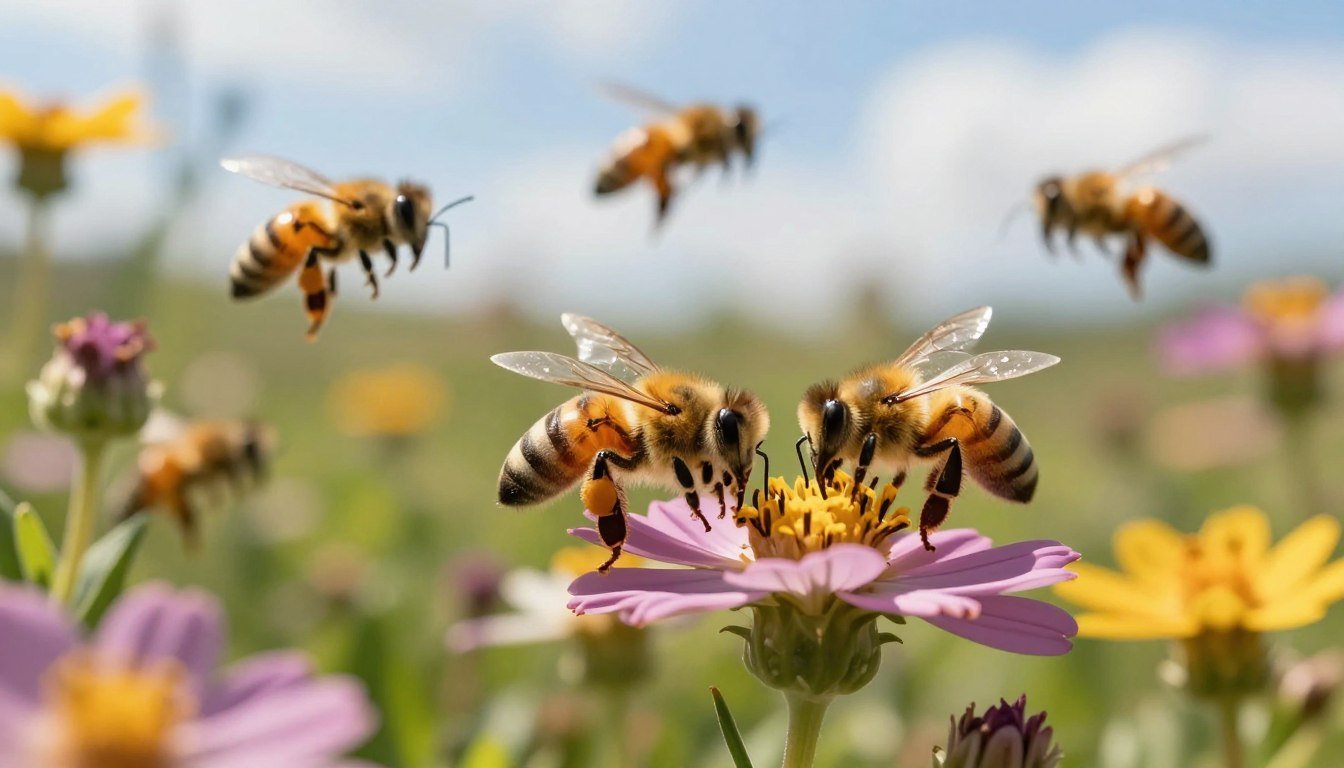
Beyond their larval pest-control value, adult hover flies are recognized as one of the most important pollinator groups after bees, visiting a wide range of flowers for nectar and pollen and, in the process, transferring pollen between blooms much the way bees do. Some research has specifically highlighted hover flies as valuable secondary pollinators for crops and wild plants alike, particularly useful given their broad geographic range and activity even in cooler or more marginal conditions where some bee species are less active. Gardeners specifically interested in maximizing overall pollination, not just honeybee activity, benefit from recognizing hover flies as a genuine contributor rather than dismissing every bee-look-alike as competition or a threat.
Quick Identification Comparison
| Trait | Hover Fly | Honeybee | Yellowjacket |
|---|---|---|---|
| Wing pairs | 1 (true fly) | 2 | 2 |
| Antennae | Short, stubby | Long, bent | Long, bent |
| Can sting? | No | Yes (females) | Yes (females) |
| Flight style | Hovers still, darts sideways | Direct, continuous | Fast, direct |
Why Agricultural Researchers Take Hover Flies Seriously
Beyond backyard gardens, hover flies have drawn genuine, substantial interest from agricultural researchers studying both crop pollination and natural pest management at a larger scale, since their combined role, effective pollinator and, in many species, aphid predator, makes them a genuinely valuable insect group for growers to understand and support. Some studies specifically comparing pollinator visitation across crops have found hover flies contributing meaningfully alongside honeybees and wild bees, particularly in crops or conditions where bee activity is comparatively lower, reinforcing the case that pollinator conservation efforts focused exclusively on bees may be overlooking a genuinely significant complementary contributor.
How Hover Flies Fit Alongside Native Bees and Honeybees
Unlike the specific native bee species covered elsewhere on this site, such as mason bees or bumblebees, hover flies aren’t bees at all and don’t compete with either honeybees or native bees for nesting resources, since they don’t nest in cavities or excavate ground burrows the way pollinating bees do. This makes hover flies a genuinely additive presence in a garden or landscape rather than a competitor for any resource honeybee colonies or native bee populations rely on, and their pollination activity happens entirely independently of whatever bee activity is also occurring in the same space.
Seasonal Activity and Where to Find Them
Hover flies are active across most of the growing season in North America, generally from spring through fall, with peak activity typically coinciding with the same warm, flower-rich conditions that support strong bee foraging as well. They’re found in an unusually wide range of habitats compared to many specialized pollinators, including gardens, meadows, woodland edges, and agricultural fields, and their tolerance for slightly cooler or more marginal conditions than many bee species means they’re sometimes the more visibly active pollinator on cool, overcast days when bee activity slows down.
Life Cycle: Egg to Adult
A female hover fly lays her eggs directly on or near a suitable food source for the larvae, aphid colonies for predatory species, or decaying organic matter and stagnant water for decomposer species, and the eggs hatch within a few days into larvae that then feed and grow through several molts over one to a few weeks depending on species and temperature. Once fully grown, the larva pupates, often in a protected spot near where it fed, before emerging as a winged adult that immediately begins feeding on nectar and pollen. Multiple generations can occur within a single growing season in warmer climates, with the exact number varying by species and regional conditions.
Common Mistakes
The most common mistake is assuming any yellow-and-black striped insect near flowers is automatically a bee or wasp capable of stinging, when the wing count, eye shape, and distinctive hovering flight are all reliable clues that it’s actually a completely harmless hover fly. Another mistake is treating every hover fly encountered as an aphid predator, when only some species have that larval habit, while others are decomposers with an entirely different ecological role. People also sometimes apply insecticide out of caution when they see hover flies near garden plants, when doing so risks killing a genuinely beneficial pollinator and, potentially, an aphid-controlling ally at the same time.
Do hover flies visit the same flower species that honeybees and native bees prefer?
Largely yes, with considerable overlap, since hover flies are generalist nectar and pollen feeders drawn to many of the same open, accessible flower shapes bees favor, though their smaller mouthparts mean they sometimes favor shallower flowers where nectar is easier for them to reach compared to some deeper, more specialized blooms better suited to longer-tongued bees.
Are hover flies affected by the same pesticides that harm honeybees?
Yes, hover flies are generally similarly vulnerable to broad-spectrum insecticides as bees are, since both groups are exposed through direct contact with treated flowers and foliage, meaning pesticide practices aimed at protecting bee populations typically benefit hover fly populations as a genuine side effect as well.
Is there a simple visual test that works for most hover fly versus bee confusion?
Watching the insect briefly in flight is usually the single most reliable quick test available in the field: a hover fly’s ability to hang perfectly motionless in one spot before darting sideways is a flight capability true bees generally don’t display, making it a genuinely practical identification shortcut even for someone without close-up view of the wings or antennae.
Do hover fly larvae ever accidentally end up preying on ladybug larvae or other beneficial insects instead of aphids?
This is genuinely rare; aphid-predating hover fly larvae are specifically adapted to hunt soft-bodied aphids and generally don’t target other beneficial predatory insect larvae, so their presence in a garden alongside ladybugs and lacewings is considered complementary rather than competitive or harmful to those other beneficial species.
For the bee most often confused with a hover fly, see how to tell a hover fly from a sweat bee.
Sources
For additional authoritative detail on this topic, see University of Maryland Extension’s guide to social wasps.
Frequently Asked Questions
Do hover flies bite people?
No, hover flies have mouthparts adapted for feeding on nectar and pollen, not for biting, and pose no bite risk to people at all.
Can gardeners intentionally attract more hover flies to control aphids?
Yes, planting a diverse mix of small, open flowers, including dill, fennel, yarrow, and alyssum, which provide easy nectar access for adult hover flies, is a well-established, genuinely effective way to encourage their presence and, by extension, more aphid-predating larvae in a garden.
Are hover flies dangerous to honeybee colonies in any way?
No documented evidence links hover flies to any threat against honeybee colonies; the two groups are ecologically unrelated beyond sharing some of the same flowers as nectar sources, and hover flies are not considered pests or competitors in any meaningful sense covered in this site’s bee vs. wasp identification guide.
How can I tell a drone fly specifically apart from an actual honeybee drone?
Drone flies share the same single-wing-pair and large-eye traits common to all true flies, along with shorter antennae and a less fuzzy body than an actual honeybee, making close inspection of those features the most reliable way to distinguish the mimic from the real thing.
Do hover flies migrate the way some butterflies do?
Yes, certain hover fly species undertake genuine long-distance seasonal migrations, a behavior that’s been the subject of dedicated entomological research given how unexpected sustained migratory flight is in an insect of that size.